
Browse by Category
Fiction
- Action & Adventure
- African American
- Anthologies
- Children's Fiction
- Classics
- Comics & Graphic Novels
- Coming of Age
- Contemporary
- Cultural & Regional
- Drama
- Erotica
- Fantasy
- General
- Historical Fiction
- Horror
- Humor & Satire
- Literary Fiction
- Mystery, Thriller & Suspense
- Poetry
- Religious & Inspirational
- Romance
- Science Fiction
- Short Stories
- War & Military
- Westerns
- Women's Fiction
- Young Adult
Non-Fiction
- Antiques & Collectibles
- Arts & Photography
- Biographies & Memoirs
- Business & Money
- Children's Non-Fiction
-
Computers & Technology
- Artificial Intelligence
- Computer Science
- Cybersecurity & Cryptography
- Data Science & Analytics
- Databases & Big Data
- Game Development & Design
- General
- Hardware & DIY
- Mobile App Development
- Networking & Cloud Computing
- Operating Systems
- Programming
- Robotics
- Software
- Software Engineering
- User Experience (UX) & Design
- Web Development & Design
- Cooking, Food & Wine
- Crafts, Hobbies & Home
- Education & Teaching
- Engineering
- General
- Health, Fitness & Dieting
-
History
- African History
- African History - North Africa
- African History - Sub-Saharan Africa
- American History
- American History - 20th Century
- American History - Civil War
- American History - Colonial Period
- Ancient History
- Asian History
- Asian History - China
- Asian History - India
- Asian History - Japan
- Asian History - Southeast Asia
- European History
- European History - Ancient Greece
- European History - Ancient Rome
- European History - Medieval
- European History - Modern
- European History - Renaissance
- General
- Middle Eastern History
- Military History
- Military History - Aviation
- Military History - Naval
- Social & Cultural History
- World History
- Humor & Entertainment
- Industrial Technology
- Language Learning
- Law
- LGBTQ+ Non-Fiction
- Literary Criticism
- Medical Books
- Parenting & Relationships
- Philosophy
- Politics & Social Sciences
- Reference
- Religion & Spirituality
-
Science & Math
- Agricultural Sciences
- Astronomy & Space Science
- Behavioral Sciences
- Biological Sciences
- Botany & Plant Science
- Chemistry
- Earth Sciences
- Engineering - Chemical
- Engineering - Civil
- Engineering - Electrical
- Engineering - Mechanical
- Environment
- General
- Geology
- Mathematics
- Nature & Ecology
- Oceanography
- Paleontology
- Physics
- Statistics
- Self-Help
- Sports & Outdoors
- Study Aids
- Sustainability & Green Living
- Textbooks
- Transportation
- Travel
- True Crime
- Urban Planning & Development
- Veterinary Medicine
- Writing & Publishing
Jump to Section
MixCache.com Total Access
Unlimited reading and audiobooks for every book published by MixCache.com.
Included titles carry the MTA badge.
Learn more →A History of North Africa
About this book:
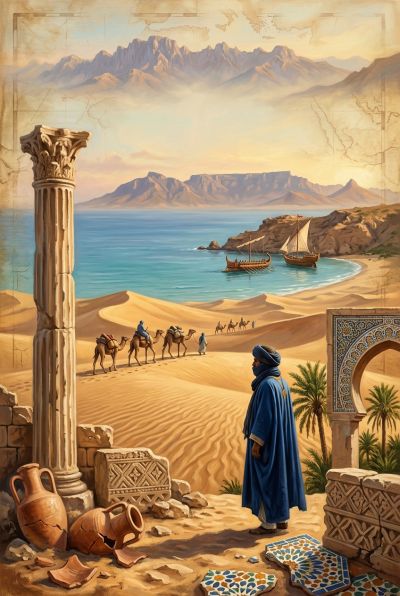
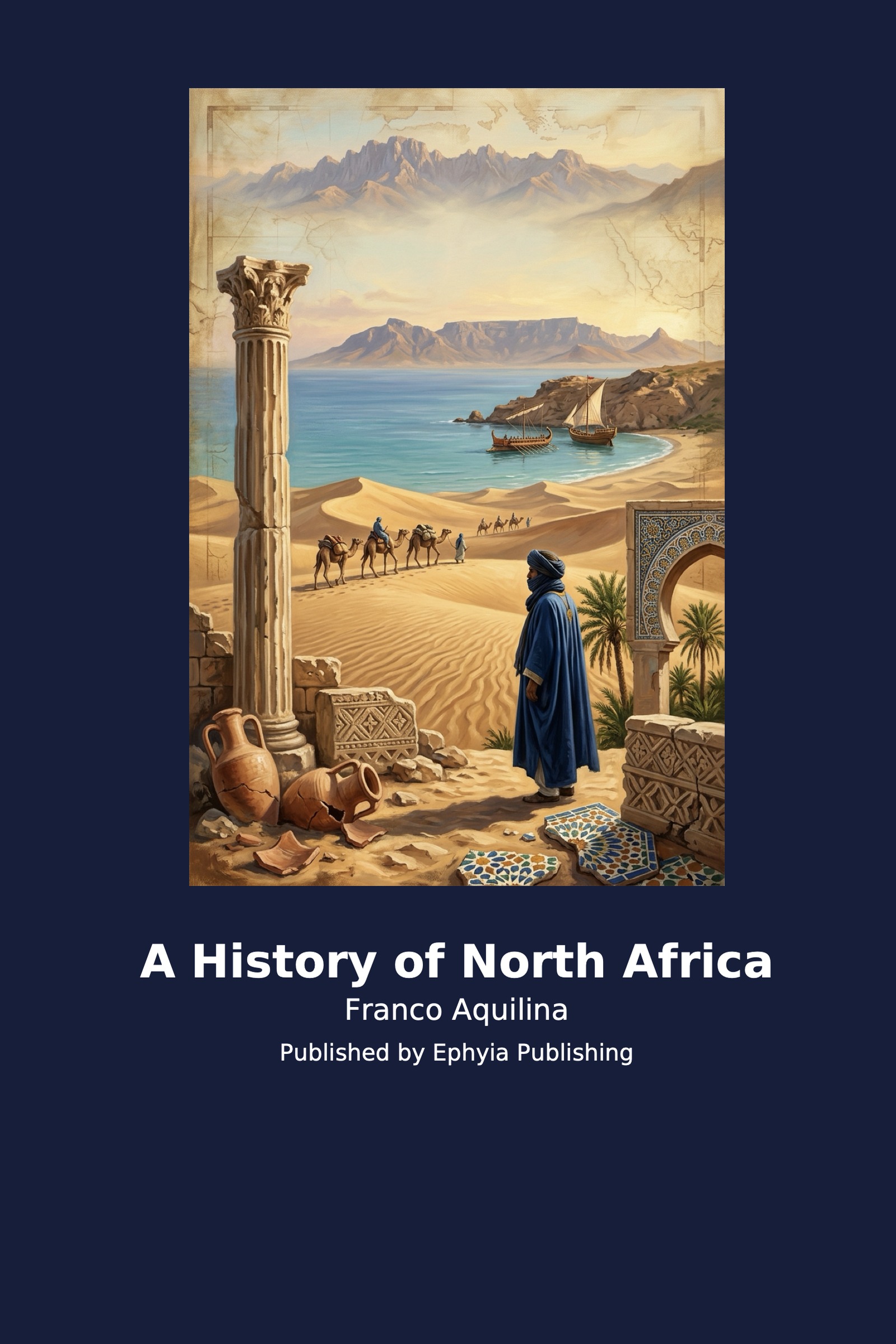

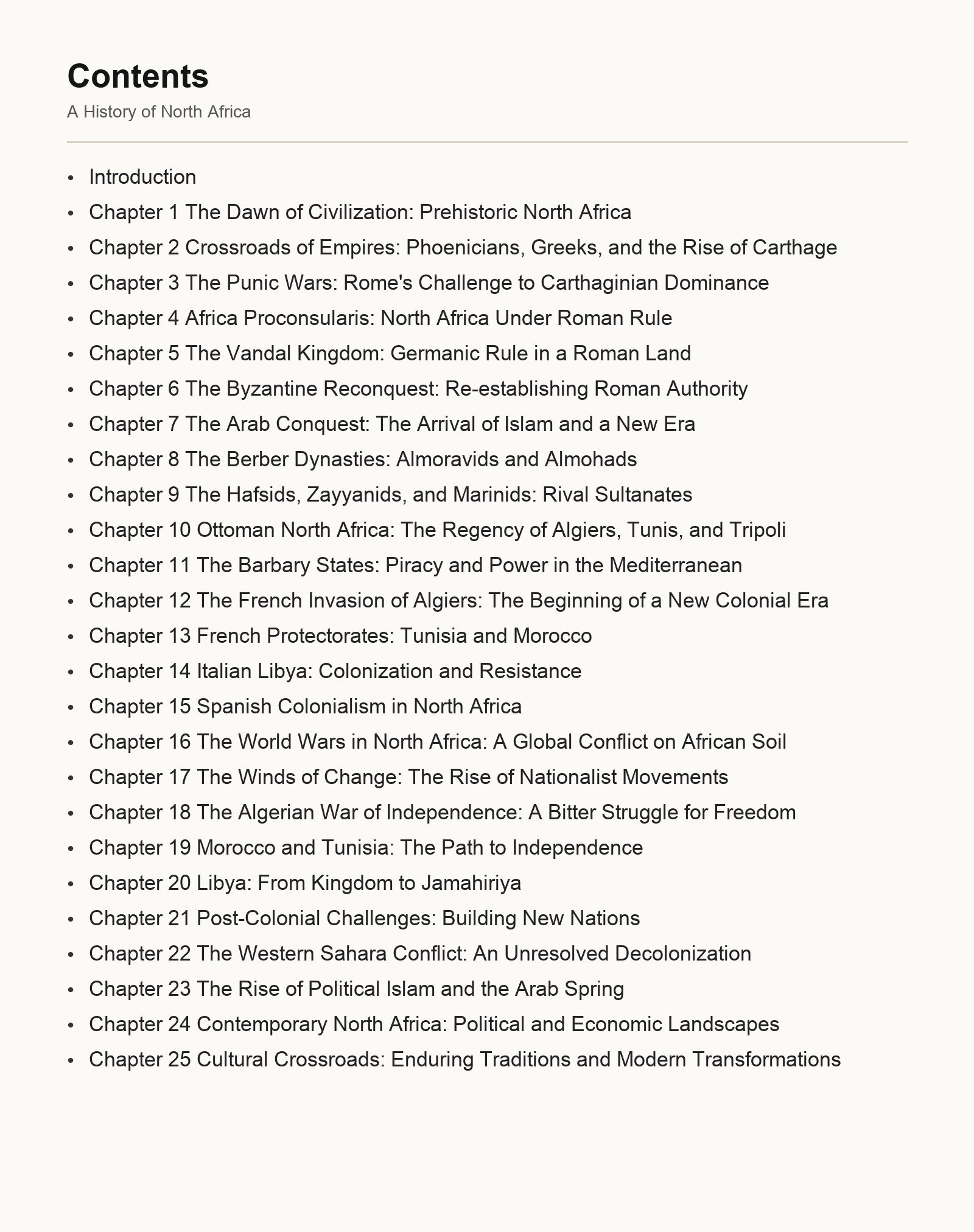
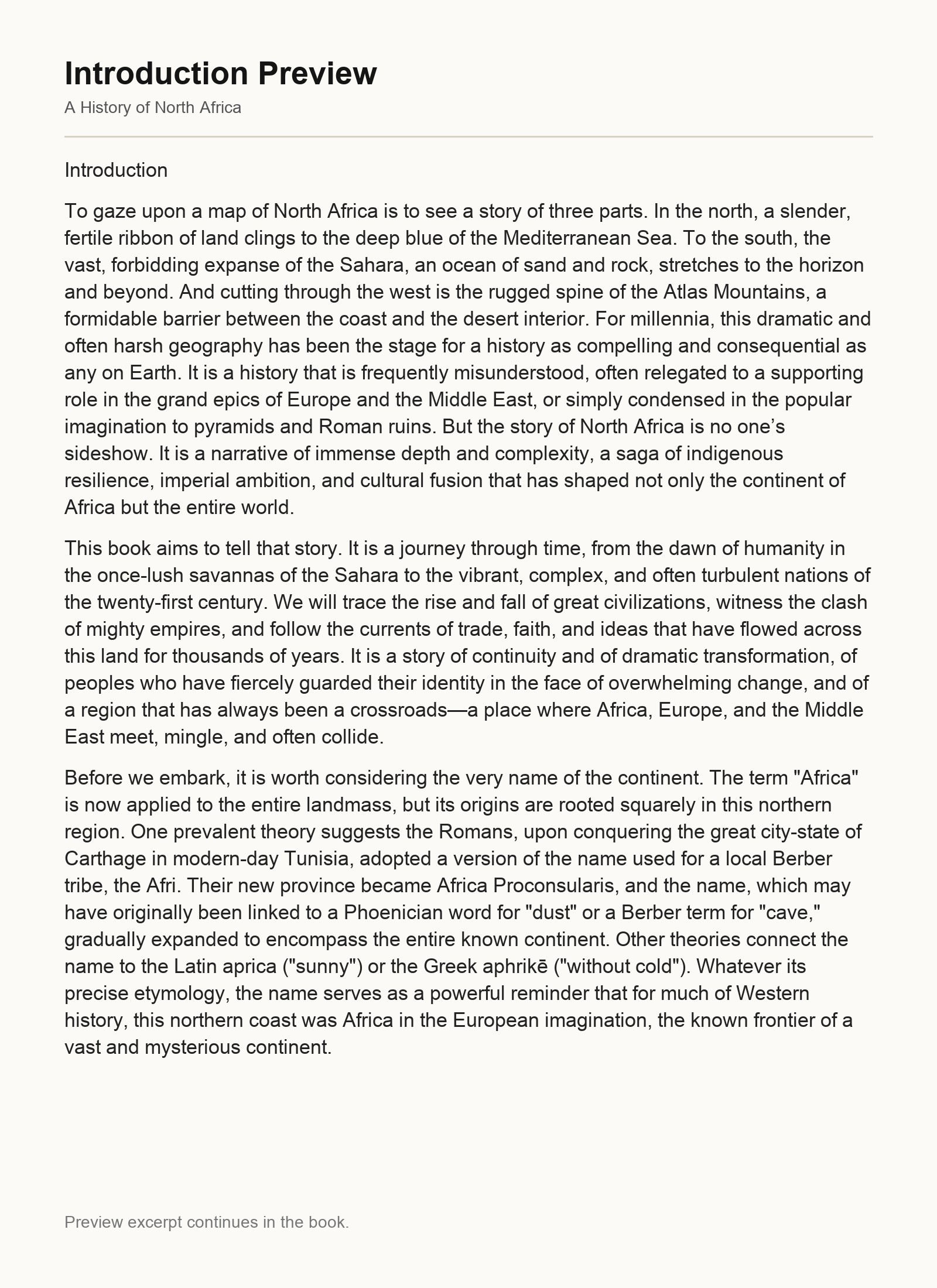
North Africa's story is far more than a footnote in the histories of Europe or the Middle East—it is a central narrative of human civilization that has shaped the world for millennia. In "A History of North Africa," Franco Aquilina invites readers on an epic journey through time, from the lush savannas of the prehistoric Sahara where early humans first thrived, to the complex nations of the twenty-first century grappling with modernity. This comprehensive work reveals how a dramatic landscape of Mediterranean coast, Atlas Mountains, and Sahara desert has served as the stage for indigenous resilience, imperial ambition, and cultural fusion that echoes across continents.
Readers will trace the rise and fall of extraordinary civilizations that called this region home, gaining insight into the indigenous Amazigh (Berber) peoples who have inhabited these lands since at least 10,000 BCE and whose endurance forms the bedrock of North African identity. The book details how Phoenician traders established Carthage, a maritime power that nearly defeated Rome, how the region became the "breadbasket" of the Roman Empire producing theologians like Augustine of Hippo, and how the Arab conquest brought Islam and irrevocably tied North Africa to the wider Muslim world. Readers will witness the rise of powerful Berber dynasties like the Almoravids and Almohads that ruled from Spain to Libya, creating golden ages of art and scholarship, before exploring the Ottoman era and the devastating impact of European colonization.
This history is one of dramatic transformation and continuity, where readers will experience the clash of empires from the Punic Wars to the World Wars fought on African soil, and understand how North Africa became a crucible for nationalist movements that shattered colonial rule. The book provides deep context for contemporary struggles, examining the Algerian War of Independence, the path to sovereignty for Morocco and Tunisia, Libya's journey from kingdom to Jamahiriya, and the unresolved Western Sahara conflict. Readers will grasp how the region's complex past—shaped by waves of conquest, adaptation, and resistance—continues to influence its political, social, and cultural landscapes today.
Beyond politics and war, Aquilina illuminates North Africa's rich cultural tapestry, showing how indigenous traditions coexist with Arab, African, European, and Ottoman influences to create a unique synthesis. Readers will discover how the Amazigh language Tamazight has experienced a powerful revival, how musical traditions from Andalusian classical to Gnawa and Raï reflect centuries of cultural exchange, and how cuisine like couscous and tagine tells a story of shared heritage. The book reveals North Africa not as a monolith but as a vibrant crossroads where Africa, Europe, and the Middle East meet, mingle, and collide—a place where ancient customs thrive alongside modern pressures and where understanding the past is essential to comprehending the present.
Ultimately, this work offers readers more than a chronological account; it provides a profound understanding of a region that has been at the center of human history from the very beginning. By presenting events from a neutral, fact-based perspective without preaching or judgment, Aquilina allows readers to form their own insights into the motivations, triumphs, and failures of the peoples and powers that have shaped North Africa. For anyone seeking to comprehend a strategically significant, culturally diverse, and demographically vital region that continues to influence global currents, this book delivers the comprehensive, engaging, and illuminating narrative that North Africa's profound story deserves.
What You'll Find Inside:
- The indigenous Amazigh (Berber) peoples as North Africa's original inhabitants whose resilience and cultural influence persist throughout history despite waves of conquest and assimilation.
- Carthage's rise as a formidable North African maritime empire that challenged Roman dominance in the Punic Wars before its ultimate destruction.
- The transformative Arab conquest of the 7th century that brought Islam and Arabic language, fundamentally reshaping North Africa's cultural and religious landscape.
- Indigenous Berber dynasties like the Almoravids and Almohads that created powerful empires spanning from sub-Saharan Africa to Al-Andalus (Islamic Spain).
- The colonial era, independence struggles (including the violent Algerian War), and post-colonial challenges like nation-building, the Western Sahara conflict, and the Arab Spring.
Who's It For:
This book is ideal for general readers, students, and history enthusiasts seeking a comprehensive yet accessible overview of North Africa's rich and complex history. It will particularly benefit those looking to move beyond superficial understandings of the region to grasp its pivotal role in Mediterranean, African, and world history. Readers interested in understanding the roots of contemporary North African politics, culture, and conflicts will find valuable context in this chronological narrative spanning from prehistoric times to the 21st century.
Table of Contents:
- Introduction
- Chapter 1 The Dawn of Civilization: Prehistoric North Africa
- Chapter 2 Crossroads of Empires: Phoenicians, Greeks, and the Rise of Carthage
- Chapter 3 The Punic Wars: Rome's Challenge to Carthaginian Dominance
- Chapter 4 Africa Proconsularis: North Africa Under Roman Rule
- Chapter 5 The Vandal Kingdom: Germanic Rule in a Roman Land
- Chapter 6 The Byzantine Reconquest: Re-establishing Roman Authority
- Chapter 7 The Arab Conquest: The Arrival of Islam and a New Era
- Chapter 8 The Berber Dynasties: Almoravids and Almohads
- Chapter 9 The Hafsids, Zayyanids, and Marinids: Rival Sultanates
- Chapter 10 Ottoman North Africa: The Regency of Algiers, Tunis, and Tripoli
- Chapter 11 The Barbary States: Piracy and Power in the Mediterranean
- Chapter 12 The French Invasion of Algiers: The Beginning of a New Colonial Era
- Chapter 13 French Protectorates: Tunisia and Morocco
- Chapter 14 Italian Libya: Colonization and Resistance
- Chapter 15 Spanish Colonialism in North Africa
- Chapter 16 The World Wars in North Africa: A Global Conflict on African Soil
- Chapter 17 The Winds of Change: The Rise of Nationalist Movements
- Chapter 18 The Algerian War of Independence: A Bitter Struggle for Freedom
- Chapter 19 Morocco and Tunisia: The Path to Independence
- Chapter 20 Libya: From Kingdom to Jamahiriya
- Chapter 21 Post-Colonial Challenges: Building New Nations
- Chapter 22 The Western Sahara Conflict: An Unresolved Decolonization
- Chapter 23 The Rise of Political Islam and the Arab Spring
- Chapter 24 Contemporary North Africa: Political and Economic Landscapes
- Chapter 25 Cultural Crossroads: Enduring Traditions and Modern Transformations
Author:
Published By:
Date Published:
May 28, 2026
Type:
Nonfiction
Language:
English
Also Available In:
Word Count:
57,826 words
Reading Time:
4 hours 3 minutes
Sample:
Order:
Order A History of North Africa (Paperback) on MixCache.com:
Buy NowPrint copy is made to order and ships worldwide. Includes the ebook free, ready to read instantly.
$5 account credit for all new MixCache.com accounts, usable toward any ebook purchase!*


