Browse by Category
Fiction
- Action & Adventure
- African American
- Anthologies
- Children's Fiction
- Classics
- Comics & Graphic Novels
- Coming of Age
- Contemporary
- Cultural & Regional
- Drama
- Erotica
- Fantasy
- General
- Historical Fiction
- Horror
- Humor & Satire
- Literary Fiction
- Mystery, Thriller & Suspense
- Poetry
- Religious & Inspirational
- Romance
- Science Fiction
- Short Stories
- War & Military
- Westerns
- Women's Fiction
- Young Adult
Non-Fiction
- Antiques & Collectibles
- Arts & Photography
- Biographies & Memoirs
- Business & Money
- Children's Non-Fiction
-
Computers & Technology
- Artificial Intelligence
- Computer Science
- Cybersecurity & Cryptography
- Data Science & Analytics
- Databases & Big Data
- Game Development & Design
- General
- Hardware & DIY
- Mobile App Development
- Networking & Cloud Computing
- Operating Systems
- Programming
- Robotics
- Software
- Software Engineering
- User Experience (UX) & Design
- Web Development & Design
- Cooking, Food & Wine
- Crafts, Hobbies & Home
- Education & Teaching
- Engineering
- General
- Health, Fitness & Dieting
-
History
- African History
- African History - North Africa
- African History - Sub-Saharan Africa
- American History
- American History - 20th Century
- American History - Civil War
- American History - Colonial Period
- Ancient History
- Asian History
- Asian History - China
- Asian History - India
- Asian History - Japan
- Asian History - Southeast Asia
- European History
- European History - Ancient Greece
- European History - Ancient Rome
- European History - Medieval
- European History - Modern
- European History - Renaissance
- General
- Middle Eastern History
- Military History
- Military History - Aviation
- Military History - Naval
- Social & Cultural History
- World History
- Humor & Entertainment
- Industrial Technology
- Language Learning
- Law
- LGBTQ+ Non-Fiction
- Literary Criticism
- Medical Books
- Parenting & Relationships
- Philosophy
- Politics & Social Sciences
- Reference
- Religion & Spirituality
-
Science & Math
- Agricultural Sciences
- Astronomy & Space Science
- Behavioral Sciences
- Biological Sciences
- Botany & Plant Science
- Chemistry
- Earth Sciences
- Engineering - Chemical
- Engineering - Civil
- Engineering - Electrical
- Engineering - Mechanical
- Environment
- General
- Geology
- Mathematics
- Nature & Ecology
- Oceanography
- Paleontology
- Physics
- Statistics
- Self-Help
- Sports & Outdoors
- Study Aids
- Sustainability & Green Living
- Textbooks
- Transportation
- Travel
- True Crime
- Urban Planning & Development
- Veterinary Medicine
- Writing & Publishing
Jump to Section
MixCache.com Total Access
Unlimited reading and audiobooks for every book published by MixCache.com.
Included titles carry the MTA badge.
Learn more →A History of Poland
About this book:
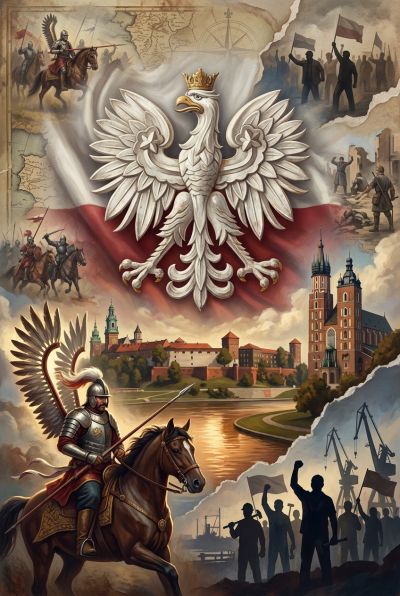
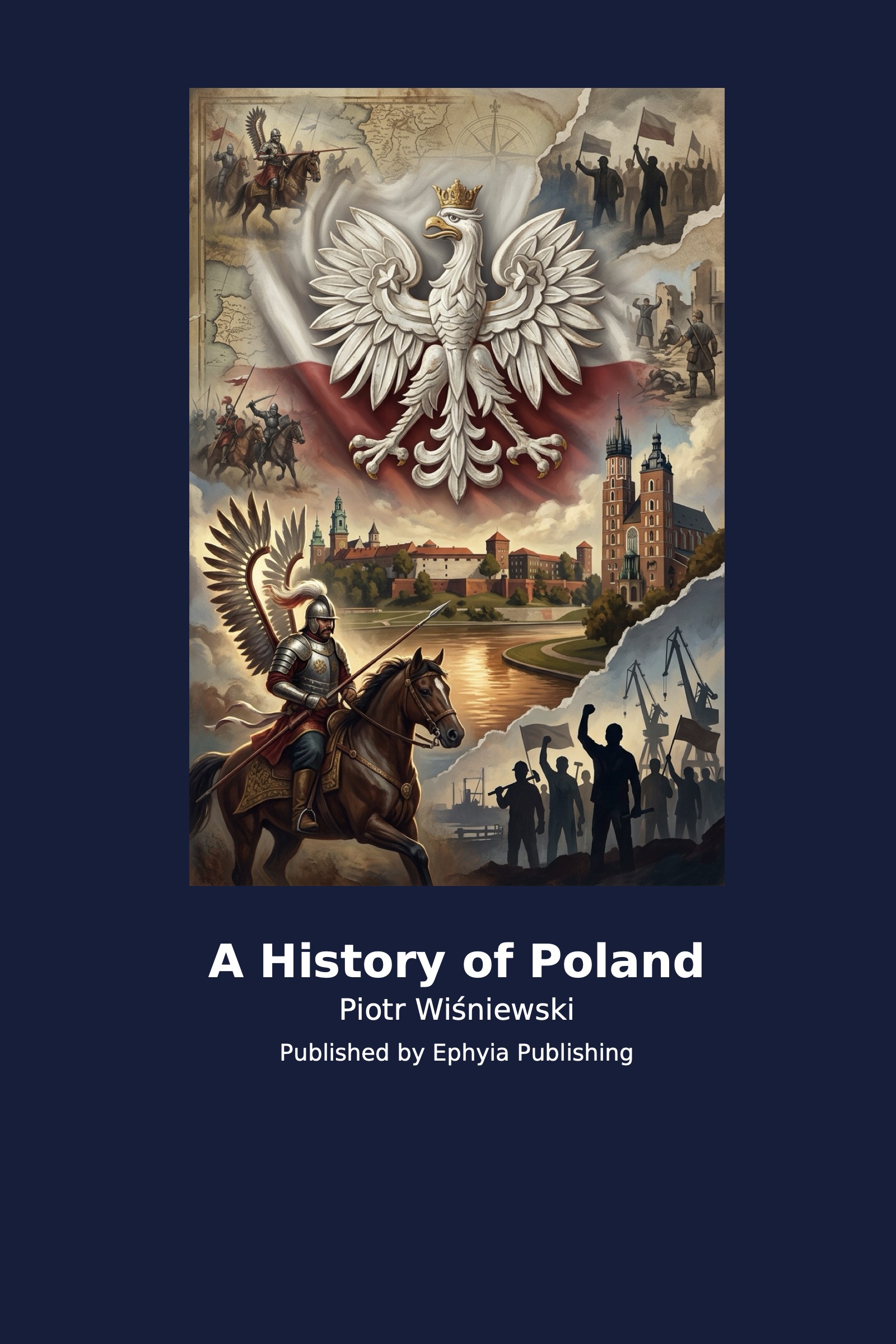
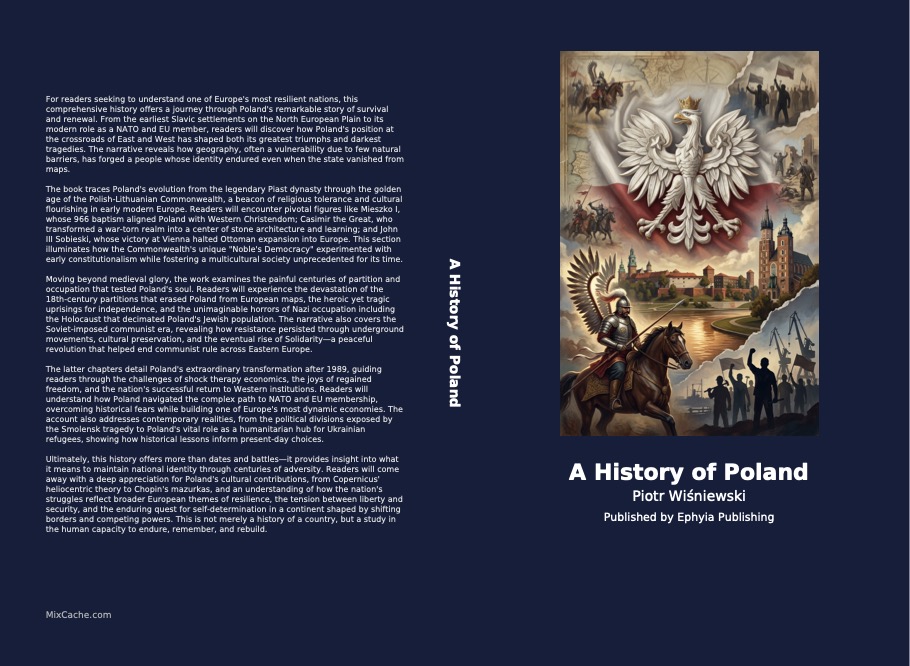
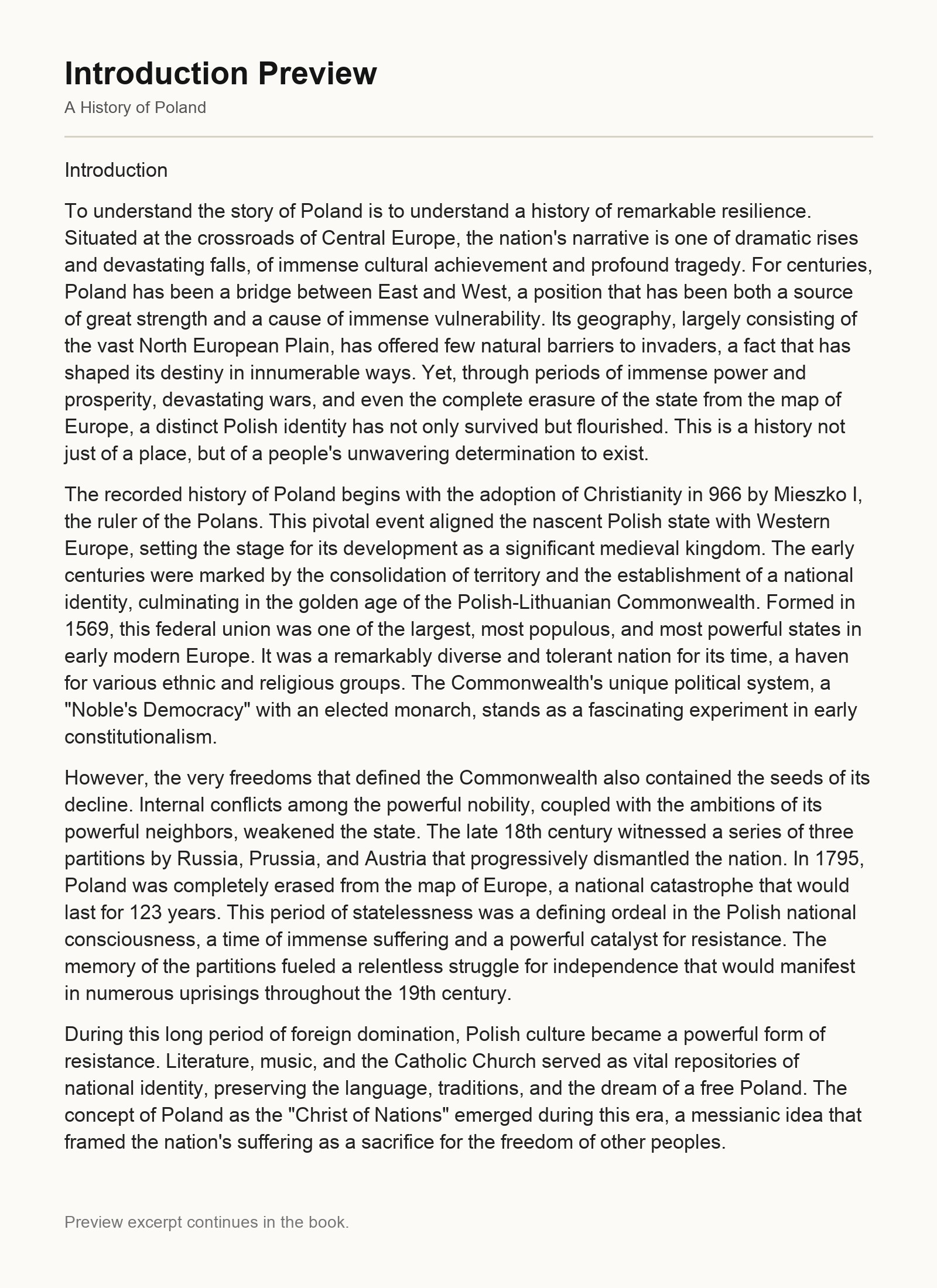
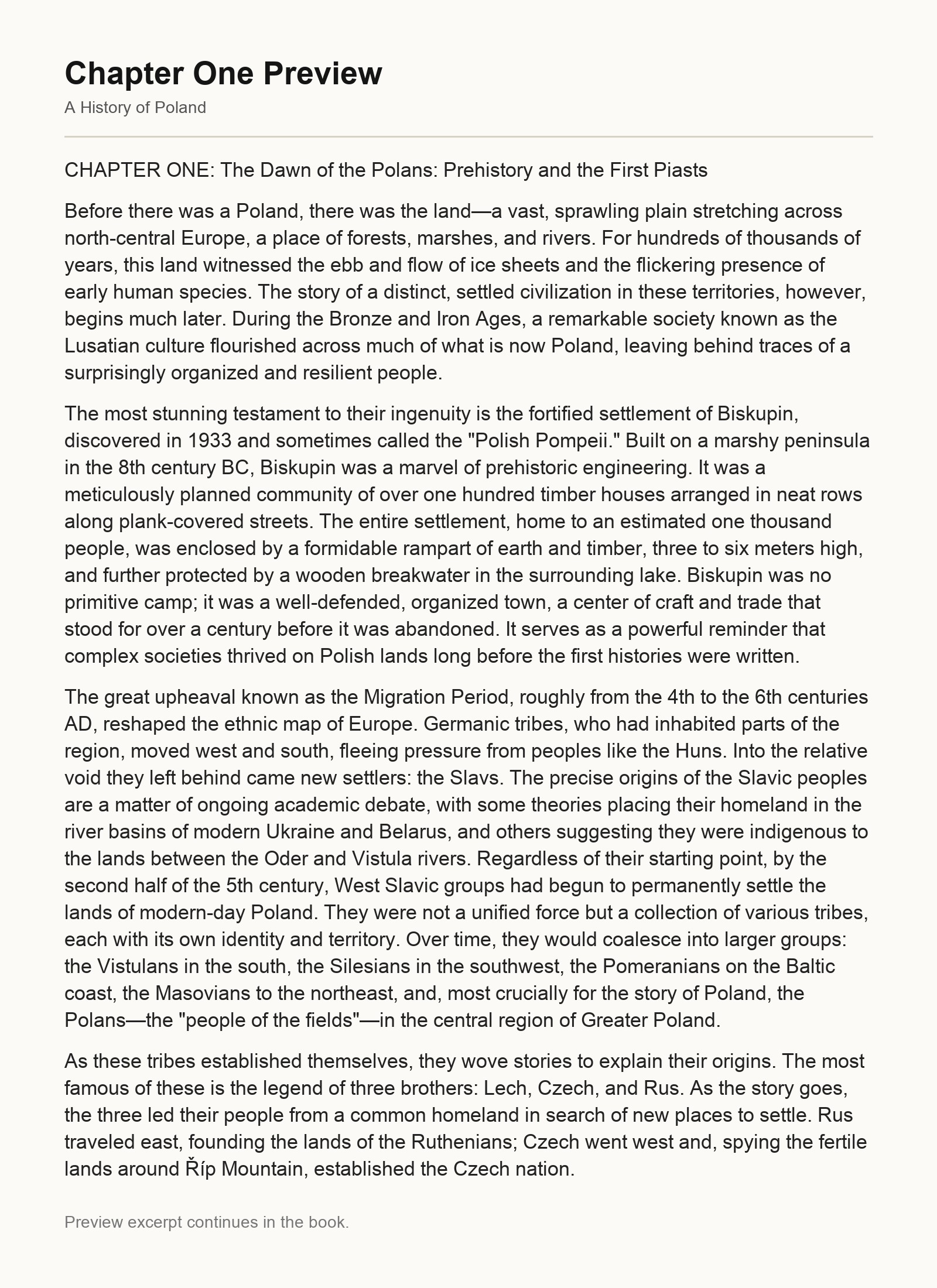
For readers seeking to understand one of Europe's most resilient nations, this comprehensive history offers a journey through Poland's remarkable story of survival and renewal. From the earliest Slavic settlements on the North European Plain to its modern role as a NATO and EU member, readers will discover how Poland's position at the crossroads of East and West has shaped both its greatest triumphs and darkest tragedies. The narrative reveals how geography, often a vulnerability due to few natural barriers, has forged a people whose identity endured even when the state vanished from maps.
The book traces Poland's evolution from the legendary Piast dynasty through the golden age of the Polish-Lithuanian Commonwealth, a beacon of religious tolerance and cultural flourishing in early modern Europe. Readers will encounter pivotal figures like Mieszko I, whose 966 baptism aligned Poland with Western Christendom; Casimir the Great, who transformed a war-torn realm into a center of stone architecture and learning; and John III Sobieski, whose victory at Vienna halted Ottoman expansion into Europe. This section illuminates how the Commonwealth's unique "Noble's Democracy" experimented with early constitutionalism while fostering a multicultural society unprecedented for its time.
Moving beyond medieval glory, the work examines the painful centuries of partition and occupation that tested Poland's soul. Readers will experience the devastation of the 18th-century partitions that erased Poland from European maps, the heroic yet tragic uprisings for independence, and the unimaginable horrors of Nazi occupation including the Holocaust that decimated Poland's Jewish population. The narrative also covers the Soviet-imposed communist era, revealing how resistance persisted through underground movements, cultural preservation, and the eventual rise of Solidarity—a peaceful revolution that helped end communist rule across Eastern Europe.
The latter chapters detail Poland's extraordinary transformation after 1989, guiding readers through the challenges of shock therapy economics, the joys of regained freedom, and the nation's successful return to Western institutions. Readers will understand how Poland navigated the complex path to NATO and EU membership, overcoming historical fears while building one of Europe's most dynamic economies. The account also addresses contemporary realities, from the political divisions exposed by the Smolensk tragedy to Poland's vital role as a humanitarian hub for Ukrainian refugees, showing how historical lessons inform present-day choices.
Ultimately, this history offers more than dates and battles—it provides insight into what it means to maintain national identity through centuries of adversity. Readers will come away with a deep appreciation for Poland's cultural contributions, from Copernicus' heliocentric theory to Chopin's mazurkas, and an understanding of how the nation's struggles reflect broader European themes of resilience, the tension between liberty and security, and the enduring quest for self-determination in a continent shaped by shifting borders and competing powers. This is not merely a history of a country, but a study in the human capacity to endure, remember, and rebuild.
What You'll Find Inside:
- Trace Poland's journey from its medieval origins as a unified kingdom under the Piast dynasty through its golden age as the expansive and tolerant Polish-Lithuanian Commonwealth.
- Explore the unique political system of the 'Noble's Democracy' with its elected monarch and extensive liberties that stood in contrast to contemporary European absolutism.
- Understand the devastating impact of the partitions, World Wars, and communist rule, alongside Poland's persistent resistance movements from uprisings to Solidarity.
- Discover how Polish culture, religion, and national identity survived and flourished even during periods when the Polish state was erased from the map.
- Follow Poland's remarkable transformation from communist rule to democratic consolidation and its integration into NATO and the European Union.
Who's It For:
This book is ideal for history enthusiasts, students of European studies, and anyone seeking to understand Poland's extraordinary journey from medieval kingdom to modern democracy. It will particularly resonate with readers interested in how nations preserve cultural identity through periods of occupation and partition, as well as those studying the development of democratic institutions and resistance movements against authoritarian regimes.
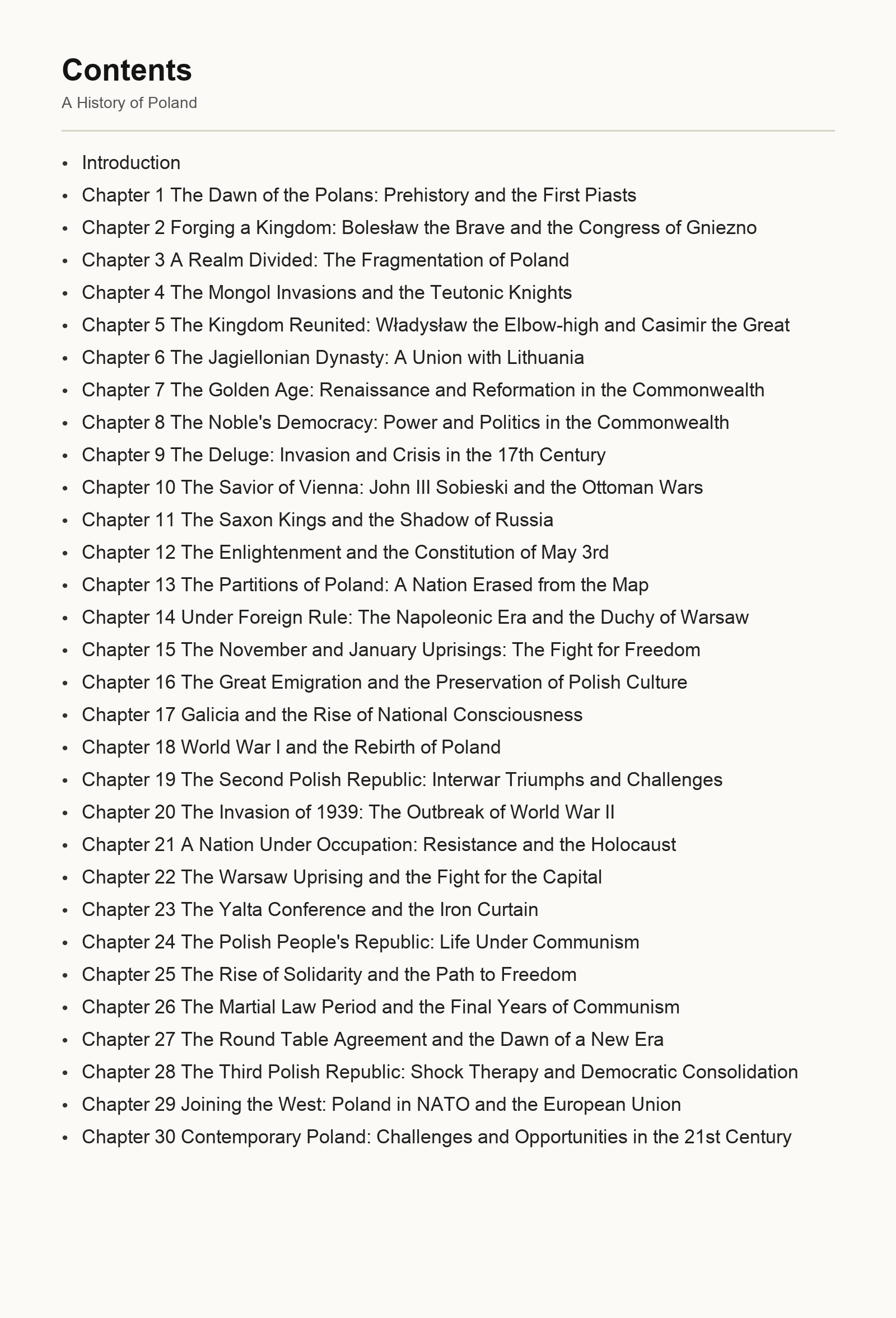
Table of Contents:
- Introduction
- Chapter 1 The Dawn of the Polans: Prehistory and the First Piasts
- Chapter 2 Forging a Kingdom: Bolesław the Brave and the Congress of Gniezno
- Chapter 3 A Realm Divided: The Fragmentation of Poland
- Chapter 4 The Mongol Invasions and the Teutonic Knights
- Chapter 5 The Kingdom Reunited: Władysław the Elbow-high and Casimir the Great
- Chapter 6 The Jagiellonian Dynasty: A Union with Lithuania
- Chapter 7 The Golden Age: Renaissance and Reformation in the Commonwealth
- Chapter 8 The Noble's Democracy: Power and Politics in the Commonwealth
- Chapter 9 The Deluge: Invasion and Crisis in the 17th Century
- Chapter 10 The Savior of Vienna: John III Sobieski and the Ottoman Wars
- Chapter 11 The Saxon Kings and the Shadow of Russia
- Chapter 12 The Enlightenment and the Constitution of May 3rd
- Chapter 13 The Partitions of Poland: A Nation Erased from the Map
- Chapter 14 Under Foreign Rule: The Napoleonic Era and the Duchy of Warsaw
- Chapter 15 The November and January Uprisings: The Fight for Freedom
- Chapter 16 The Great Emigration and the Preservation of Polish Culture
- Chapter 17 Galicia and the Rise of National Consciousness
- Chapter 18 World War I and the Rebirth of Poland
- Chapter 19 The Second Polish Republic: Interwar Triumphs and Challenges
- Chapter 20 The Invasion of 1939: The Outbreak of World War II
- Chapter 21 A Nation Under Occupation: Resistance and the Holocaust
- Chapter 22 The Warsaw Uprising and the Fight for the Capital
- Chapter 23 The Yalta Conference and the Iron Curtain
- Chapter 24 The Polish People's Republic: Life Under Communism
- Chapter 25 The Rise of Solidarity and the Path to Freedom
- Chapter 26 The Martial Law Period and the Final Years of Communism
- Chapter 27 The Round Table Agreement and the Dawn of a New Era
- Chapter 28 The Third Polish Republic: Shock Therapy and Democratic Consolidation
- Chapter 29 Joining the West: Poland in NATO and the European Union
- Chapter 30 Contemporary Poland: Challenges and Opportunities in the 21st Century
Author:
Published By:
Date Published:
May 27, 2026
Type:
Nonfiction
Language:
English
Word Count:
64,910 words
Reading Time:
4 hours 33 minutes
Sample:
Order:
Order A History of Poland (Paperback) on MixCache.com:
Buy NowPrint copy is made to order and ships worldwide. Includes the ebook free, ready to read instantly.
$5 account credit for all new MixCache.com accounts, usable toward any ebook purchase!*