Browse by Category
Fiction
- Action & Adventure
- African American
- Anthologies
- Children's Fiction
- Classics
- Comics & Graphic Novels
- Coming of Age
- Contemporary
- Cultural & Regional
- Drama
- Erotica
- Fantasy
- General
- Historical Fiction
- Horror
- Humor & Satire
- Literary Fiction
- Mystery, Thriller & Suspense
- Poetry
- Religious & Inspirational
- Romance
- Science Fiction
- Short Stories
- War & Military
- Westerns
- Women's Fiction
- Young Adult
Non-Fiction
- Antiques & Collectibles
- Arts & Photography
- Biographies & Memoirs
- Business & Money
- Children's Non-Fiction
-
Computers & Technology
- Artificial Intelligence
- Computer Science
- Cybersecurity & Cryptography
- Data Science & Analytics
- Databases & Big Data
- Game Development & Design
- General
- Hardware & DIY
- Mobile App Development
- Networking & Cloud Computing
- Operating Systems
- Programming
- Robotics
- Software
- Software Engineering
- User Experience (UX) & Design
- Web Development & Design
- Cooking, Food & Wine
- Crafts, Hobbies & Home
- Education & Teaching
- Engineering
- General
- Health, Fitness & Dieting
-
History
- African History
- African History - North Africa
- African History - Sub-Saharan Africa
- American History
- American History - 20th Century
- American History - Civil War
- American History - Colonial Period
- Ancient History
- Asian History
- Asian History - China
- Asian History - India
- Asian History - Japan
- Asian History - Southeast Asia
- European History
- European History - Ancient Greece
- European History - Ancient Rome
- European History - Medieval
- European History - Modern
- European History - Renaissance
- General
- Middle Eastern History
- Military History
- Military History - Aviation
- Military History - Naval
- Social & Cultural History
- World History
- Humor & Entertainment
- Industrial Technology
- Language Learning
- Law
- LGBTQ+ Non-Fiction
- Literary Criticism
- Medical Books
- Parenting & Relationships
- Philosophy
- Politics & Social Sciences
- Reference
- Religion & Spirituality
-
Science & Math
- Agricultural Sciences
- Astronomy & Space Science
- Behavioral Sciences
- Biological Sciences
- Botany & Plant Science
- Chemistry
- Earth Sciences
- Engineering - Chemical
- Engineering - Civil
- Engineering - Electrical
- Engineering - Mechanical
- Environment
- General
- Geology
- Mathematics
- Nature & Ecology
- Oceanography
- Paleontology
- Physics
- Statistics
- Self-Help
- Sports & Outdoors
- Study Aids
- Sustainability & Green Living
- Textbooks
- Transportation
- Travel
- True Crime
- Urban Planning & Development
- Veterinary Medicine
- Writing & Publishing
Jump to Section
MixCache.com Total Access
Unlimited reading and audiobooks for every book published by MixCache.com.
Included titles carry the MTA badge.
Learn more →
The Yoruba
A Portrait of Heritage, Identity, and Civilization
About this book:
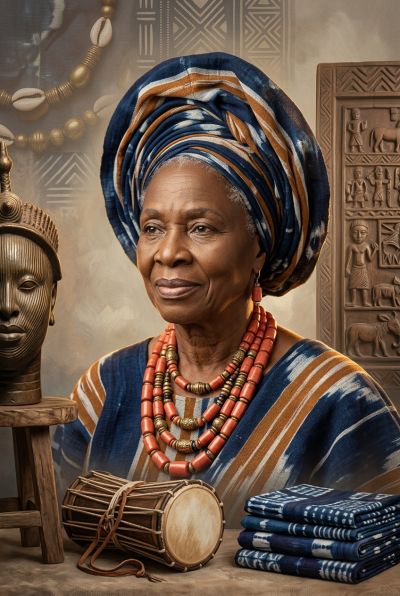
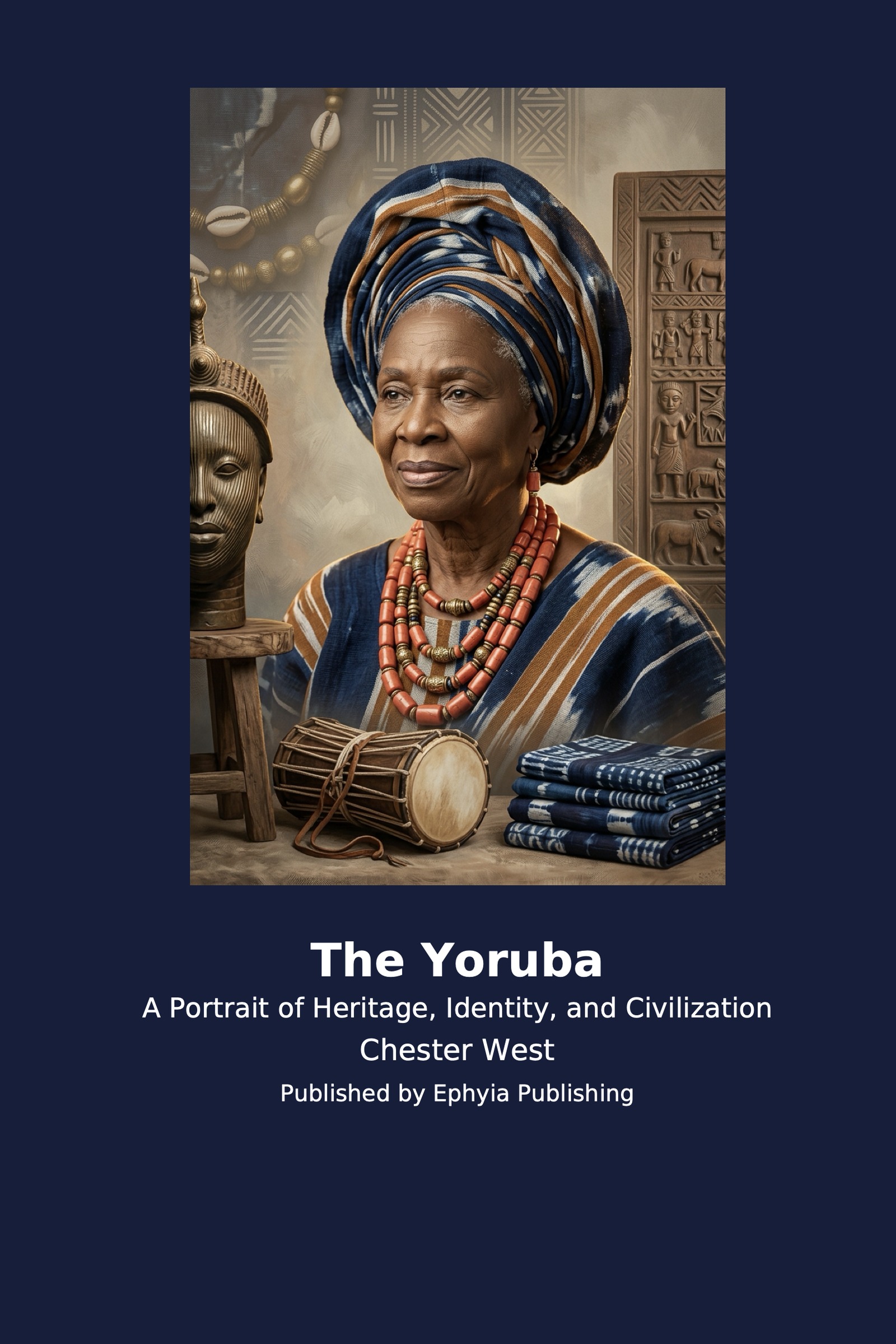
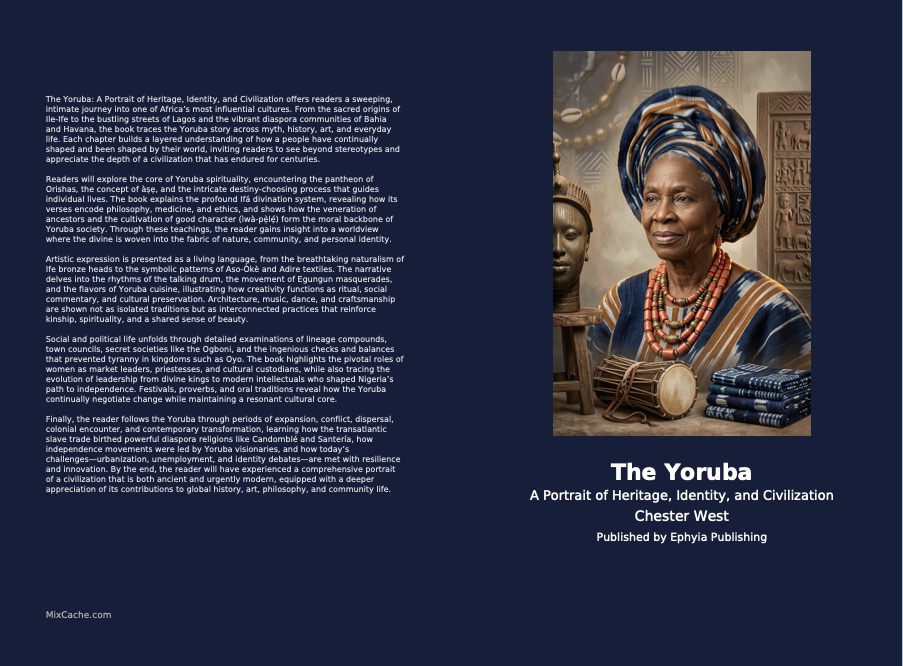
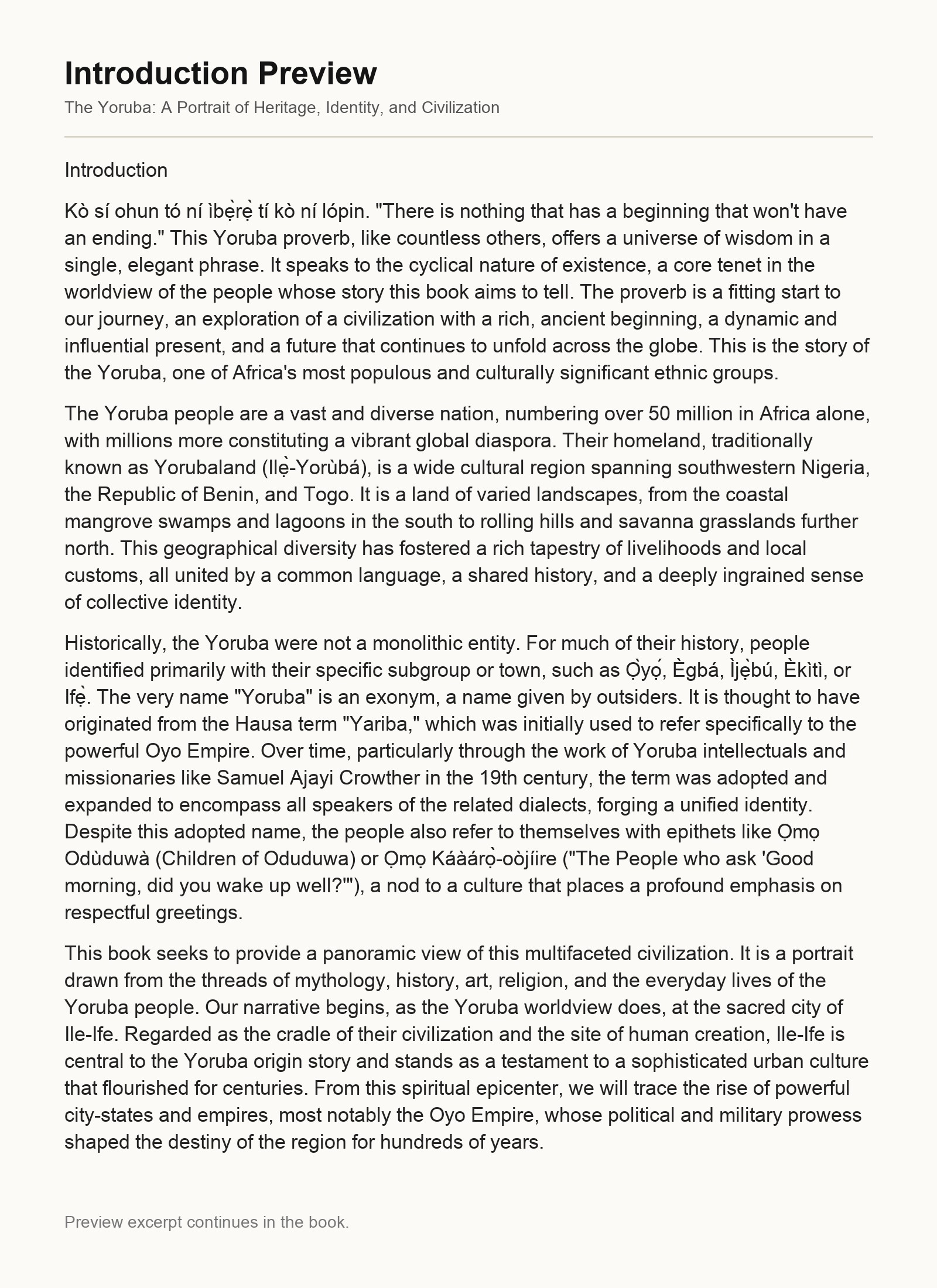
The Yoruba: A Portrait of Heritage, Identity, and Civilization offers readers a sweeping, intimate journey into one of Africa’s most influential cultures. From the sacred origins of Ile-Ife to the bustling streets of Lagos and the vibrant diaspora communities of Bahia and Havana, the book traces the Yoruba story across myth, history, art, and everyday life. Each chapter builds a layered understanding of how a people have continually shaped and been shaped by their world, inviting readers to see beyond stereotypes and appreciate the depth of a civilization that has endured for centuries.
Readers will explore the core of Yoruba spirituality, encountering the pantheon of Orishas, the concept of àṣẹ, and the intricate destiny‑choosing process that guides individual lives. The book explains the profound Ifá divination system, revealing how its verses encode philosophy, medicine, and ethics, and shows how the veneration of ancestors and the cultivation of good character (ìwà‑pẹ̀lẹ́) form the moral backbone of Yoruba society. Through these teachings, the reader gains insight into a worldview where the divine is woven into the fabric of nature, community, and personal identity.
Artistic expression is presented as a living language, from the breathtaking naturalism of Ife bronze heads to the symbolic patterns of Aso‑Òkè and Adire textiles. The narrative delves into the rhythms of the talking drum, the movement of Egungun masquerades, and the flavors of Yoruba cuisine, illustrating how creativity functions as ritual, social commentary, and cultural preservation. Architecture, music, dance, and craftsmanship are shown not as isolated traditions but as interconnected practices that reinforce kinship, spirituality, and a shared sense of beauty.
Social and political life unfolds through detailed examinations of lineage compounds, town councils, secret societies like the Ogboni, and the ingenious checks and balances that prevented tyranny in kingdoms such as Oyo. The book highlights the pivotal roles of women as market leaders, priestesses, and cultural custodians, while also tracing the evolution of leadership from divine kings to modern intellectuals who shaped Nigeria’s path to independence. Festivals, proverbs, and oral traditions reveal how the Yoruba continually negotiate change while maintaining a resonant cultural core.
Finally, the reader follows the Yoruba through periods of expansion, conflict, dispersal, colonial encounter, and contemporary transformation, learning how the transatlantic slave trade birthed powerful diaspora religions like Candomblé and Santería, how independence movements were led by Yoruba visionaries, and how today’s challenges—urbanization, unemployment, and identity debates—are met with resilience and innovation. By the end, the reader will have experienced a comprehensive portrait of a civilization that is both ancient and urgently modern, equipped with a deeper appreciation of its contributions to global history, art, philosophy, and community life.
What You'll Find Inside:
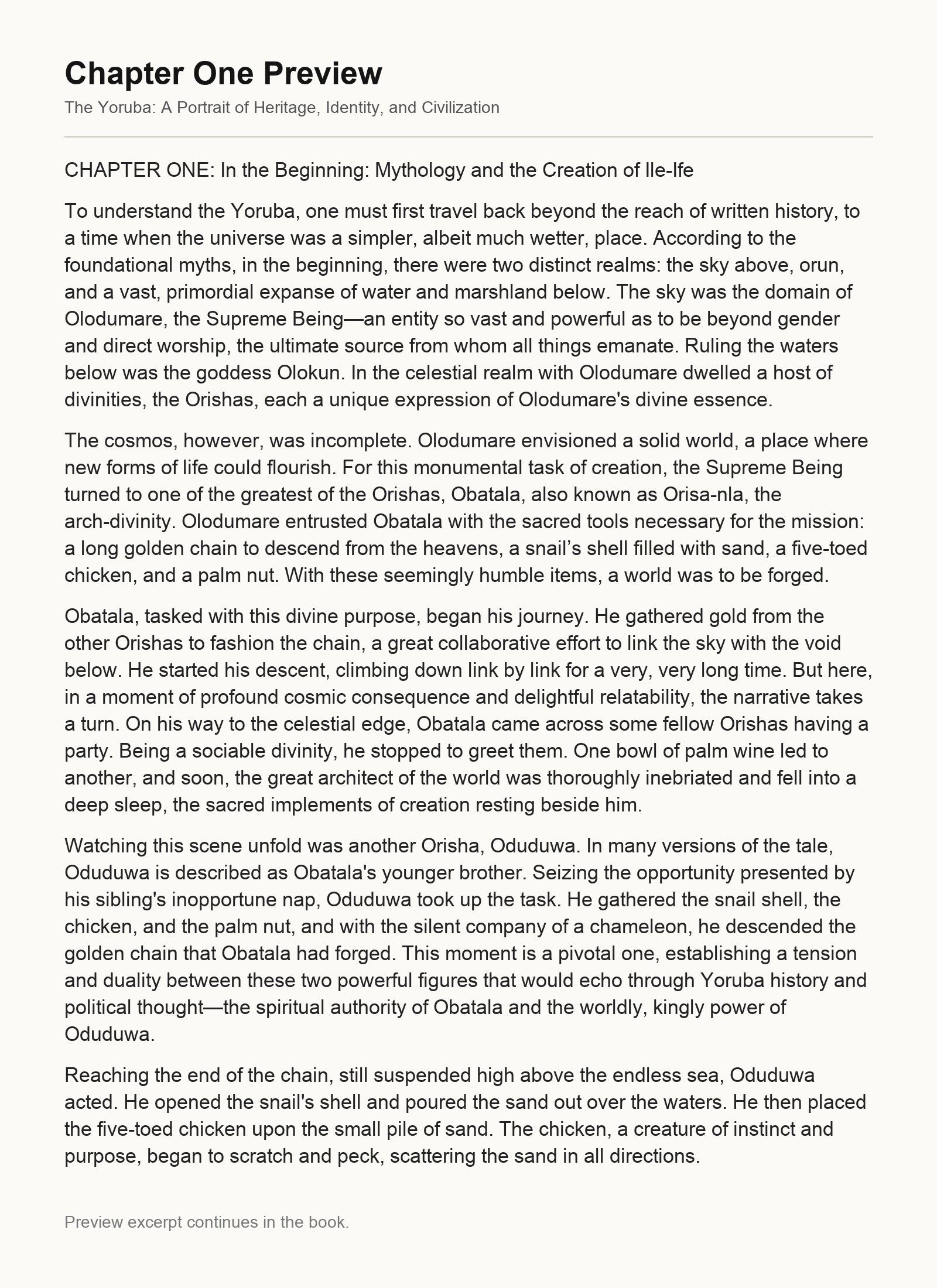
- Explore the foundational myths of Yoruba civilization, including the creation story of Ile-Ife and the complex cosmology of the Orishas, Olódùmarè, and the concept of àṣẹ (divine life force).
- Trace the complete historical journey from ancient Ife's artistic golden age through the rise and fall of the Oyo Empire, the tumultuous nineteenth-century wars, the transatlantic slave trade, colonial encounters, to the struggle for Nigerian independence.
- Discover the vibrant expressions of Yoruba culture through detailed examinations of traditional art forms, music and dance traditions (including the talking drum), textile arts (Aso-Òkè and Adire), and culinary heritage.
- Understand the sophisticated social fabric of Yoruba society, including kinship structures (ẹ̀bí and idílé), political systems with checks and balances, and the vital role of proverbs, poetry, and oral traditions in maintaining cultural continuity.
- Examine the global impact of the Yoruba diaspora in the Americas and the contemporary challenges facing Yoruba communities in the 21st century, from identity politics to urban development.
Who's It For:
This book is ideal for students and scholars of African studies, anthropology, history, and cultural studies seeking a comprehensive understanding of one of Africa's most influential civilizations. It will also resonate deeply with members of the Yoruba diaspora wishing to reconnect with their ancestral heritage and understand the historical and cultural forces that shaped their identity. General readers interested in world civilizations, African culture, or the interplay between tradition and modernity will find this work both informative and engaging, offering insights into how Yoruba philosophy, art, and social structures have endured and evolved across centuries and continents.
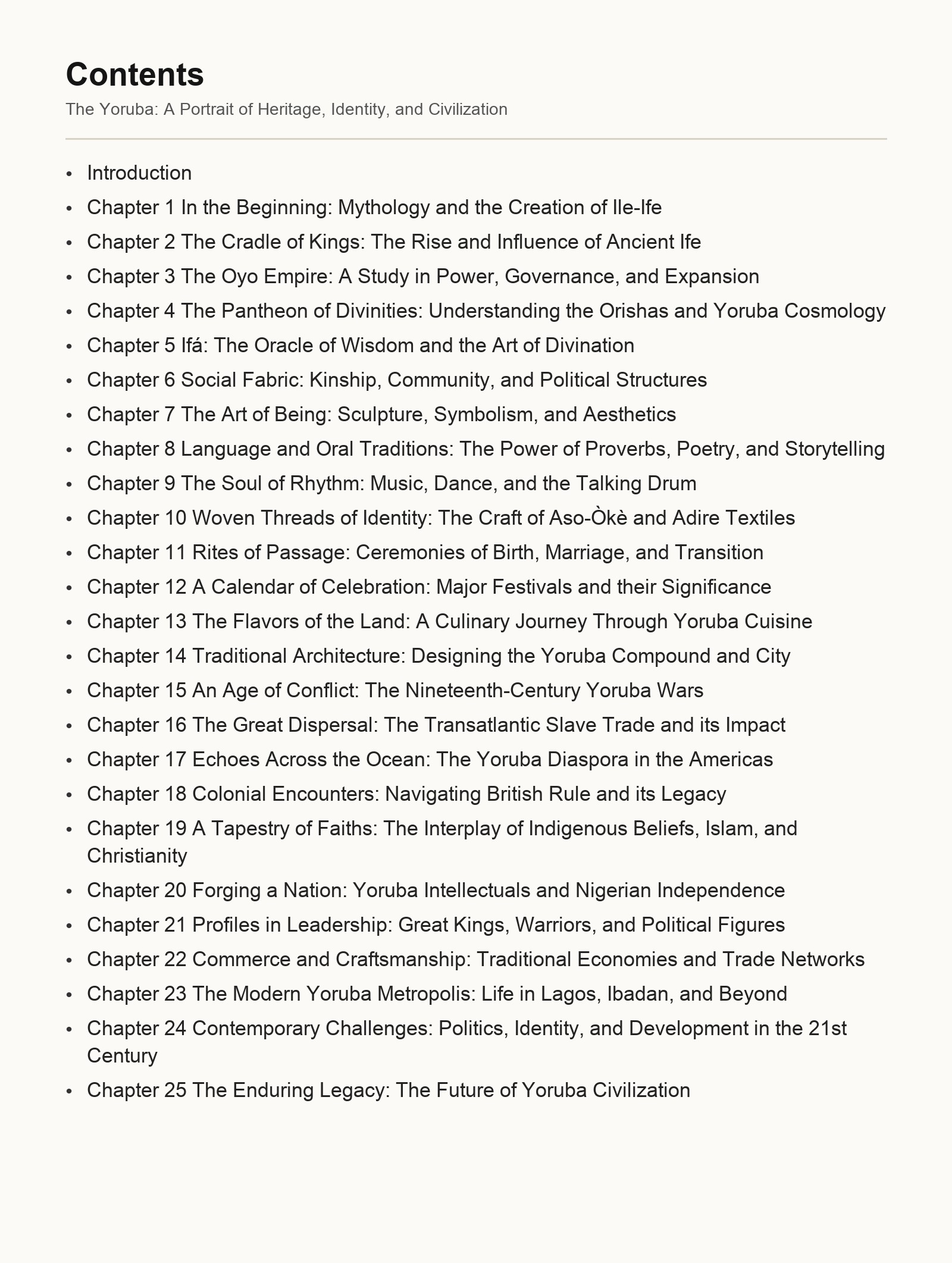
Table of Contents:
- Introduction
- Chapter 1 In the Beginning: Mythology and the Creation of Ile-Ife
- Chapter 2 The Cradle of Kings: The Rise and Influence of Ancient Ife
- Chapter 3 The Oyo Empire: A Study in Power, Governance, and Expansion
- Chapter 4 The Pantheon of Divinities: Understanding the Orishas and Yoruba Cosmology
- Chapter 5 Ifá: The Oracle of Wisdom and the Art of Divination
- Chapter 6 Social Fabric: Kinship, Community, and Political Structures
- Chapter 7 The Art of Being: Sculpture, Symbolism, and Aesthetics
- Chapter 8 Language and Oral Traditions: The Power of Proverbs, Poetry, and Storytelling
- Chapter 9 The Soul of Rhythm: Music, Dance, and the Talking Drum
- Chapter 10 Woven Threads of Identity: The Craft of Aso-Òkè and Adire Textiles
- Chapter 11 Rites of Passage: Ceremonies of Birth, Marriage, and Transition
- Chapter 12 A Calendar of Celebration: Major Festivals and their Significance
- Chapter 13 The Flavors of the Land: A Culinary Journey Through Yoruba Cuisine
- Chapter 14 Traditional Architecture: Designing the Yoruba Compound and City
- Chapter 15 An Age of Conflict: The Nineteenth-Century Yoruba Wars
- Chapter 16 The Great Dispersal: The Transatlantic Slave Trade and its Impact
- Chapter 17 Echoes Across the Ocean: The Yoruba Diaspora in the Americas
- Chapter 18 Colonial Encounters: Navigating British Rule and its Legacy
- Chapter 19 A Tapestry of Faiths: The Interplay of Indigenous Beliefs, Islam, and Christianity
- Chapter 20 Forging a Nation: Yoruba Intellectuals and Nigerian Independence
- Chapter 21 Profiles in Leadership: Great Kings, Warriors, and Political Figures
- Chapter 22 Commerce and Craftsmanship: Traditional Economies and Trade Networks
- Chapter 23 The Modern Yoruba Metropolis: Life in Lagos, Ibadan, and Beyond
- Chapter 24 Contemporary Challenges: Politics, Identity, and Development in the 21st Century
- Chapter 25 The Enduring Legacy: The Future of Yoruba Civilization
Author:
Published By:
Date Published:
May 27, 2026
Type:
Nonfiction
Language:
English
Also Available In:
Word Count:
46,560 words
Reading Time:
3 hours 16 minutes
Sample:
Order:
Order The Yoruba (Paperback) on MixCache.com:
Buy NowPrint copy is made to order and ships worldwide. Includes the ebook free, ready to read instantly.
$5 account credit for all new MixCache.com accounts, usable toward any ebook purchase!*