Browse by Category
Fiction
- Action & Adventure
- African American
- Anthologies
- Children's Fiction
- Classics
- Comics & Graphic Novels
- Coming of Age
- Contemporary
- Cultural & Regional
- Drama
- Erotica
- Fantasy
- General
- Historical Fiction
- Horror
- Humor & Satire
- Literary Fiction
- Mystery, Thriller & Suspense
- Poetry
- Religious & Inspirational
- Romance
- Science Fiction
- Short Stories
- War & Military
- Westerns
- Women's Fiction
- Young Adult
Non-Fiction
- Antiques & Collectibles
- Arts & Photography
- Biographies & Memoirs
- Business & Money
- Children's Non-Fiction
-
Computers & Technology
- Artificial Intelligence
- Computer Science
- Cybersecurity & Cryptography
- Data Science & Analytics
- Databases & Big Data
- Game Development & Design
- General
- Hardware & DIY
- Mobile App Development
- Networking & Cloud Computing
- Operating Systems
- Programming
- Robotics
- Software
- Software Engineering
- User Experience (UX) & Design
- Web Development & Design
- Cooking, Food & Wine
- Crafts, Hobbies & Home
- Education & Teaching
- Engineering
- General
- Health, Fitness & Dieting
-
History
- African History
- African History - North Africa
- African History - Sub-Saharan Africa
- American History
- American History - 20th Century
- American History - Civil War
- American History - Colonial Period
- Ancient History
- Asian History
- Asian History - China
- Asian History - India
- Asian History - Japan
- Asian History - Southeast Asia
- European History
- European History - Ancient Greece
- European History - Ancient Rome
- European History - Medieval
- European History - Modern
- European History - Renaissance
- General
- Middle Eastern History
- Military History
- Military History - Aviation
- Military History - Naval
- Social & Cultural History
- World History
- Humor & Entertainment
- Industrial Technology
- Language Learning
- Law
- LGBTQ+ Non-Fiction
- Literary Criticism
- Medical Books
- Parenting & Relationships
- Philosophy
- Politics & Social Sciences
- Reference
- Religion & Spirituality
-
Science & Math
- Agricultural Sciences
- Astronomy & Space Science
- Behavioral Sciences
- Biological Sciences
- Botany & Plant Science
- Chemistry
- Earth Sciences
- Engineering - Chemical
- Engineering - Civil
- Engineering - Electrical
- Engineering - Mechanical
- Environment
- General
- Geology
- Mathematics
- Nature & Ecology
- Oceanography
- Paleontology
- Physics
- Statistics
- Self-Help
- Sports & Outdoors
- Study Aids
- Sustainability & Green Living
- Textbooks
- Transportation
- Travel
- True Crime
- Urban Planning & Development
- Veterinary Medicine
- Writing & Publishing
Jump to Section
MixCache.com Total Access
Unlimited reading and audiobooks for every book published by MixCache.com.
Included titles carry the MTA badge.
Learn more →A History of French Polynesia
About this book:
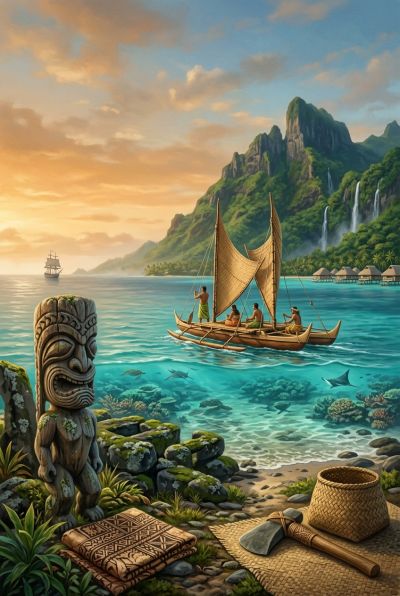
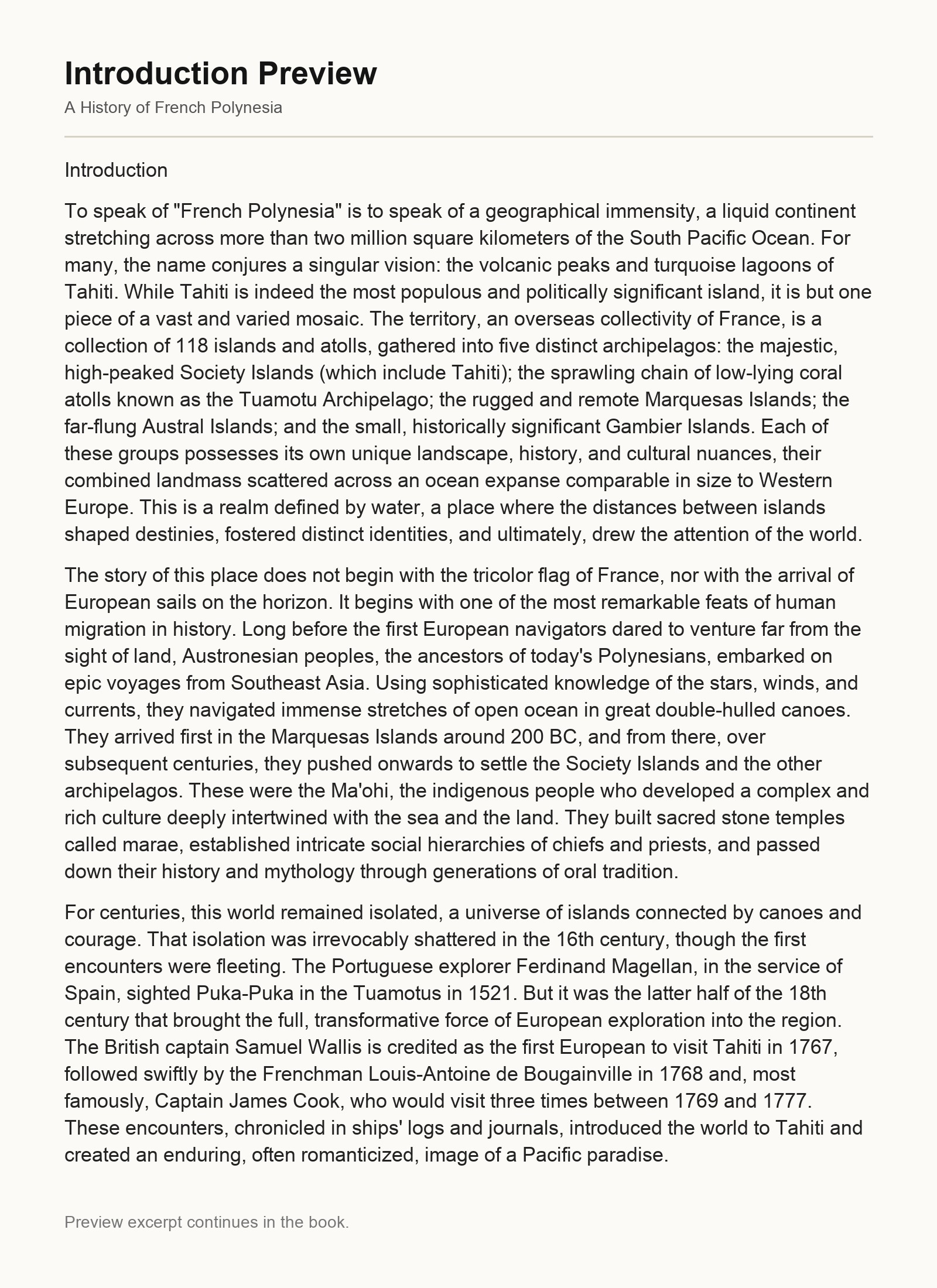
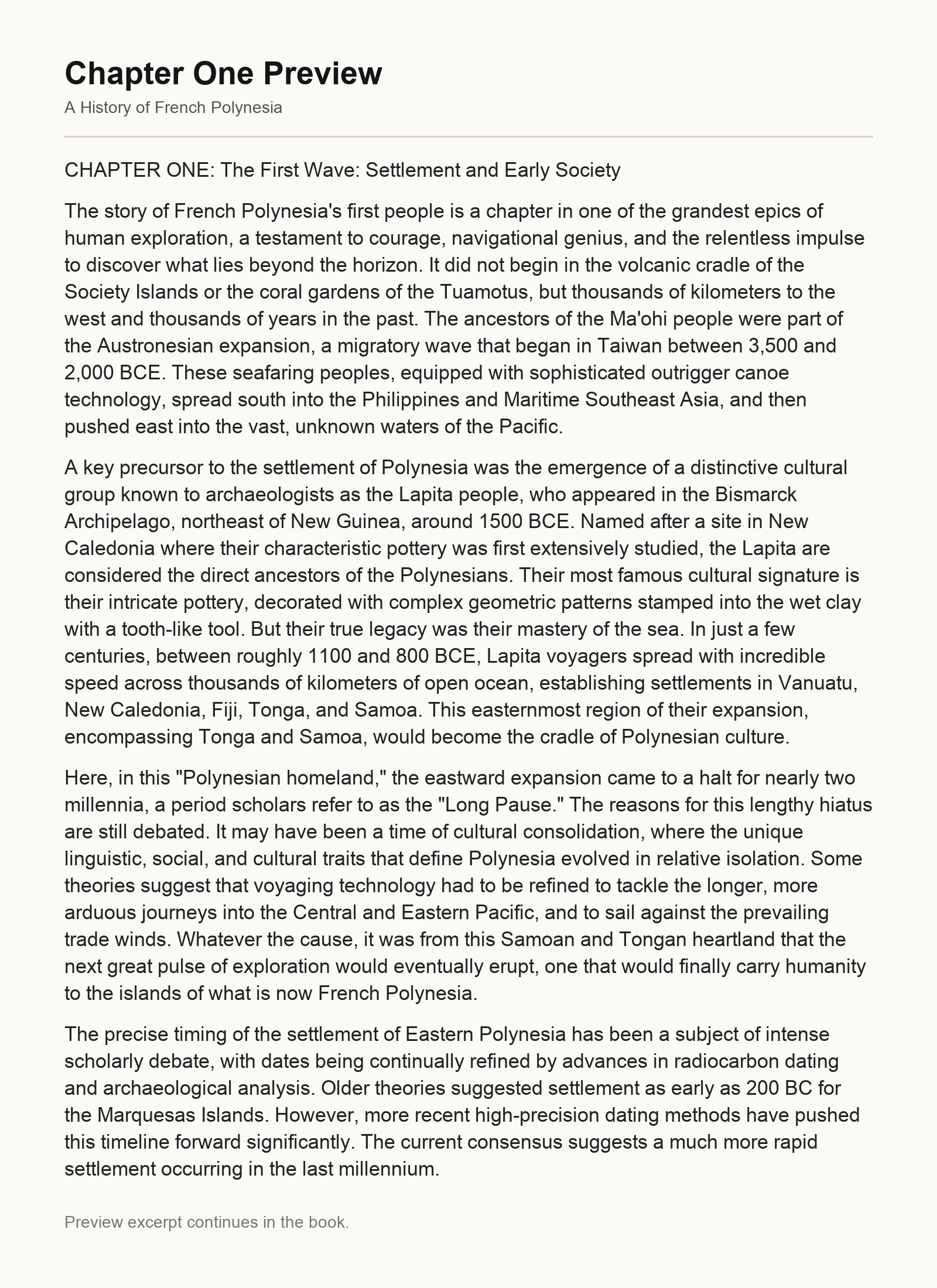
This comprehensive history takes readers on an extraordinary journey across two millennia, from the daring Austronesian voyagers who first settled these remote islands using only star paths and ocean swells, to the complex political and environmental realities of French Polynesia in the 21st century. Readers will discover how 118 scattered islands and atolls, spread across an ocean expanse rivaling Western Europe, developed distinct identities while maintaining deep cultural connections through centuries of voyaging, trade, and shared traditions.
Delve into the sophisticated world of the ancient Ma'ohi before European arrival—where intricate social hierarchies centered on divine chiefs, powerful spiritual concepts of mana and tapu governed daily life, and marae temples served as the beating heart of communities. Experience the ingenuity of Polynesian navigation as master wayfinders read the ocean like a map, and understand how the double-hulled canoe enabled not just settlement but a vast network of exchange that linked Hawai'i to New Zealand long before Europeans saw the Pacific as anything but an empty void.
Follow the dramatic transformation brought by European sails—from the initial violent encounters of Wallis and Bougainville to Cook's scientific expeditions, the cultural collision of the Bounty mutiny, and the rise of the Pōmare dynasty powered by European weapons. Witness how Protestant missionaries and French Catholics vied for souls while whalers and traders introduced cash economies that shattered traditional life, leading to the Franco-Tahitian War and the eventual establishment of French colonial rule that would reshape the islands for over a century.
Explore the tumultuous 20th century that pulled this Pacific territory into global conflicts—Polynesian soldiers fighting in both World Wars, the American occupation of Bora Bora, and the rise of Tahitian nationalism led by figures like Pouvana'a a Oopa. Most profoundly, understand the nuclear era's lasting impact as France conducted 193 tests at Moruroa and Fangataufa, transforming the economy and environment while leaving a legacy of health concerns, political activism, and ongoing struggles for recognition and compensation that continue to shape relations with Paris today.
Finally, gain insight into contemporary French Polynesia—how tourism and black pearl farming replaced nuclear revenue, how the Ma'ohi cultural renaissance revived language, dance, and tattooing as acts of pride and resistance, and how the territory now confronts existential threats from climate change and globalization while asserting its voice on the world stage. This is not merely a chronicle of events, but an invitation to understand how a people navigated isolation and connection, trauma and resilience, to forge a modern identity that honors ancient voyagers while facing the challenges of a changing ocean.
What You'll Find Inside:
- The extraordinary Polynesian settlement of the islands through advanced celestial navigation and double-hulled voyaging canoes, beginning around 1000-1200 AD
- The pivotal European encounters from Wallis and Bougainville to Cook that ended Polynesian isolation and initiated profound cultural and demographic changes
- The Franco-Tahitian War (1844-1846) that broke Tahitian resistance and established French protectorate rule, leading to full colonial annexation by 1880
- France's nuclear testing program (1966-1996) at Moruroa and Fangataufa that transformed the economy but left enduring health, environmental, and political legacies
- The territory's political journey from colony to overseas collectivity, alongside the Ma'ohi cultural renaissance and 21st-century challenges of climate change and globalization
Who's It For:
This book is essential reading for students and scholars of Pacific history, post-colonial studies, and environmental justice, offering a comprehensive narrative of French Polynesia from ancient Polynesian settlement to contemporary challenges. It will particularly benefit those interested in indigenous cultural resilience, the impacts of nuclear testing, and the complex political relationship between overseas territories and metropolitan powers. General readers with an interest in world history, cultural anthropology, or the Pacific region will also find valuable insights into how a remote oceanic society has navigated globalization while striving to preserve its Ma'ohi identity.
Table of Contents:
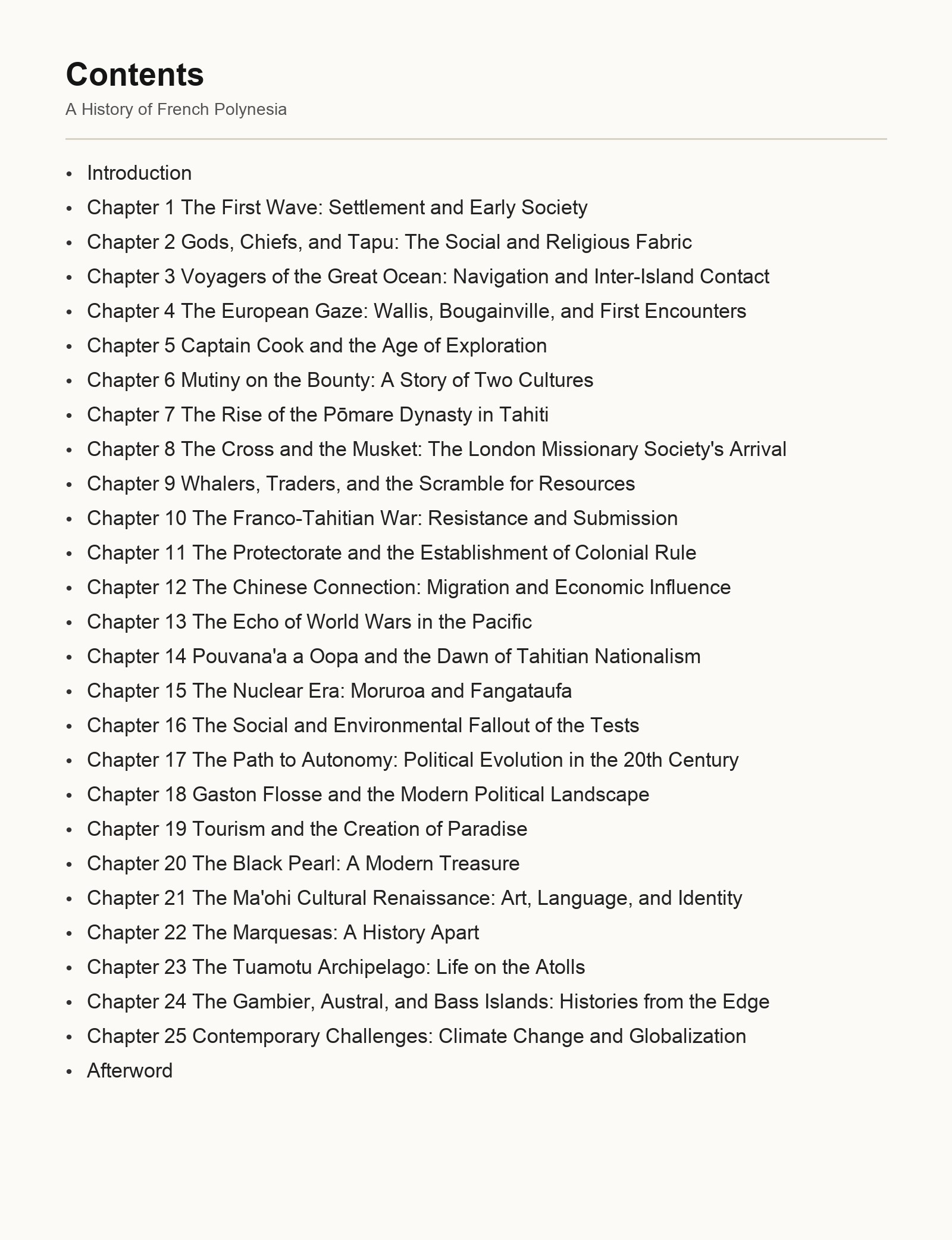
- Introduction
- Chapter 1 The First Wave: Settlement and Early Society
- Chapter 2 Gods, Chiefs, and Tapu: The Social and Religious Fabric
- Chapter 3 Voyagers of the Great Ocean: Navigation and Inter-Island Contact
- Chapter 4 The European Gaze: Wallis, Bougainville, and First Encounters
- Chapter 5 Captain Cook and the Age of Exploration
- Chapter 6 Mutiny on the Bounty: A Story of Two Cultures
- Chapter 7 The Rise of the Pōmare Dynasty in Tahiti
- Chapter 8 The Cross and the Musket: The London Missionary Society's Arrival
- Chapter 9 Whalers, Traders, and the Scramble for Resources
- Chapter 10 The Franco-Tahitian War: Resistance and Submission
- Chapter 11 The Protectorate and the Establishment of Colonial Rule
- Chapter 12 The Chinese Connection: Migration and Economic Influence
- Chapter 13 The Echo of World Wars in the Pacific
- Chapter 14 Pouvana'a a Oopa and the Dawn of Tahitian Nationalism
- Chapter 15 The Nuclear Era: Moruroa and Fangataufa
- Chapter 16 The Social and Environmental Fallout of the Tests
- Chapter 17 The Path to Autonomy: Political Evolution in the 20th Century
- Chapter 18 Gaston Flosse and the Modern Political Landscape
- Chapter 19 Tourism and the Creation of Paradise
- Chapter 20 The Black Pearl: A Modern Treasure
- Chapter 21 The Ma'ohi Cultural Renaissance: Art, Language, and Identity
- Chapter 22 The Marquesas: A History Apart
- Chapter 23 The Tuamotu Archipelago: Life on the Atolls
- Chapter 24 The Gambier, Austral, and Bass Islands: Histories from the Edge
- Chapter 25 Contemporary Challenges: Climate Change and Globalization
- Afterword
Author:
Published By:
Date Published:
May 27, 2026
Type:
Nonfiction
Language:
English
Also Available In:
Word Count:
46,672 words
Reading Time:
3 hours 16 minutes
Sample:
Order:
Order A History of French Polynesia (Hardcover) on MixCache.com:
Buy NowPrint copy is made to order and ships worldwide. Includes the ebook free, ready to read instantly.
$5 account credit for all new MixCache.com accounts, usable toward any ebook purchase!*