Browse by Category
Fiction
- Action & Adventure
- African American
- Anthologies
- Children's Fiction
- Classics
- Comics & Graphic Novels
- Coming of Age
- Contemporary
- Cultural & Regional
- Drama
- Erotica
- Fantasy
- General
- Historical Fiction
- Horror
- Humor & Satire
- Literary Fiction
- Mystery, Thriller & Suspense
- Poetry
- Religious & Inspirational
- Romance
- Science Fiction
- Short Stories
- War & Military
- Westerns
- Women's Fiction
- Young Adult
Non-Fiction
- Antiques & Collectibles
- Arts & Photography
- Biographies & Memoirs
- Business & Money
- Children's Non-Fiction
-
Computers & Technology
- Artificial Intelligence
- Computer Science
- Cybersecurity & Cryptography
- Data Science & Analytics
- Databases & Big Data
- Game Development & Design
- General
- Hardware & DIY
- Mobile App Development
- Networking & Cloud Computing
- Operating Systems
- Programming
- Robotics
- Software
- Software Engineering
- User Experience (UX) & Design
- Web Development & Design
- Cooking, Food & Wine
- Crafts, Hobbies & Home
- Education & Teaching
- Engineering
- General
- Health, Fitness & Dieting
-
History
- African History
- African History - North Africa
- African History - Sub-Saharan Africa
- American History
- American History - 20th Century
- American History - Civil War
- American History - Colonial Period
- Ancient History
- Asian History
- Asian History - China
- Asian History - India
- Asian History - Japan
- Asian History - Southeast Asia
- European History
- European History - Ancient Greece
- European History - Ancient Rome
- European History - Medieval
- European History - Modern
- European History - Renaissance
- General
- Middle Eastern History
- Military History
- Military History - Aviation
- Military History - Naval
- Social & Cultural History
- World History
- Humor & Entertainment
- Industrial Technology
- Language Learning
- Law
- LGBTQ+ Non-Fiction
- Literary Criticism
- Medical Books
- Parenting & Relationships
- Philosophy
- Politics & Social Sciences
- Reference
- Religion & Spirituality
-
Science & Math
- Agricultural Sciences
- Astronomy & Space Science
- Behavioral Sciences
- Biological Sciences
- Botany & Plant Science
- Chemistry
- Earth Sciences
- Engineering - Chemical
- Engineering - Civil
- Engineering - Electrical
- Engineering - Mechanical
- Environment
- General
- Geology
- Mathematics
- Nature & Ecology
- Oceanography
- Paleontology
- Physics
- Statistics
- Self-Help
- Sports & Outdoors
- Study Aids
- Sustainability & Green Living
- Textbooks
- Transportation
- Travel
- True Crime
- Urban Planning & Development
- Veterinary Medicine
- Writing & Publishing
Jump to Section
MixCache.com Total Access
Unlimited reading and audiobooks for every book published by MixCache.com.
Included titles carry the MTA badge.
Learn more →
A Short History of China
From Early Dynastic Rule to Modern China
About this book:

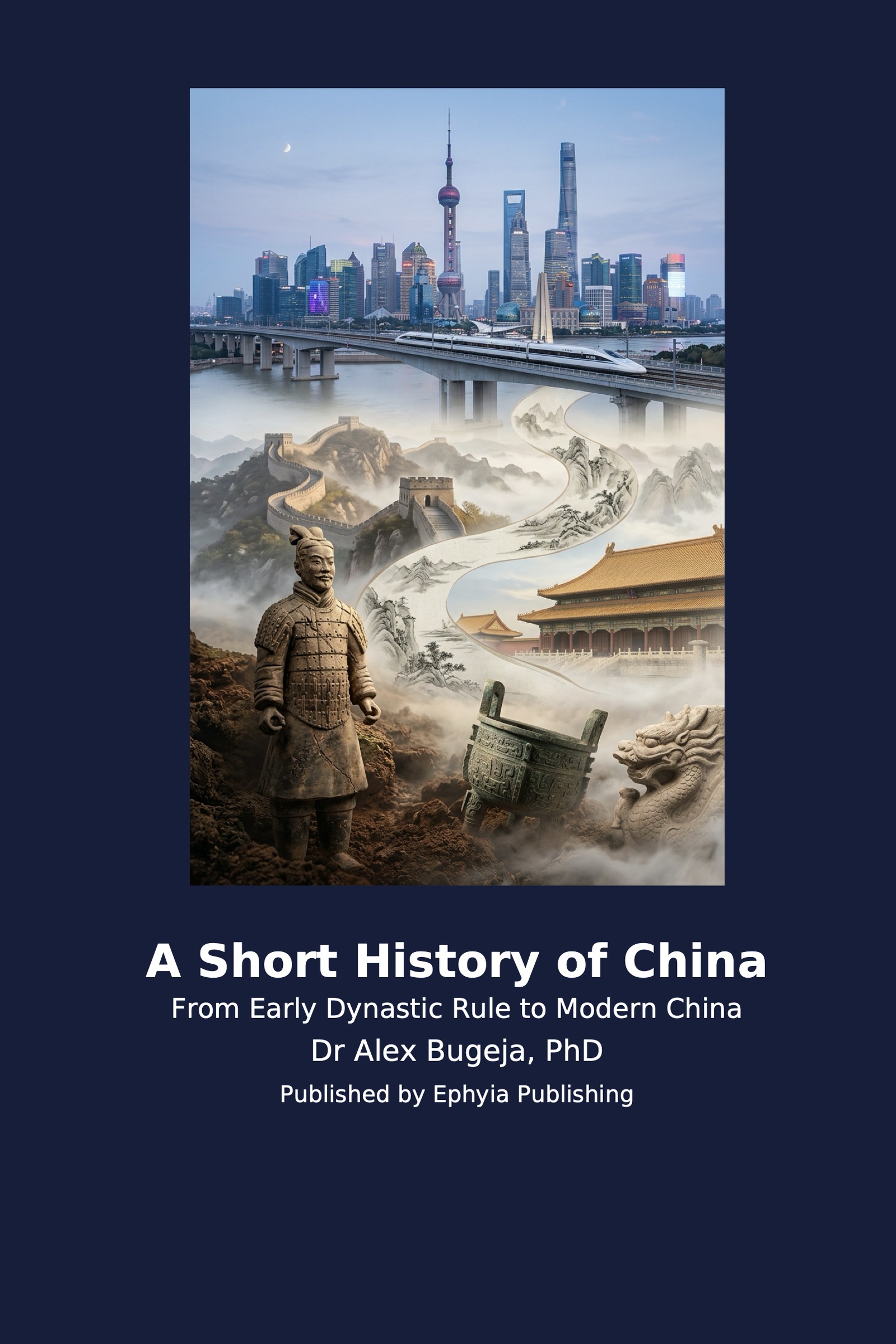
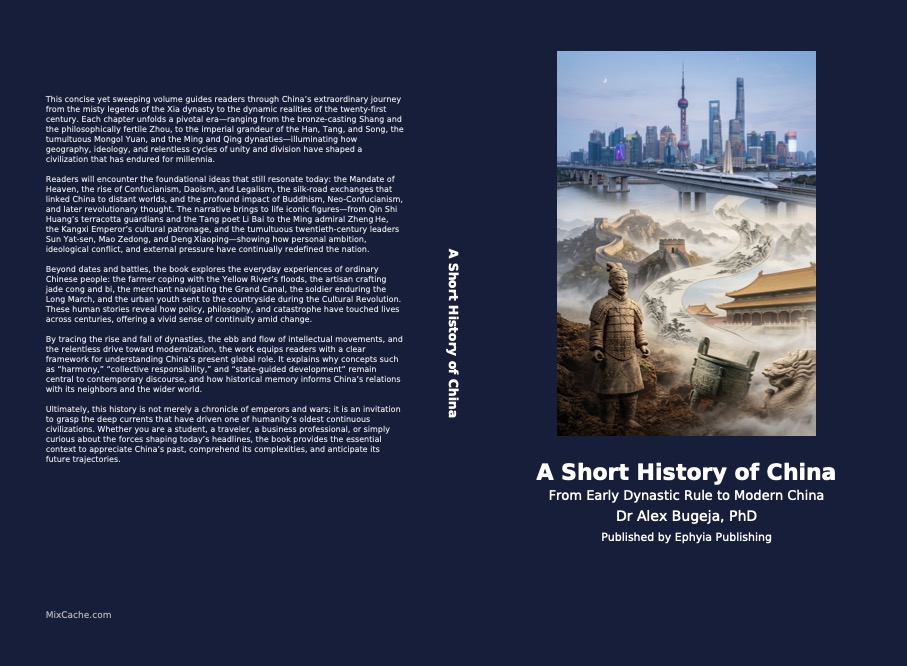
This concise yet sweeping volume guides readers through China’s extraordinary journey from the misty legends of the Xia dynasty to the dynamic realities of the twenty‑first century. Each chapter unfolds a pivotal era—ranging from the bronze‑casting Shang and the philosophically fertile Zhou, to the imperial grandeur of the Han, Tang, and Song, the tumultuous Mongol Yuan, and the Ming and Qing dynasties—illuminating how geography, ideology, and relentless cycles of unity and division have shaped a civilization that has endured for millennia.
Readers will encounter the foundational ideas that still resonate today: the Mandate of Heaven, the rise of Confucianism, Daoism, and Legalism, the silk‑road exchanges that linked China to distant worlds, and the profound impact of Buddhism, Neo‑Confucianism, and later revolutionary thought. The narrative brings to life iconic figures—from Qin Shi Huang’s terracotta guardians and the Tang poet Li Bai to the Ming admiral Zheng He, the Kangxi Emperor’s cultural patronage, and the tumultuous twentieth‑century leaders Sun Yat‑sen, Mao Zedong, and Deng Xiaoping—showing how personal ambition, ideological conflict, and external pressure have continually redefined the nation.
Beyond dates and battles, the book explores the everyday experiences of ordinary Chinese people: the farmer coping with the Yellow River’s floods, the artisan crafting jade cong and bi, the merchant navigating the Grand Canal, the soldier enduring the Long March, and the urban youth sent to the countryside during the Cultural Revolution. These human stories reveal how policy, philosophy, and catastrophe have touched lives across centuries, offering a vivid sense of continuity amid change.
By tracing the rise and fall of dynasties, the ebb and flow of intellectual movements, and the relentless drive toward modernization, the work equips readers with a clear framework for understanding China’s present global role. It explains why concepts such as “harmony,” “collective responsibility,” and “state‑guided development” remain central to contemporary discourse, and how historical memory informs China’s relations with its neighbors and the wider world.
Ultimately, this history is not merely a chronicle of emperors and wars; it is an invitation to grasp the deep currents that have driven one of humanity’s oldest continuous civilizations. Whether you are a student, a traveler, a business professional, or simply curious about the forces shaping today’s headlines, the book provides the essential context to appreciate China’s past, comprehend its complexities, and anticipate its future trajectories.
What You'll Find Inside:
- The Mandate of Heaven concept provided divine justification for dynastic change, allowing rebels to overthrow corrupt rulers while legitimizing new dynasties throughout China's 3,000-year history.
- Chinese history follows a cyclical pattern of unification under strong dynasties (Han, Tang, Qing) followed by periods of fragmentation and warfare (Three Kingdoms, Warlord Era).
- The Hundred Schools of Thought era birthed Confucianism, Daoism, and Legalism, with Confucianism becoming the state ideology that shaped governance, education, and social relations for centuries.
- China's complex relationship with northern nomadic peoples involved conflict, cultural exchange, and periods of foreign rule (Mongol Yuan, Manchu Qing) that significantly influenced Chinese civilization.
- Western imperialism through the Opium Wars and unequal treaties ended China's isolation, triggering internal rebellions and revolutionary changes that culminated in the founding of modern China.
Who's It For:
This book is ideal for students of history, international relations, or Asian studies seeking a comprehensive yet accessible overview of China's long historical trajectory. It will also benefit general readers interested in world history who want to understand the philosophical, political, and cultural foundations that have shaped China's development. Professionals engaged in business, diplomacy, or academic work with China will find valuable context for understanding contemporary issues through their historical roots. The work serves both as an introduction for newcomers to Chinese history and as a refreshing synthesis for those already familiar with specific periods.
Table of Contents:
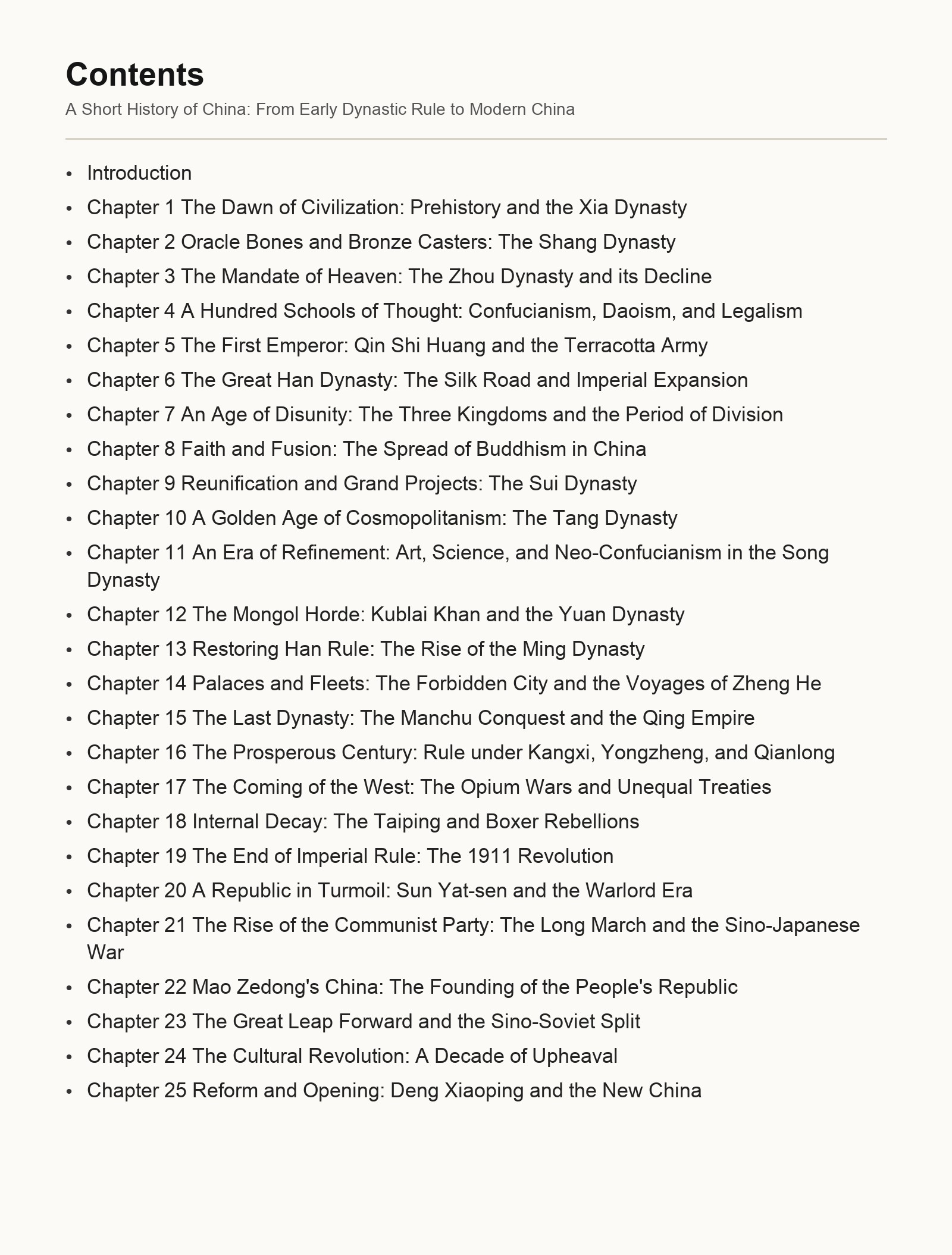
- Introduction
- Chapter 1 The Dawn of Civilization: Prehistory and the Xia Dynasty
- Chapter 2 Oracle Bones and Bronze Casters: The Shang Dynasty
- Chapter 3 The Mandate of Heaven: The Zhou Dynasty and its Decline
- Chapter 4 A Hundred Schools of Thought: Confucianism, Daoism, and Legalism
- Chapter 5 The First Emperor: Qin Shi Huang and the Terracotta Army
- Chapter 6 The Great Han Dynasty: The Silk Road and Imperial Expansion
- Chapter 7 An Age of Disunity: The Three Kingdoms and the Period of Division
- Chapter 8 Faith and Fusion: The Spread of Buddhism in China
- Chapter 9 Reunification and Grand Projects: The Sui Dynasty
- Chapter 10 A Golden Age of Cosmopolitanism: The Tang Dynasty
- Chapter 11 An Era of Refinement: Art, Science, and Neo-Confucianism in the Song Dynasty
- Chapter 12 The Mongol Horde: Kublai Khan and the Yuan Dynasty
- Chapter 13 Restoring Han Rule: The Rise of the Ming Dynasty
- Chapter 14 Palaces and Fleets: The Forbidden City and the Voyages of Zheng He
- Chapter 15 The Last Dynasty: The Manchu Conquest and the Qing Empire
- Chapter 16 The Prosperous Century: Rule under Kangxi, Yongzheng, and Qianlong
- Chapter 17 The Coming of the West: The Opium Wars and Unequal Treaties
- Chapter 18 Internal Decay: The Taiping and Boxer Rebellions
- Chapter 19 The End of Imperial Rule: The 1911 Revolution
- Chapter 20 A Republic in Turmoil: Sun Yat-sen and the Warlord Era
- Chapter 21 The Rise of the Communist Party: The Long March and the Sino-Japanese War
- Chapter 22 Mao Zedong's China: The Founding of the People's Republic
- Chapter 23 The Great Leap Forward and the Sino-Soviet Split
- Chapter 24 The Cultural Revolution: A Decade of Upheaval
- Chapter 25 Reform and Opening: Deng Xiaoping and the New China
Author:
Published By:
Date Published:
May 27, 2026
Type:
Nonfiction
Language:
English
Also Available In:
Word Count:
60,606 words
Reading Time:
4 hours 15 minutes
Sample:
Order:
Order A Short History of China (Paperback) on MixCache.com:
Buy NowPrint copy is made to order and ships worldwide. Includes the ebook free, ready to read instantly.
$5 account credit for all new MixCache.com accounts, usable toward any ebook purchase!*