Browse by Category
Fiction
- Action & Adventure
- African American
- Anthologies
- Children's Fiction
- Classics
- Comics & Graphic Novels
- Coming of Age
- Contemporary
- Cultural & Regional
- Drama
- Erotica
- Fantasy
- General
- Historical Fiction
- Horror
- Humor & Satire
- Literary Fiction
- Mystery, Thriller & Suspense
- Poetry
- Religious & Inspirational
- Romance
- Science Fiction
- Short Stories
- War & Military
- Westerns
- Women's Fiction
- Young Adult
Non-Fiction
- Antiques & Collectibles
- Arts & Photography
- Biographies & Memoirs
- Business & Money
- Children's Non-Fiction
-
Computers & Technology
- Artificial Intelligence
- Computer Science
- Cybersecurity & Cryptography
- Data Science & Analytics
- Databases & Big Data
- Game Development & Design
- General
- Hardware & DIY
- Mobile App Development
- Networking & Cloud Computing
- Operating Systems
- Programming
- Robotics
- Software
- Software Engineering
- User Experience (UX) & Design
- Web Development & Design
- Cooking, Food & Wine
- Crafts, Hobbies & Home
- Education & Teaching
- Engineering
- General
- Health, Fitness & Dieting
-
History
- African History
- African History - North Africa
- African History - Sub-Saharan Africa
- American History
- American History - 20th Century
- American History - Civil War
- American History - Colonial Period
- Ancient History
- Asian History
- Asian History - China
- Asian History - India
- Asian History - Japan
- Asian History - Southeast Asia
- European History
- European History - Ancient Greece
- European History - Ancient Rome
- European History - Medieval
- European History - Modern
- European History - Renaissance
- General
- Middle Eastern History
- Military History
- Military History - Aviation
- Military History - Naval
- Social & Cultural History
- World History
- Humor & Entertainment
- Industrial Technology
- Language Learning
- Law
- LGBTQ+ Non-Fiction
- Literary Criticism
- Medical Books
- Parenting & Relationships
- Philosophy
- Politics & Social Sciences
- Reference
- Religion & Spirituality
-
Science & Math
- Agricultural Sciences
- Astronomy & Space Science
- Behavioral Sciences
- Biological Sciences
- Botany & Plant Science
- Chemistry
- Earth Sciences
- Engineering - Chemical
- Engineering - Civil
- Engineering - Electrical
- Engineering - Mechanical
- Environment
- General
- Geology
- Mathematics
- Nature & Ecology
- Oceanography
- Paleontology
- Physics
- Statistics
- Self-Help
- Sports & Outdoors
- Study Aids
- Sustainability & Green Living
- Textbooks
- Transportation
- Travel
- True Crime
- Urban Planning & Development
- Veterinary Medicine
- Writing & Publishing
Jump to Section
MixCache.com Total Access
Unlimited reading and audiobooks for every book published by MixCache.com.
Included titles carry the MTA badge.
Learn more →The History of Steel
About this book:

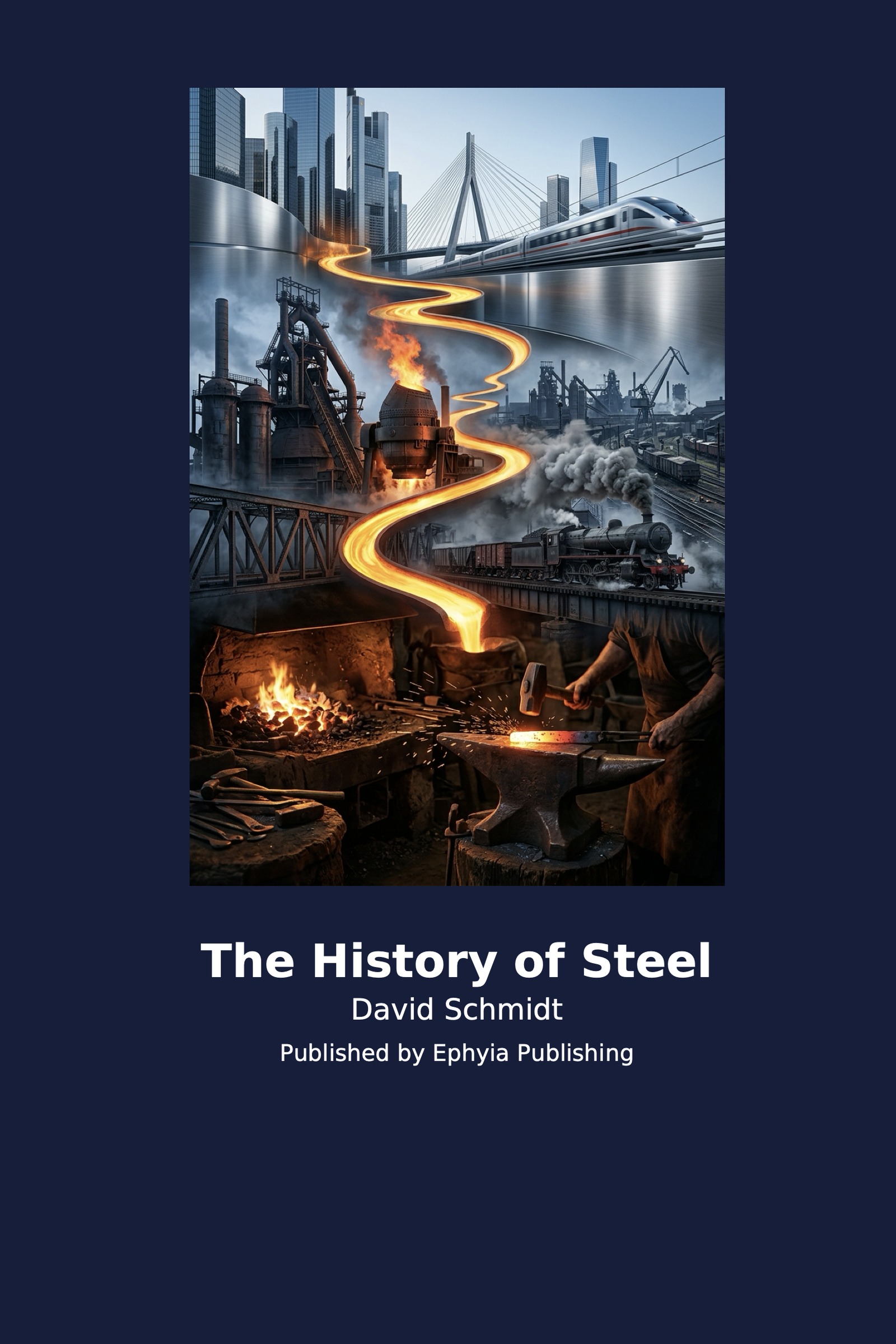
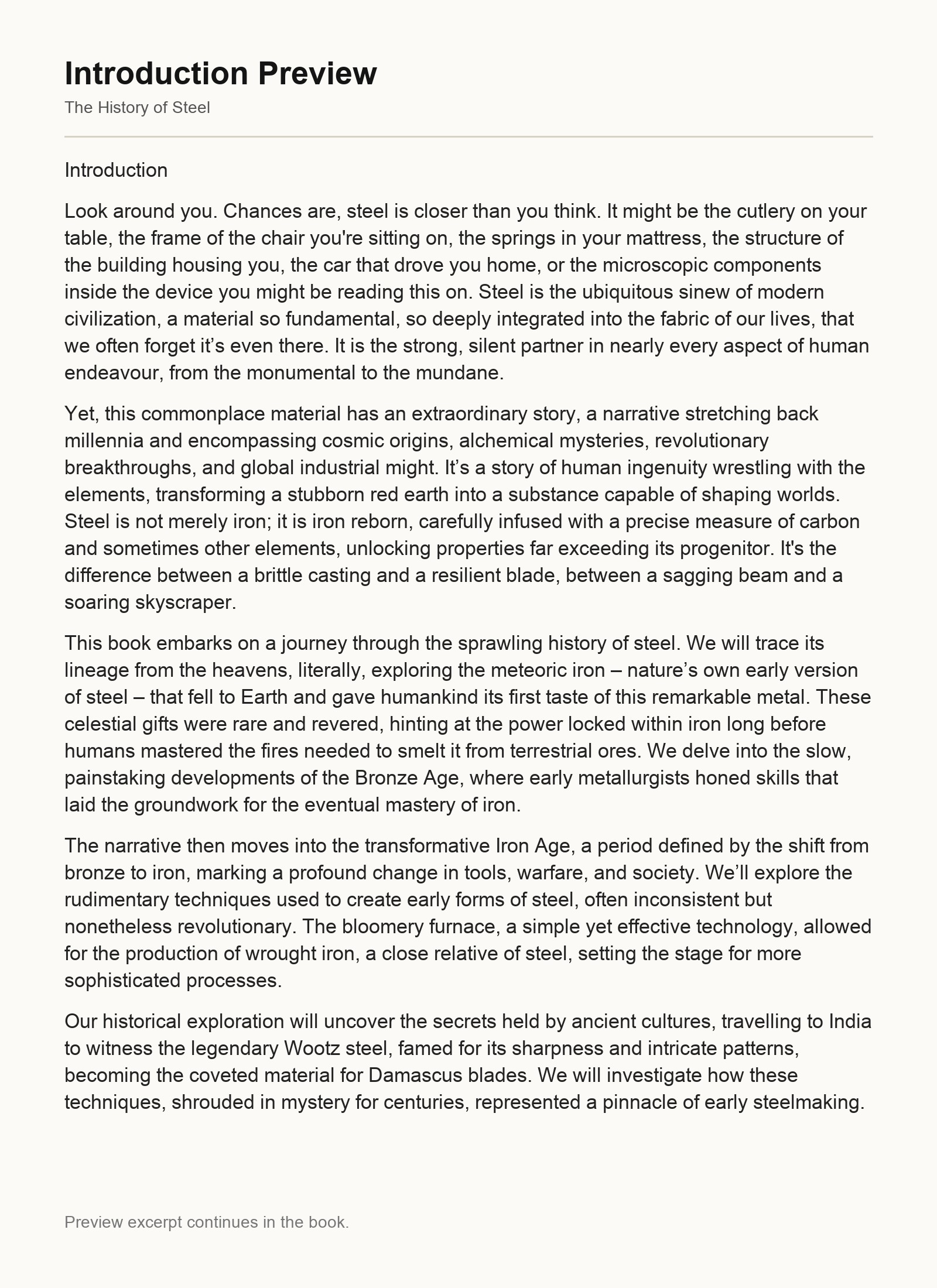
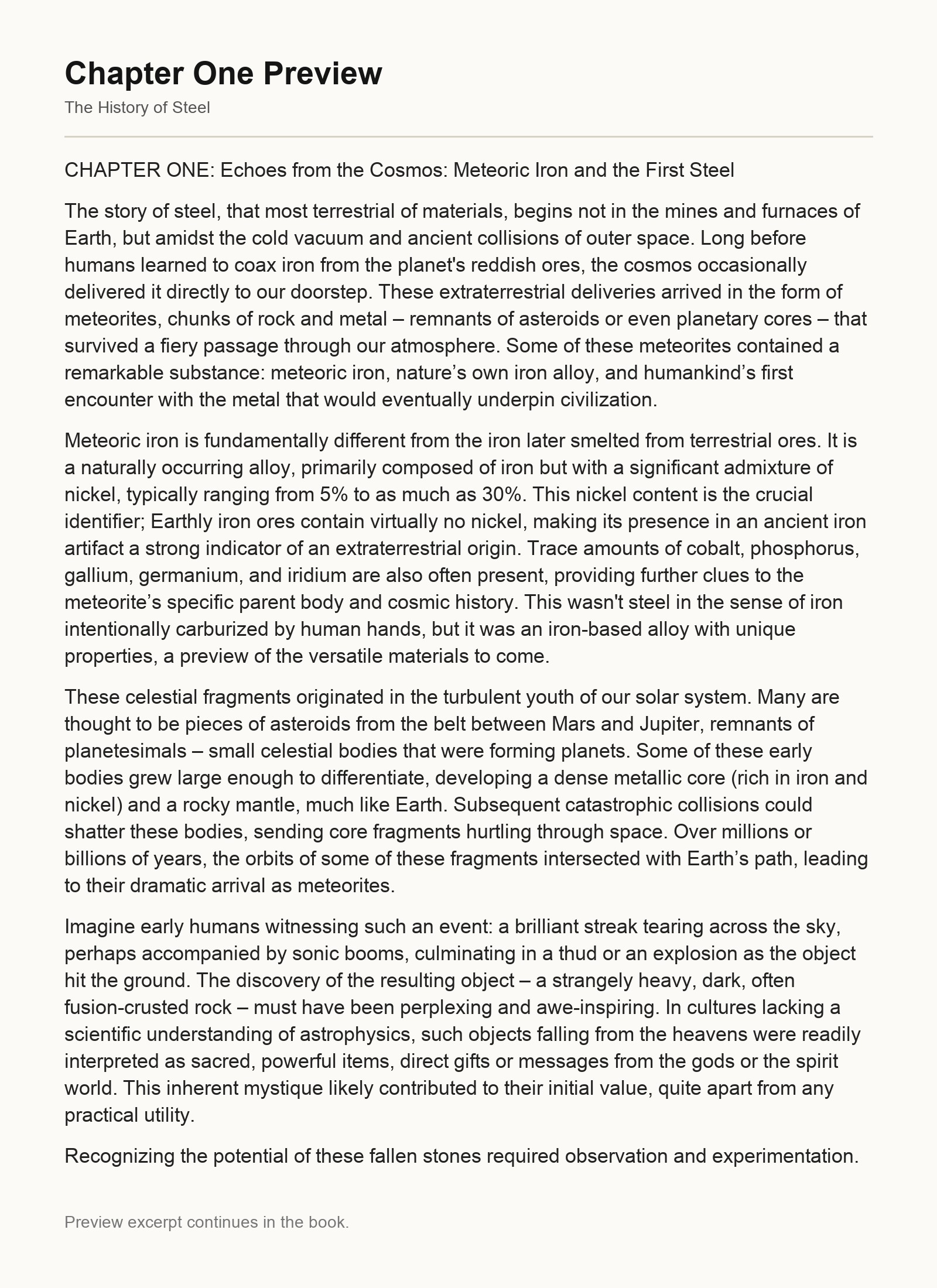
From the moment you wake up to the time you go to sleep, steel is woven into the fabric of your day – in the cutlery on your table, the frame of your chair, the beams of the building you inhabit, the car you drive, and even the tiny components inside your phone. This book invites you on an extraordinary journey that reveals how a material forged in the fires of ancient supernovae became the silent backbone of modern civilization. You’ll trace steel’s story from its first celestial gifts of meteoric iron, through the ingenuity of early smiths, to the roaring furnaces that powered the Industrial Revolution and beyond.
Discover the pivotal moments that transformed iron into steel: the secretive Wootz process of India that produced legendary Damascus blades, the cementation and crucible techniques that gave Europe its first high‑quality steels, Henry Bessemer’s revolutionary air‑blown converter that made steel cheap and abundant, and the open‑hearth and electric arc furnaces that refined quality and enabled mass production. Each chapter uncovers how cultural needs, geographic fortunes, and relentless human curiosity drove innovations that reshaped tools, weapons, railways, bridges, skyscrapers, automobiles, ships, and even medical implants.
Beyond the timeline, you’ll delve into the science that gives steel its remarkable versatility. Learn how carbon atoms dance within iron’s crystal lattice, how heat treatment creates martensite for hardness or pearlite for toughness, and how alloying with chromium, nickel, molybdenum and other elements births stainless steels, tool steels, and advanced high‑strength alloys. The book explains, in clear terms, the microstructure‑property relationships that let engineers tailor steel for everything from a surgeon’s scalpel to a wind‑turbine tower, while also showing why steel’s strength‑to‑weight ratio made the skyscraper possible and why its recyclability offers a path to a sustainable future.
Steel’s story is also a human one. Meet the ancient artisans who worked meteoric iron into prestige daggers, the blast‑furnace crews enduring furnace heat and noise, the union organizers who fought for safer mills, and today’s technicians monitoring computerized electric‑arc furnaces. At the same time, confront the environmental challenges of steelmaking – its energy use, carbon emissions, and waste – and explore the industry’s efforts to meet them through hydrogen‑based reduction, carbon capture, advanced recycling, and nanotechnology‑enhanced grades. The narrative balances awe at steel’s achievements with a clear‑eyed look at the responsibilities that come with wielding such a powerful material.
By the final page, you’ll have gained a panoramic view of steel’s past, present, and potential future – from cosmic dust to circular economy, from atomic vibrations to global trade routes. Whether you are a student of history, a budding engineer, a designer, or simply curious about the material that silently shapes our world, this book offers a richly detailed, accessible, and compelling account of why steel remains, and will continue to be, the indispensable sinew of human progress. Let the journey begin.
What You'll Find Inside:
- Traces steel's 4,000-year journey from meteoric iron origins through ancient Wootz steel innovations to modern mass-production breakthroughs like the Bessemer process.
- Explains how metallurgical advances transformed steel from a precious craft material into the affordable backbone of railways, skyscrapers, automobiles, and global infrastructure.
- Details steel's diverse applications across medicine (scalpels, implants), transportation (ships, vehicles), art (sculptures, architecture), and everyday objects (cutlery, appliances).
- Covers the science of steel including metallurgy, alloying techniques (stainless, tool steels), and material science that enable property customization for specific industrial needs.
- Addresses modern challenges including environmental impacts, recycling innovations, labor history, and future developments like hydrogen-based steelmaking and nanotechnology.
Who's It For:
This book is ideal for students, educators, and professionals in materials science, engineering, history, and industrial fields seeking a comprehensive understanding of steel's role in shaping civilization. It also appeals to general readers interested in how fundamental materials drive technological progress, societal change, and sustainable development, offering accessible explanations of complex metallurgical concepts alongside engaging historical narratives.
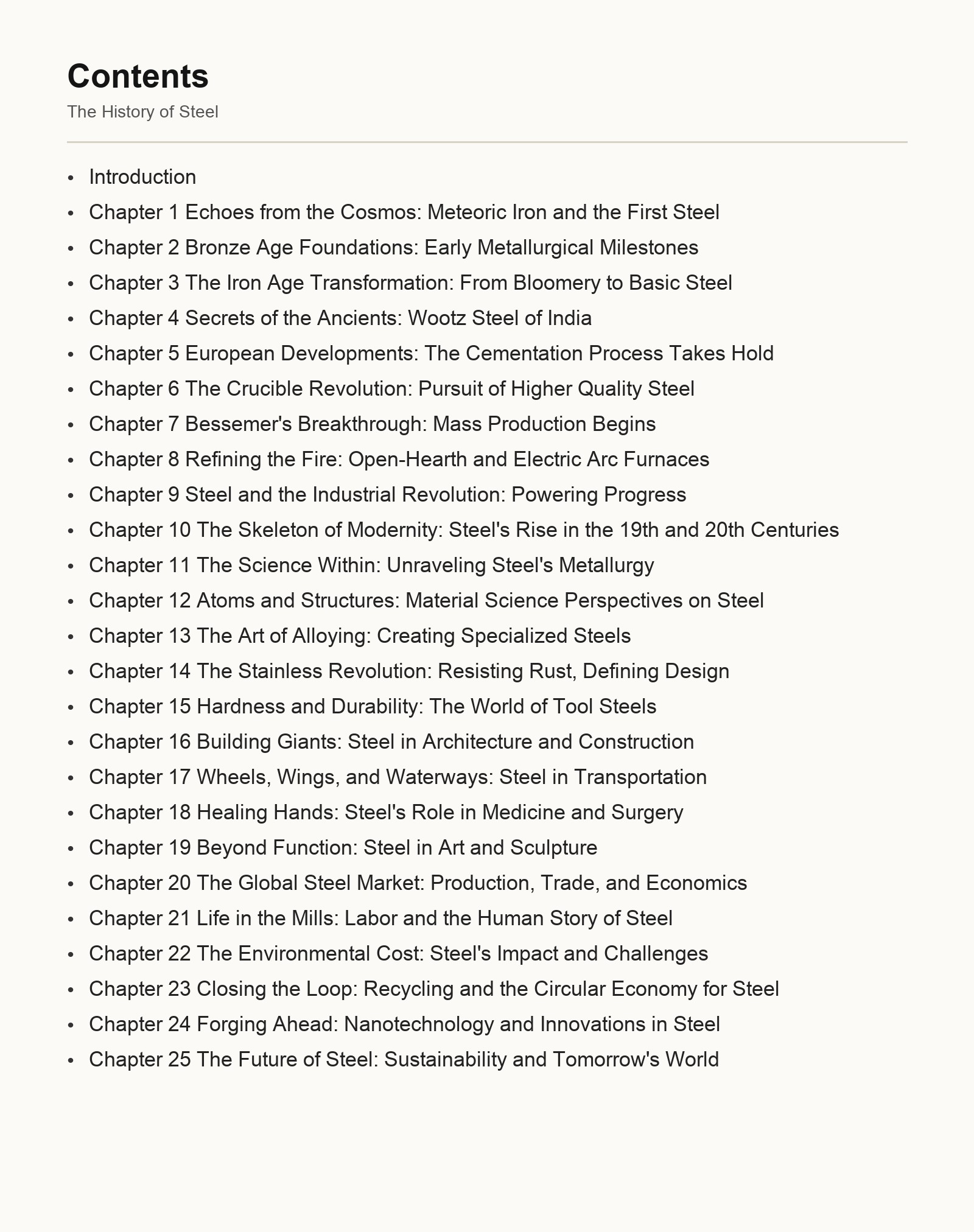
Table of Contents:
- Introduction
- Chapter 1 Echoes from the Cosmos: Meteoric Iron and the First Steel
- Chapter 2 Bronze Age Foundations: Early Metallurgical Milestones
- Chapter 3 The Iron Age Transformation: From Bloomery to Basic Steel
- Chapter 4 Secrets of the Ancients: Wootz Steel of India
- Chapter 5 European Developments: The Cementation Process Takes Hold
- Chapter 6 The Crucible Revolution: Pursuit of Higher Quality Steel
- Chapter 7 Bessemer's Breakthrough: Mass Production Begins
- Chapter 8 Refining the Fire: Open-Hearth and Electric Arc Furnaces
- Chapter 9 Steel and the Industrial Revolution: Powering Progress
- Chapter 10 The Skeleton of Modernity: Steel's Rise in the 19th and 20th Centuries
- Chapter 11 The Science Within: Unraveling Steel's Metallurgy
- Chapter 12 Atoms and Structures: Material Science Perspectives on Steel
- Chapter 13 The Art of Alloying: Creating Specialized Steels
- Chapter 14 The Stainless Revolution: Resisting Rust, Defining Design
- Chapter 15 Hardness and Durability: The World of Tool Steels
- Chapter 16 Building Giants: Steel in Architecture and Construction
- Chapter 17 Wheels, Wings, and Waterways: Steel in Transportation
- Chapter 18 Healing Hands: Steel's Role in Medicine and Surgery
- Chapter 19 Beyond Function: Steel in Art and Sculpture
- Chapter 20 The Global Steel Market: Production, Trade, and Economics
- Chapter 21 Life in the Mills: Labor and the Human Story of Steel
- Chapter 22 The Environmental Cost: Steel's Impact and Challenges
- Chapter 23 Closing the Loop: Recycling and the Circular Economy for Steel
- Chapter 24 Forging Ahead: Nanotechnology and Innovations in Steel
- Chapter 25 The Future of Steel: Sustainability and Tomorrow's World
Author:
Published By:
Date Published:
May 27, 2026
Type:
Nonfiction
Language:
English
Also Available In:
German, Italian, Dutch, Portuguese
Word Count:
56,014 words
Reading Time:
3 hours 55 minutes
Sample:
Order:
Order The History of Steel (Hardcover) on MixCache.com:
Buy NowPrint copy is made to order and ships worldwide. Includes the ebook free, ready to read instantly.
$5 account credit for all new MixCache.com accounts, usable toward any ebook purchase!*