
Browse by Category
Fiction
- Action & Adventure
- African American
- Anthologies
- Children's Fiction
- Classics
- Comics & Graphic Novels
- Coming of Age
- Contemporary
- Cultural & Regional
- Drama
- Erotica
- Fantasy
- General
- Historical Fiction
- Horror
- Humor & Satire
- Literary Fiction
- Mystery, Thriller & Suspense
- Poetry
- Religious & Inspirational
- Romance
- Science Fiction
- Short Stories
- War & Military
- Westerns
- Women's Fiction
- Young Adult
Non-Fiction
- Antiques & Collectibles
- Arts & Photography
- Biographies & Memoirs
- Business & Money
- Children's Non-Fiction
-
Computers & Technology
- Artificial Intelligence
- Computer Science
- Cybersecurity & Cryptography
- Data Science & Analytics
- Databases & Big Data
- Game Development & Design
- General
- Hardware & DIY
- Mobile App Development
- Networking & Cloud Computing
- Operating Systems
- Programming
- Robotics
- Software
- Software Engineering
- User Experience (UX) & Design
- Web Development & Design
- Cooking, Food & Wine
- Crafts, Hobbies & Home
- Education & Teaching
- Engineering
- General
- Health, Fitness & Dieting
-
History
- African History
- African History - North Africa
- African History - Sub-Saharan Africa
- American History
- American History - 20th Century
- American History - Civil War
- American History - Colonial Period
- Ancient History
- Asian History
- Asian History - China
- Asian History - India
- Asian History - Japan
- Asian History - Southeast Asia
- European History
- European History - Ancient Greece
- European History - Ancient Rome
- European History - Medieval
- European History - Modern
- European History - Renaissance
- General
- Middle Eastern History
- Military History
- Military History - Aviation
- Military History - Naval
- Social & Cultural History
- World History
- Humor & Entertainment
- Industrial Technology
- Language Learning
- Law
- LGBTQ+ Non-Fiction
- Literary Criticism
- Medical Books
- Parenting & Relationships
- Philosophy
- Politics & Social Sciences
- Reference
- Religion & Spirituality
-
Science & Math
- Agricultural Sciences
- Astronomy & Space Science
- Behavioral Sciences
- Biological Sciences
- Botany & Plant Science
- Chemistry
- Earth Sciences
- Engineering - Chemical
- Engineering - Civil
- Engineering - Electrical
- Engineering - Mechanical
- Environment
- General
- Geology
- Mathematics
- Nature & Ecology
- Oceanography
- Paleontology
- Physics
- Statistics
- Self-Help
- Sports & Outdoors
- Study Aids
- Sustainability & Green Living
- Textbooks
- Transportation
- Travel
- True Crime
- Urban Planning & Development
- Veterinary Medicine
- Writing & Publishing
Jump to Section
MixCache.com Total Access
Unlimited reading and audiobooks for every book published by MixCache.com.
Included titles carry the MTA badge.
Learn more →A History of Extremadura
About this book:
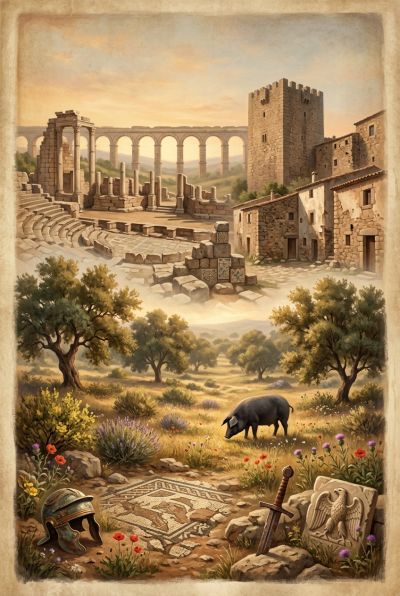
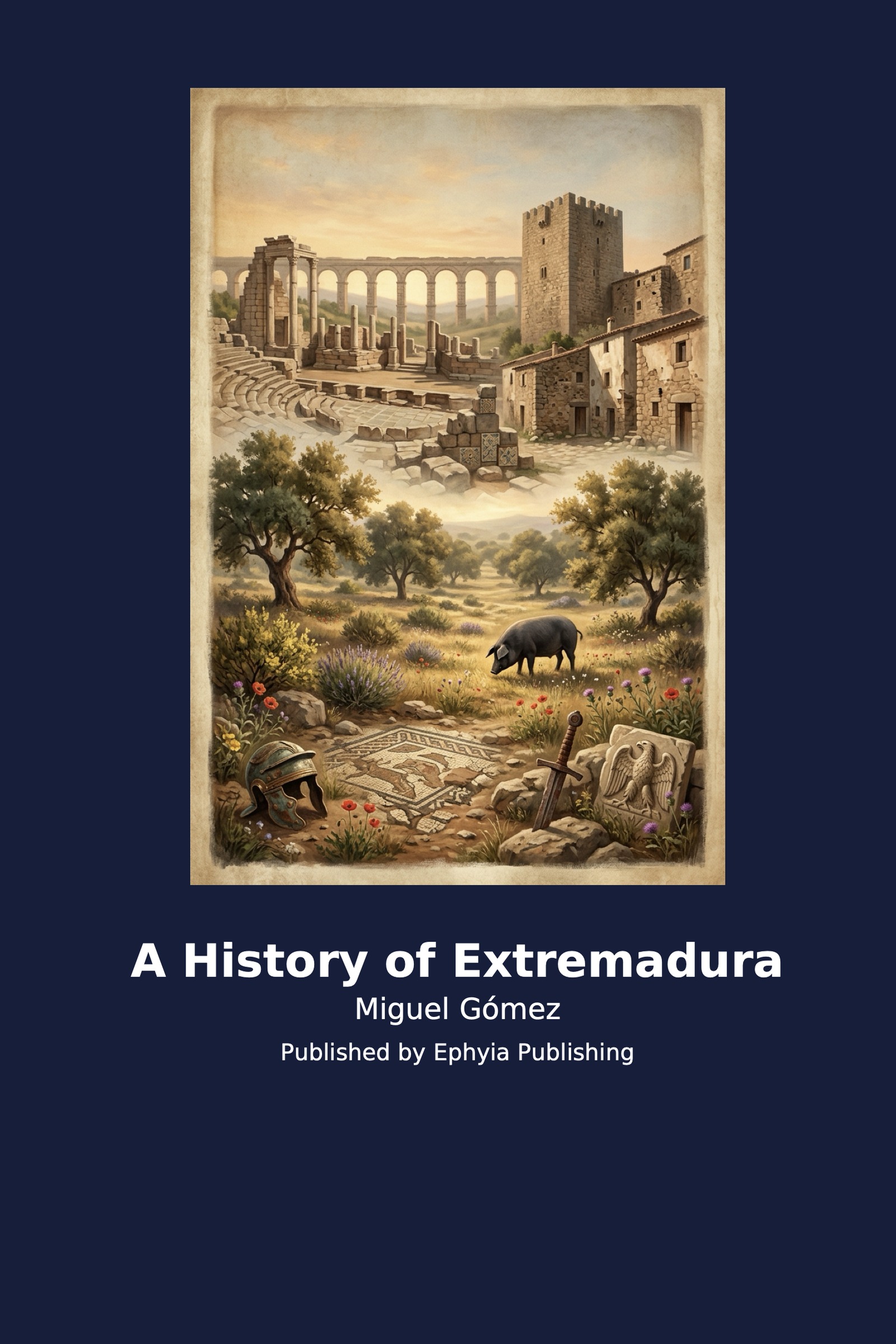
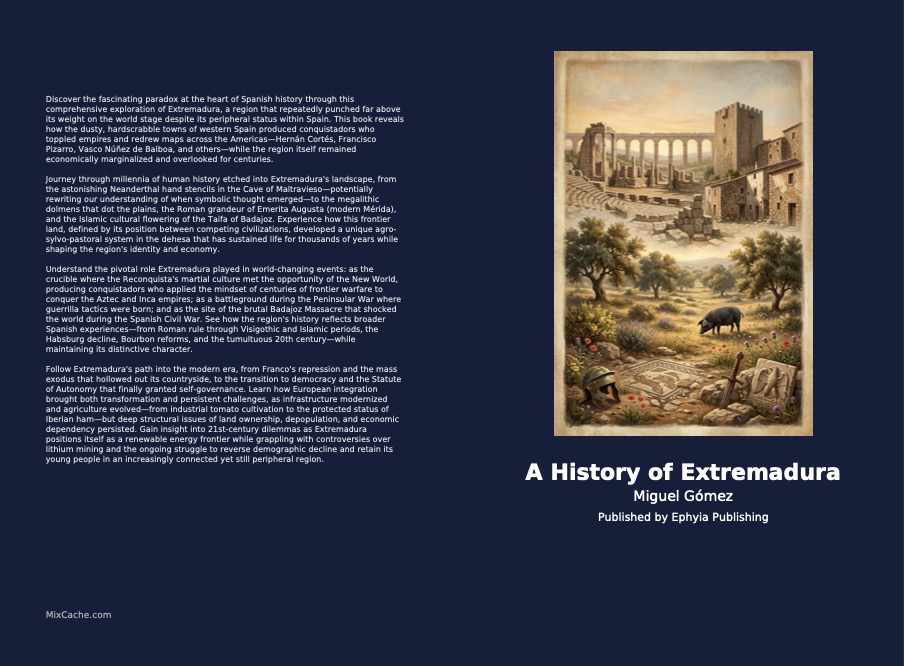
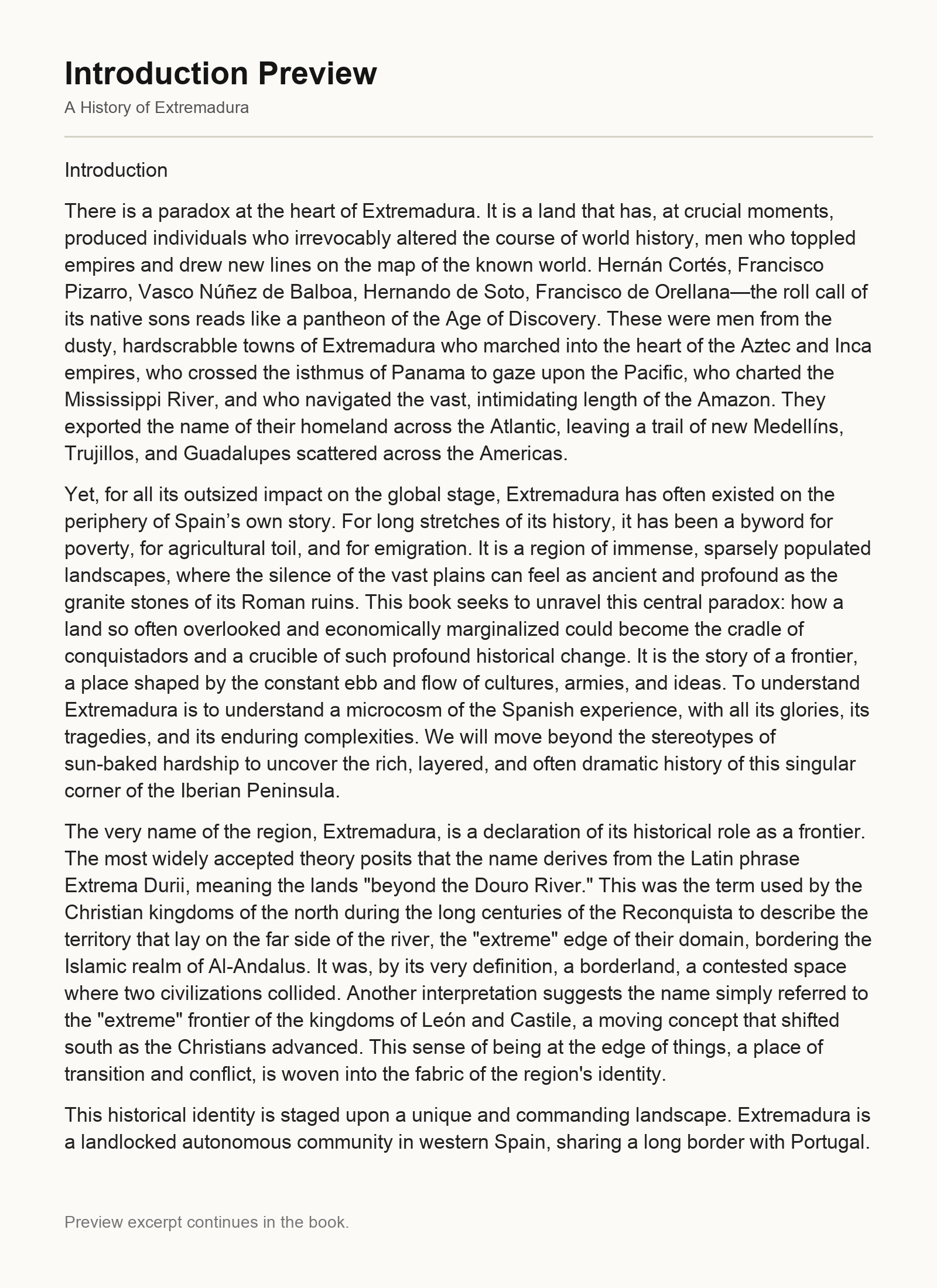
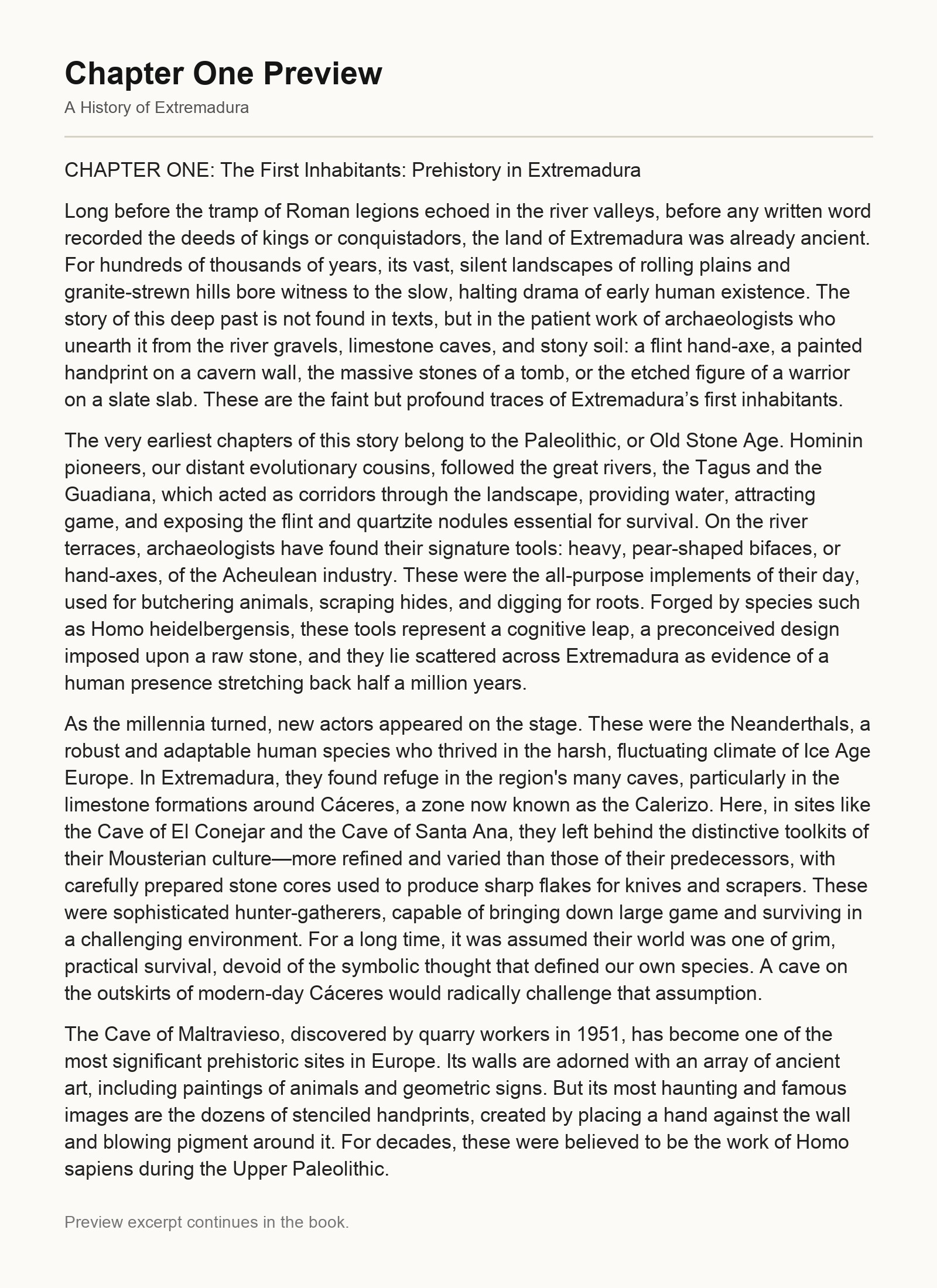
Discover the fascinating paradox at the heart of Spanish history through this comprehensive exploration of Extremadura, a region that repeatedly punched far above its weight on the world stage despite its peripheral status within Spain. This book reveals how the dusty, hardscrabble towns of western Spain produced conquistadors who toppled empires and redrew maps across the Americas—Hernán Cortés, Francisco Pizarro, Vasco Núñez de Balboa, and others—while the region itself remained economically marginalized and overlooked for centuries.
Journey through millennia of human history etched into Extremadura's landscape, from the astonishing Neanderthal hand stencils in the Cave of Maltravieso—potentially rewriting our understanding of when symbolic thought emerged—to the megalithic dolmens that dot the plains, the Roman grandeur of Emerita Augusta (modern Mérida), and the Islamic cultural flowering of the Taifa of Badajoz. Experience how this frontier land, defined by its position between competing civilizations, developed a unique agro-sylvo-pastoral system in the dehesa that has sustained life for thousands of years while shaping the region's identity and economy.
Understand the pivotal role Extremadura played in world-changing events: as the crucible where the Reconquista's martial culture met the opportunity of the New World, producing conquistadors who applied the mindset of centuries of frontier warfare to conquer the Aztec and Inca empires; as a battleground during the Peninsular War where guerrilla tactics were born; and as the site of the brutal Badajoz Massacre that shocked the world during the Spanish Civil War. See how the region's history reflects broader Spanish experiences—from Roman rule through Visigothic and Islamic periods, the Habsburg decline, Bourbon reforms, and the tumultuous 20th century—while maintaining its distinctive character.
Follow Extremadura's path into the modern era, from Franco's repression and the mass exodus that hollowed out its countryside, to the transition to democracy and the Statute of Autonomy that finally granted self-governance. Learn how European integration brought both transformation and persistent challenges, as infrastructure modernized and agriculture evolved—from industrial tomato cultivation to the protected status of Iberian ham—but deep structural issues of land ownership, depopulation, and economic dependency persisted. Gain insight into 21st-century dilemmas as Extremadura positions itself as a renewable energy frontier while grappling with controversies over lithium mining and the ongoing struggle to reverse demographic decline and retain its young people in an increasingly connected yet still peripheral region.
What You'll Find Inside:
- How Extremadura's frontier position shaped its history from prehistoric times through Roman, Visigothic, Islamic, and Christian periods
- The paradox of Extremadura producing world-changing conquistadors while remaining economically marginalized within Spain
- The evolution of land ownership systems from Roman villas through latifundios to modern agricultural reforms
- Extremadura's experience with major 20th-century events including the Civil War, Franco repression, and democratic transition
- The region's modern challenges and opportunities in the European Union, including agricultural transformation and cultural renaissance
Who's It For:
This book is ideal for students and scholars of Spanish or European history, readers interested in the Age of Exploration and conquistadors, and anyone studying regional identities, frontier societies, or land reform issues. It will particularly benefit those seeking to understand how peripheral regions can exert outsized historical influence, as well as general readers looking for a comprehensive, nuanced exploration of a specific region's complex journey from ancient times to the 21st century.
Table of Contents:
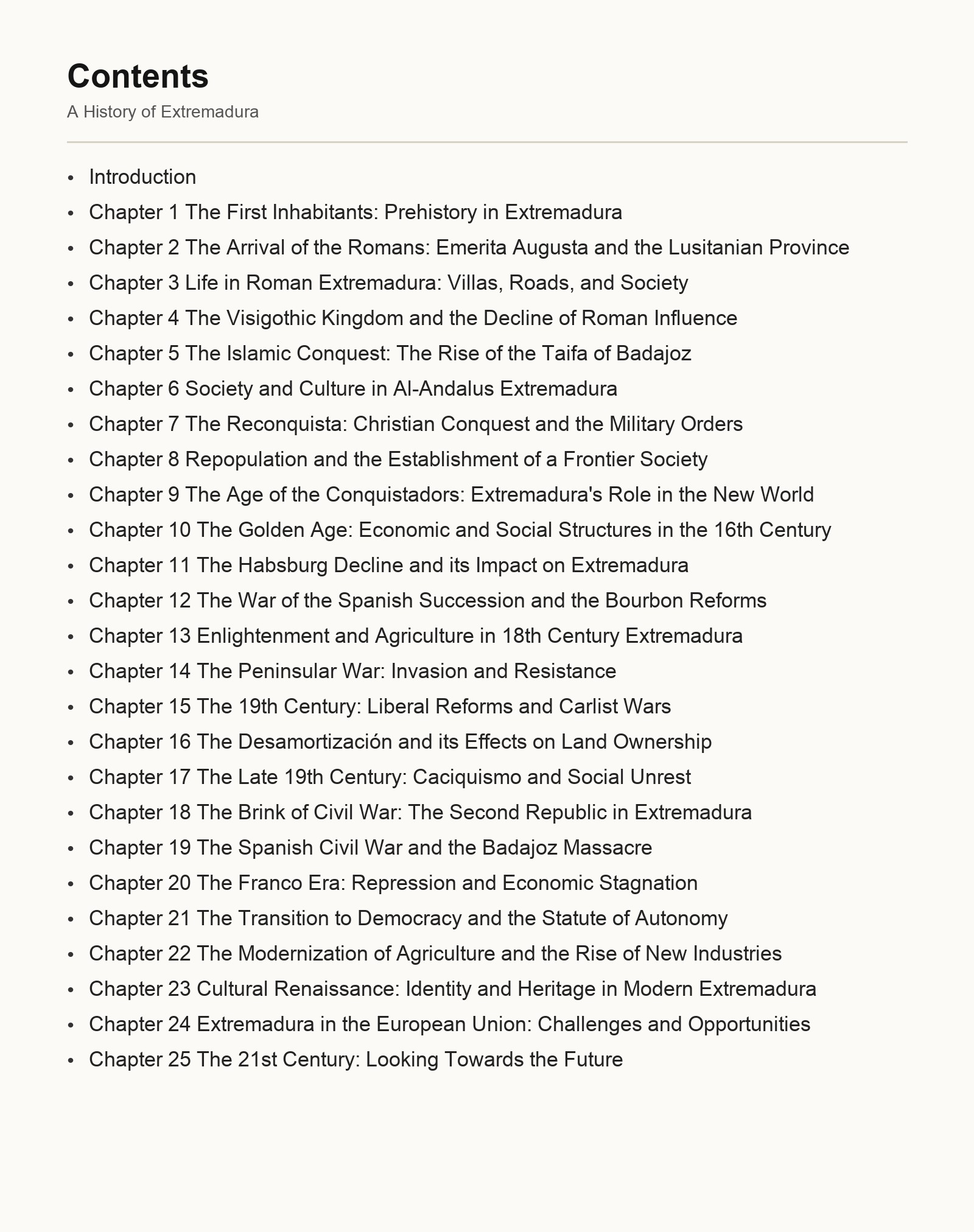
- Introduction
- Chapter 1 The First Inhabitants: Prehistory in Extremadura
- Chapter 2 The Arrival of the Romans: Emerita Augusta and the Lusitanian Province
- Chapter 3 Life in Roman Extremadura: Villas, Roads, and Society
- Chapter 4 The Visigothic Kingdom and the Decline of Roman Influence
- Chapter 5 The Islamic Conquest: The Rise of the Taifa of Badajoz
- Chapter 6 Society and Culture in Al-Andalus Extremadura
- Chapter 7 The Reconquista: Christian Conquest and the Military Orders
- Chapter 8 Repopulation and the Establishment of a Frontier Society
- Chapter 9 The Age of the Conquistadors: Extremadura's Role in the New World
- Chapter 10 The Golden Age: Economic and Social Structures in the 16th Century
- Chapter 11 The Habsburg Decline and its Impact on Extremadura
- Chapter 12 The War of the Spanish Succession and the Bourbon Reforms
- Chapter 13 Enlightenment and Agriculture in 18th Century Extremadura
- Chapter 14 The Peninsular War: Invasion and Resistance
- Chapter 15 The 19th Century: Liberal Reforms and Carlist Wars
- Chapter 16 The Desamortización and its Effects on Land Ownership
- Chapter 17 The Late 19th Century: Caciquismo and Social Unrest
- Chapter 18 The Brink of Civil War: The Second Republic in Extremadura
- Chapter 19 The Spanish Civil War and the Badajoz Massacre
- Chapter 20 The Franco Era: Repression and Economic Stagnation
- Chapter 21 The Transition to Democracy and the Statute of Autonomy
- Chapter 22 The Modernization of Agriculture and the Rise of New Industries
- Chapter 23 Cultural Renaissance: Identity and Heritage in Modern Extremadura
- Chapter 24 Extremadura in the European Union: Challenges and Opportunities
- Chapter 25 The 21st Century: Looking Towards the Future
Author:
Published By:
Date Published:
May 26, 2026
Type:
Nonfiction
Language:
English
Also Available In:
Word Count:
51,373 words
Reading Time:
3 hours 36 minutes
Sample:
Order:
Order A History of Extremadura (Paperback) on MixCache.com:
Buy NowPrint copy is made to order and ships worldwide. Includes the ebook free, ready to read instantly.
$5 account credit for all new MixCache.com accounts, usable toward any ebook purchase!*


