Browse by Category
Fiction
- Action & Adventure
- African American
- Anthologies
- Children's Fiction
- Classics
- Comics & Graphic Novels
- Coming of Age
- Contemporary
- Cultural & Regional
- Drama
- Erotica
- Fantasy
- General
- Historical Fiction
- Horror
- Humor & Satire
- Literary Fiction
- Mystery, Thriller & Suspense
- Poetry
- Religious & Inspirational
- Romance
- Science Fiction
- Short Stories
- War & Military
- Westerns
- Women's Fiction
- Young Adult
Non-Fiction
- Antiques & Collectibles
- Arts & Photography
- Biographies & Memoirs
- Business & Money
- Children's Non-Fiction
-
Computers & Technology
- Artificial Intelligence
- Computer Science
- Cybersecurity & Cryptography
- Data Science & Analytics
- Databases & Big Data
- Game Development & Design
- General
- Hardware & DIY
- Mobile App Development
- Networking & Cloud Computing
- Operating Systems
- Programming
- Robotics
- Software
- Software Engineering
- User Experience (UX) & Design
- Web Development & Design
- Cooking, Food & Wine
- Crafts, Hobbies & Home
- Education & Teaching
- Engineering
- General
- Health, Fitness & Dieting
-
History
- African History
- African History - North Africa
- African History - Sub-Saharan Africa
- American History
- American History - 20th Century
- American History - Civil War
- American History - Colonial Period
- Ancient History
- Asian History
- Asian History - China
- Asian History - India
- Asian History - Japan
- Asian History - Southeast Asia
- European History
- European History - Ancient Greece
- European History - Ancient Rome
- European History - Medieval
- European History - Modern
- European History - Renaissance
- General
- Middle Eastern History
- Military History
- Military History - Aviation
- Military History - Naval
- Social & Cultural History
- World History
- Humor & Entertainment
- Industrial Technology
- Language Learning
- Law
- LGBTQ+ Non-Fiction
- Literary Criticism
- Medical Books
- Parenting & Relationships
- Philosophy
- Politics & Social Sciences
- Reference
- Religion & Spirituality
-
Science & Math
- Agricultural Sciences
- Astronomy & Space Science
- Behavioral Sciences
- Biological Sciences
- Botany & Plant Science
- Chemistry
- Earth Sciences
- Engineering - Chemical
- Engineering - Civil
- Engineering - Electrical
- Engineering - Mechanical
- Environment
- General
- Geology
- Mathematics
- Nature & Ecology
- Oceanography
- Paleontology
- Physics
- Statistics
- Self-Help
- Sports & Outdoors
- Study Aids
- Sustainability & Green Living
- Textbooks
- Transportation
- Travel
- True Crime
- Urban Planning & Development
- Veterinary Medicine
- Writing & Publishing
Jump to Section
MixCache.com Total Access
Unlimited reading and audiobooks for every book published by MixCache.com.
Included titles carry the MTA badge.
Learn more →
A History Of Fishing
The Fishing Industry From Antiquity To The Present Day
About this book:
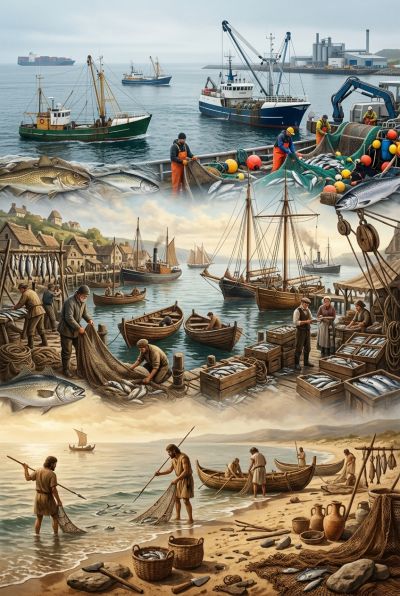
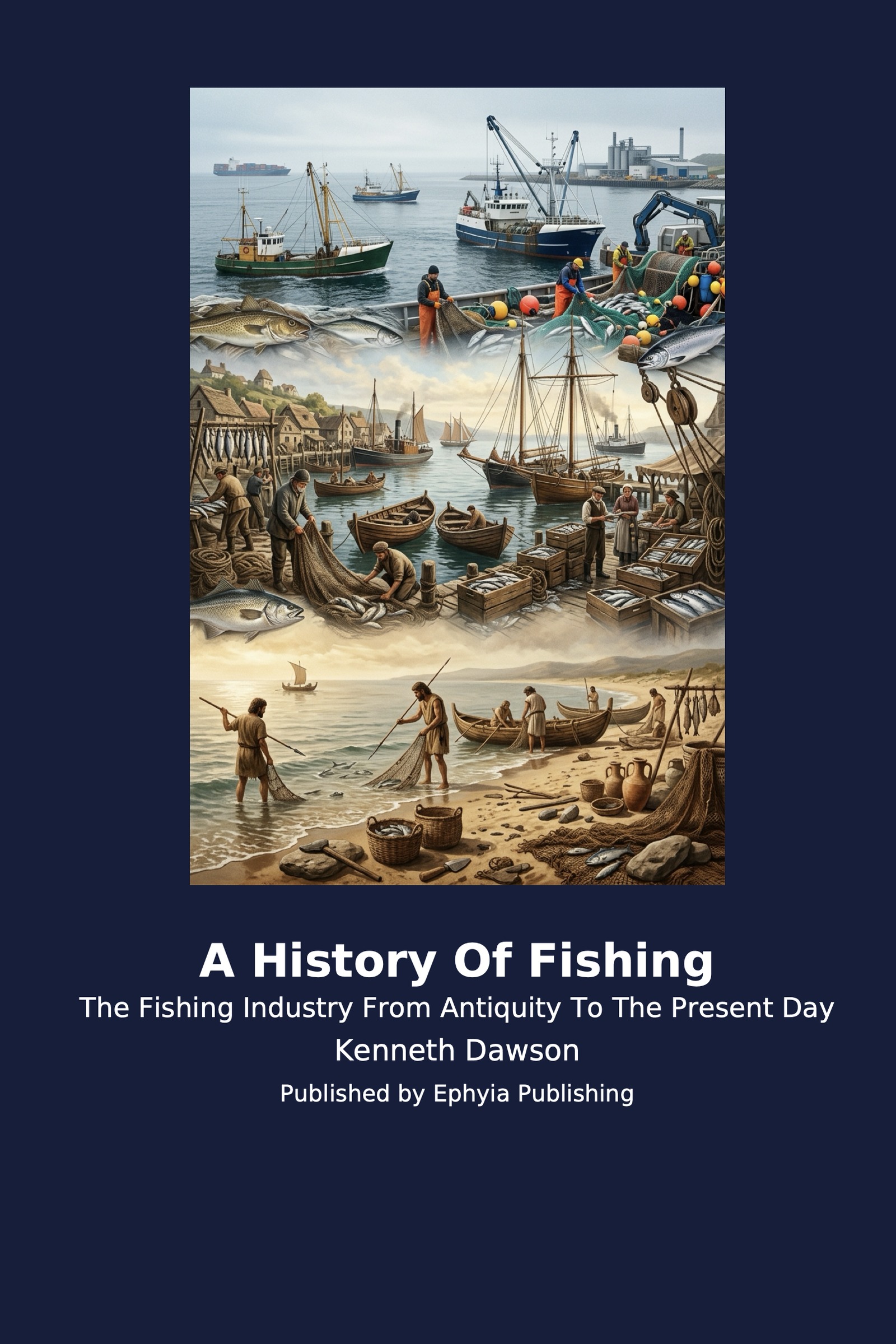
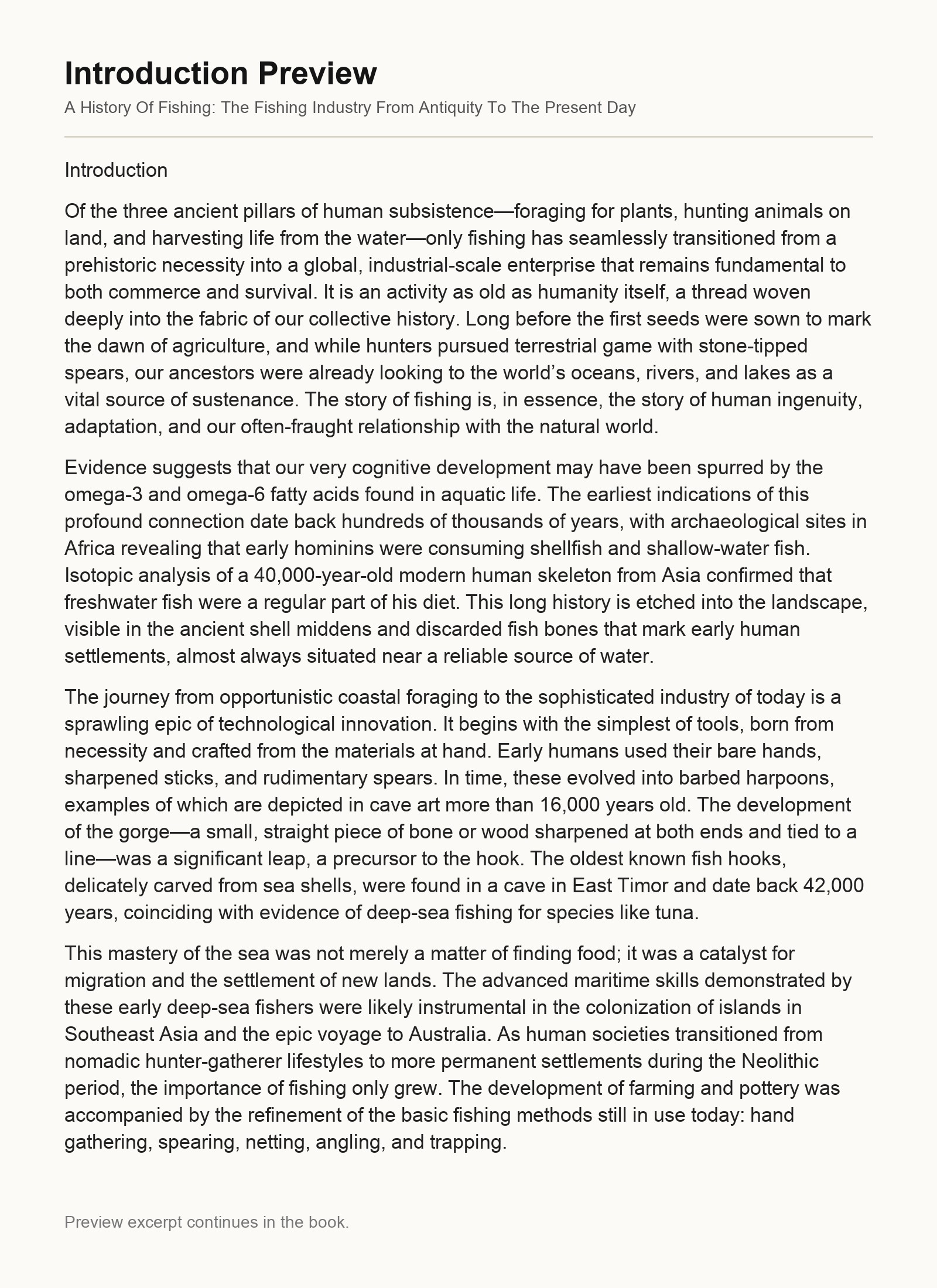
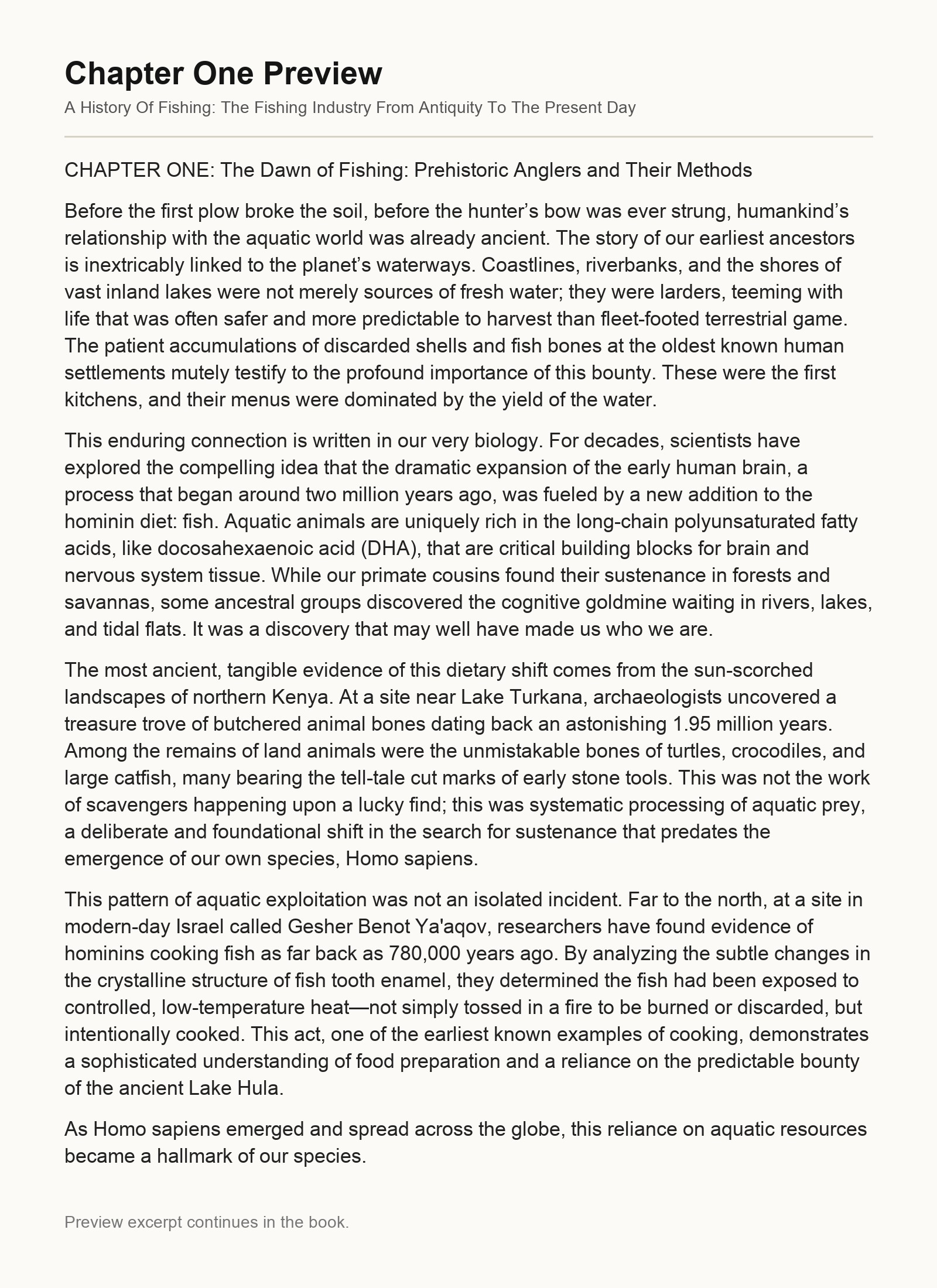
From the earliest hand‑gathered shellfish of prehistoric shores to today’s satellite‑guided factory trawlers, A History of Fishing traces the relentless ingenuity that turned a simple need for food into a global industry shaping empires, economies, and ecosystems. Readers will journey through millennia of innovation—from bone harpoons and woven nets to steam‑powered otter trawls, diesel engines, and the dramatic rise of aquaculture—seeing how each technological leap expanded humanity’s reach into the oceans while also revealing the hidden costs of overfishing, bycatch, and habitat destruction.
The book illuminates the cultural and political forces that have driven fishing forward: the religious fasting traditions that created a pan‑European demand for fish, the monastic fishponds that pioneered early aquaculture, the Viking stockfish that fueled North Atlantic exploration, and the Dutch herring “goldmine” that financed a Golden Age. It shows how colonial cod fisheries built New England’s wealth, how the Grand Banks became an international battleground, and how the Cod Wars redefined maritime law, leading to the United Nations Convention on the Law of the Sea and the modern Exclusive Economic Zone system that still governs who may fish where.
Readers will gain a deep understanding of the environmental challenges that now confront the industry, from the collapse of the Peruvian anchoveta and the North Atlantic cod to the pervasive problems of bycatch, ghost nets, and bottom‑trawling damage. The narrative also explores the hopeful shift toward sustainability—ecosystem‑based management, individual transferable quotas, marine protected areas, and consumer‑driven certifications like the Marine Stewardship Council—offering a clear picture of what responsible fishing looks like in the 21st century and what lies ahead amid climate change, shifting fish stocks, and new international disputes.
Beyond the commercial scale, the book celebrates the enduring human connection to the water through the lens of recreational angling. It details how technological advances democratized sport fishing, sparked subcultures from bass tournaments to fly‑fishing for bonefish, and turned anglers into powerful conservation advocates whose license fees and tackle taxes fund research, habitat restoration, and enforcement. Whether you are a student of history, an environmental professional, a policy maker, or simply someone who loves the cast of a line, this work provides a comprehensive, engaging, and thought‑provoking account of how fishing has shaped—and continues to shape—our world.
What You'll Find Inside:
- Trace fishing's evolution from prehistoric hand-gathering and spearing to today's satellite-guided industrial fleets using sonar and GPS
- Discover how innovations like the Dutch Herring Buss, steam trawlers, and factory ships transformed fishing into a dominant global economic force
- Explore fishing's pivotal role in shaping history—from Viking expansion fueled by stockfish to colonial cod economies and the 20th-century Cod Wars
- Learn about preservation breakthroughs from salting and drying to canning and freezing that revolutionized global fish consumption and trade
- Examine the modern overfishing crisis, bycatch impacts, and habitat destruction alongside emerging sustainable fishing paradigms and technologies
Who's It For:
This book is ideal for history enthusiasts, environmental studies students, and anyone interested in the intersection of human innovation, natural resources, and global economics. It will particularly appeal to readers fascinated by maritime history, the evolution of food systems, or the historical roots of contemporary fishing crises. Professionals in fisheries management, marine biology, or environmental policy will find valuable historical context for understanding modern challenges and solutions.
Table of Contents:
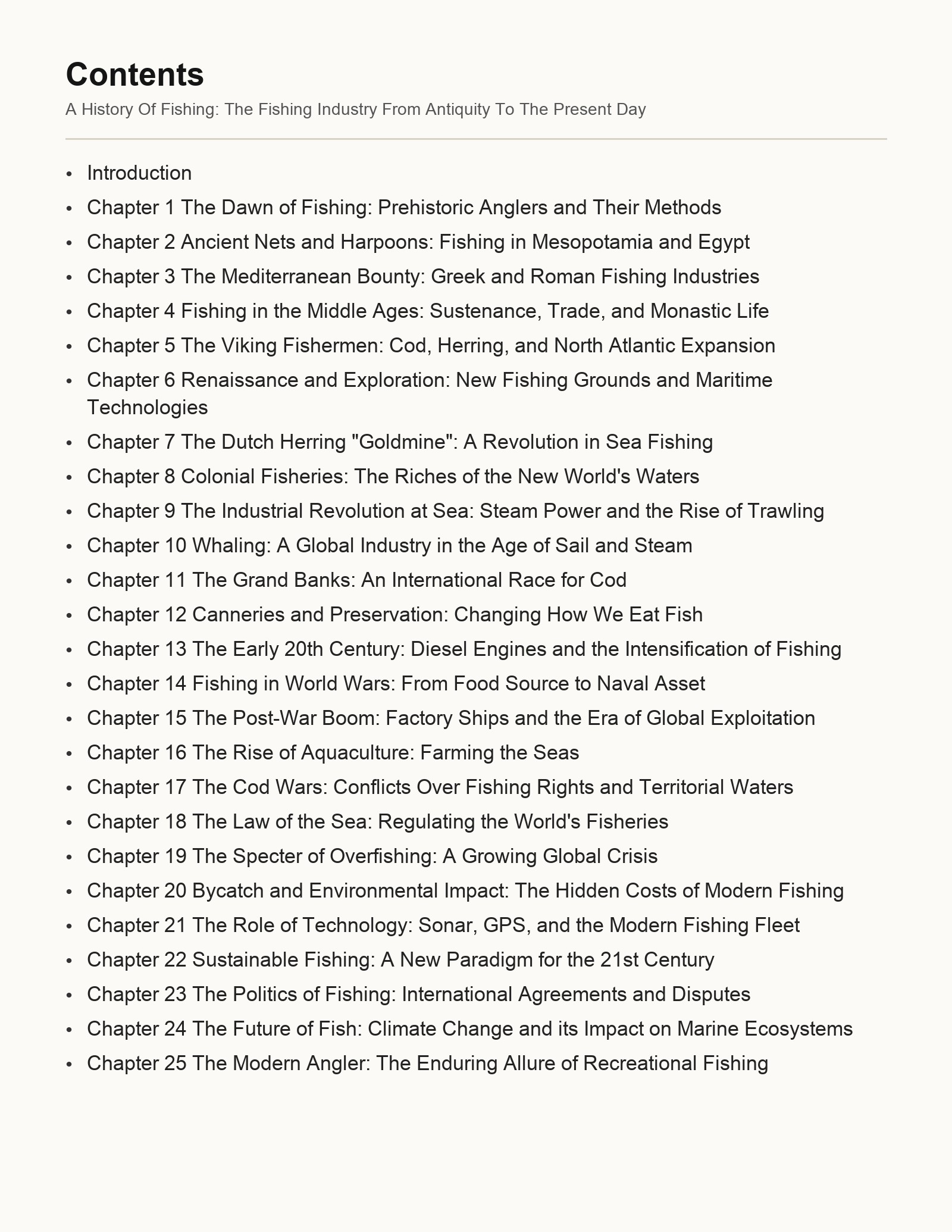
- Introduction
- Chapter 1 The Dawn of Fishing: Prehistoric Anglers and Their Methods
- Chapter 2 Ancient Nets and Harpoons: Fishing in Mesopotamia and Egypt
- Chapter 3 The Mediterranean Bounty: Greek and Roman Fishing Industries
- Chapter 4 Fishing in the Middle Ages: Sustenance, Trade, and Monastic Life
- Chapter 5 The Viking Fishermen: Cod, Herring, and North Atlantic Expansion
- Chapter 6 Renaissance and Exploration: New Fishing Grounds and Maritime Technologies
- Chapter 7 The Dutch Herring "Goldmine": A Revolution in Sea Fishing
- Chapter 8 Colonial Fisheries: The Riches of the New World's Waters
- Chapter 9 The Industrial Revolution at Sea: Steam Power and the Rise of Trawling
- Chapter 10 Whaling: A Global Industry in the Age of Sail and Steam
- Chapter 11 The Grand Banks: An International Race for Cod
- Chapter 12 Canneries and Preservation: Changing How We Eat Fish
- Chapter 13 The Early 20th Century: Diesel Engines and the Intensification of Fishing
- Chapter 14 Fishing in World Wars: From Food Source to Naval Asset
- Chapter 15 The Post-War Boom: Factory Ships and the Era of Global Exploitation
- Chapter 16 The Rise of Aquaculture: Farming the Seas
- Chapter 17 The Cod Wars: Conflicts Over Fishing Rights and Territorial Waters
- Chapter 18 The Law of the Sea: Regulating the World's Fisheries
- Chapter 19 The Specter of Overfishing: A Growing Global Crisis
- Chapter 20 Bycatch and Environmental Impact: The Hidden Costs of Modern Fishing
- Chapter 21 The Role of Technology: Sonar, GPS, and the Modern Fishing Fleet
- Chapter 22 Sustainable Fishing: A New Paradigm for the 21st Century
- Chapter 23 The Politics of Fishing: International Agreements and Disputes
- Chapter 24 The Future of Fish: Climate Change and its Impact on Marine Ecosystems
- Chapter 25 The Modern Angler: The Enduring Allure of Recreational Fishing
Author:
Published By:
Date Published:
May 25, 2026
Type:
Nonfiction
Language:
English
Also Available In:
Word Count:
46,615 words
Reading Time:
3 hours 16 minutes
Sample:
Order:
Order A History Of Fishing (Hardcover) on MixCache.com:
Buy NowPrint copy is made to order and ships worldwide. Includes the ebook free, ready to read instantly.
$5 account credit for all new MixCache.com accounts, usable toward any ebook purchase!*