
Browse by Category
Fiction
- Action & Adventure
- African American
- Anthologies
- Children's Fiction
- Classics
- Comics & Graphic Novels
- Coming of Age
- Contemporary
- Cultural & Regional
- Drama
- Erotica
- Fantasy
- General
- Historical Fiction
- Horror
- Humor & Satire
- Literary Fiction
- Mystery, Thriller & Suspense
- Poetry
- Religious & Inspirational
- Romance
- Science Fiction
- Short Stories
- War & Military
- Westerns
- Women's Fiction
- Young Adult
Non-Fiction
- Antiques & Collectibles
- Arts & Photography
- Biographies & Memoirs
- Business & Money
- Children's Non-Fiction
-
Computers & Technology
- Artificial Intelligence
- Computer Science
- Cybersecurity & Cryptography
- Data Science & Analytics
- Databases & Big Data
- Game Development & Design
- General
- Hardware & DIY
- Mobile App Development
- Networking & Cloud Computing
- Operating Systems
- Programming
- Robotics
- Software
- Software Engineering
- User Experience (UX) & Design
- Web Development & Design
- Cooking, Food & Wine
- Crafts, Hobbies & Home
- Education & Teaching
- Engineering
- General
- Health, Fitness & Dieting
-
History
- African History
- African History - North Africa
- African History - Sub-Saharan Africa
- American History
- American History - 20th Century
- American History - Civil War
- American History - Colonial Period
- Ancient History
- Asian History
- Asian History - China
- Asian History - India
- Asian History - Japan
- Asian History - Southeast Asia
- European History
- European History - Ancient Greece
- European History - Ancient Rome
- European History - Medieval
- European History - Modern
- European History - Renaissance
- General
- Middle Eastern History
- Military History
- Military History - Aviation
- Military History - Naval
- Social & Cultural History
- World History
- Humor & Entertainment
- Industrial Technology
- Language Learning
- Law
- LGBTQ+ Non-Fiction
- Literary Criticism
- Medical Books
- Parenting & Relationships
- Philosophy
- Politics & Social Sciences
- Reference
- Religion & Spirituality
-
Science & Math
- Agricultural Sciences
- Astronomy & Space Science
- Behavioral Sciences
- Biological Sciences
- Botany & Plant Science
- Chemistry
- Earth Sciences
- Engineering - Chemical
- Engineering - Civil
- Engineering - Electrical
- Engineering - Mechanical
- Environment
- General
- Geology
- Mathematics
- Nature & Ecology
- Oceanography
- Paleontology
- Physics
- Statistics
- Self-Help
- Sports & Outdoors
- Study Aids
- Sustainability & Green Living
- Textbooks
- Transportation
- Travel
- True Crime
- Urban Planning & Development
- Veterinary Medicine
- Writing & Publishing
Jump to Section
MixCache.com Total Access
Unlimited reading and audiobooks for every book published by MixCache.com.
Included titles carry the MTA badge.
Learn more →
Nunavut
A History
About this book:
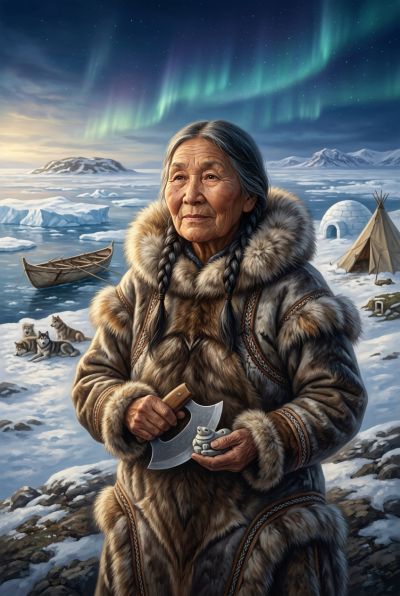
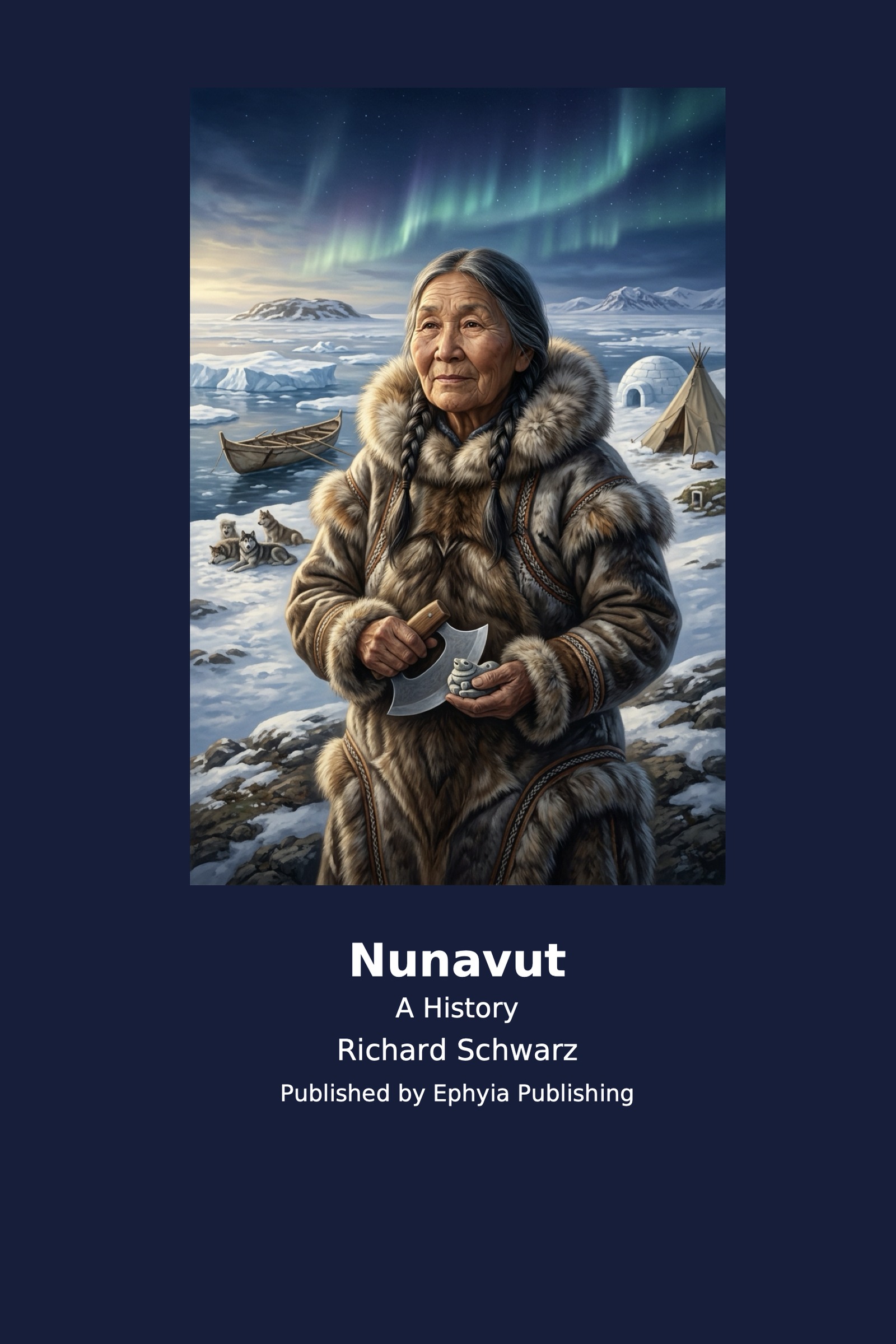
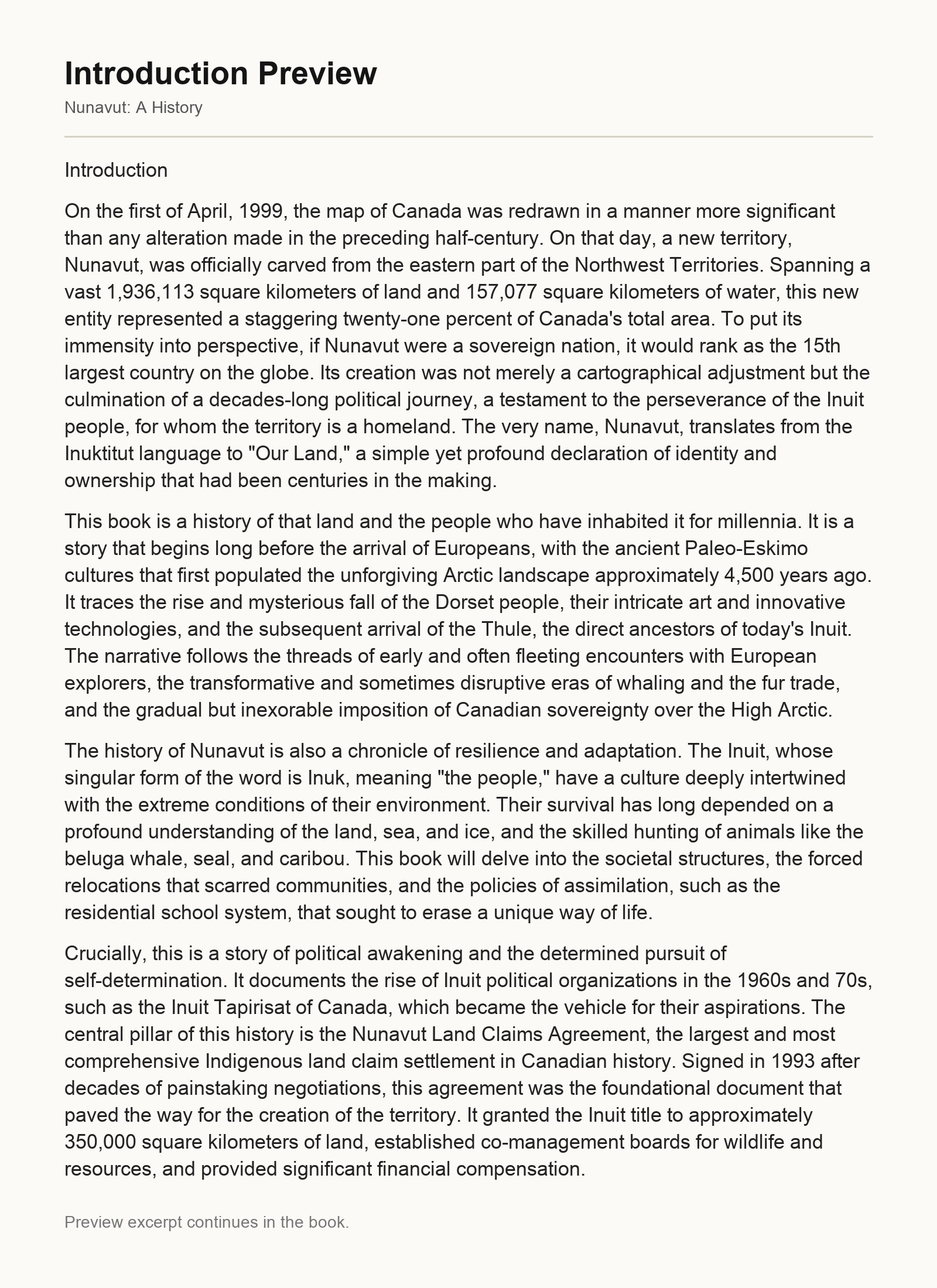
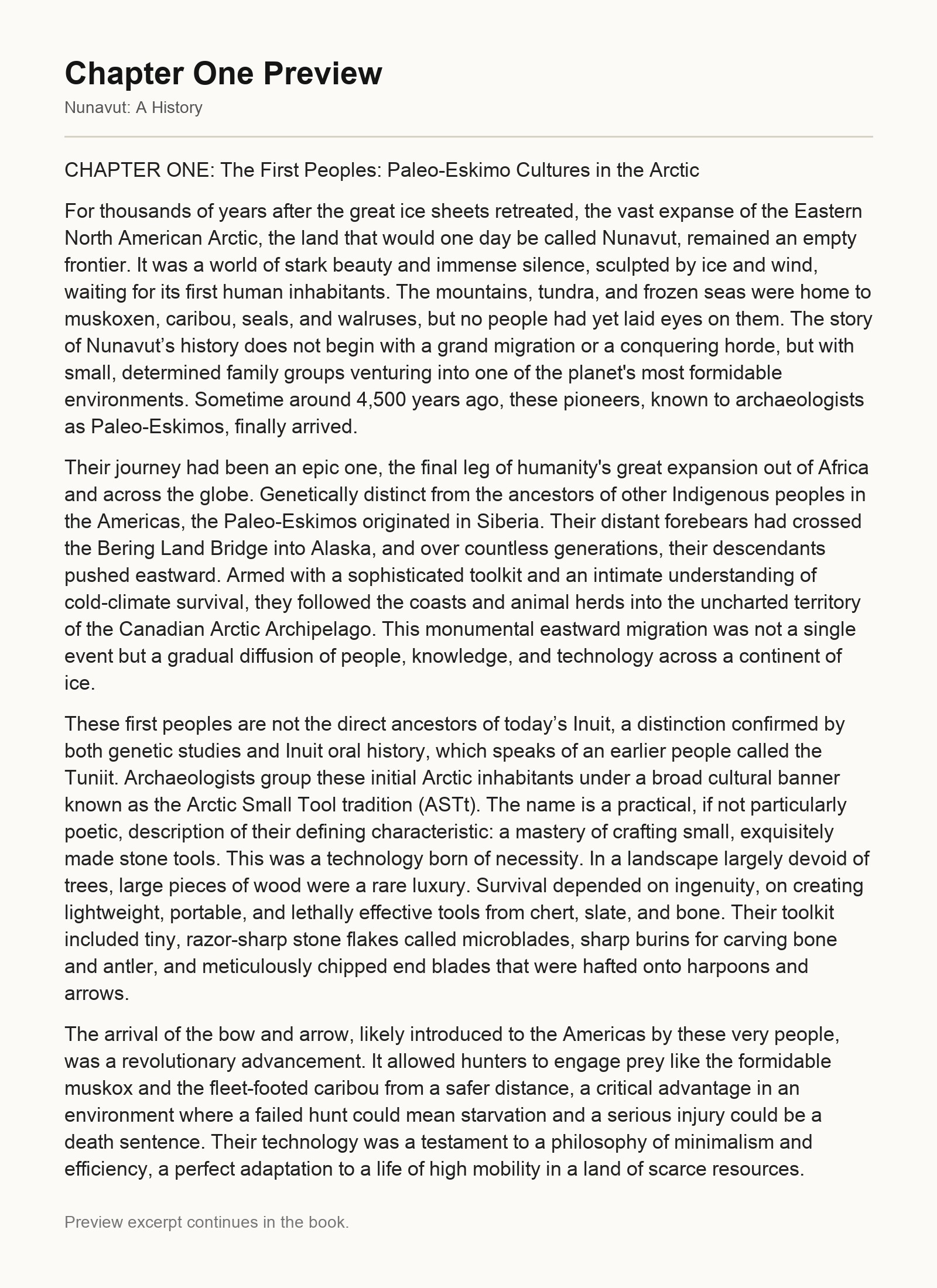
Nunavut: A History offers readers an unparalleled journey through the deep past and dynamic present of Canada’s newest and largest territory. From the arrival of Paleo‑Eskimo pioneers 4,500 years ago to the historic birth of Nunavut on April 1, 1999, Richard Schwarz weaves together archaeology, oral tradition, and political narrative to reveal how the land and its people have continuously adapted to one of the planet’s most demanding environments. The book traces the rise and fall of the Dorset, the transformative Thule migration, and the flourishing Inuit society that thrived on seal, caribou, and whale long before outsiders ever set foot in the Arctic.
Readers will gain insight into the rich cultural foundations that sustained Inuit life for millennia—seasonal hunting practices, the ingenious iglu and qulliq, spiritual beliefs centered on sedna and shamanism, and a worldview where every animal, rock, and gust of wind possessed a spirit. The narrative then follows the disruptive waves of European contact: the desperate searches for the Northwest Passage, the exploitative whaling era that introduced rifles and disease, the Hudson’s Bay Company’s fur trade that re‑shaped settlement patterns, and the gradual imposition of Canadian sovereignty through police patrols, legal tribunals, and the dehumanizing disc number system. These chapters illuminate both the resilience of Inuit communities and the profound scars left by colonial policies, forced relocations, and residential schools.
The heart of the book lies in the political awakening of the 1960s and the decades‑long struggle for self‑determination that culminated in the Nunavut Land Claims Agreement—the largest Indigenous land claim settlement in Canadian history. Schwarz details how Inuit leaders transformed cultural knowledge into legal argument, negotiated co‑management boards for wildlife, and secured a public government where Inuit would form the democratic majority. Readers will experience the triumph and turmoil of building a territory from scratch: the challenges of decentralization, housing shortages, training a representative public service, and the effort to enshrine Inuktitut as a working language of government while preserving traditional knowledge.
Beyond politics, the work explores Nunavut’s modern realities—its booming mining sector, the growth of Inuit‑owned birthright corporations, the enduring importance of country food, and the vibrant arts scene that has produced globally renowned carvings, prints, films, and throat‑singing performances. It also confronts the pressing social issues that stem from historical trauma: suicide, food insecurity, tuberculosis, and the education gap, showing how the new government is striving to heal while confronting climate change, thawing permafrost, and the opening of the Northwest Passage. The final chapters look ahead to devolution, the push for a Nunavut‑based university, and the aspirations of a young, tech‑savvy generation eager to blend ancient skills with contemporary innovation.
By the end of this comprehensive account, readers will not only understand how Nunavut came to be but also feel the pulse of a people who have survived millennia of change, reclaimed their homeland, and continue to shape a future defined by self‑reliance, cultural pride, and an unbreakable connection to the land. This book is essential for anyone seeking to grasp the profound story of Canada’s Arctic and the enduring legacy of its first inhabitants.
What You'll Find Inside:
- The book traces Nunavut's 4,500-year human history from Paleo-Eskimo pioneers through Dorset and Thule cultures to the direct ancestors of modern Inuit, revealing the deep Indigenous roots of the land.
- It details the political journey of Inuit self-determination, including the Nunavut Land Claims Agreement (largest Indigenous land settlement in Canadian history) and the creation of Nunavut as a territory where Inuit form the democratic majority.
- The work examines the devastating impacts of colonialism on Inuit society, including forced relocations, residential schools, disease epidemics, and cultural disruption that created lasting social challenges.
- It explores how Nunavut balances traditional Inuit culture and knowledge (Inuit Qaujimajatuqangit) with modern governance, economic development, and the pressures of globalization in the 21st century.
- The book addresses contemporary challenges including climate change impacts on traditional ways of life, infrastructure deficits, and Nunavut's growing strategic importance in global affairs as Arctic ice melts.
Who's It For:
This book is ideal for students and scholars of Canadian history, Indigenous studies, and Arctic affairs who seek a comprehensive understanding of Nunavut's formation. It will also benefit policy makers, government officials working with Indigenous communities, and Inuit individuals interested in their people's historical journey toward self-government. General readers with an interest in Indigenous rights movements, territorial development, or the intersection of traditional knowledge with modern governance will find this work both informative and accessible.
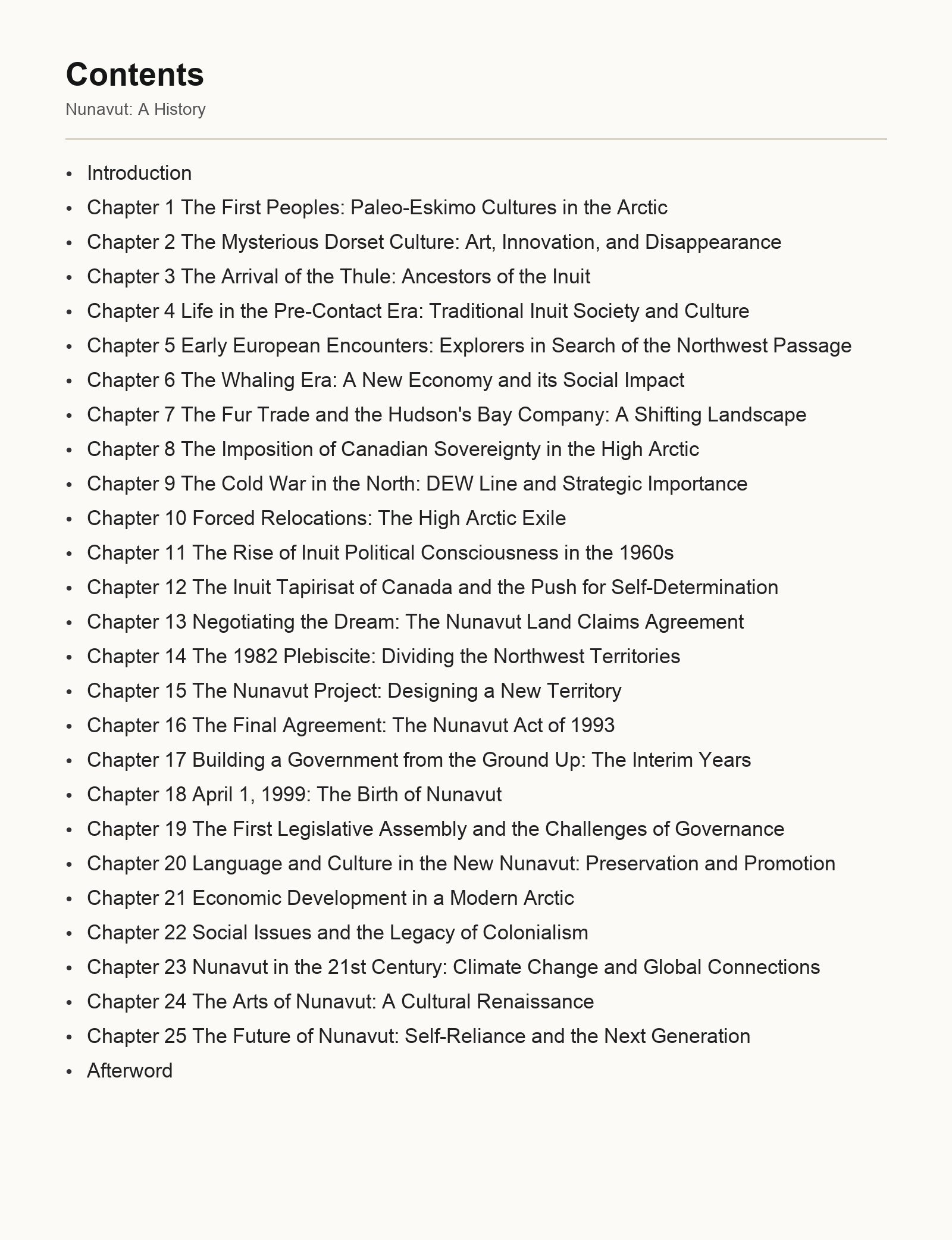
Table of Contents:
- Introduction
- Chapter 1 The First Peoples: Paleo-Eskimo Cultures in the Arctic
- Chapter 2 The Mysterious Dorset Culture: Art, Innovation, and Disappearance
- Chapter 3 The Arrival of the Thule: Ancestors of the Inuit
- Chapter 4 Life in the Pre-Contact Era: Traditional Inuit Society and Culture
- Chapter 5 Early European Encounters: Explorers in Search of the Northwest Passage
- Chapter 6 The Whaling Era: A New Economy and its Social Impact
- Chapter 7 The Fur Trade and the Hudson's Bay Company: A Shifting Landscape
- Chapter 8 The Imposition of Canadian Sovereignty in the High Arctic
- Chapter 9 The Cold War in the North: DEW Line and Strategic Importance
- Chapter 10 Forced Relocations: The High Arctic Exile
- Chapter 11 The Rise of Inuit Political Consciousness in the 1960s
- Chapter 12 The Inuit Tapirisat of Canada and the Push for Self-Determination
- Chapter 13 Negotiating the Dream: The Nunavut Land Claims Agreement
- Chapter 14 The 1982 Plebiscite: Dividing the Northwest Territories
- Chapter 15 The Nunavut Project: Designing a New Territory
- Chapter 16 The Final Agreement: The Nunavut Act of 1993
- Chapter 17 Building a Government from the Ground Up: The Interim Years
- Chapter 18 April 1, 1999: The Birth of Nunavut
- Chapter 19 The First Legislative Assembly and the Challenges of Governance
- Chapter 20 Language and Culture in the New Nunavut: Preservation and Promotion
- Chapter 21 Economic Development in a Modern Arctic
- Chapter 22 Social Issues and the Legacy of Colonialism
- Chapter 23 Nunavut in the 21st Century: Climate Change and Global Connections
- Chapter 24 The Arts of Nunavut: A Cultural Renaissance
- Chapter 25 The Future of Nunavut: Self-Reliance and the Next Generation
- Afterword
Author:
Published By:
Date Published:
May 25, 2026
Type:
Nonfiction
Language:
English
Also Available In:
Word Count:
47,291 words
Reading Time:
3 hours 19 minutes
Sample:
Order:
Buy the Nunavut ebook on MixCache.com:
Buy NowThe full ebook will be available immediately to read instantly on any device.
$5 account credit for all new MixCache.com accounts, usable toward any ebook purchase!*




Ratings & Reviews
Ask Questions About This Book
Have a question about the content? Ask our AI assistant!
Start by asking a question about "Nunavut"
Example: "Does this book mention William Shakespeare?"
Thinking...