Browse by Category
Fiction
- Action & Adventure
- African American
- Anthologies
- Children's Fiction
- Classics
- Comics & Graphic Novels
- Coming of Age
- Contemporary
- Cultural & Regional
- Drama
- Erotica
- Fantasy
- General
- Historical Fiction
- Horror
- Humor & Satire
- Literary Fiction
- Mystery, Thriller & Suspense
- Poetry
- Religious & Inspirational
- Romance
- Science Fiction
- Short Stories
- War & Military
- Westerns
- Women's Fiction
- Young Adult
Non-Fiction
- Antiques & Collectibles
- Arts & Photography
- Biographies & Memoirs
- Business & Money
- Children's Non-Fiction
-
Computers & Technology
- Artificial Intelligence
- Computer Science
- Cybersecurity & Cryptography
- Data Science & Analytics
- Databases & Big Data
- Game Development & Design
- General
- Hardware & DIY
- Mobile App Development
- Networking & Cloud Computing
- Operating Systems
- Programming
- Robotics
- Software
- Software Engineering
- User Experience (UX) & Design
- Web Development & Design
- Cooking, Food & Wine
- Crafts, Hobbies & Home
- Education & Teaching
- Engineering
- General
- Health, Fitness & Dieting
-
History
- African History
- African History - North Africa
- African History - Sub-Saharan Africa
- American History
- American History - 20th Century
- American History - Civil War
- American History - Colonial Period
- Ancient History
- Asian History
- Asian History - China
- Asian History - India
- Asian History - Japan
- Asian History - Southeast Asia
- European History
- European History - Ancient Greece
- European History - Ancient Rome
- European History - Medieval
- European History - Modern
- European History - Renaissance
- General
- Middle Eastern History
- Military History
- Military History - Aviation
- Military History - Naval
- Social & Cultural History
- World History
- Humor & Entertainment
- Industrial Technology
- Language Learning
- Law
- LGBTQ+ Non-Fiction
- Literary Criticism
- Medical Books
- Parenting & Relationships
- Philosophy
- Politics & Social Sciences
- Reference
- Religion & Spirituality
-
Science & Math
- Agricultural Sciences
- Astronomy & Space Science
- Behavioral Sciences
- Biological Sciences
- Botany & Plant Science
- Chemistry
- Earth Sciences
- Engineering - Chemical
- Engineering - Civil
- Engineering - Electrical
- Engineering - Mechanical
- Environment
- General
- Geology
- Mathematics
- Nature & Ecology
- Oceanography
- Paleontology
- Physics
- Statistics
- Self-Help
- Sports & Outdoors
- Study Aids
- Sustainability & Green Living
- Textbooks
- Transportation
- Travel
- True Crime
- Urban Planning & Development
- Veterinary Medicine
- Writing & Publishing
Jump to Section
MixCache.com Total Access
Unlimited reading and audiobooks for every book published by MixCache.com.
Included titles carry the MTA badge.
Learn more →
A History of Archaeology
From Antiquarian Curiosity to Modern Science
About this book:
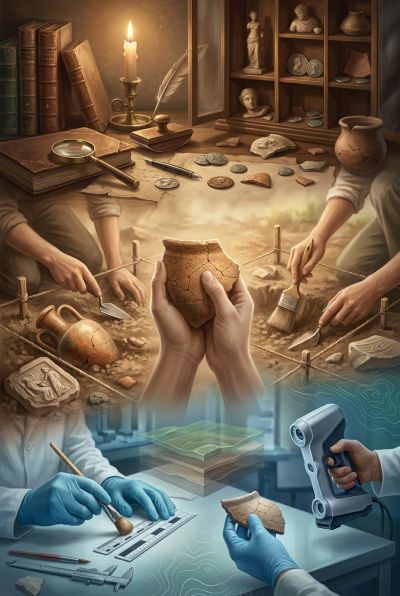
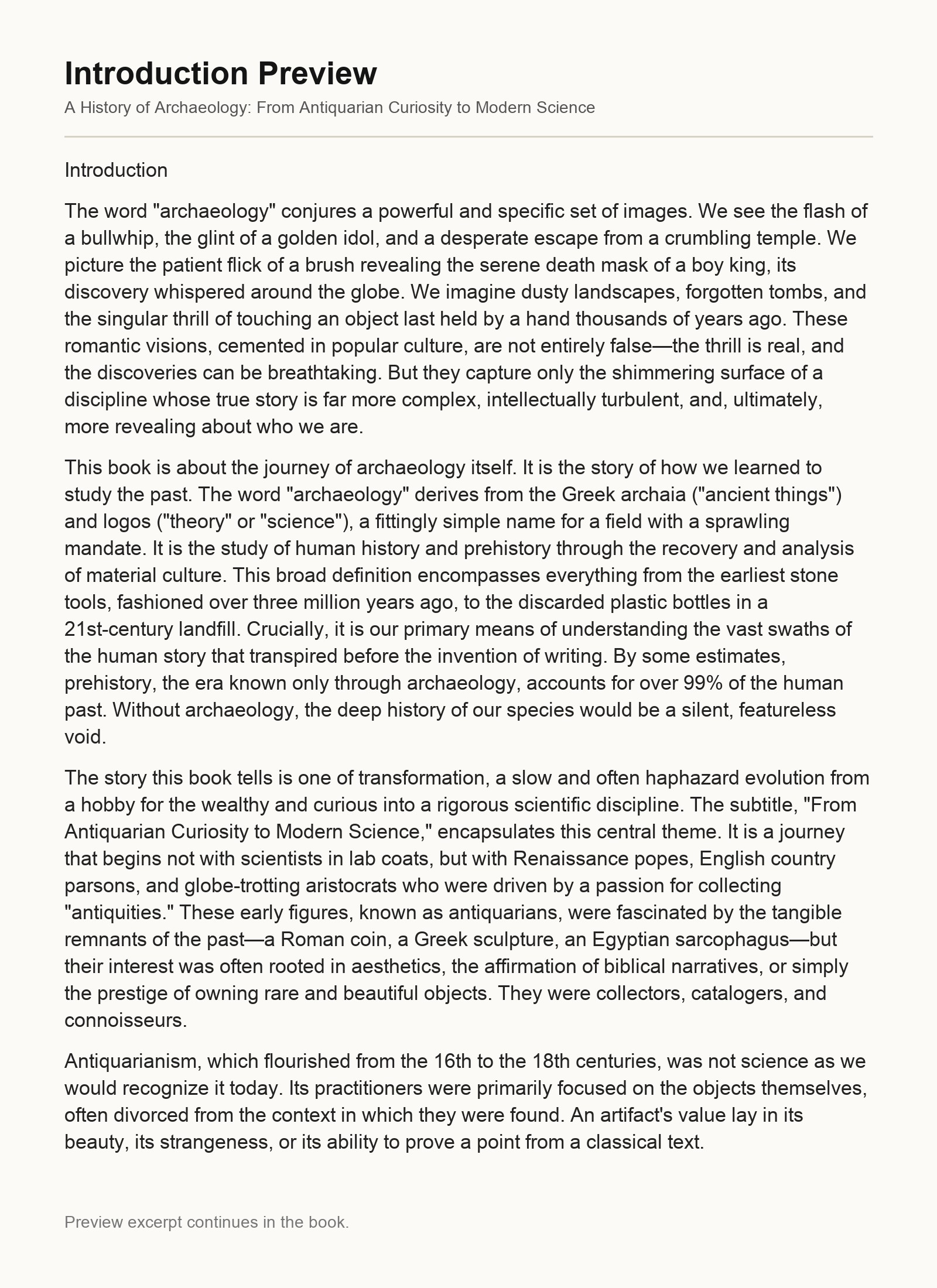
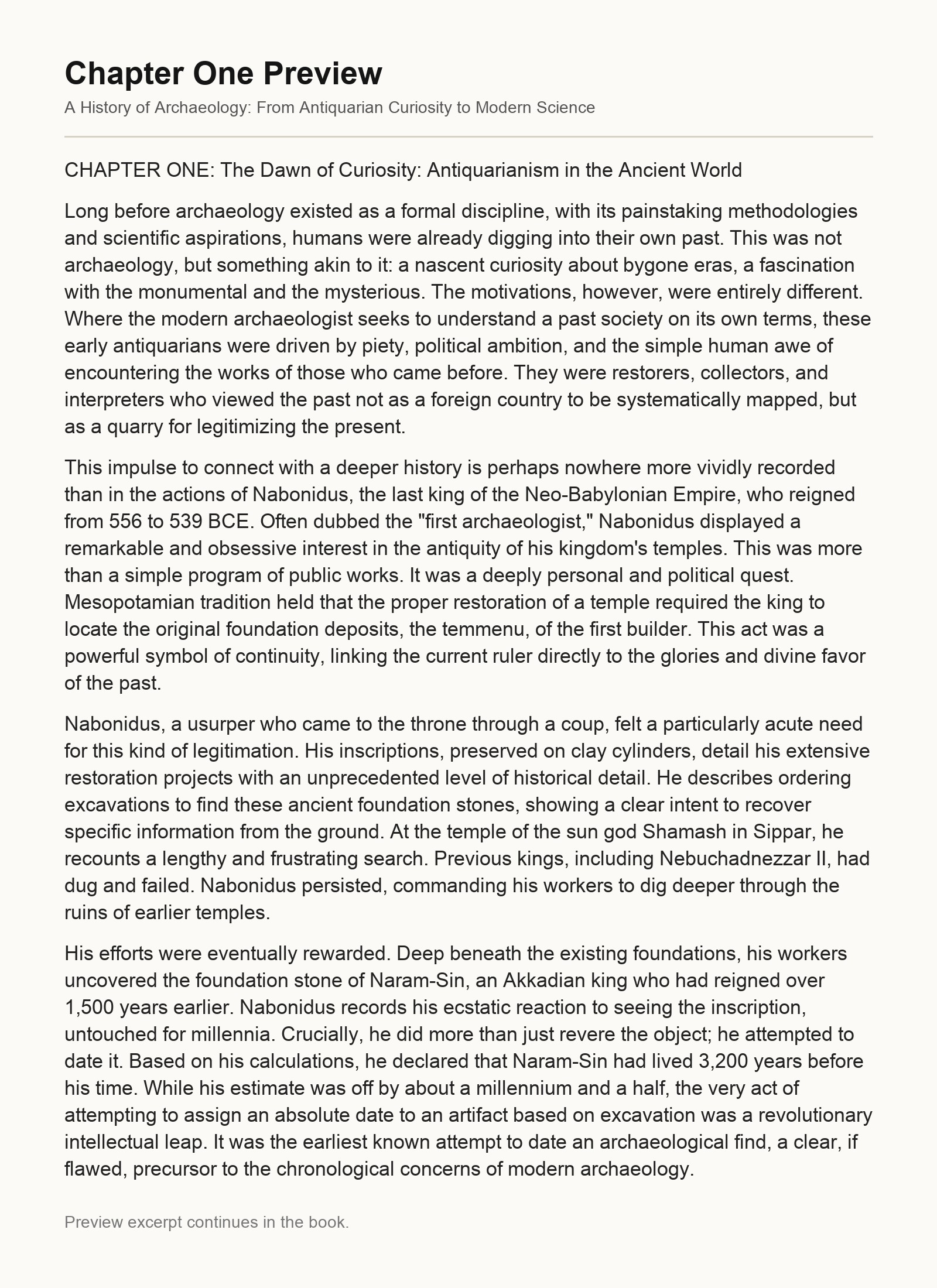
From the first curious digs of ancient kings to the high‑tech labs of today, this book traces the full arc of archaeology—how a hobby of treasure hunters became a rigorous science that reveals the deepest chapters of human history. Readers will follow the story from Renaissance antiquarians who unearthed marble masterpieces, through the painstaking excavations of Pompeii and Herculaneum that taught the value of context, to the groundbreaking work of Napoleon’s scholars in Egypt and the Rosetta Stone that unlocked an entire civilization’s voice.
The narrative highlights the pivotal moments that reshaped the field: the invention of the Three‑Age System that gave prehistory its first chronological framework, the influence of Darwin and Lyell that opened the concept of deep time, and the methodological revolutions brought by figures like Pitt‑Rivers, Flinders Petrie, and Kathleen Kenyon, who introduced stratigraphy, seriation, and meticulous recording. Each chapter shows how new tools—from aerial photography and radiocarbon dating to DNA analysis and LiDAR—expanded what archaeologists could see, ask, and prove about the past.
Beyond techniques, the book explores the intellectual battles that have defined modern archaeology, from the processual drive to explain cultural change through scientific hypothesis testing to the post‑processual emphasis on meaning, power, and multiple voices. Readers will gain insight into how debates over agency, gender, and indigenous perspectives have transformed the discipline into a more inclusive, self‑critical science that collaborates with descendant communities and tackles contemporary issues such as climate change, looting, and heritage management.
Finally, the volume looks ahead to the 21st‑century archaeologist, who works in teams that combine fieldwork with GIS, 3D modeling, genomics, and computational modeling, while navigating ethical questions about DNA, repatriation, and the illicit antiquities trade. By the end, readers will not only have learned how we have come to know the human past but also will appreciate the ongoing challenges and opportunities that make archaeology a vibrant, evolving science of who we are.
What You'll Find Inside:
- The transformation of archaeology from antiquarian treasure hunting to a rigorous scientific discipline, tracing its evolution through key methodological and theoretical breakthroughs.
- Major chronological frameworks that revolutionized the field, including the Three-Age System, stratigraphy and seriation, and the development of radiocarbon dating for absolute dating.
- Pivotal discoveries that reshaped human history understanding, such as Pompeii and Herculaneum, the Rosetta Stone, Tutankhamun's tomb, and DNA evidence revealing Neanderthal and Denisovan interbreeding with modern humans.
- Theoretical debates that defined modern archaeology, from culture-historical approaches to the processual/post-processual conflict and their lasting impact on how we interpret the past.
- Archaeology's expansion into new frontiers and contemporary relevance, including aerial and underwater archaeology, digital technologies (GIS, LiDAR, 3D modeling), cultural resource management, and applications to modern challenges like climate change and indigenous heritage rights.
Who's It For:
This book is ideal for undergraduate and graduate students in archaeology, anthropology, or history who need a comprehensive overview of the discipline's evolution. It will also appeal to educated general readers with a passion for history and discovery, providing them with the intellectual context behind famous archaeological finds and methods. Professionals working in cultural resource management, heritage preservation, or related fields will find value in understanding the historical foundations of contemporary practices. Finally, anyone curious about how humanity has come to understand its own deep past through material remains will appreciate this narrative of scientific transformation.
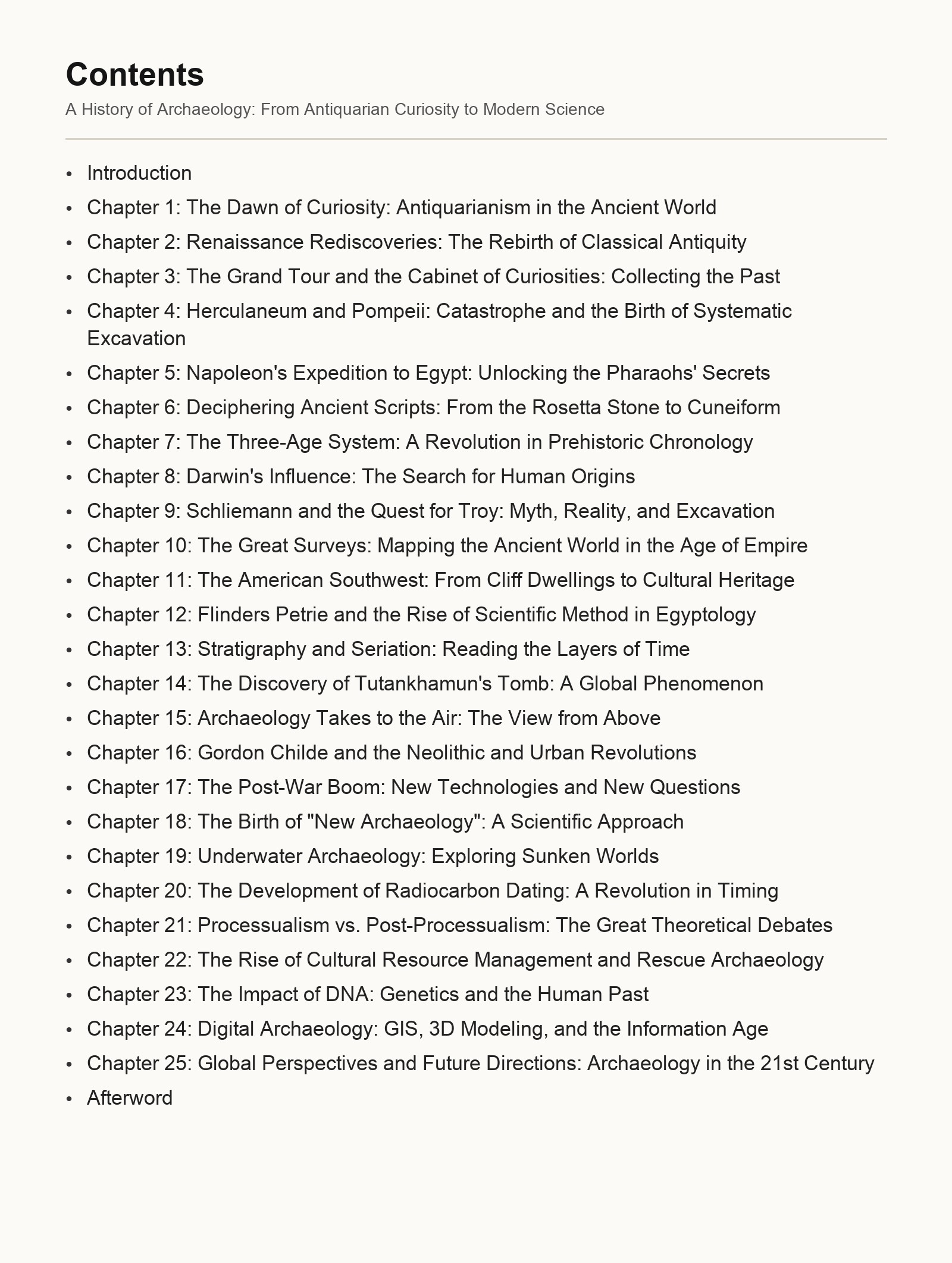
Table of Contents:
- Introduction
- Chapter 1: The Dawn of Curiosity: Antiquarianism in the Ancient World
- Chapter 2: Renaissance Rediscoveries: The Rebirth of Classical Antiquity
- Chapter 3: The Grand Tour and the Cabinet of Curiosities: Collecting the Past
- Chapter 4: Herculaneum and Pompeii: Catastrophe and the Birth of Systematic Excavation
- Chapter 5: Napoleon's Expedition to Egypt: Unlocking the Pharaohs' Secrets
- Chapter 6: Deciphering Ancient Scripts: From the Rosetta Stone to Cuneiform
- Chapter 7: The Three-Age System: A Revolution in Prehistoric Chronology
- Chapter 8: Darwin's Influence: The Search for Human Origins
- Chapter 9: Schliemann and the Quest for Troy: Myth, Reality, and Excavation
- Chapter 10: The Great Surveys: Mapping the Ancient World in the Age of Empire
- Chapter 11: The American Southwest: From Cliff Dwellings to Cultural Heritage
- Chapter 12: Flinders Petrie and the Rise of Scientific Method in Egyptology
- Chapter 13: Stratigraphy and Seriation: Reading the Layers of Time
- Chapter 14: The Discovery of Tutankhamun's Tomb: A Global Phenomenon
- Chapter 15: Archaeology Takes to the Air: The View from Above
- Chapter 16: Gordon Childe and the Neolithic and Urban Revolutions
- Chapter 17: The Post-War Boom: New Technologies and New Questions
- Chapter 18: The Birth of "New Archaeology": A Scientific Approach
- Chapter 19: Underwater Archaeology: Exploring Sunken Worlds
- Chapter 20: The Development of Radiocarbon Dating: A Revolution in Timing
- Chapter 21: Processualism vs. Post-Processualism: The Great Theoretical Debates
- Chapter 22: The Rise of Cultural Resource Management and Rescue Archaeology
- Chapter 23: The Impact of DNA: Genetics and the Human Past
- Chapter 24: Digital Archaeology: GIS, 3D Modeling, and the Information Age
- Chapter 25: Global Perspectives and Future Directions: Archaeology in the 21st Century
- Afterword
Author:
Published By:
Date Published:
May 24, 2026
Type:
Nonfiction
Language:
English
Also Available In:
German, French, Italian, Dutch, Portuguese
Word Count:
56,429 words
Reading Time:
3 hours 57 minutes
Sample:
Order:
Order A History of Archaeology (Hardcover) on MixCache.com:
Buy NowPrint copy is made to order and ships worldwide. Includes the ebook free, ready to read instantly.
$5 account credit for all new MixCache.com accounts, usable toward any ebook purchase!*