
Browse by Category
Fiction
- Action & Adventure
- African American
- Anthologies
- Children's Fiction
- Classics
- Comics & Graphic Novels
- Coming of Age
- Contemporary
- Cultural & Regional
- Drama
- Erotica
- Fantasy
- General
- Historical Fiction
- Horror
- Humor & Satire
- Literary Fiction
- Mystery, Thriller & Suspense
- Poetry
- Religious & Inspirational
- Romance
- Science Fiction
- Short Stories
- War & Military
- Westerns
- Women's Fiction
- Young Adult
Non-Fiction
- Antiques & Collectibles
- Arts & Photography
- Biographies & Memoirs
- Business & Money
- Children's Non-Fiction
-
Computers & Technology
- Artificial Intelligence
- Computer Science
- Cybersecurity & Cryptography
- Data Science & Analytics
- Databases & Big Data
- Game Development & Design
- General
- Hardware & DIY
- Mobile App Development
- Networking & Cloud Computing
- Operating Systems
- Programming
- Robotics
- Software
- Software Engineering
- User Experience (UX) & Design
- Web Development & Design
- Cooking, Food & Wine
- Crafts, Hobbies & Home
- Education & Teaching
- Engineering
- General
- Health, Fitness & Dieting
-
History
- African History
- African History - North Africa
- African History - Sub-Saharan Africa
- American History
- American History - 20th Century
- American History - Civil War
- American History - Colonial Period
- Ancient History
- Asian History
- Asian History - China
- Asian History - India
- Asian History - Japan
- Asian History - Southeast Asia
- European History
- European History - Ancient Greece
- European History - Ancient Rome
- European History - Medieval
- European History - Modern
- European History - Renaissance
- General
- Middle Eastern History
- Military History
- Military History - Aviation
- Military History - Naval
- Social & Cultural History
- World History
- Humor & Entertainment
- Industrial Technology
- Language Learning
- Law
- LGBTQ+ Non-Fiction
- Literary Criticism
- Medical Books
- Parenting & Relationships
- Philosophy
- Politics & Social Sciences
- Reference
- Religion & Spirituality
-
Science & Math
- Agricultural Sciences
- Astronomy & Space Science
- Behavioral Sciences
- Biological Sciences
- Botany & Plant Science
- Chemistry
- Earth Sciences
- Engineering - Chemical
- Engineering - Civil
- Engineering - Electrical
- Engineering - Mechanical
- Environment
- General
- Geology
- Mathematics
- Nature & Ecology
- Oceanography
- Paleontology
- Physics
- Statistics
- Self-Help
- Sports & Outdoors
- Study Aids
- Sustainability & Green Living
- Textbooks
- Transportation
- Travel
- True Crime
- Urban Planning & Development
- Veterinary Medicine
- Writing & Publishing
Jump to Section
MixCache.com Total Access
Unlimited reading and audiobooks for every book published by MixCache.com.
Included titles carry the MTA badge.
Learn more →
The Permanent Underclass
MTA
Surviving the Post-Labor Economy in the Age of Silicon Valley
About this book:

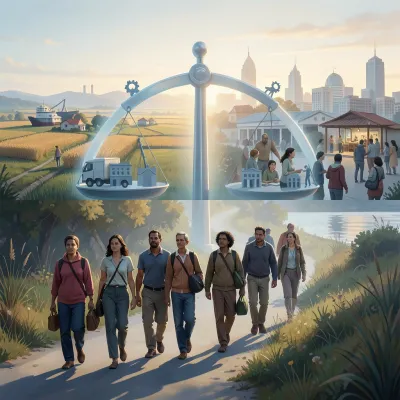
The Permanent Underclass argues that the fear of a technology‑driven surplus labor force is not a deterministic outcome of automation but a product of policy choices, power relations, and cultural narratives that have repeatedly sorted populations into opportunity or exclusion throughout history. Drawing on the long arc of dispossession—from enclosures to deindustrialization—the book shows how each wave of technological change creates winners and losers, and how today’s AI‑driven productivity gains are being captured by a narrow elite of data, algorithmic, and network‑effect capital while wages stagnate, work becomes precarious, and traditional safety nets fray. It challenges the Silicon Valley meme of an inevitable “permanent underclass” by emphasizing that technology is a lever that amplifies the social commitments we choose, not an autonomous force that absolves us of responsibility.
The book then maps the mechanisms that produce this outcome: the automation paradox (productivity without paychecks), the gig illusion (algorithmic bosses and extreme precarity), digital Taylorism (ubiquitous surveillance and metric‑driven control), and the geography of no work (hollowed‑out towns versus exclusionary cities). It examines how education, health, housing, and time have become the real currencies of security, how stigma and meritocratic myths obscure structural causes, and how race, gender, and migration intersect to deepen marginalization. In response, it surveys a toolkit of interventions—universal basic income or negative income taxes, portable benefits, public options for broadband, banking, and care, wealth and data taxes, civic AI as public infrastructure, inclusive design, worker cooperatives and platform co‑ops, and new metrics of well‑being that move beyond GDP and employment rates. Throughout, the emphasis is on deliberate, democratic choices to redistribute the gains of automation, to redefine dignity beyond paid work, and to build solidarity through mutual aid, collective organizing, and equitable access to the foundations of a digital age.
Ultimately, The Permanent Underclass presents a vision of abundance that is achievable only if societies break the winner‑take‑all dynamics of intangible capital, reinvest the wealth generated by data and algorithms into public goods, and replace narratives of individual blame with collective responsibility. The future is not a fixed trajectory but a negotiated social contract; by treating technology as a tool for inclusion rather than extraction, we can avoid cementing a permanent underclass and instead create an economy where technological progress enlarges freedom, security, and meaningful contribution for all. The choice—scarcity or abundance, division or solidarity—lies in the policies, institutions, and stories we decide to uphold today.
What You'll Find Inside:
- The automation paradox: How technological progress increases productivity while decoupling wealth creation from human labor, leading to growing inequality despite overall economic growth.
- The gig economy illusion: Why flexibility in platform work often masks deep precarity, algorithmic management, and the erosion of traditional worker protections.
- Geography of exclusion: How automation exacerbates spatial inequality between hollowed-out industrial towns and unaffordable tech hubs, creating new forms of economic marginalization.
- Beyond jobs: Why health, housing, and discretionary time are the true currencies of security in a post-labor economy, and how to secure them when traditional employment declines.
- Policy pathways: Concrete experiments and solutions being tested today—from universal basic income and platform cooperatives to public options for broadband and care—that could prevent a permanent underclass.
Who's It For:
This book is essential reading for policymakers, economists, and social innovators grappling with the societal impacts of AI and automation. It will particularly benefit labor advocates, tech industry professionals concerned about ethical implications, and anyone working to design inclusive economic policies for a post-labor future. Researchers and students in economics, sociology, and public policy will find valuable historical context and forward-looking solutions. Ultimately, it speaks to anyone seeking to understand how technological progress can be harnessed for shared prosperity rather than entrenched inequality.
Table of Contents:
- Introduction
- Chapter 1 The Long Arc of Dispossession: From Industrialization to Automation
- Chapter 2 Silicon Valley’s Anxiety: How a Meme Became a Forecast
- Chapter 3 The Automation Paradox: Productivity Without Paychecks
- Chapter 4 The Gig Illusion: Flexibility, Precarity, and Algorithmic Bosses
- Chapter 5 AI at the Margins: Who Gets Automated First, and Why
- Chapter 6 Geography of No Work: Hollowed-Out Towns and Exclusionary Cities
- Chapter 7 Education’s Broken Promise: Skills, Signaling, and Sorting
- Chapter 8 Digital Taylorism: Surveillance, Metrics, and Managed Lives
- Chapter 9 The New Capital: Data, Intangibles, and Winner-Take-All
- Chapter 10 Safety Nets with Holes: Welfare States in a Post-Labor Era
- Chapter 11 Cash Without Jobs: UBI, Negative Income Taxes, and Beyond
- Chapter 12 Health, Housing, and Time: The Real Currency of Security
- Chapter 13 Stigma and Story: Rethinking Merit and Blame
- Chapter 14 Race, Gender, and the Underclass Narrative
- Chapter 15 Migration and Borders in an Automated World
- Chapter 16 The Shadow Economy: Informal Work, Hustles, and Mutual Aid
- Chapter 17 Organizing Without a Factory: Unions, Co-ops, and Platforms
- Chapter 18 Public Options for the Digital Age: Broadband, Banking, and Care
- Chapter 19 Taxing the Intangible: Rents, Wealth, and Sovereign Capacity
- Chapter 20 Innovation for Inclusion: Designing Technology for the Bottom Half
- Chapter 21 Civic AI: Algorithms as Public Infrastructure
- Chapter 22 Measuring What Matters: Beyond GDP and Jobs
- Chapter 23 Dignity Without Employment: Meaning, Identity, and Contribution
- Chapter 24 Transition Playbooks: Experiments, Pilots, and Policy Paths
- Chapter 25 The Future We Choose: Scarcity, Abundance, and Solidarity
Author:
Published By:
Date Published:
May 24, 2026
Type:
Nonfiction
Language:
English
Word Count:
43,694 words
Reading Time:
3 hours 4 minutes
Sample:
MixCache.com Total Access
Get unlimited access to this book + all books published by MixCache.com for $11.99/month
Subscribe to MTAOr purchase this book individually below
Order:
Buy the The Permanent Underclass ebook on MixCache.com:
Buy Now
Full ebook will be available immediately
- read online or download as a PDF file.
$5 account credit for all new MixCache.com accounts, usable toward any ebook purchase!*


Ratings & Reviews
Ask Questions About This Book
Have a question about the content? Ask our AI assistant!
Start by asking a question about "The Permanent Underclass"
Example: "Does this book mention William Shakespeare?"
Thinking...