Browse by Category
Fiction
- Action & Adventure
- African American
- Anthologies
- Children's Fiction
- Classics
- Comics & Graphic Novels
- Coming of Age
- Contemporary
- Cultural & Regional
- Drama
- Erotica
- Fantasy
- General
- Historical Fiction
- Horror
- Humor & Satire
- Literary Fiction
- Mystery, Thriller & Suspense
- Poetry
- Religious & Inspirational
- Romance
- Science Fiction
- Short Stories
- War & Military
- Westerns
- Women's Fiction
- Young Adult
Non-Fiction
- Antiques & Collectibles
- Arts & Photography
- Biographies & Memoirs
- Business & Money
- Children's Non-Fiction
-
Computers & Technology
- Artificial Intelligence
- Computer Science
- Cybersecurity & Cryptography
- Data Science & Analytics
- Databases & Big Data
- Game Development & Design
- General
- Hardware & DIY
- Mobile App Development
- Networking & Cloud Computing
- Operating Systems
- Programming
- Robotics
- Software
- Software Engineering
- User Experience (UX) & Design
- Web Development & Design
- Cooking, Food & Wine
- Crafts, Hobbies & Home
- Education & Teaching
- Engineering
- General
- Health, Fitness & Dieting
-
History
- African History
- African History - North Africa
- African History - Sub-Saharan Africa
- American History
- American History - 20th Century
- American History - Civil War
- American History - Colonial Period
- Ancient History
- Asian History
- Asian History - China
- Asian History - India
- Asian History - Japan
- Asian History - Southeast Asia
- European History
- European History - Ancient Greece
- European History - Ancient Rome
- European History - Medieval
- European History - Modern
- European History - Renaissance
- General
- Middle Eastern History
- Military History
- Military History - Aviation
- Military History - Naval
- Social & Cultural History
- World History
- Humor & Entertainment
- Industrial Technology
- Language Learning
- Law
- LGBTQ+ Non-Fiction
- Literary Criticism
- Medical Books
- Parenting & Relationships
- Philosophy
- Politics & Social Sciences
- Reference
- Religion & Spirituality
-
Science & Math
- Agricultural Sciences
- Astronomy & Space Science
- Behavioral Sciences
- Biological Sciences
- Botany & Plant Science
- Chemistry
- Earth Sciences
- Engineering - Chemical
- Engineering - Civil
- Engineering - Electrical
- Engineering - Mechanical
- Environment
- General
- Geology
- Mathematics
- Nature & Ecology
- Oceanography
- Paleontology
- Physics
- Statistics
- Self-Help
- Sports & Outdoors
- Study Aids
- Sustainability & Green Living
- Textbooks
- Transportation
- Travel
- True Crime
- Urban Planning & Development
- Veterinary Medicine
- Writing & Publishing
Jump to Section
MixCache.com Total Access
Unlimited reading and audiobooks for every book published by MixCache.com.
Included titles carry the MTA badge.
Learn more →A History of Papua New Guinea
About this book:

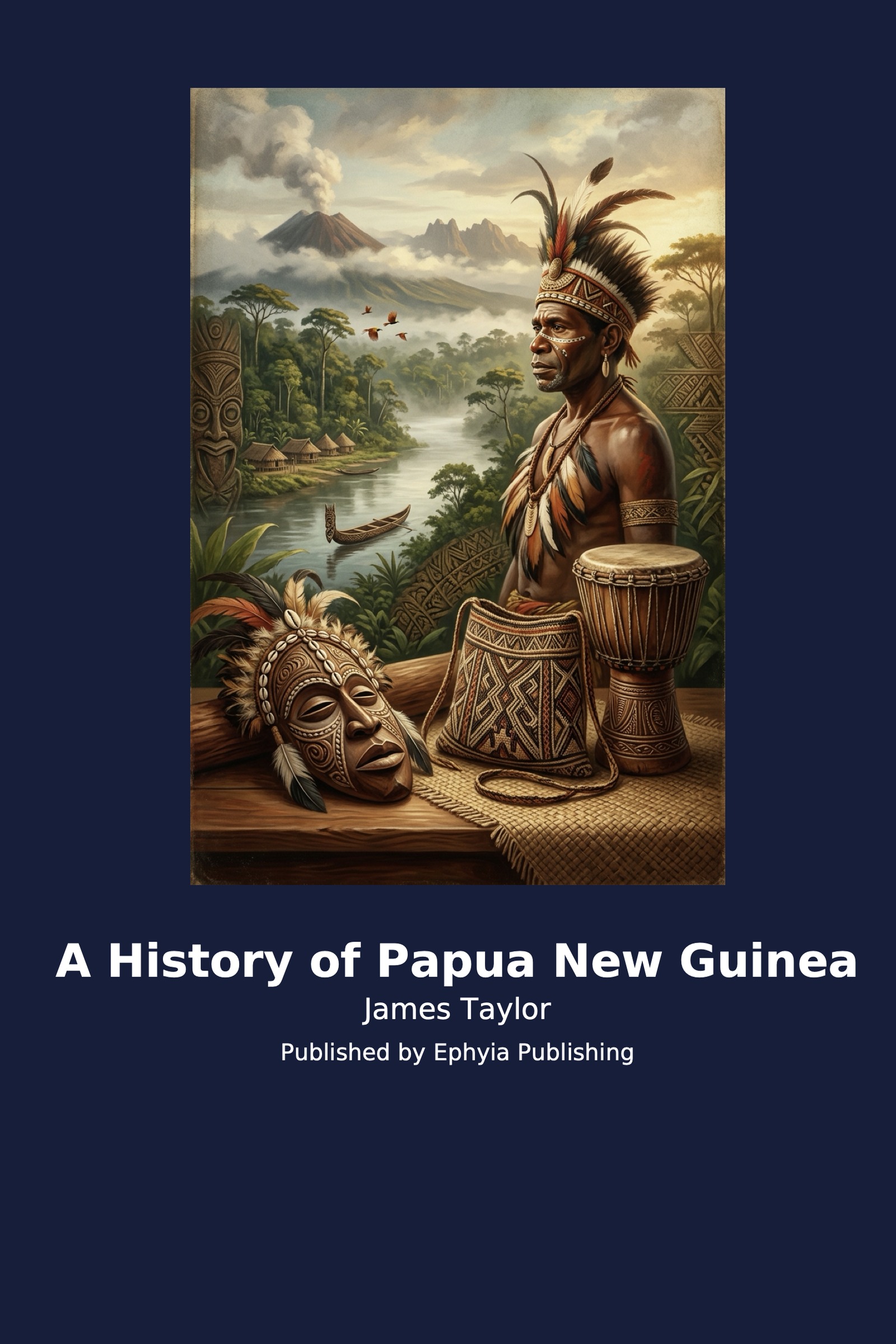
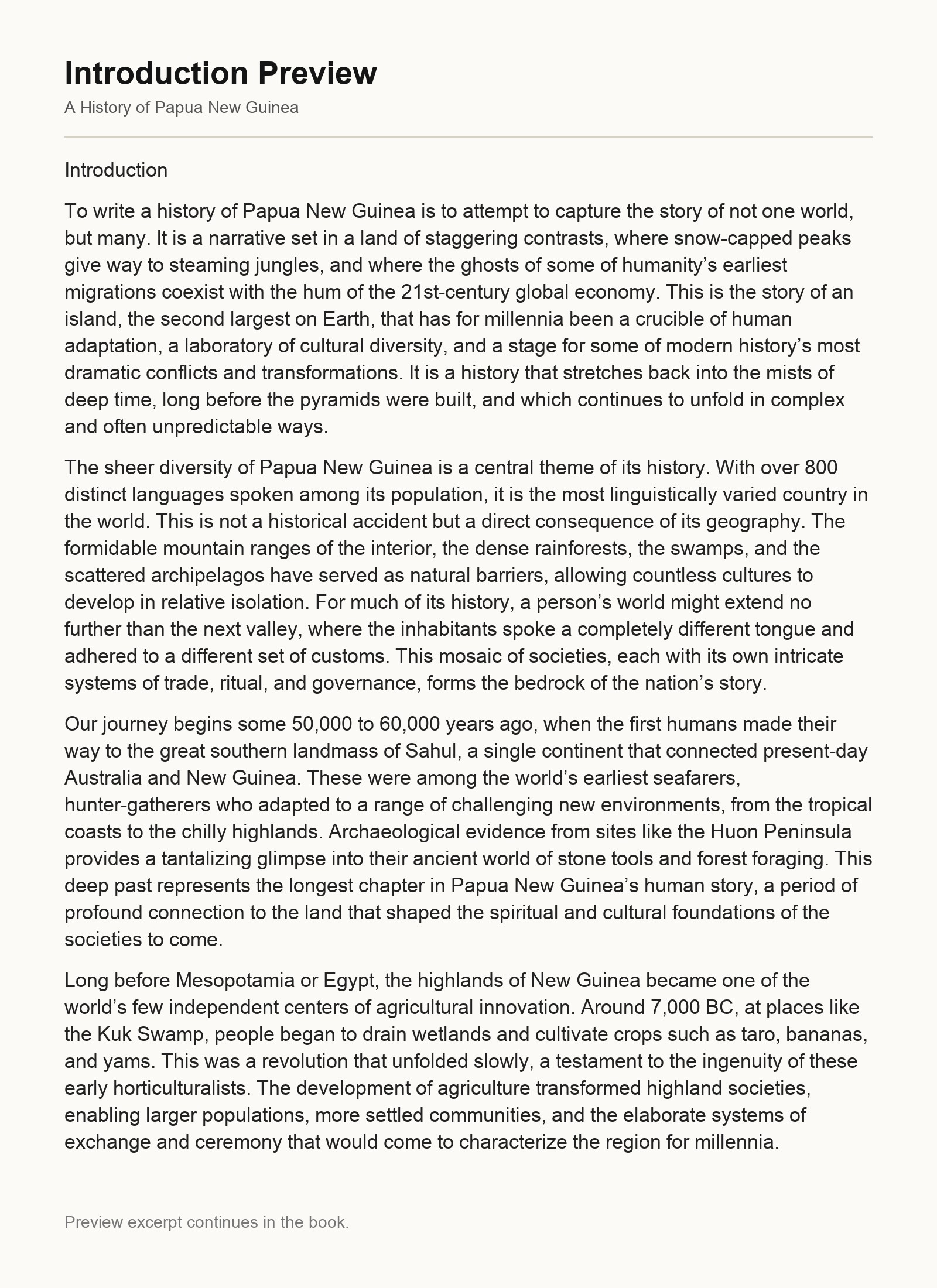
A History of Papua New Guinea offers readers a sweeping journey from the first human footsteps on the island tens of thousands of years ago to the vibrant, contested present of a nation navigating independence, resource wealth, and global pressures. You will trace the deep roots of settlement, witness the independent invention of agriculture in the highlands, and explore how the Lapita seafarers reshaped coastal societies, setting the stage for a cultural mosaic unlike any other on Earth.
The book delves into the intricate pre‑colonial world of trade networks like the Kula ring and Hiri cycle, the ritualized warfare and spiritual beliefs that governed daily life, and the arrival of European explorers whose fleeting encounters would eventually ignite colonial ambitions. You will see how German and British administrations carved up the land, imposed plantation economies, and introduced new labor systems, missions, and the pidgin languages that still bind the nation today.
Through vivid accounts of World War II’s brutal New Guinea campaign, the heroic role of the “Fuzzy Wuzzy Angels,” and the postwar administrative union, you will understand how conflict forged a shared national consciousness and set the stage for the peaceful transition to self‑governance. The narrative follows the rise of political parties, the leadership of Michael Somare, the birth of the nation in 1975, and the enduring challenges of Bougainville’s secessionist movement, economic booms and busts, and the struggle to maintain law and order amid tribal and urban violence.
Readers will gain insight into contemporary Papua New Guinea: the tension between ancient wantok obligations and modern state institutions, the impact of mining and gas projects on rural livelihoods, the ongoing quest for gender equality and health improvements, and the looming threats of climate change and geopolitical rivalry. By the end, you will not only know the facts of PNG’s past but also appreciate the resilience, creativity, and deep connection to land that continue to shape its people’s destiny in the twenty‑first century.
What You'll Find Inside:
- Papua New Guinea's extraordinary human history beginning 50,000-60,000 years ago with early Sahul settlers who independently developed agriculture in the highlands around 7,000 BC, making it one of only a few places where farming emerged without outside influence.
- The nation's unparalleled cultural diversity with over 800 distinct languages, shaped by geographic isolation that allowed countless societies to develop unique trade networks like the Kula ring, Hiri trade, and complex belief systems including headhunting and cannibalism rituals.
- The colonial division of 1884 that split eastern New Guinea between German commercial exploitation in the north and Australian paternalistic administration in the south, creating contrasting legacies that still influence regional dynamics today.
- The peaceful transition to independence in 1975 led by Michael Somare, followed by immediate challenges including the Bougainville secessionist conflict, political instability marked by frequent votes of no confidence, and economic dependence on volatile resource exports.
- Contemporary Papua New Guinea at a crossroads facing the 2019 Bougainville independence referendum (98.3% voted for independence), the ongoing resource curse where mineral wealth hasn't improved living standards for most citizens, and existential threats from climate change to vulnerable coastal and highland communities.
Who's It For:
This book is ideal for students, researchers, and professionals interested in Pacific history, post-colonial studies, anthropology, and nation-building processes. It will particularly benefit those seeking to understand Papua New Guinea's unique journey from ancient settlement to modern statehood, including development workers, policymakers, and diplomats engaged with the region, as well as general readers looking for a comprehensive account of one of the world's most culturally diverse and geopolitically significant nations.
Table of Contents:
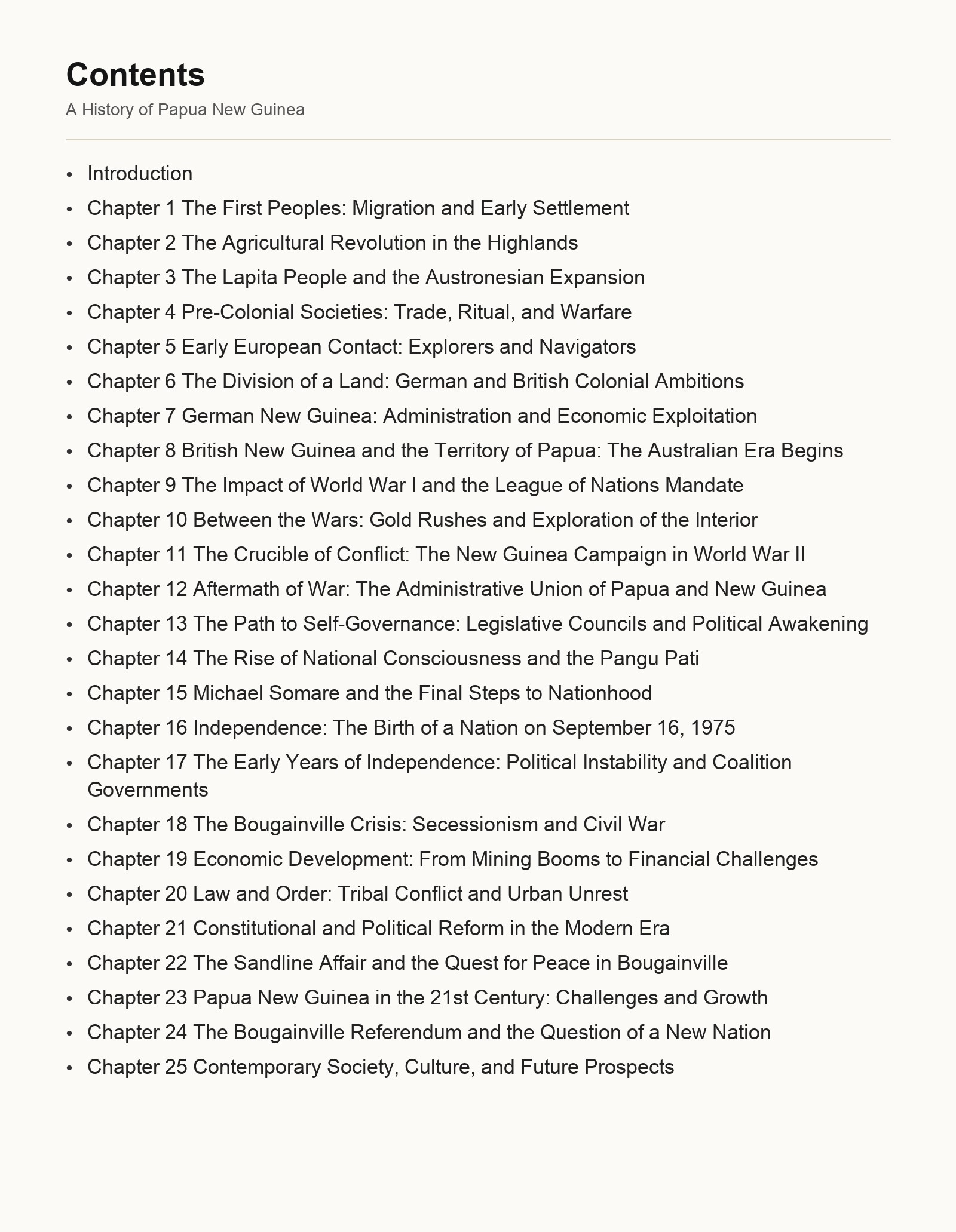
- Introduction
- Chapter 1 The First Peoples: Migration and Early Settlement
- Chapter 2 The Agricultural Revolution in the Highlands
- Chapter 3 The Lapita People and the Austronesian Expansion
- Chapter 4 Pre-Colonial Societies: Trade, Ritual, and Warfare
- Chapter 5 Early European Contact: Explorers and Navigators
- Chapter 6 The Division of a Land: German and British Colonial Ambitions
- Chapter 7 German New Guinea: Administration and Economic Exploitation
- Chapter 8 British New Guinea and the Territory of Papua: The Australian Era Begins
- Chapter 9 The Impact of World War I and the League of Nations Mandate
- Chapter 10 Between the Wars: Gold Rushes and Exploration of the Interior
- Chapter 11 The Crucible of Conflict: The New Guinea Campaign in World War II
- Chapter 12 Aftermath of War: The Administrative Union of Papua and New Guinea
- Chapter 13 The Path to Self-Governance: Legislative Councils and Political Awakening
- Chapter 14 The Rise of National Consciousness and the Pangu Pati
- Chapter 15 Michael Somare and the Final Steps to Nationhood
- Chapter 16 Independence: The Birth of a Nation on September 16, 1975
- Chapter 17 The Early Years of Independence: Political Instability and Coalition Governments
- Chapter 18 The Bougainville Crisis: Secessionism and Civil War
- Chapter 19 Economic Development: From Mining Booms to Financial Challenges
- Chapter 20 Law and Order: Tribal Conflict and Urban Unrest
- Chapter 21 Constitutional and Political Reform in the Modern Era
- Chapter 22 The Sandline Affair and the Quest for Peace in Bougainville
- Chapter 23 Papua New Guinea in the 21st Century: Challenges and Growth
- Chapter 24 The Bougainville Referendum and the Question of a New Nation
- Chapter 25 Contemporary Society, Culture, and Future Prospects
Author:
Published By:
Date Published:
May 24, 2026
Type:
Nonfiction
Language:
English
Word Count:
50,116 words
Reading Time:
3 hours 31 minutes
Sample:
Order:
Order A History of Papua New Guinea (Paperback) on MixCache.com:
Buy NowPrint copy is made to order and ships worldwide. Includes the ebook free, ready to read instantly.
$5 account credit for all new MixCache.com accounts, usable toward any ebook purchase!*