Browse by Category
Fiction
- Action & Adventure
- African American
- Anthologies
- Children's Fiction
- Classics
- Comics & Graphic Novels
- Coming of Age
- Contemporary
- Cultural & Regional
- Drama
- Erotica
- Fantasy
- General
- Historical Fiction
- Horror
- Humor & Satire
- Literary Fiction
- Mystery, Thriller & Suspense
- Poetry
- Religious & Inspirational
- Romance
- Science Fiction
- Short Stories
- War & Military
- Westerns
- Women's Fiction
- Young Adult
Non-Fiction
- Antiques & Collectibles
- Arts & Photography
- Biographies & Memoirs
- Business & Money
- Children's Non-Fiction
-
Computers & Technology
- Artificial Intelligence
- Computer Science
- Cybersecurity & Cryptography
- Data Science & Analytics
- Databases & Big Data
- Game Development & Design
- General
- Hardware & DIY
- Mobile App Development
- Networking & Cloud Computing
- Operating Systems
- Programming
- Robotics
- Software
- Software Engineering
- User Experience (UX) & Design
- Web Development & Design
- Cooking, Food & Wine
- Crafts, Hobbies & Home
- Education & Teaching
- Engineering
- General
- Health, Fitness & Dieting
-
History
- African History
- African History - North Africa
- African History - Sub-Saharan Africa
- American History
- American History - 20th Century
- American History - Civil War
- American History - Colonial Period
- Ancient History
- Asian History
- Asian History - China
- Asian History - India
- Asian History - Japan
- Asian History - Southeast Asia
- European History
- European History - Ancient Greece
- European History - Ancient Rome
- European History - Medieval
- European History - Modern
- European History - Renaissance
- General
- Middle Eastern History
- Military History
- Military History - Aviation
- Military History - Naval
- Social & Cultural History
- World History
- Humor & Entertainment
- Industrial Technology
- Language Learning
- Law
- LGBTQ+ Non-Fiction
- Literary Criticism
- Medical Books
- Parenting & Relationships
- Philosophy
- Politics & Social Sciences
- Reference
- Religion & Spirituality
-
Science & Math
- Agricultural Sciences
- Astronomy & Space Science
- Behavioral Sciences
- Biological Sciences
- Botany & Plant Science
- Chemistry
- Earth Sciences
- Engineering - Chemical
- Engineering - Civil
- Engineering - Electrical
- Engineering - Mechanical
- Environment
- General
- Geology
- Mathematics
- Nature & Ecology
- Oceanography
- Paleontology
- Physics
- Statistics
- Self-Help
- Sports & Outdoors
- Study Aids
- Sustainability & Green Living
- Textbooks
- Transportation
- Travel
- True Crime
- Urban Planning & Development
- Veterinary Medicine
- Writing & Publishing
Jump to Section
MixCache.com Total Access
Unlimited reading and audiobooks for every book published by MixCache.com.
Included titles carry the MTA badge.
Learn more →A History of Saint Kitts and Nevis
About this book:
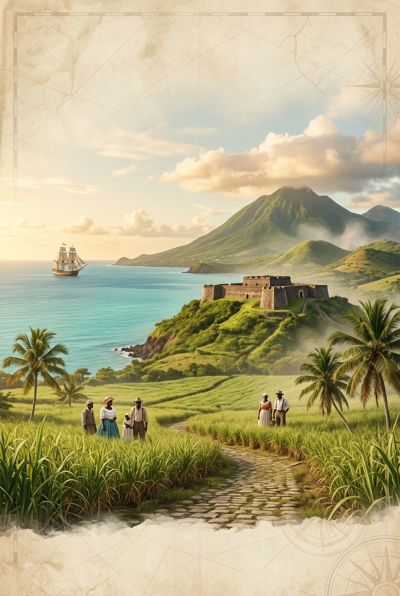

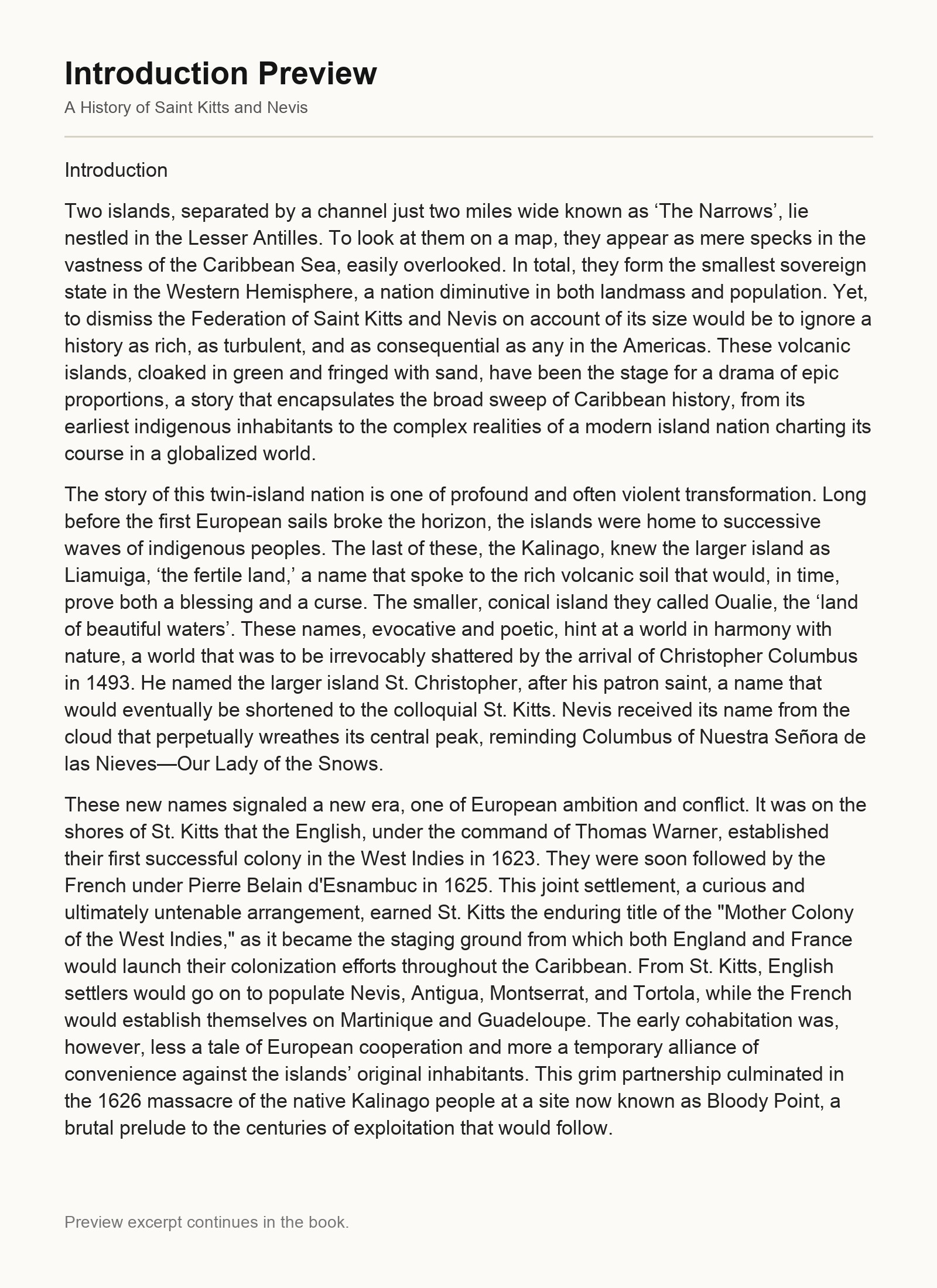
This comprehensive history invites readers to journey through the remarkable story of Saint Kitts and Nevis, from the earliest indigenous settlements to the complexities of twenty-first century nationhood. Bernard Green masterfully traces how these two tiny islands, often overlooked on maps, have played an outsized role in shaping Caribbean and global history. Readers will discover how the islands' volcanic landscapes and strategic location made them prized possessions in European power struggles, while their people demonstrated extraordinary resilience in the face of conquest, exploitation, and adversity.
The book delves deeply into the transformative eras that defined the islands' destiny. Readers will walk alongside the First Peoples who named Liamuiga and Oualie, witness the dramatic arrival of Columbus and the ensuing Anglo-French rivalry that turned St. Kitts into the "Mother Colony of the West Indies," and understand how the rise of King Sugar reshaped every aspect of life—from the construction of Brimstone Hill Fortress by enslaved labor to the emergence of a brutal plantation economy that generated immense wealth through unimaginable human suffering. The narrative brings to life pivotal figures like Alexander Hamilton and Horatio Nelson, whose formative years on Nevis connect these small islands to world-changing events in America and naval history.
Readers will experience the tumultuous journey from slavery to sovereignty, examining the painful transition of emancipation and apprenticeship, the rise of labor movements that challenged plantocratic rule, and the political awakening that led to self-governance. The book details the islands' fraught path through the West Indies Federation, the Anguilla Revolution, the Christena disaster that tore at the national psyche, and finally the hard-won independence of 1983. Through these chapters, readers gain insight into the persistent tensions between unity and autonomy that have shaped the federation's constitutional evolution, including Nevis's unique right to secede.
The narrative continues into the modern era, revealing how the closure of the sugar industry in 2005 forced a profound economic pivot toward tourism, offshore finance, and citizenship by investment. Readers will understand the contemporary challenges of balancing global integration with national sovereignty, from navigating international financial regulations to managing the impacts of pandemics on a tourism-dependent economy. Most vividly, the book explores how national identity is forged not just in parliaments and ledgers but in the rhythms of Carnival and Culturama, the beat of string bands and masquerade troupes, the pride of cricket fields and Olympic tracks, and the enduring cultural expressions that affirm a people's creativity and endurance against all odds.
By the book's conclusion, readers will have gained a profound appreciation for how Saint Kitts and Nevis transformed from colonies into a sovereign nation, learning invaluable lessons about resilience, adaptation, and the quest for self-determination. This history reveals not just what happened to these islands, but what their people did in response—how they survived, resisted, rebuilt, and continue to forge a unique identity in a globalized world. For anyone seeking to understand the true depth of Caribbean history beyond stereotypes of sun and sand, this work offers an essential, human-centered account of a small nation's extraordinary journey.
What You'll Find Inside:
- The book traces the indigenous heritage of St. Kitts and Nevis from the Archaic peoples through the Saladoid culture to the Kalinago, whose names for the islands (Liamuiga and Oualie) reflect their deep connection to the land.
- It details how St. Kitts became known as the 'Mother Colony of the West Indies' as the first successful English and French settlements that launched further colonization throughout the Caribbean.
- The work examines the brutal sugar economy built on enslaved African labor, which transformed the islands' demographics, ecology, and social structure for over three centuries.
- It covers the complex path to independence, including the unique constitutional arrangement that grants Nevis the right to secede and the 1998 referendum that tested this provision.
- The book concludes with the modern economic pivot from sugar to tourism, finance, and citizenship by investment, examining both the opportunities and challenges of this transition.
Who's It For:
This book is ideal for students, researchers, and general readers interested in Caribbean history, post-colonial studies, and the specific development of small island nations. It will particularly benefit those seeking to understand how Saint Kitts and Nevis navigated centuries of colonial rule, slavery, economic transformation, and political evolution to become the smallest sovereign state in the Western Hemisphere. The comprehensive yet accessible narrative makes it valuable for academic coursework, personal enrichment, or anyone wishing to grasp the profound historical forces that have shaped this twin-island federation.
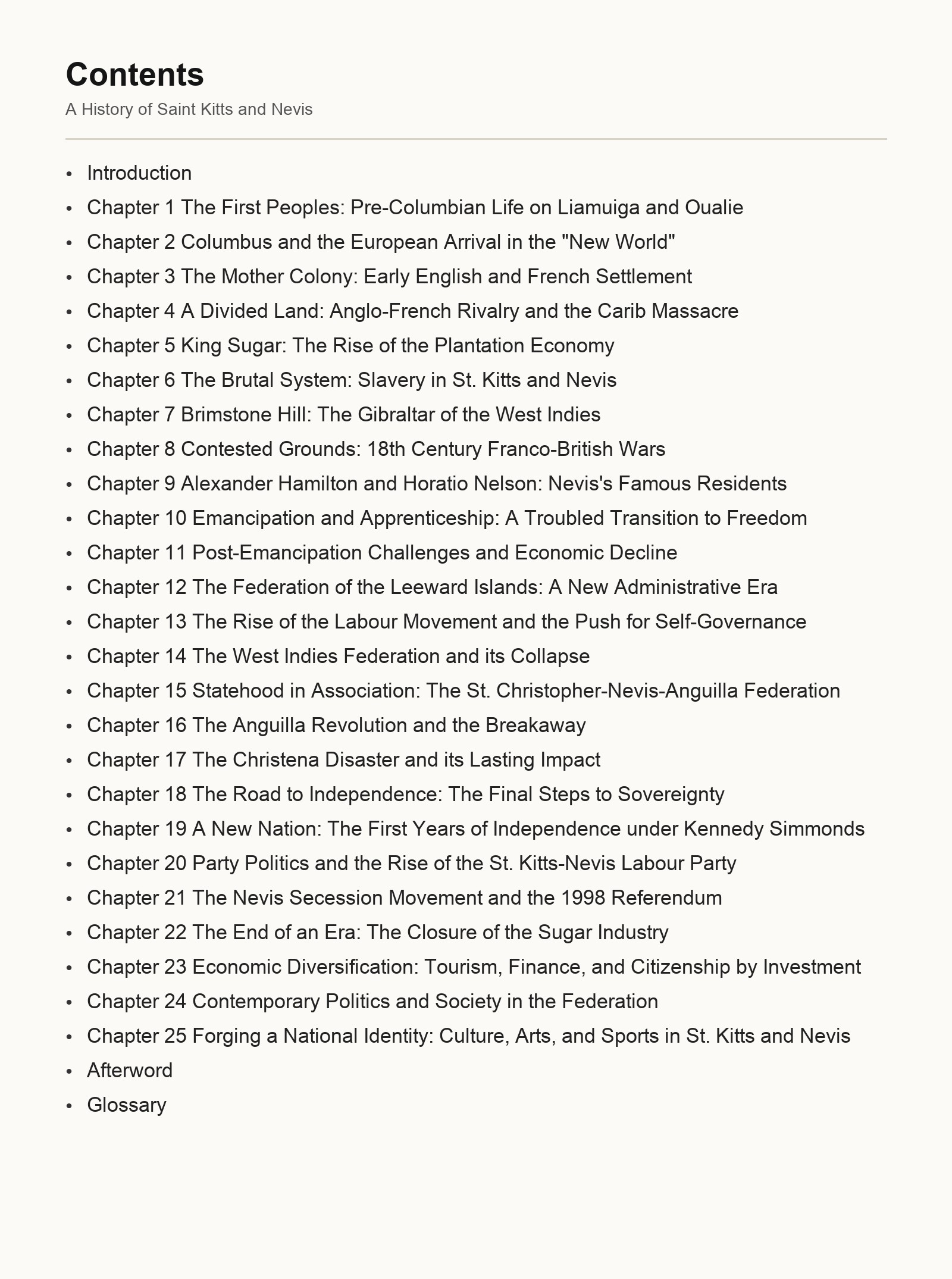
Table of Contents:
- Introduction
- Chapter 1 The First Peoples: Pre-Columbian Life on Liamuiga and Oualie
- Chapter 2 Columbus and the European Arrival in the "New World"
- Chapter 3 The Mother Colony: Early English and French Settlement
- Chapter 4 A Divided Land: Anglo-French Rivalry and the Carib Massacre
- Chapter 5 King Sugar: The Rise of the Plantation Economy
- Chapter 6 The Brutal System: Slavery in St. Kitts and Nevis
- Chapter 7 Brimstone Hill: The Gibraltar of the West Indies
- Chapter 8 Contested Grounds: 18th Century Franco-British Wars
- Chapter 9 Alexander Hamilton and Horatio Nelson: Nevis's Famous Residents
- Chapter 10 Emancipation and Apprenticeship: A Troubled Transition to Freedom
- Chapter 11 Post-Emancipation Challenges and Economic Decline
- Chapter 12 The Federation of the Leeward Islands: A New Administrative Era
- Chapter 13 The Rise of the Labour Movement and the Push for Self-Governance
- Chapter 14 The West Indies Federation and its Collapse
- Chapter 15 Statehood in Association: The St. Christopher-Nevis-Anguilla Federation
- Chapter 16 The Anguilla Revolution and the Breakaway
- Chapter 17 The Christena Disaster and its Lasting Impact
- Chapter 18 The Road to Independence: The Final Steps to Sovereignty
- Chapter 19 A New Nation: The First Years of Independence under Kennedy Simmonds
- Chapter 20 Party Politics and the Rise of the St. Kitts-Nevis Labour Party
- Chapter 21 The Nevis Secession Movement and the 1998 Referendum
- Chapter 22 The End of an Era: The Closure of the Sugar Industry
- Chapter 23 Economic Diversification: Tourism, Finance, and Citizenship by Investment
- Chapter 24 Contemporary Politics and Society in the Federation
- Chapter 25 Forging a National Identity: Culture, Arts, and Sports in St. Kitts and Nevis
- Afterword
- Glossary
Author:
Published By:
Date Published:
May 24, 2026
Type:
Nonfiction
Language:
English
Also Available In:
German, Spanish, French, Italian, Dutch, Portuguese
Word Count:
50,072 words
Reading Time:
3 hours 30 minutes
Sample:
Order:
Order A History of Saint Kitts and Nevis (Paperback) on MixCache.com:
Buy NowPrint copy is made to order and ships worldwide. Includes the ebook free, ready to read instantly.
$5 account credit for all new MixCache.com accounts, usable toward any ebook purchase!*