Browse by Category
Fiction
- Action & Adventure
- African American
- Anthologies
- Children's Fiction
- Classics
- Comics & Graphic Novels
- Coming of Age
- Contemporary
- Cultural & Regional
- Drama
- Erotica
- Fantasy
- General
- Historical Fiction
- Horror
- Humor & Satire
- Literary Fiction
- Mystery, Thriller & Suspense
- Poetry
- Religious & Inspirational
- Romance
- Science Fiction
- Short Stories
- War & Military
- Westerns
- Women's Fiction
- Young Adult
Non-Fiction
- Antiques & Collectibles
- Arts & Photography
- Biographies & Memoirs
- Business & Money
- Children's Non-Fiction
-
Computers & Technology
- Artificial Intelligence
- Computer Science
- Cybersecurity & Cryptography
- Data Science & Analytics
- Databases & Big Data
- Game Development & Design
- General
- Hardware & DIY
- Mobile App Development
- Networking & Cloud Computing
- Operating Systems
- Programming
- Robotics
- Software
- Software Engineering
- User Experience (UX) & Design
- Web Development & Design
- Cooking, Food & Wine
- Crafts, Hobbies & Home
- Education & Teaching
- Engineering
- General
- Health, Fitness & Dieting
-
History
- African History
- African History - North Africa
- African History - Sub-Saharan Africa
- American History
- American History - 20th Century
- American History - Civil War
- American History - Colonial Period
- Ancient History
- Asian History
- Asian History - China
- Asian History - India
- Asian History - Japan
- Asian History - Southeast Asia
- European History
- European History - Ancient Greece
- European History - Ancient Rome
- European History - Medieval
- European History - Modern
- European History - Renaissance
- General
- Middle Eastern History
- Military History
- Military History - Aviation
- Military History - Naval
- Social & Cultural History
- World History
- Humor & Entertainment
- Industrial Technology
- Language Learning
- Law
- LGBTQ+ Non-Fiction
- Literary Criticism
- Medical Books
- Parenting & Relationships
- Philosophy
- Politics & Social Sciences
- Reference
- Religion & Spirituality
-
Science & Math
- Agricultural Sciences
- Astronomy & Space Science
- Behavioral Sciences
- Biological Sciences
- Botany & Plant Science
- Chemistry
- Earth Sciences
- Engineering - Chemical
- Engineering - Civil
- Engineering - Electrical
- Engineering - Mechanical
- Environment
- General
- Geology
- Mathematics
- Nature & Ecology
- Oceanography
- Paleontology
- Physics
- Statistics
- Self-Help
- Sports & Outdoors
- Study Aids
- Sustainability & Green Living
- Textbooks
- Transportation
- Travel
- True Crime
- Urban Planning & Development
- Veterinary Medicine
- Writing & Publishing
Jump to Section
MixCache.com Total Access
Unlimited reading and audiobooks for every book published by MixCache.com.
Included titles carry the MTA badge.
Learn more →
Contemporary Muslim Thinkers and Movements
MTA
Profiles and critiques of influential intellectuals, activists, and reform movements shaping today's Islamicate world
About this book:
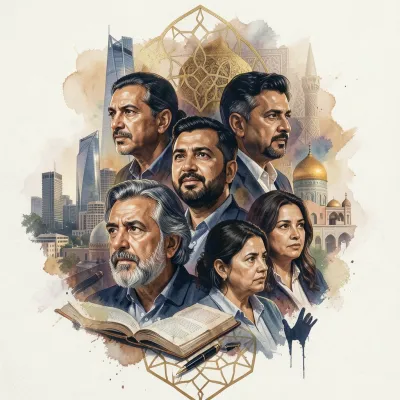
This volume serves as an analytical compass for navigating the diverse intellectuals, activists, and reform movements shaping the Islamicate world from the late twentieth century to the present. By deliberately employing the terms “contemporary” and “Islamicate,” the book situates Muslim thought within a broad civilizational sphere that encompasses theology, law, politics, culture, economics, and everyday life, while recognizing the internal diversity and transnational flows that characterize contemporary discourse. Each chapter combines biographical profiling with methodological critique, situating thinkers within their institutional habitats, tracing the reception and contestation of their ideas, and examining how arguments travel across universities, courts, media, mosques, and digital platforms.
The work is organized thematically, beginning with foundational discussions of reformist hermeneutics and the rethinking of Shari‘a in relation to human rights and constitutionalism, then moving through feminist exegesis and gender justice, debates over Hadith authority and moral reasoning, and the transformations of Political Islam after the Arab uprisings. Subsequent chapters explore post‑Islamist orientations toward everyday life, the experiences of Muslim minorities in the West, philosophical critiques of modernity, anthropological studies of piety, and the revivals of Sufism and the internal transitions within Salafism and Shi‘i thought. Further sections address Islamic finance and the moral economy, Eco‑Islamic activism, digital da‘wa and platformed piety, reimagined education, artistic expressions in film, hip‑hop and visual culture, science and bioethics, race and migration in the Black/Global Muslim Atlantic, Qur’anic translation and public theology, gender‑focused family law reform, security and counter‑extremism politics, interfaith theology and diplomacy, and concluding scenarios for the future of Muslim thought.
Overall, the book reveals a vibrant, contested, and intellectually dynamic field where traditional sources are continually re‑engaged through ijtihad, contextualization, and interdisciplinary dialogue. It highlights how authority is negotiated among ulama, charismatic preachers, online influencers, and transnational networks, and how movements ranging from quietist spirituality to activist justice efforts seek to articulate Islamic visions that respond to modernity’s challenges—climate change, bioethical dilemmas, racial injustice, and demands for democratic governance. By mapping these currents, the volume equips readers to assess claims, recognize patterns of continuity and change, and participate in the ongoing, polyphonic seminar of contemporary Islamicate thought with both charitable reading and rigorous critique.
What You'll Find Inside:
- Reformist hermeneutics of Qur'an and Hadith addressing modern challenges like gender equality and human rights through contextual and ethical readings
- The transformation of Political Islam and emergence of post-Islamism following the Arab Uprisings, examining parties, movements, and state adaptations
- Muslim minority negotiations of identity, citizenship, and pluralism in Western secular contexts, including interfaith engagement and civic belonging
- Contemporary ethical frameworks in Islamic finance, environmental ethics, and bioethics rooted in maqasid al-Shari'a (higher objectives of Islamic law)
- Digital transformation of religious authority, practice, and community formation through online platforms, fatwa infrastructures, and platformed piety
Who's It For:
This book serves students seeking an entry point into contemporary Muslim thought, journalists needing analytical tools for nuanced reporting beyond headlines, and scholars looking for comparative mapping of adjacent conversations. It equips readers to evaluate the impact of ideas by examining claimed interpretive authority, addressed publics, sustaining institutions, and internal/external critiques—making it ideal for those engaging critically with Islamicate intellectual landscapes in academic, professional, or civic contexts.
Table of Contents:
- Introduction
- Chapter 1 Mapping the Field: Why "Contemporary" and Why "Islamicate"?
- Chapter 2 Theology after Tradition: Reformist Readings of Scripture
- Chapter 3 Rethinking Shari‘a: Human Rights and Constitutionalism
- Chapter 4 Feminist Exegesis and Gender Justice
- Chapter 5 Authority and Authenticity: Hadith, Law, and Moral Reasoning
- Chapter 6 Political Islam after the Uprisings: Parties, Movements, and States
- Chapter 7 Post‑Islamism and Everyday Life
- Chapter 8 Pluralism, Citizenship, and Muslim Minorities in the West
- Chapter 9 Philosophy and the Critique of Modernity
- Chapter 10 Piety, Secularism, and the Anthropology of Islam
- Chapter 11 Sufi Revivals: Spirituality, Markets, and Media
- Chapter 12 Salafism in Transition: Authority, Reform, and Dissent
- Chapter 13 Shi‘i Intellectual Currents: From Revolution to Reform
- Chapter 14 Islamic Finance and the Moral Economy
- Chapter 15 Eco‑Islam: Environmental Ethics and Activism
- Chapter 16 Digital Da‘wa and Platformed Piety
- Chapter 17 Education Reimagined: Madrasas, Universities, and Liberal Arts
- Chapter 18 Art and Aesthetics: Film, Hip‑Hop, and the Islamic Imaginary
- Chapter 19 Science, Bioethics, and New Fatwa Infrastructures
- Chapter 20 Race, Migration, and the Black/Global Muslim Atlantic
- Chapter 21 Qur’anic Translation, Hermeneutics, and Public Theology
- Chapter 22 Gender, Law, and Family Reform Movements
- Chapter 23 Security, Counter‑Extremism, and the Politics of Knowledge
- Chapter 24 Interfaith Theology, Dialogue, and Diplomacy
- Chapter 25 Futures of Muslim Thought: Scenarios, Risks, and Hopes
Author:
Published By:
Date Published:
May 22, 2026
Type:
Nonfiction
Language:
English
Word Count:
47,074 words
Reading Time:
3 hours 18 minutes
Sample:
Order:
Order Contemporary Muslim Thinkers and Movements (Paperback) on MixCache.com:
Buy NowPrint copy is made to order and ships worldwide. Includes the ebook free, ready to read instantly.
$5 account credit for all new MixCache.com accounts, usable toward any ebook purchase!*