
Browse by Category
Fiction
- Action & Adventure
- African American
- Anthologies
- Children's Fiction
- Classics
- Comics & Graphic Novels
- Coming of Age
- Contemporary
- Cultural & Regional
- Drama
- Erotica
- Fantasy
- General
- Historical Fiction
- Horror
- Humor & Satire
- Literary Fiction
- Mystery, Thriller & Suspense
- Poetry
- Religious & Inspirational
- Romance
- Science Fiction
- Short Stories
- War & Military
- Westerns
- Women's Fiction
- Young Adult
Non-Fiction
- Antiques & Collectibles
- Arts & Photography
- Biographies & Memoirs
- Business & Money
- Children's Non-Fiction
-
Computers & Technology
- Artificial Intelligence
- Computer Science
- Cybersecurity & Cryptography
- Data Science & Analytics
- Databases & Big Data
- Game Development & Design
- General
- Hardware & DIY
- Mobile App Development
- Networking & Cloud Computing
- Operating Systems
- Programming
- Robotics
- Software
- Software Engineering
- User Experience (UX) & Design
- Web Development & Design
- Cooking, Food & Wine
- Crafts, Hobbies & Home
- Education & Teaching
- Engineering
- General
- Health, Fitness & Dieting
-
History
- African History
- African History - North Africa
- African History - Sub-Saharan Africa
- American History
- American History - 20th Century
- American History - Civil War
- American History - Colonial Period
- Ancient History
- Asian History
- Asian History - China
- Asian History - India
- Asian History - Japan
- Asian History - Southeast Asia
- European History
- European History - Ancient Greece
- European History - Ancient Rome
- European History - Medieval
- European History - Modern
- European History - Renaissance
- General
- Middle Eastern History
- Military History
- Military History - Aviation
- Military History - Naval
- Social & Cultural History
- World History
- Humor & Entertainment
- Industrial Technology
- Language Learning
- Law
- LGBTQ+ Non-Fiction
- Literary Criticism
- Medical Books
- Parenting & Relationships
- Philosophy
- Politics & Social Sciences
- Reference
- Religion & Spirituality
-
Science & Math
- Agricultural Sciences
- Astronomy & Space Science
- Behavioral Sciences
- Biological Sciences
- Botany & Plant Science
- Chemistry
- Earth Sciences
- Engineering - Chemical
- Engineering - Civil
- Engineering - Electrical
- Engineering - Mechanical
- Environment
- General
- Geology
- Mathematics
- Nature & Ecology
- Oceanography
- Paleontology
- Physics
- Statistics
- Self-Help
- Sports & Outdoors
- Study Aids
- Sustainability & Green Living
- Textbooks
- Transportation
- Travel
- True Crime
- Urban Planning & Development
- Veterinary Medicine
- Writing & Publishing
Jump to Section

Want unlimited access to all books published by MixCache.com (plus their audiobooks)? Try MixCache.com Total Access. Look for the MTA badge on book covers to identify included titles.
Access to infinite ebooks: Don't see the book you want? Suggest it and we'll create it (free!) for you from scratch with our powerful AI book writer. Then read it with MTA - besides profiting from any sales it makes!
The Peoples of Africa
About this book:
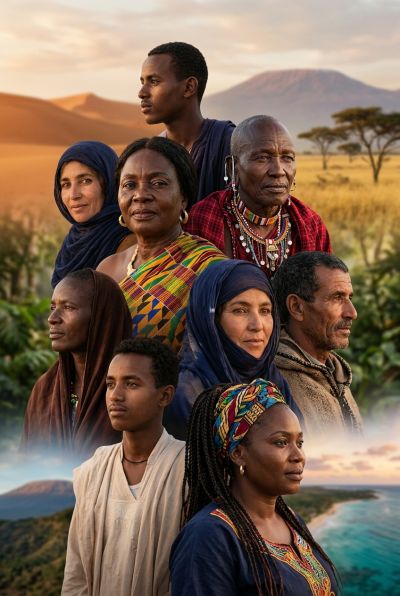
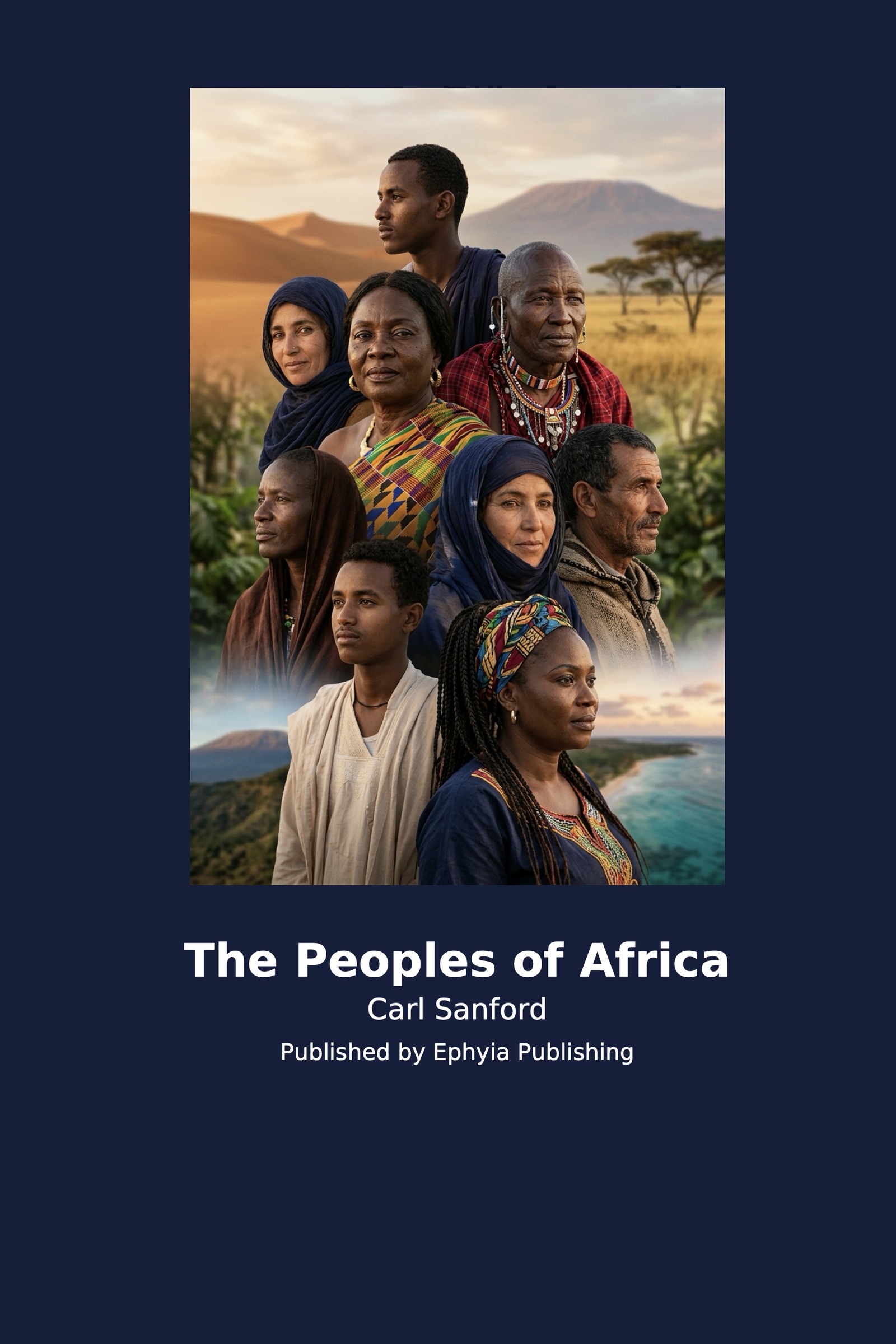
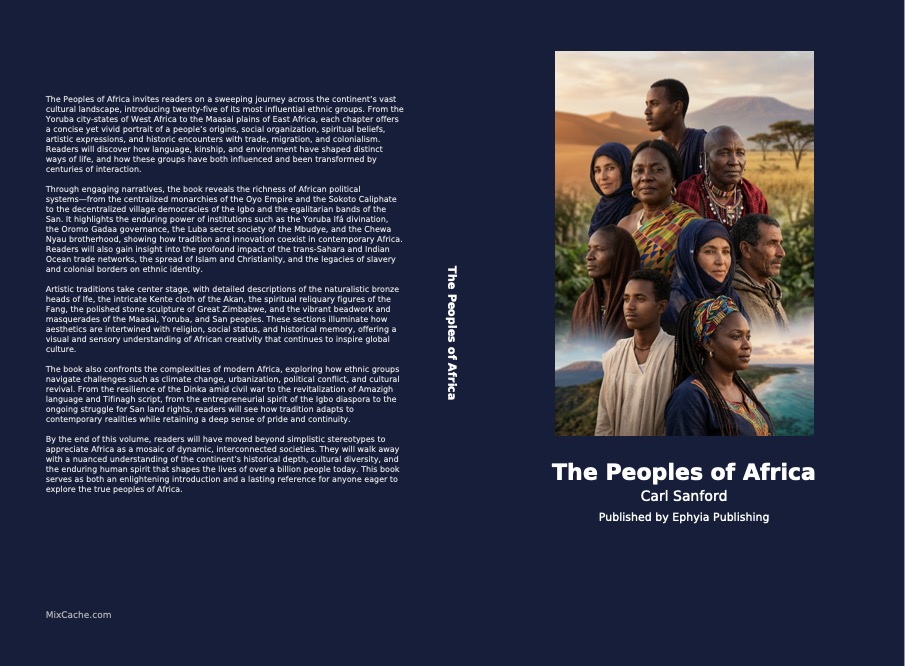
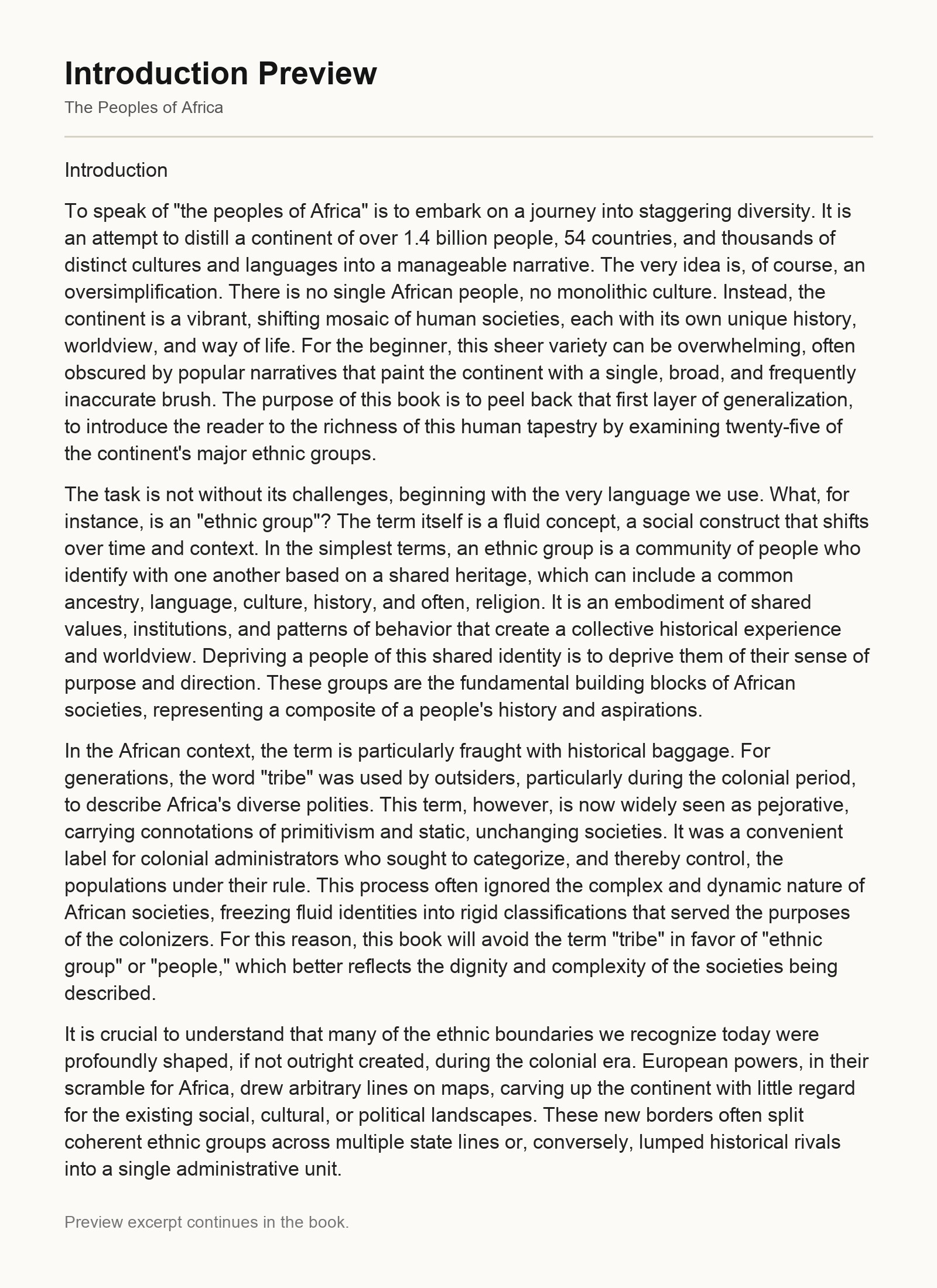
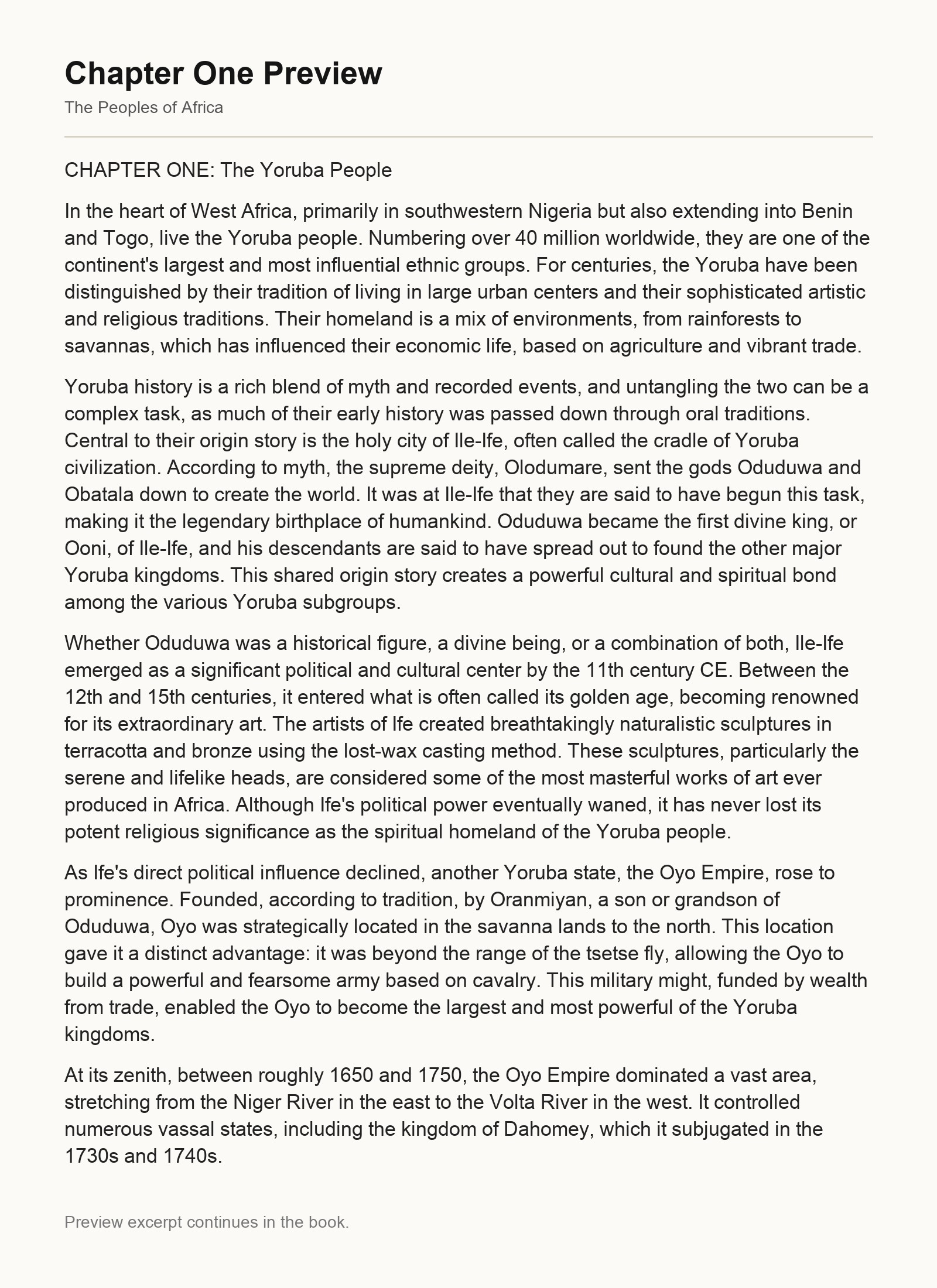
The Peoples of Africa invites readers on a sweeping journey across the continent’s vast cultural landscape, introducing twenty‑five of its most influential ethnic groups. From the Yoruba city‑states of West Africa to the Maasai plains of East Africa, each chapter offers a concise yet vivid portrait of a people’s origins, social organization, spiritual beliefs, artistic expressions, and historic encounters with trade, migration, and colonialism. Readers will discover how language, kinship, and environment have shaped distinct ways of life, and how these groups have both influenced and been transformed by centuries of interaction.
Through engaging narratives, the book reveals the richness of African political systems—from the centralized monarchies of the Oyo Empire and the Sokoto Caliphate to the decentralized village democracies of the Igbo and the egalitarian bands of the San. It highlights the enduring power of institutions such as the Yoruba Ifá divination, the Oromo Gadaa governance, the Luba secret society of the Mbudye, and the Chewa Nyau brotherhood, showing how tradition and innovation coexist in contemporary Africa. Readers will also gain insight into the profound impact of the trans‑Sahara and Indian Ocean trade networks, the spread of Islam and Christianity, and the legacies of slavery and colonial borders on ethnic identity.
Artistic traditions take center stage, with detailed descriptions of the naturalistic bronze heads of Ife, the intricate Kente cloth of the Akan, the spiritual reliquary figures of the Fang, the polished stone sculpture of Great Zimbabwe, and the vibrant beadwork and masquerades of the Maasai, Yoruba, and San peoples. These sections illuminate how aesthetics are intertwined with religion, social status, and historical memory, offering a visual and sensory understanding of African creativity that continues to inspire global culture.
The book also confronts the complexities of modern Africa, exploring how ethnic groups navigate challenges such as climate change, urbanization, political conflict, and cultural revival. From the resilience of the Dinka amid civil war to the revitalization of Amazigh language and Tifinagh script, from the entrepreneurial spirit of the Igbo diaspora to the ongoing struggle for San land rights, readers will see how tradition adapts to contemporary realities while retaining a deep sense of pride and continuity.
By the end of this volume, readers will have moved beyond simplistic stereotypes to appreciate Africa as a mosaic of dynamic, interconnected societies. They will walk away with a nuanced understanding of the continent’s historical depth, cultural diversity, and the enduring human spirit that shapes the lives of over a billion people today. This book serves as both an enlightening introduction and a lasting reference for anyone eager to explore the true peoples of Africa.
What You'll Find Inside:
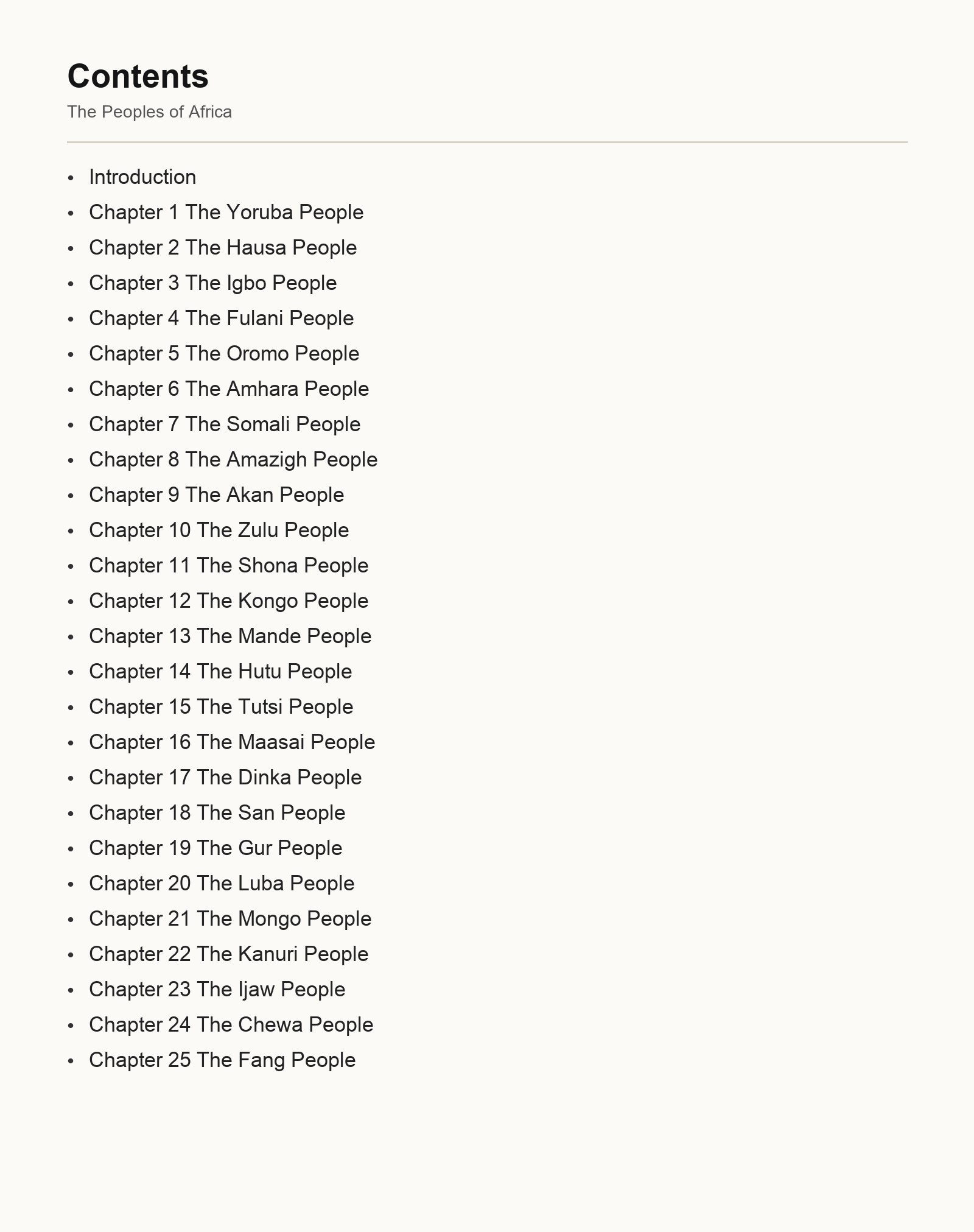
- The book explores the incredible ethnic diversity of Africa through profiles of 25 major ethnic groups across the continent, challenging the myth of a monolithic African identity
- It examines how colonialism artificially shaped ethnic boundaries and continues to influence African politics, identity, and intergroup relations to this day
- Each chapter provides insights into the history, social organization, cultural practices, and economic life of different African peoples, from ancient kingdoms to modern communities
- The book highlights both unique traditions (like the Yoruba's Ifá divination, Maasai age-sets, and San trance dances) and shared experiences across African societies
- It emphasizes that African ethnic identities are dynamic and evolving, showing how groups navigate modernity while maintaining cultural resilience and adapting to 21st-century challenges
Who's It For:
This book is ideal for beginners and general readers seeking an accessible introduction to Africa's ethnic diversity. It will particularly benefit students of African studies, anthropology, or history who need a foundational understanding of the continent's major peoples. Anyone interested in gaining a nuanced perspective beyond simplistic portrayals of Africa will find valuable insights in this comprehensive yet approachable overview that balances historical depth with contemporary relevance.
Author:
Published By:
Date Published:
May 22, 2026
Type:
Nonfiction
Language:
English
Also Available In:
Word Count:
50,860 words
Reading Time:
3 hours 34 minutes
Sample:
Order:
Order The Peoples of Africa (Hardcover) on MixCache.com:
Buy NowPrint copy is made to order and ships worldwide. Includes the ebook free, ready to read instantly.
$5 account credit for all new MixCache.com accounts, usable toward any ebook purchase!*


