Browse by Category
Fiction
- Action & Adventure
- African American
- Anthologies
- Children's Fiction
- Classics
- Comics & Graphic Novels
- Coming of Age
- Contemporary
- Cultural & Regional
- Drama
- Erotica
- Fantasy
- General
- Historical Fiction
- Horror
- Humor & Satire
- Literary Fiction
- Mystery, Thriller & Suspense
- Poetry
- Religious & Inspirational
- Romance
- Science Fiction
- Short Stories
- War & Military
- Westerns
- Women's Fiction
- Young Adult
Non-Fiction
- Antiques & Collectibles
- Arts & Photography
- Biographies & Memoirs
- Business & Money
- Children's Non-Fiction
-
Computers & Technology
- Artificial Intelligence
- Computer Science
- Cybersecurity & Cryptography
- Data Science & Analytics
- Databases & Big Data
- Game Development & Design
- General
- Hardware & DIY
- Mobile App Development
- Networking & Cloud Computing
- Operating Systems
- Programming
- Robotics
- Software
- Software Engineering
- User Experience (UX) & Design
- Web Development & Design
- Cooking, Food & Wine
- Crafts, Hobbies & Home
- Education & Teaching
- Engineering
- General
- Health, Fitness & Dieting
-
History
- African History
- African History - North Africa
- African History - Sub-Saharan Africa
- American History
- American History - 20th Century
- American History - Civil War
- American History - Colonial Period
- Ancient History
- Asian History
- Asian History - China
- Asian History - India
- Asian History - Japan
- Asian History - Southeast Asia
- European History
- European History - Ancient Greece
- European History - Ancient Rome
- European History - Medieval
- European History - Modern
- European History - Renaissance
- General
- Middle Eastern History
- Military History
- Military History - Aviation
- Military History - Naval
- Social & Cultural History
- World History
- Humor & Entertainment
- Industrial Technology
- Language Learning
- Law
- LGBTQ+ Non-Fiction
- Literary Criticism
- Medical Books
- Parenting & Relationships
- Philosophy
- Politics & Social Sciences
- Reference
- Religion & Spirituality
-
Science & Math
- Agricultural Sciences
- Astronomy & Space Science
- Behavioral Sciences
- Biological Sciences
- Botany & Plant Science
- Chemistry
- Earth Sciences
- Engineering - Chemical
- Engineering - Civil
- Engineering - Electrical
- Engineering - Mechanical
- Environment
- General
- Geology
- Mathematics
- Nature & Ecology
- Oceanography
- Paleontology
- Physics
- Statistics
- Self-Help
- Sports & Outdoors
- Study Aids
- Sustainability & Green Living
- Textbooks
- Transportation
- Travel
- True Crime
- Urban Planning & Development
- Veterinary Medicine
- Writing & Publishing
Jump to Section
MixCache.com Total Access
Unlimited reading and audiobooks for every book published by MixCache.com.
Included titles carry the MTA badge.
Learn more →A History of Ghana
About this book:
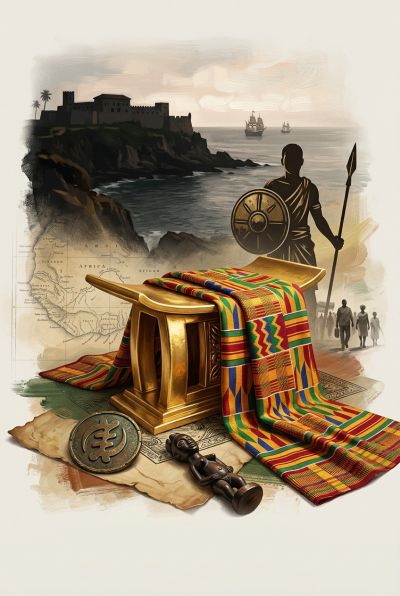


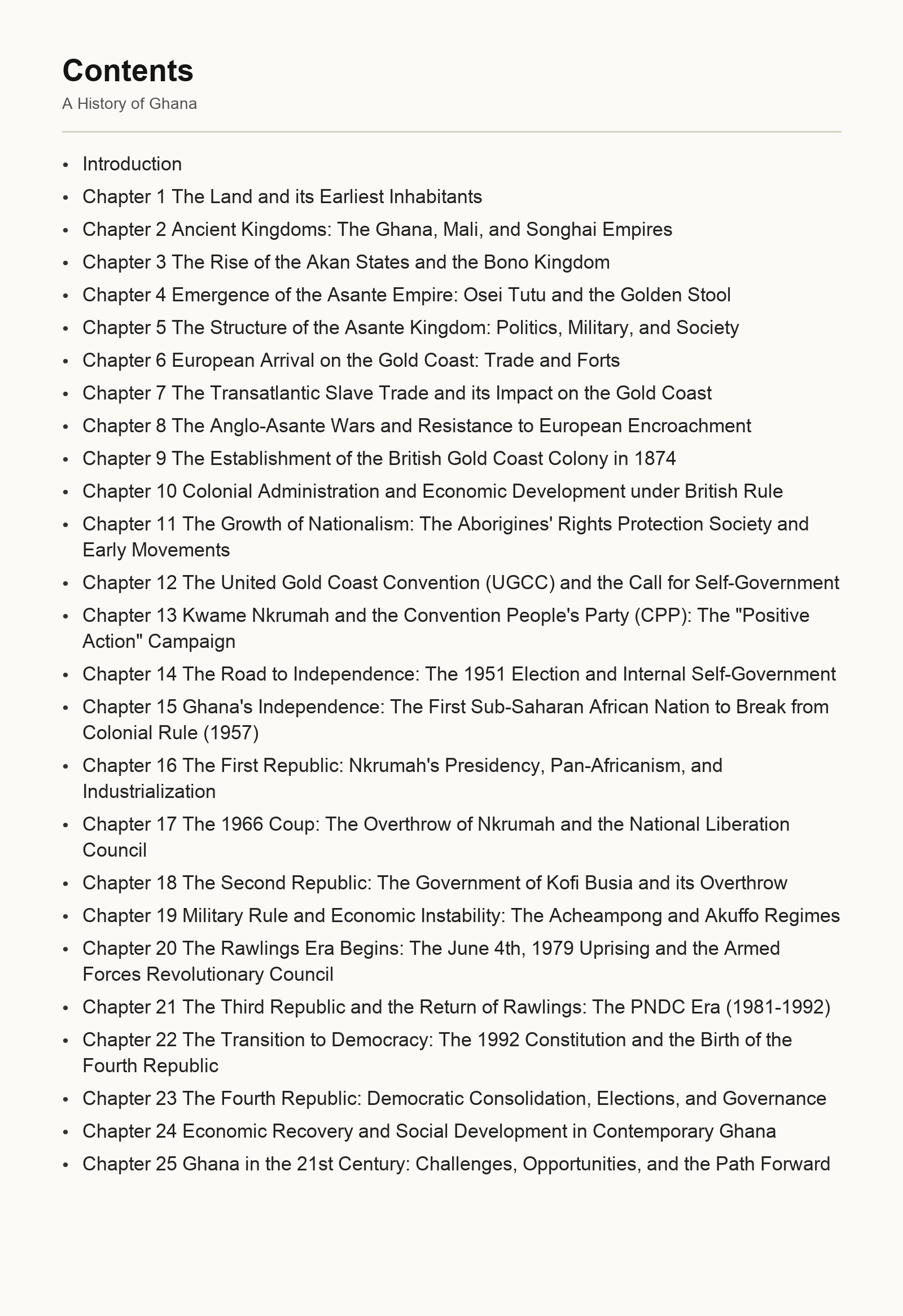
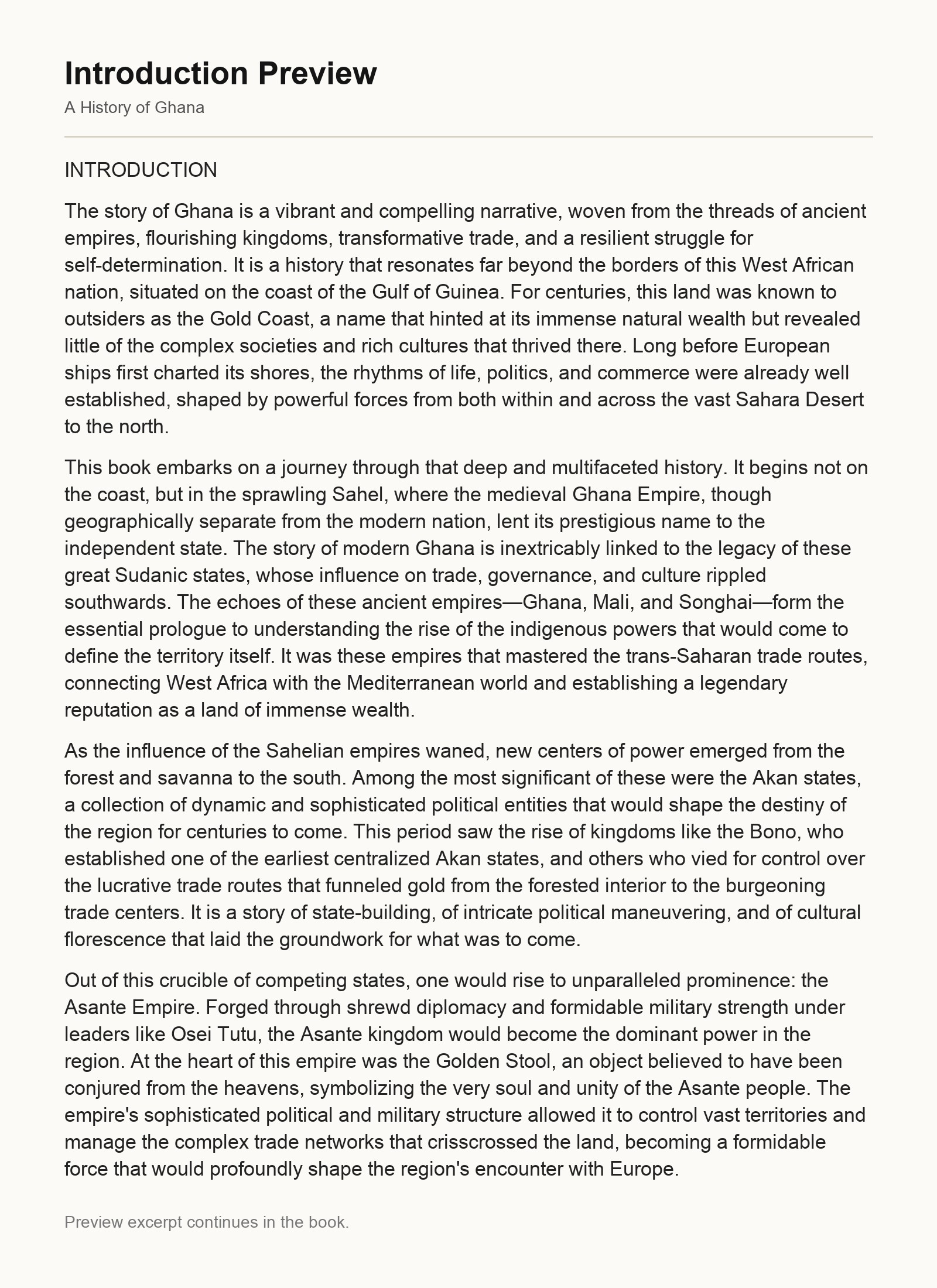
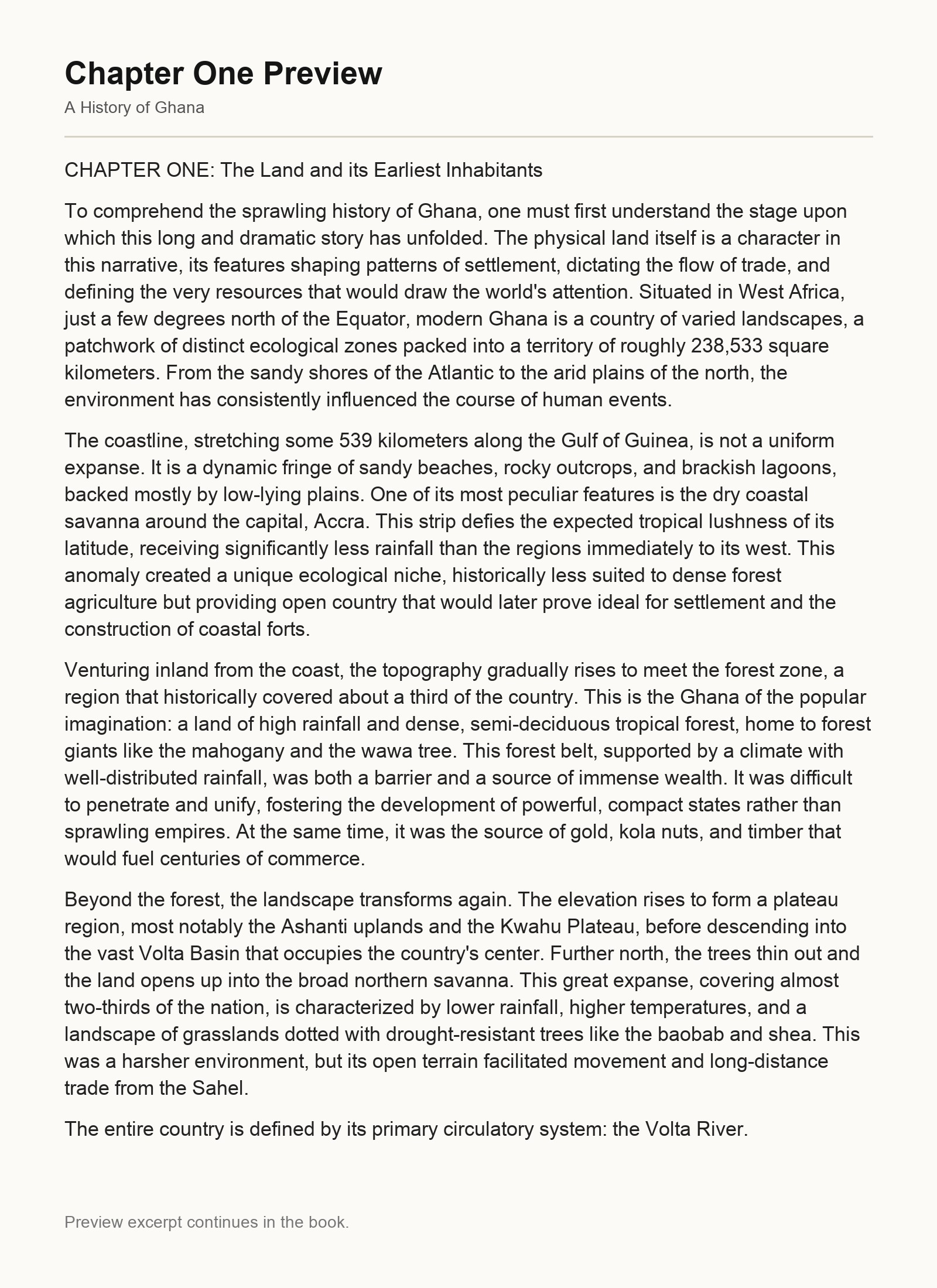
A History of Ghana offers readers a sweeping journey from the earliest Stone Age communities that first left their mark on the Volta River basin to the vibrant, contested democracy of twenty‑first‑century Ghana. Through clear, chronological chapters the book traces how the land’s diverse ecology—coastal savanna, dense forest, and northern savanna—shaped settlement patterns, trade routes, and the rise of powerful societies long before Europeans arrived. Readers will gain a deep appreciation for the ingenuity of early inhabitants, from the Kintampo farmers who pioneered settled life to the iron‑working communities that laid the groundwork for the great Sudanic empires whose wealth and ideas rippled southward.
The narrative then moves into the legendary Ghana, Mali, and Songhai empires, revealing how control of trans‑Saharan gold and salt trade built immense wealth, spread Islamic scholarship, and created a legacy that echoed in the forest kingdoms of the Akan. From there the book details the emergence of the Akan states, the pivotal Bono kingdom, and the dramatic birth of the Asante Empire under Osei Tutu and Okomfo Anokye, whose Golden Stool became the spiritual and political symbol of a unified nation. Readers will experience the inner workings of Asante governance, its disciplined military, sophisticated economy based on gold and kola, and the vibrant art and culture that flourished in Kumasi.
European contact transforms the story as Portuguese, Dutch, British, and other powers erect forts along the Gold Coast, initially trading gold and ivory before the horrific shift to the transatlantic slave trade. The book examines how this brutal commerce reshaped societies, fueled Asante expansion, devastated communities, and turned coastal forts into dungeons of the “Door of No Return.” It then follows the ensuing Anglo‑Asante wars, the British establishment of the Gold Coast Colony in 1874, and the imposition of colonial rule that introduced cash‑crop economies, railways, and Western education while undermining traditional authority.
The struggle for self‑rule comes alive through the rise of nationalist movements—from the Aborigines’ Rights Protection Society and the United Gold Coast Convention to Kwame Nkrumah’s Convention People’s Party and his “Positive Action” campaign. Readers will walk the road to independence, witness the euphoric birth of Ghana in 1957 as the first sub‑Saharan nation to break free, and explore Nkrumah’s ambitious First Republic, his Pan‑African vision, industrialization drives, and the eventual turn toward authoritarianism. The text then navigates the turbulent decades of coups, the Rawlings era, economic reforms, and the hard‑won transition to multi‑party democracy that has defined the Fourth Republic.
Finally, the book brings the story into the present, showing how Ghana has managed oil discovery, debt relief, social programs like the National Health Insurance Scheme and Free Senior High School, and persistent challenges such as urban inequality, corruption, and environmental threats. By the end, readers will not only have absorbed a comprehensive factual account but will also have felt the rhythm of Ghana’s enduring spirit—its resilience, its aspirations, and the ongoing quest to translate independence into inclusive prosperity.
What You'll Find Inside:
- The book traces Ghana's origins from ancient Sudanic empires (Ghana, Mali, Songhai) through the rise of Akan states, highlighting how the Asante Empire formed around the unifying symbol of the Golden Stool under Osei Tutu and Okomfo Anokye.
- It examines the devastating impact of the transatlantic slave trade on Gold Coast societies, detailing how European forts were transformed from gold trading posts to slave holding centers, fueling wars and demographic collapse.
- The text chronicles the path to independence led by Kwame Nkrumah and the CPP, including the 'Positive Action' campaign of nonviolent protests, strikes, and civil disobedience that pressured Britain to grant self-government.
- It analyzes Ghana's post-independence turbulent history, covering Nkrumah's authoritarian turn, successive military coups, and the Rawlings era that began with revolutionary house-cleaning before implementing economic recovery programs.
- The book concludes with Ghana's democratic consolidation in the Fourth Republic, peaceful transfers of power between parties, and contemporary challenges including economic management, social development, and oil wealth distribution.
Who's It For:
This book is ideal for students, scholars, and general readers interested in African history, particularly those seeking a comprehensive understanding of Ghana's journey from ancient civilizations through colonialism to modern democracy. It will benefit readers wanting to understand the historical roots of Ghana's political institutions, economic development, and social dynamics, as well as anyone studying decolonization, post-colonial African states, or the complexities of democratic consolidation in developing nations.
Table of Contents:
- Introduction
- Chapter 1 The Land and its Earliest Inhabitants
- Chapter 2 Ancient Kingdoms: The Ghana, Mali, and Songhai Empires
- Chapter 3 The Rise of the Akan States and the Bono Kingdom
- Chapter 4 Emergence of the Asante Empire: Osei Tutu and the Golden Stool
- Chapter 5 The Structure of the Asante Kingdom: Politics, Military, and Society
- Chapter 6 European Arrival on the Gold Coast: Trade and Forts
- Chapter 7 The Transatlantic Slave Trade and its Impact on the Gold Coast
- Chapter 8 The Anglo-Asante Wars and Resistance to European Encroachment
- Chapter 9 The Establishment of the British Gold Coast Colony in 1874
- Chapter 10 Colonial Administration and Economic Development under British Rule
- Chapter 11 The Growth of Nationalism: The Aborigines' Rights Protection Society and Early Movements
- Chapter 12 The United Gold Coast Convention (UGCC) and the Call for Self-Government
- Chapter 13 Kwame Nkrumah and the Convention People's Party (CPP): The "Positive Action" Campaign
- Chapter 14 The Road to Independence: The 1951 Election and Internal Self-Government
- Chapter 15 Ghana's Independence: The First Sub-Saharan African Nation to Break from Colonial Rule (1957)
- Chapter 16 The First Republic: Nkrumah's Presidency, Pan-Africanism, and Industrialization
- Chapter 17 The 1966 Coup: The Overthrow of Nkrumah and the National Liberation Council
- Chapter 18 The Second Republic: The Government of Kofi Busia and its Overthrow
- Chapter 19 Military Rule and Economic Instability: The Acheampong and Akuffo Regimes
- Chapter 20 The Rawlings Era Begins: The June 4th, 1979 Uprising and the Armed Forces Revolutionary Council
- Chapter 21 The Third Republic and the Return of Rawlings: The PNDC Era (1981-1992)
- Chapter 22 The Transition to Democracy: The 1992 Constitution and the Birth of the Fourth Republic
- Chapter 23 The Fourth Republic: Democratic Consolidation, Elections, and Governance
- Chapter 24 Economic Recovery and Social Development in Contemporary Ghana
- Chapter 25 Ghana in the 21st Century: Challenges, Opportunities, and the Path Forward
Author:
Published By:
Date Published:
May 21, 2026
Type:
Nonfiction
Language:
English
Also Available In:
Word Count:
51,343 words
Reading Time:
3 hours 36 minutes
Sample:
Order:
Order A History of Ghana (Hardcover) on MixCache.com:
Buy NowPrint copy is made to order and ships worldwide. Includes the ebook free, ready to read instantly.
$5 account credit for all new MixCache.com accounts, usable toward any ebook purchase!*