
Browse by Category
Fiction
- Action & Adventure
- African American
- Anthologies
- Children's Fiction
- Classics
- Comics & Graphic Novels
- Coming of Age
- Contemporary
- Cultural & Regional
- Drama
- Erotica
- Fantasy
- General
- Historical Fiction
- Horror
- Humor & Satire
- Literary Fiction
- Mystery, Thriller & Suspense
- Poetry
- Religious & Inspirational
- Romance
- Science Fiction
- Short Stories
- War & Military
- Westerns
- Women's Fiction
- Young Adult
Non-Fiction
- Antiques & Collectibles
- Arts & Photography
- Biographies & Memoirs
- Business & Money
- Children's Non-Fiction
-
Computers & Technology
- Artificial Intelligence
- Computer Science
- Cybersecurity & Cryptography
- Data Science & Analytics
- Databases & Big Data
- Game Development & Design
- General
- Hardware & DIY
- Mobile App Development
- Networking & Cloud Computing
- Operating Systems
- Programming
- Robotics
- Software
- Software Engineering
- User Experience (UX) & Design
- Web Development & Design
- Cooking, Food & Wine
- Crafts, Hobbies & Home
- Education & Teaching
- Engineering
- General
- Health, Fitness & Dieting
-
History
- African History
- African History - North Africa
- African History - Sub-Saharan Africa
- American History
- American History - 20th Century
- American History - Civil War
- American History - Colonial Period
- Ancient History
- Asian History
- Asian History - China
- Asian History - India
- Asian History - Japan
- Asian History - Southeast Asia
- European History
- European History - Ancient Greece
- European History - Ancient Rome
- European History - Medieval
- European History - Modern
- European History - Renaissance
- General
- Middle Eastern History
- Military History
- Military History - Aviation
- Military History - Naval
- Social & Cultural History
- World History
- Humor & Entertainment
- Industrial Technology
- Language Learning
- Law
- LGBTQ+ Non-Fiction
- Literary Criticism
- Medical Books
- Parenting & Relationships
- Philosophy
- Politics & Social Sciences
- Reference
- Religion & Spirituality
-
Science & Math
- Agricultural Sciences
- Astronomy & Space Science
- Behavioral Sciences
- Biological Sciences
- Botany & Plant Science
- Chemistry
- Earth Sciences
- Engineering - Chemical
- Engineering - Civil
- Engineering - Electrical
- Engineering - Mechanical
- Environment
- General
- Geology
- Mathematics
- Nature & Ecology
- Oceanography
- Paleontology
- Physics
- Statistics
- Self-Help
- Sports & Outdoors
- Study Aids
- Sustainability & Green Living
- Textbooks
- Transportation
- Travel
- True Crime
- Urban Planning & Development
- Veterinary Medicine
- Writing & Publishing
Jump to Section
MixCache.com Total Access
Unlimited reading and audiobooks for every book published by MixCache.com.
Included titles carry the MTA badge.
Learn more →
There Cannot Be Peace
A History of the Middle East
About this book:
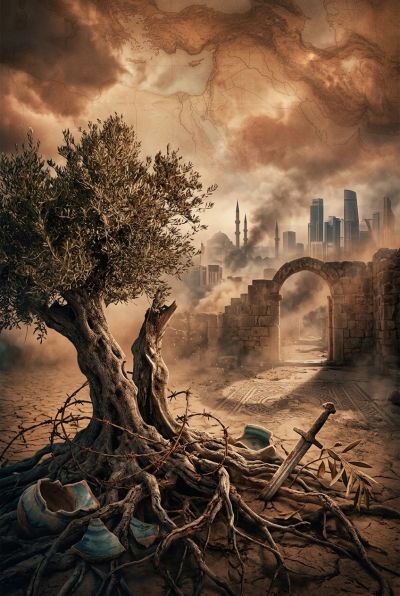

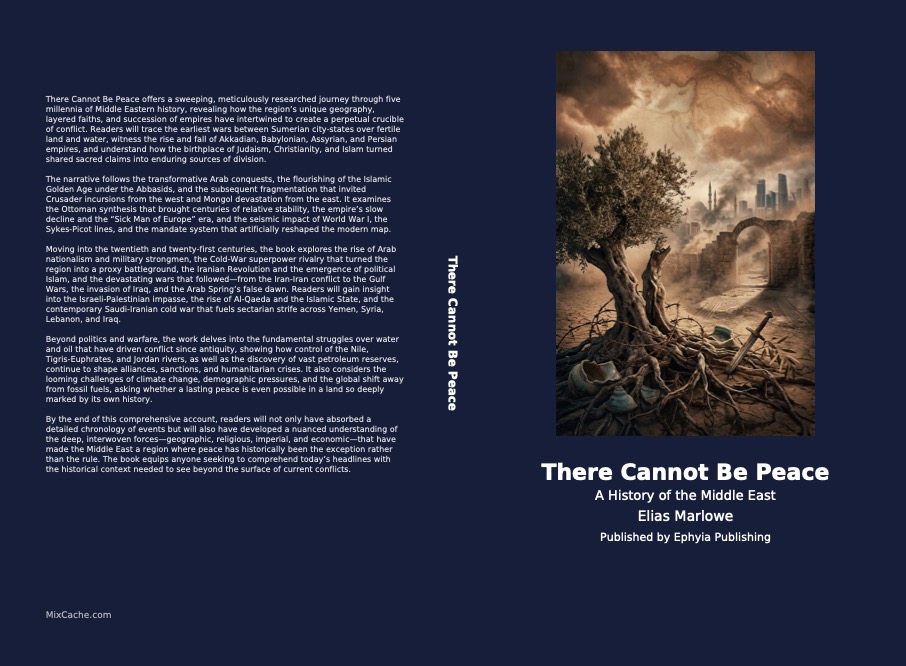
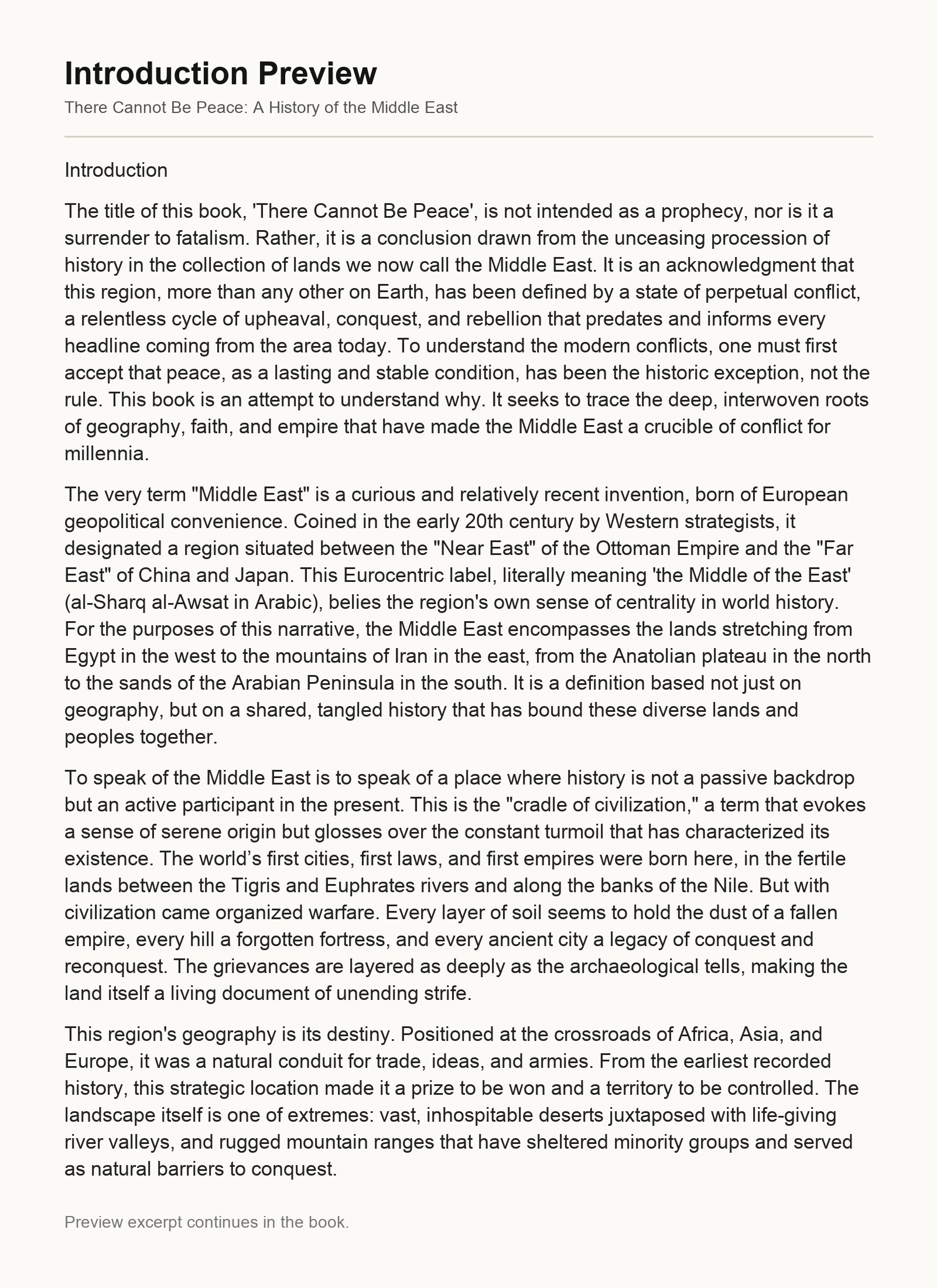
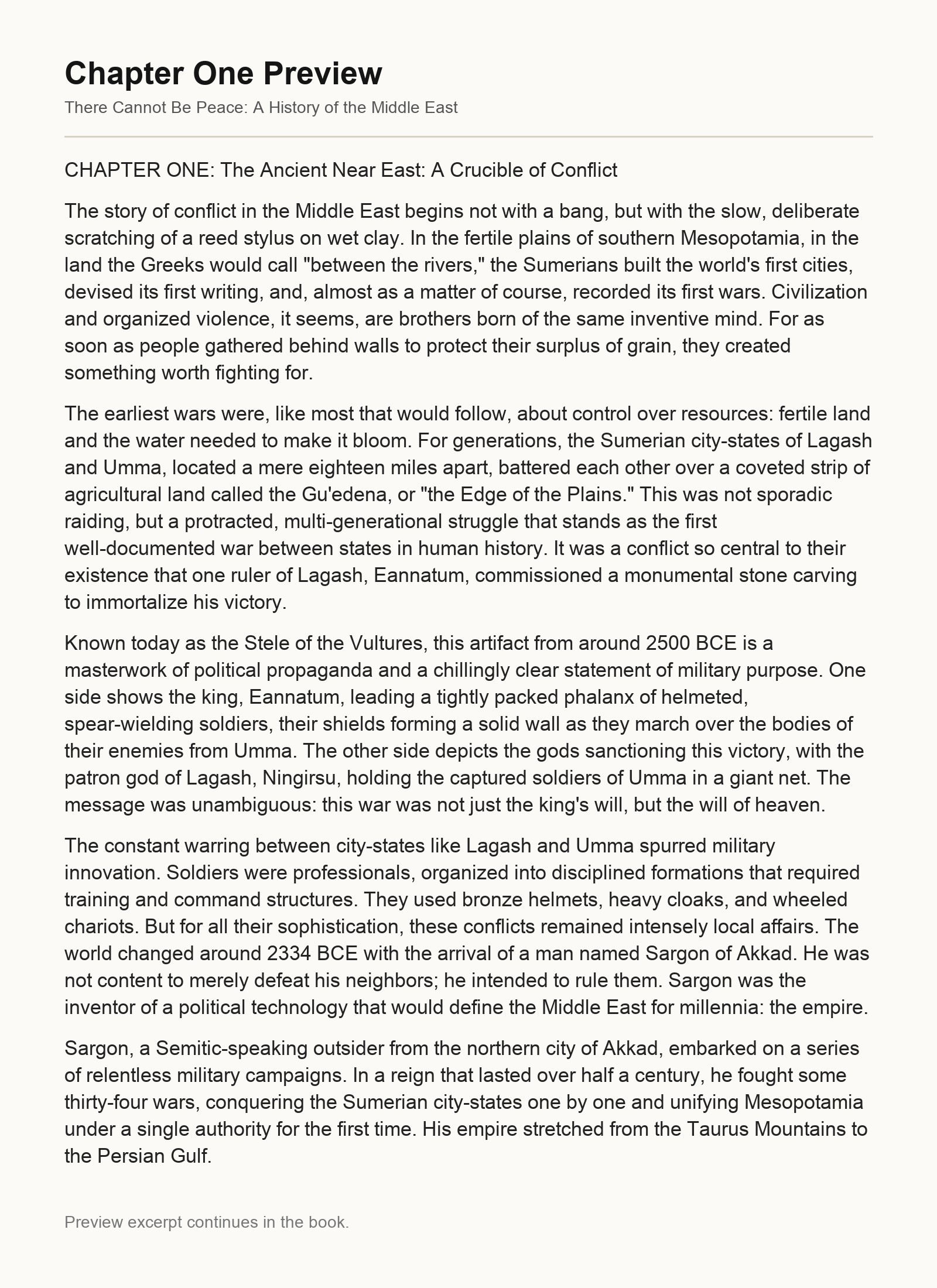
There Cannot Be Peace offers a sweeping, meticulously researched journey through five millennia of Middle Eastern history, revealing how the region’s unique geography, layered faiths, and succession of empires have intertwined to create a perpetual crucible of conflict. Readers will trace the earliest wars between Sumerian city‑states over fertile land and water, witness the rise and fall of Akkadian, Babylonian, Assyrian, and Persian empires, and understand how the birthplace of Judaism, Christianity, and Islam turned shared sacred claims into enduring sources of division.
The narrative follows the transformative Arab conquests, the flourishing of the Islamic Golden Age under the Abbasids, and the subsequent fragmentation that invited Crusader incursions from the west and Mongol devastation from the east. It examines the Ottoman synthesis that brought centuries of relative stability, the empire’s slow decline and the “Sick Man of Europe” era, and the seismic impact of World War I, the Sykes‑Picot lines, and the mandate system that artificially reshaped the modern map.
Moving into the twentieth and twenty‑first centuries, the book explores the rise of Arab nationalism and military strongmen, the Cold‑War superpower rivalry that turned the region into a proxy battleground, the Iranian Revolution and the emergence of political Islam, and the devastating wars that followed—from the Iran‑Iran conflict to the Gulf Wars, the invasion of Iraq, and the Arab Spring’s false dawn. Readers will gain insight into the Israeli‑Palestinian impasse, the rise of Al‑Qaeda and the Islamic State, and the contemporary Saudi‑Iranian cold war that fuels sectarian strife across Yemen, Syria, Lebanon, and Iraq.
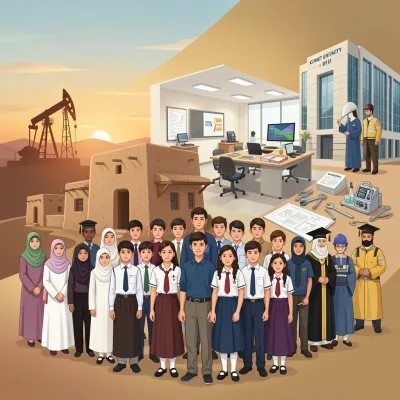
Beyond politics and warfare, the work delves into the fundamental struggles over water and oil that have driven conflict since antiquity, showing how control of the Nile, Tigris‑Euphrates, and Jordan rivers, as well as the discovery of vast petroleum reserves, continue to shape alliances, sanctions, and humanitarian crises. It also considers the looming challenges of climate change, demographic pressures, and the global shift away from fossil fuels, asking whether a lasting peace is even possible in a land so deeply marked by its own history.
By the end of this comprehensive account, readers will not only have absorbed a detailed chronology of events but will also have developed a nuanced understanding of the deep, interwoven forces—geographic, religious, imperial, and economic—that have made the Middle East a region where peace has historically been the exception rather than the rule. The book equips anyone seeking to comprehend today’s headlines with the historical context needed to see beyond the surface of current conflicts.
What You'll Find Inside:
- The Middle East's geography as a crossroads and its scarcity of water and abundance of oil have made it a perennial prize for empires and a source of conflict.
- The birth of Judaism, Christianity, and Islam in the region created overlapping, mutually exclusive claims to sacred sites like Jerusalem, turning theology into territorial dispute.
- A succession of empires—from Akkadian and Assyrian to Ottoman and European powers—imposed artificial borders and systems of rule that ignored local sectarian and tribal realities, planting seeds of instability.
- Modern ideologies such as Arab nationalism, political Islam, and superpower Cold War rivalries have intensified sectarian divisions and turned local disputes into proxy wars.
- The Palestinian question and the struggle over essential resources—particularly water from the Nile, Tigris-Euphrates, and Jordan rivers, and oil wealth—remain central, unresolved drivers of violence.
Who's It For:
This book is ideal for university students and scholars of history, political science, and international relations who need a comprehensive, chronological understanding of the Middle East's conflict-ridden past. It will also benefit policymakers, journalists, and analysts seeking to grasp the historical roots of contemporary crises—from the Palestinian-Israeli standoff to Saudi-Iranian rivalry—in order to inform more effective strategies. General readers with a serious interest in how geography, religion, and great-power politics have shaped one of the world's most volatile regions will find the narrative both accessible and deeply informative.
Table of Contents:
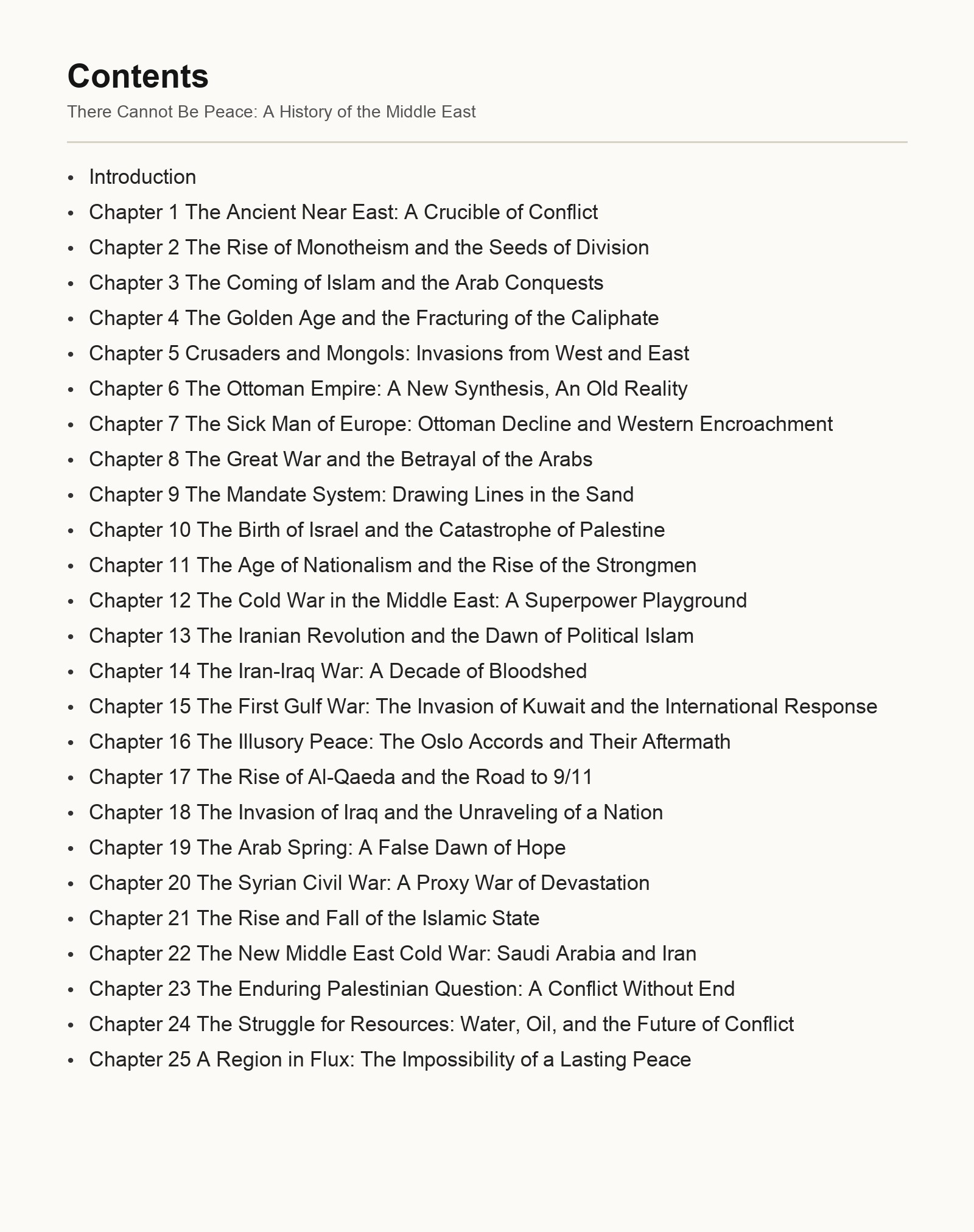
- Introduction
- Chapter 1 The Ancient Near East: A Crucible of Conflict
- Chapter 2 The Rise of Monotheism and the Seeds of Division
- Chapter 3 The Coming of Islam and the Arab Conquests
- Chapter 4 The Golden Age and the Fracturing of the Caliphate
- Chapter 5 Crusaders and Mongols: Invasions from West and East
- Chapter 6 The Ottoman Empire: A New Synthesis, An Old Reality
- Chapter 7 The Sick Man of Europe: Ottoman Decline and Western Encroachment
- Chapter 8 The Great War and the Betrayal of the Arabs
- Chapter 9 The Mandate System: Drawing Lines in the Sand
- Chapter 10 The Birth of Israel and the Catastrophe of Palestine
- Chapter 11 The Age of Nationalism and the Rise of the Strongmen
- Chapter 12 The Cold War in the Middle East: A Superpower Playground
- Chapter 13 The Iranian Revolution and the Dawn of Political Islam
- Chapter 14 The Iran-Iraq War: A Decade of Bloodshed
- Chapter 15 The First Gulf War: The Invasion of Kuwait and the International Response
- Chapter 16 The Illusory Peace: The Oslo Accords and Their Aftermath
- Chapter 17 The Rise of Al-Qaeda and the Road to 9/11
- Chapter 18 The Invasion of Iraq and the Unraveling of a Nation
- Chapter 19 The Arab Spring: A False Dawn of Hope
- Chapter 20 The Syrian Civil War: A Proxy War of Devastation
- Chapter 21 The Rise and Fall of the Islamic State
- Chapter 22 The New Middle East Cold War: Saudi Arabia and Iran
- Chapter 23 The Enduring Palestinian Question: A Conflict Without End
- Chapter 24 The Struggle for Resources: Water, Oil, and the Future of Conflict
- Chapter 25 A Region in Flux: The Impossibility of a Lasting Peace
Author:
Published By:
Date Published:
May 20, 2026
Type:
Nonfiction
Language:
English
Also Available In:
Word Count:
55,951 words
Reading Time:
3 hours 55 minutes
Sample:
Order:
Buy the There Cannot Be Peace ebook on MixCache.com:
Buy NowThe full ebook will be available immediately to read instantly on any device.
$5 account credit for all new MixCache.com accounts, usable toward any ebook purchase!*




Ratings & Reviews
Ask Questions About This Book
Have a question about the content? Ask our AI assistant!
Start by asking a question about "There Cannot Be Peace"
Example: "Does this book mention William Shakespeare?"
Thinking...