Browse by Category
Fiction
- Action & Adventure
- African American
- Anthologies
- Children's Fiction
- Classics
- Comics & Graphic Novels
- Coming of Age
- Contemporary
- Cultural & Regional
- Drama
- Erotica
- Fantasy
- General
- Historical Fiction
- Horror
- Humor & Satire
- Literary Fiction
- Mystery, Thriller & Suspense
- Poetry
- Religious & Inspirational
- Romance
- Science Fiction
- Short Stories
- War & Military
- Westerns
- Women's Fiction
- Young Adult
Non-Fiction
- Antiques & Collectibles
- Arts & Photography
- Biographies & Memoirs
- Business & Money
- Children's Non-Fiction
-
Computers & Technology
- Artificial Intelligence
- Computer Science
- Cybersecurity & Cryptography
- Data Science & Analytics
- Databases & Big Data
- Game Development & Design
- General
- Hardware & DIY
- Mobile App Development
- Networking & Cloud Computing
- Operating Systems
- Programming
- Robotics
- Software
- Software Engineering
- User Experience (UX) & Design
- Web Development & Design
- Cooking, Food & Wine
- Crafts, Hobbies & Home
- Education & Teaching
- Engineering
- General
- Health, Fitness & Dieting
-
History
- African History
- African History - North Africa
- African History - Sub-Saharan Africa
- American History
- American History - 20th Century
- American History - Civil War
- American History - Colonial Period
- Ancient History
- Asian History
- Asian History - China
- Asian History - India
- Asian History - Japan
- Asian History - Southeast Asia
- European History
- European History - Ancient Greece
- European History - Ancient Rome
- European History - Medieval
- European History - Modern
- European History - Renaissance
- General
- Middle Eastern History
- Military History
- Military History - Aviation
- Military History - Naval
- Social & Cultural History
- World History
- Humor & Entertainment
- Industrial Technology
- Language Learning
- Law
- LGBTQ+ Non-Fiction
- Literary Criticism
- Medical Books
- Parenting & Relationships
- Philosophy
- Politics & Social Sciences
- Reference
- Religion & Spirituality
-
Science & Math
- Agricultural Sciences
- Astronomy & Space Science
- Behavioral Sciences
- Biological Sciences
- Botany & Plant Science
- Chemistry
- Earth Sciences
- Engineering - Chemical
- Engineering - Civil
- Engineering - Electrical
- Engineering - Mechanical
- Environment
- General
- Geology
- Mathematics
- Nature & Ecology
- Oceanography
- Paleontology
- Physics
- Statistics
- Self-Help
- Sports & Outdoors
- Study Aids
- Sustainability & Green Living
- Textbooks
- Transportation
- Travel
- True Crime
- Urban Planning & Development
- Veterinary Medicine
- Writing & Publishing
Jump to Section
MixCache.com Total Access
Unlimited reading and audiobooks for every book published by MixCache.com.
Included titles carry the MTA badge.
Learn more →A History of Provence
About this book:
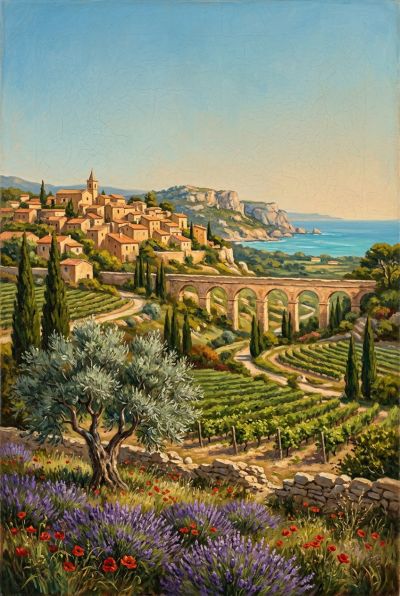
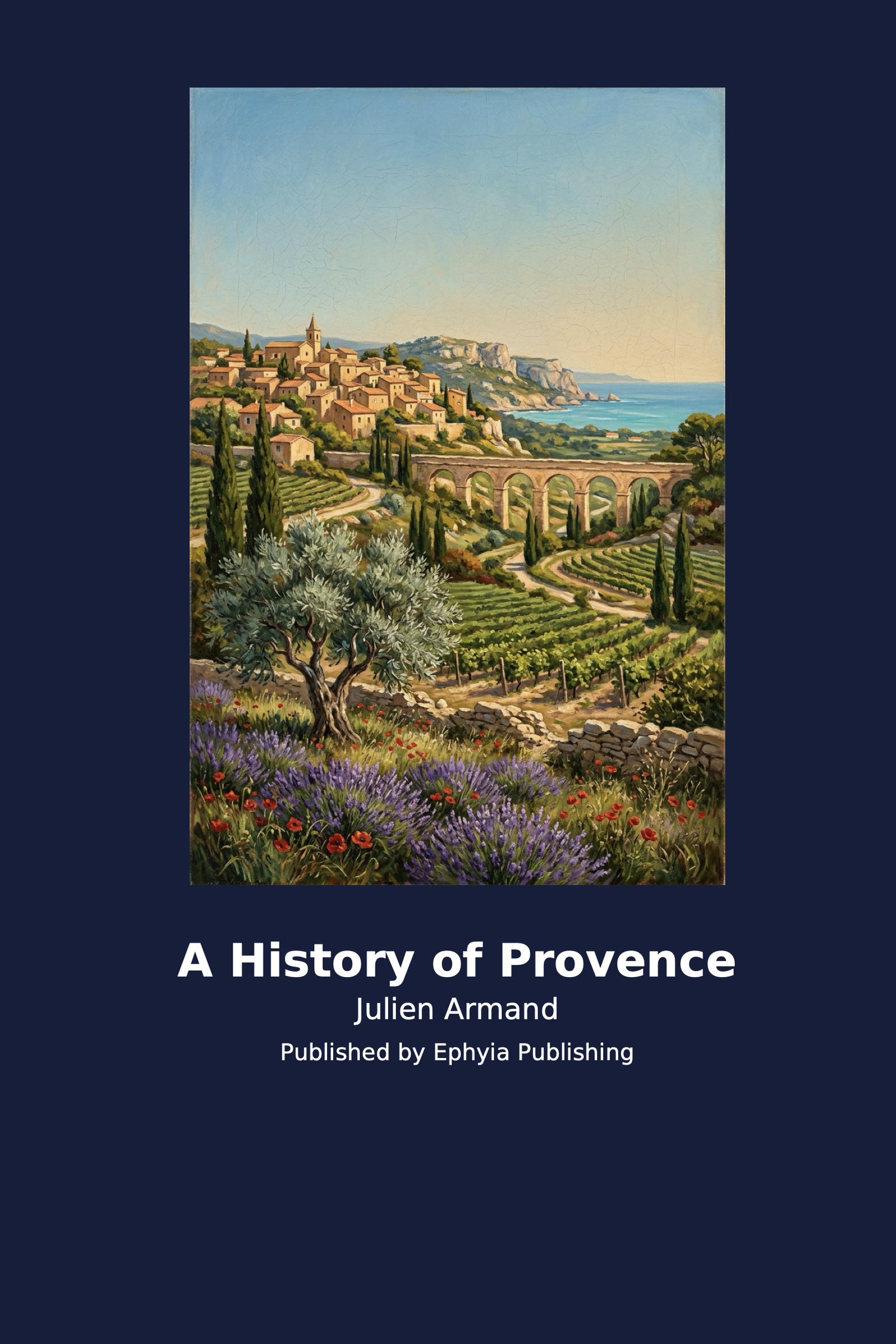
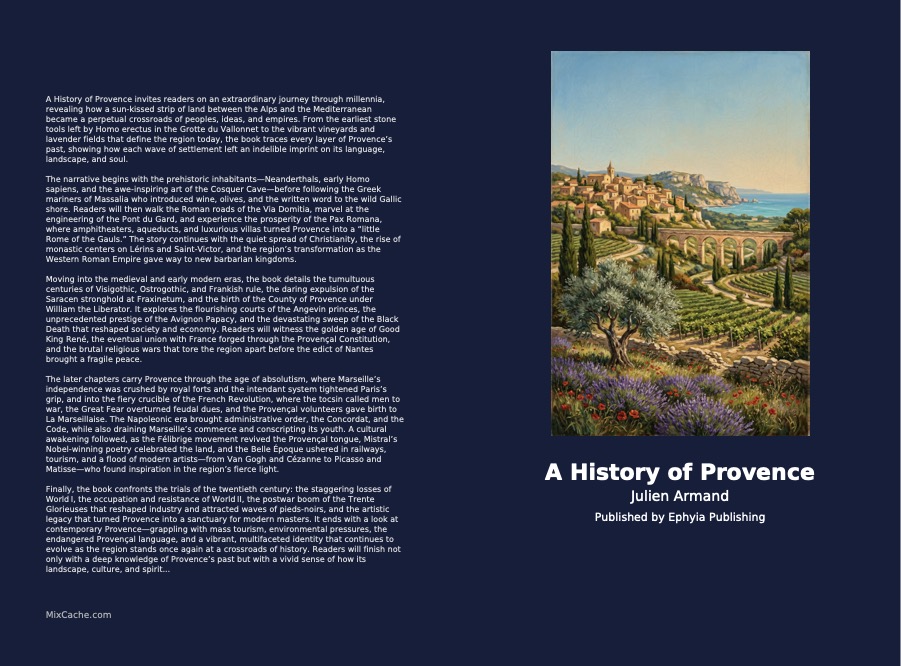
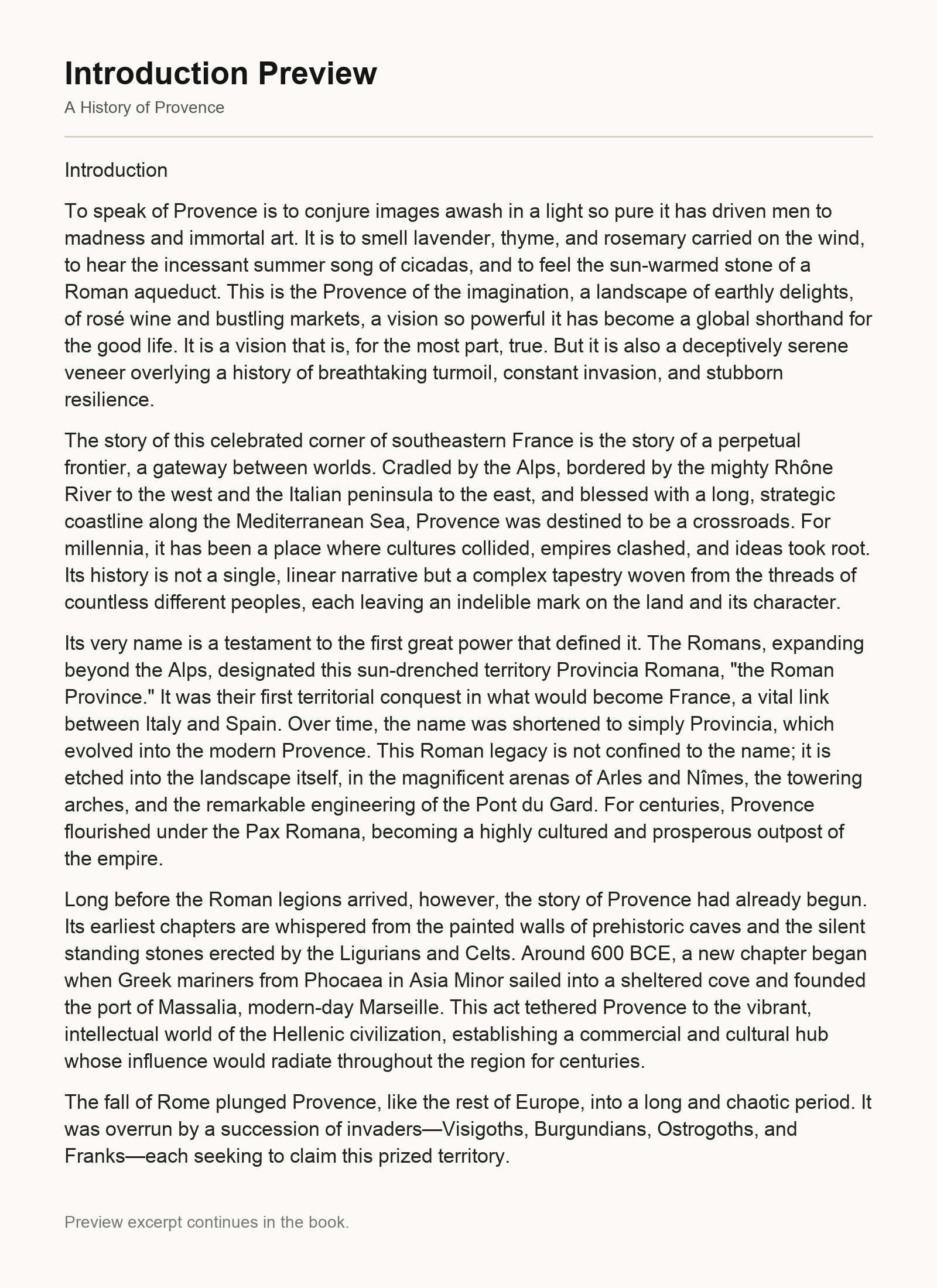
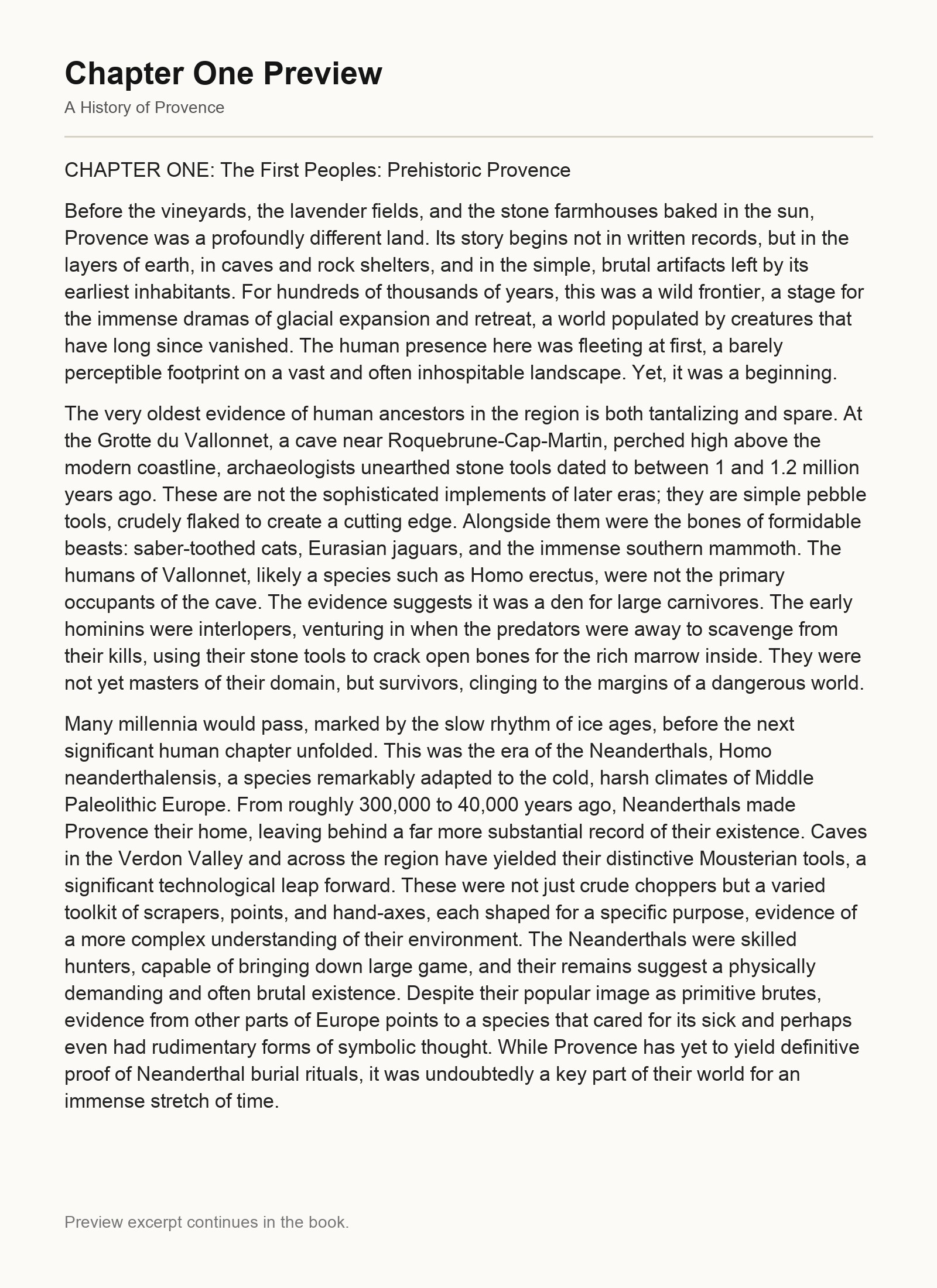
A History of Provence invites readers on an extraordinary journey through millennia, revealing how a sun‑kissed strip of land between the Alps and the Mediterranean became a perpetual crossroads of peoples, ideas, and empires. From the earliest stone tools left by Homo erectus in the Grotte du Vallonnet to the vibrant vineyards and lavender fields that define the region today, the book traces every layer of Provence’s past, showing how each wave of settlement left an indelible imprint on its language, landscape, and soul.
The narrative begins with the prehistoric inhabitants—Neanderthals, early Homo sapiens, and the awe‑inspiring art of the Cosquer Cave—before following the Greek mariners of Massalia who introduced wine, olives, and the written word to the wild Gallic shore. Readers will then walk the Roman roads of the Via Domitia, marvel at the engineering of the Pont du Gard, and experience the prosperity of the Pax Romana, where amphitheaters, aqueducts, and luxurious villas turned Provence into a “little Rome of the Gauls.” The story continues with the quiet spread of Christianity, the rise of monastic centers on Lérins and Saint‑Victor, and the region’s transformation as the Western Roman Empire gave way to new barbarian kingdoms.
Moving into the medieval and early modern eras, the book details the tumultuous centuries of Visigothic, Ostrogothic, and Frankish rule, the daring expulsion of the Saracen stronghold at Fraxinetum, and the birth of the County of Provence under William the Liberator. It explores the flourishing courts of the Angevin princes, the unprecedented prestige of the Avignon Papacy, and the devastating sweep of the Black Death that reshaped society and economy. Readers will witness the golden age of Good King René, the eventual union with France forged through the Provençal Constitution, and the brutal religious wars that tore the region apart before the edict of Nantes brought a fragile peace.
The later chapters carry Provence through the age of absolutism, where Marseille’s independence was crushed by royal forts and the intendant system tightened Paris’s grip, and into the fiery crucible of the French Revolution, where the tocsin called men to war, the Great Fear overturned feudal dues, and the Provençal volunteers gave birth to La Marseillaise. The Napoleonic era brought administrative order, the Concordat, and the Code, while also draining Marseille’s commerce and conscripting its youth. A cultural awakening followed, as the Félibrige movement revived the Provençal tongue, Mistral’s Nobel‑winning poetry celebrated the land, and the Belle Époque ushered in railways, tourism, and a flood of modern artists—from Van Gogh and Cézanne to Picasso and Matisse—who found inspiration in the region’s fierce light.
Finally, the book confronts the trials of the twentieth century: the staggering losses of World I, the occupation and resistance of World II, the postwar boom of the Trente Glorieuses that reshaped industry and attracted waves of pieds‑noirs, and the artistic legacy that turned Provence into a sanctuary for modern masters. It ends with a look at contemporary Provence—grappling with mass tourism, environmental pressures, the endangered Provençal language, and a vibrant, multifaceted identity that continues to evolve as the region stands once again at a crossroads of history. Readers will finish not only with a deep knowledge of Provence’s past but with a vivid sense of how its landscape, culture, and spirit have been forged by centuries of invasion, resilience, and reinvention.
What You'll Find Inside:
- From prehistoric cave art to Greek colonies: Discover how Provence's earliest inhabitants left their mark in the Cosquer Cave paintings and how Greek settlers from Phocaea founded Massalia (Marseille), introducing viticulture and olive cultivation that shaped the region's landscape and economy for millennia.
- Roman legacy and medieval transformation: Explore Provence's golden age under Roman rule with engineering marvels like the Pont du Gard, followed by its evolution into a fiercely independent county governed by powerful local rulers who defended against Saracen raiders and fostered a vibrant troubadour culture.
- The Avignon Papacy and Provençal Renaissance: Witness how Provence became the center of Christendom when popes resided in Avignon for 70 years, and later flourished under the cultured patronage of 'Good King René' who presided over a late medieval flowering of arts and learning.
- Cultural resilience through turmoil: Trace Provence's journey from the devastation of the Black Death and Wars of Religion to its modern revival through the Félibrige movement led by Nobel Prize-winning poet Frédéric Mistral, which preserved the Provençal language and identity against centuries of French centralization.
- Artistic inspiration and contemporary challenges: See how Provence's unique light attracted revolutionary artists from Van Gogh and Cézanne to Picasso and Matisse, while examining how the region now balances tourism-driven prosperity with environmental pressures and questions of cultural identity in the 21st century.
Who's It For:
This book is ideal for history enthusiasts, travelers to Provence, and anyone fascinated by how a region's geography shapes its destiny over millennia. Readers interested in the interplay between landscape, culture, and power will find Provence's story particularly compelling—as it reveals how this southeastern corner of France served as a crossroads for civilizations from prehistoric times to the present. The narrative will appeal to those who appreciate detailed historical accounts that weave together political events, social transformations, and cultural achievements, from Roman engineering to Provençal poetry and modern art.
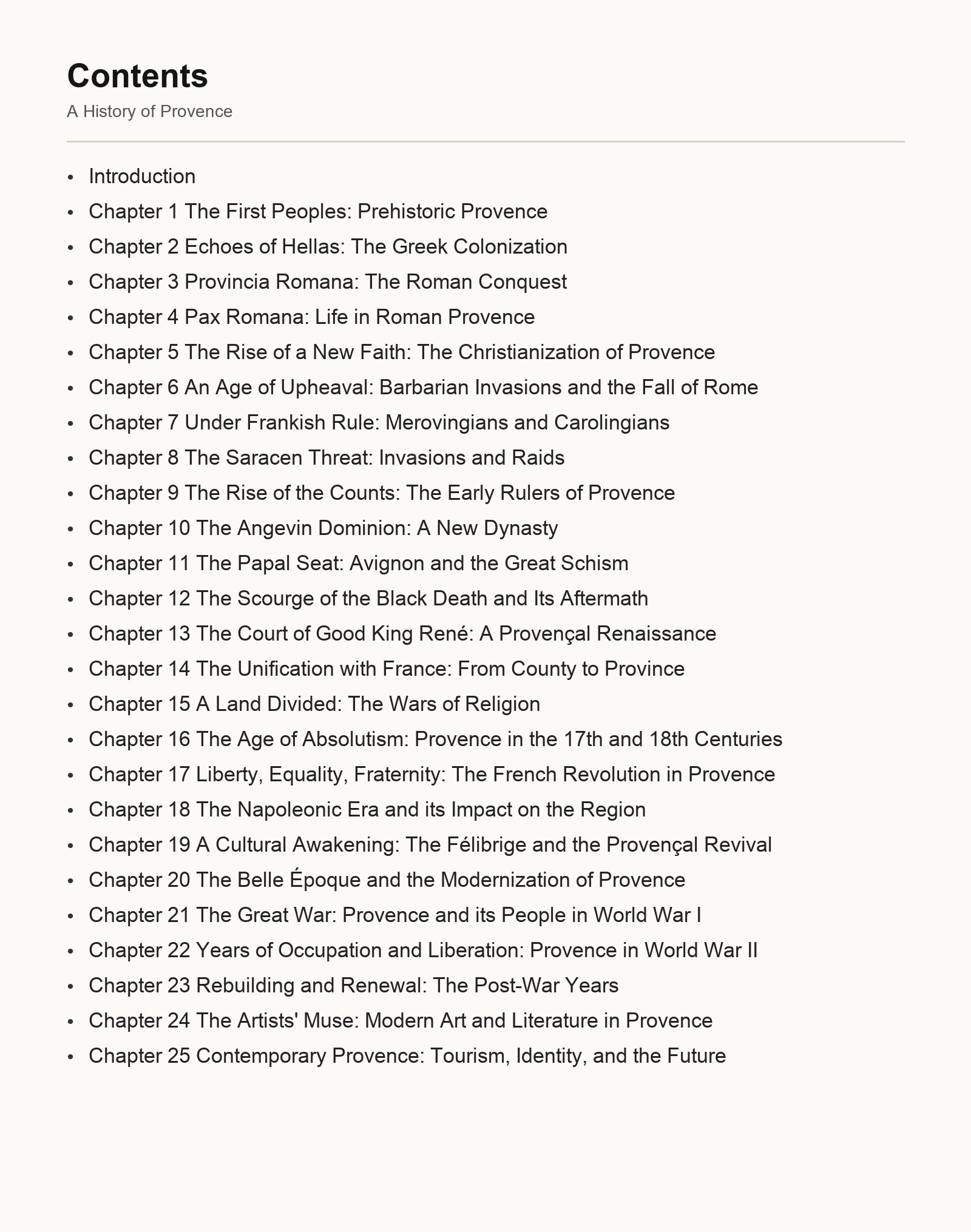
Table of Contents:
- Introduction
- Chapter 1 The First Peoples: Prehistoric Provence
- Chapter 2 Echoes of Hellas: The Greek Colonization
- Chapter 3 Provincia Romana: The Roman Conquest
- Chapter 4 Pax Romana: Life in Roman Provence
- Chapter 5 The Rise of a New Faith: The Christianization of Provence
- Chapter 6 An Age of Upheaval: Barbarian Invasions and the Fall of Rome
- Chapter 7 Under Frankish Rule: Merovingians and Carolingians
- Chapter 8 The Saracen Threat: Invasions and Raids
- Chapter 9 The Rise of the Counts: The Early Rulers of Provence
- Chapter 10 The Angevin Dominion: A New Dynasty
- Chapter 11 The Papal Seat: Avignon and the Great Schism
- Chapter 12 The Scourge of the Black Death and Its Aftermath
- Chapter 13 The Court of Good King René: A Provençal Renaissance
- Chapter 14 The Unification with France: From County to Province
- Chapter 15 A Land Divided: The Wars of Religion
- Chapter 16 The Age of Absolutism: Provence in the 17th and 18th Centuries
- Chapter 17 Liberty, Equality, Fraternity: The French Revolution in Provence
- Chapter 18 The Napoleonic Era and its Impact on the Region
- Chapter 19 A Cultural Awakening: The Félibrige and the Provençal Revival
- Chapter 20 The Belle Époque and the Modernization of Provence
- Chapter 21 The Great War: Provence and its People in World War I
- Chapter 22 Years of Occupation and Liberation: Provence in World War II
- Chapter 23 Rebuilding and Renewal: The Post-War Years
- Chapter 24 The Artists' Muse: Modern Art and Literature in Provence
- Chapter 25 Contemporary Provence: Tourism, Identity, and the Future
Author:
Published By:
Date Published:
May 18, 2026
Type:
Nonfiction
Language:
English
Also Available In:
Word Count:
41,935 words
Reading Time:
2 hours 56 minutes
Sample:
Order:
Order A History of Provence (Hardcover) on MixCache.com:
Buy NowPrint copy is made to order and ships worldwide. Includes the ebook free, ready to read instantly.
$5 account credit for all new MixCache.com accounts, usable toward any ebook purchase!*