Browse by Category
Fiction
- Action & Adventure
- African American
- Anthologies
- Children's Fiction
- Classics
- Comics & Graphic Novels
- Coming of Age
- Contemporary
- Cultural & Regional
- Drama
- Erotica
- Fantasy
- General
- Historical Fiction
- Horror
- Humor & Satire
- Literary Fiction
- Mystery, Thriller & Suspense
- Poetry
- Religious & Inspirational
- Romance
- Science Fiction
- Short Stories
- War & Military
- Westerns
- Women's Fiction
- Young Adult
Non-Fiction
- Antiques & Collectibles
- Arts & Photography
- Biographies & Memoirs
- Business & Money
- Children's Non-Fiction
-
Computers & Technology
- Artificial Intelligence
- Computer Science
- Cybersecurity & Cryptography
- Data Science & Analytics
- Databases & Big Data
- Game Development & Design
- General
- Hardware & DIY
- Mobile App Development
- Networking & Cloud Computing
- Operating Systems
- Programming
- Robotics
- Software
- Software Engineering
- User Experience (UX) & Design
- Web Development & Design
- Cooking, Food & Wine
- Crafts, Hobbies & Home
- Education & Teaching
- Engineering
- General
- Health, Fitness & Dieting
-
History
- African History
- African History - North Africa
- African History - Sub-Saharan Africa
- American History
- American History - 20th Century
- American History - Civil War
- American History - Colonial Period
- Ancient History
- Asian History
- Asian History - China
- Asian History - India
- Asian History - Japan
- Asian History - Southeast Asia
- European History
- European History - Ancient Greece
- European History - Ancient Rome
- European History - Medieval
- European History - Modern
- European History - Renaissance
- General
- Middle Eastern History
- Military History
- Military History - Aviation
- Military History - Naval
- Social & Cultural History
- World History
- Humor & Entertainment
- Industrial Technology
- Language Learning
- Law
- LGBTQ+ Non-Fiction
- Literary Criticism
- Medical Books
- Parenting & Relationships
- Philosophy
- Politics & Social Sciences
- Reference
- Religion & Spirituality
-
Science & Math
- Agricultural Sciences
- Astronomy & Space Science
- Behavioral Sciences
- Biological Sciences
- Botany & Plant Science
- Chemistry
- Earth Sciences
- Engineering - Chemical
- Engineering - Civil
- Engineering - Electrical
- Engineering - Mechanical
- Environment
- General
- Geology
- Mathematics
- Nature & Ecology
- Oceanography
- Paleontology
- Physics
- Statistics
- Self-Help
- Sports & Outdoors
- Study Aids
- Sustainability & Green Living
- Textbooks
- Transportation
- Travel
- True Crime
- Urban Planning & Development
- Veterinary Medicine
- Writing & Publishing
Jump to Section
MixCache.com Total Access
Unlimited reading and audiobooks for every book published by MixCache.com.
Included titles carry the MTA badge.
Learn more →A History of Guinea-Bissau
About this book:
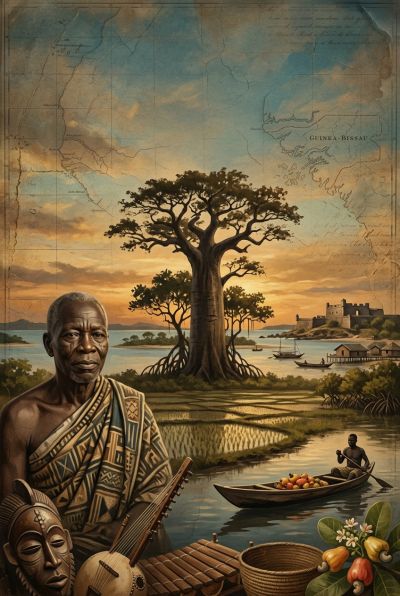
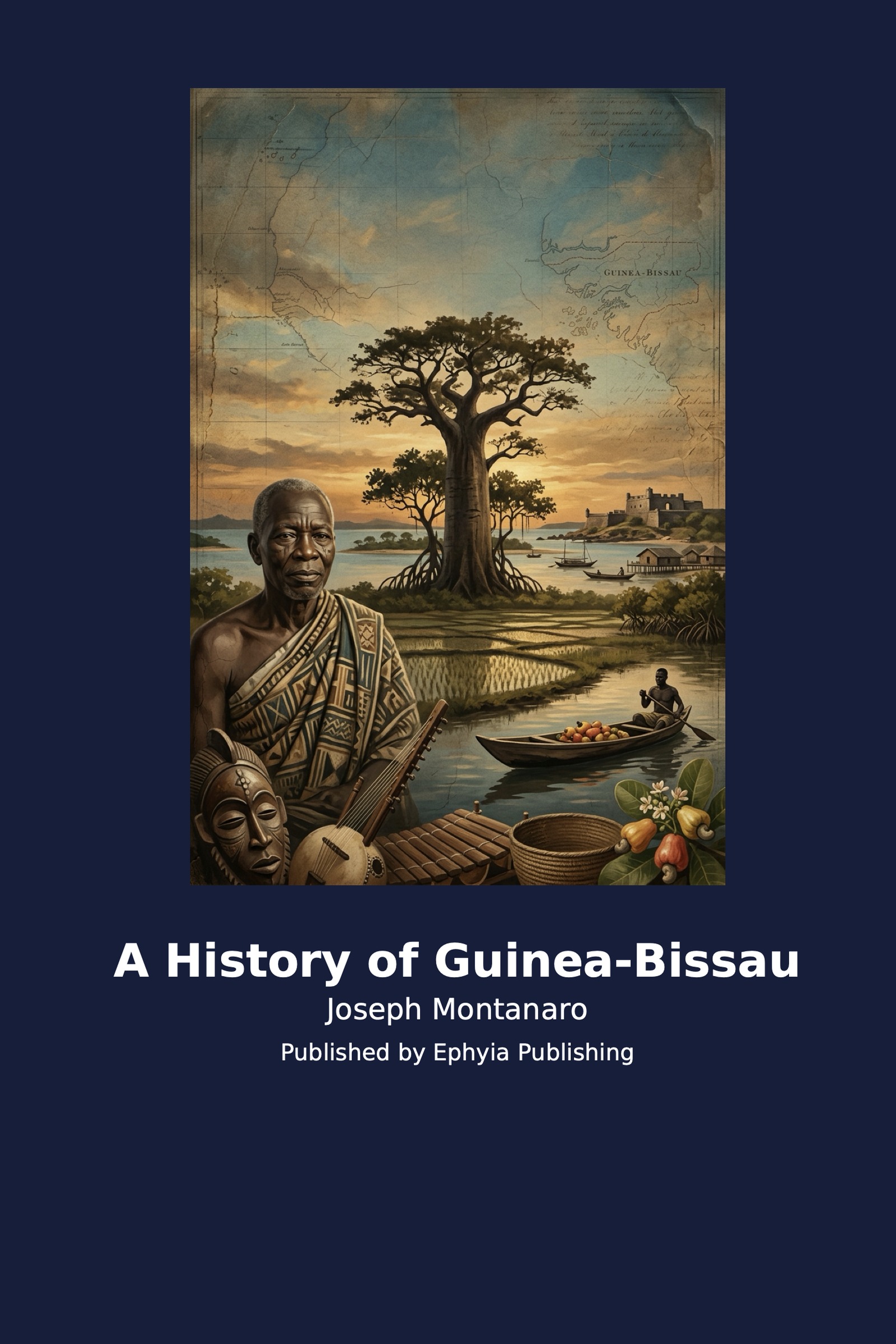
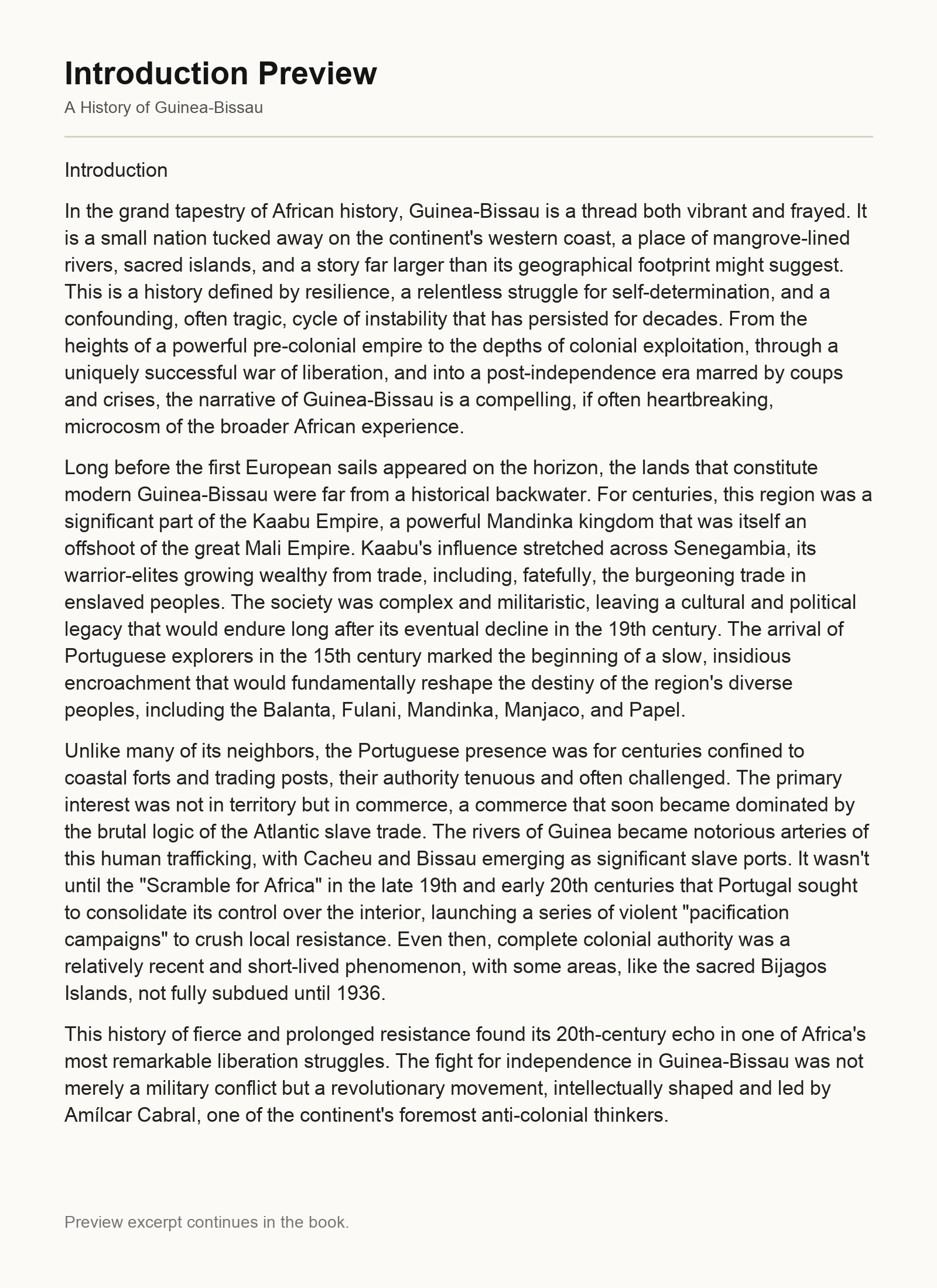
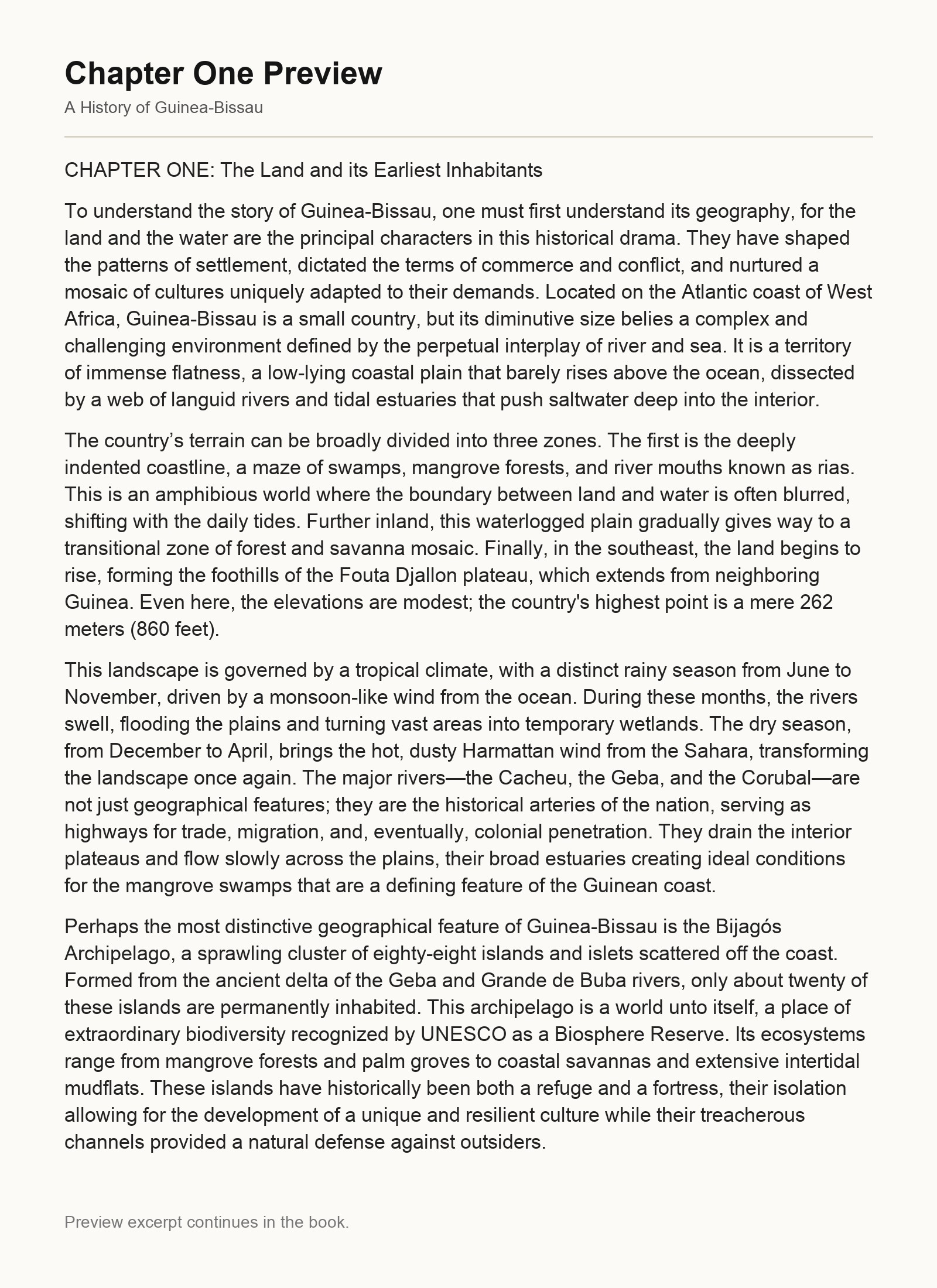
"A History of Guinea‑Bissau" offers readers a comprehensive journey through the rise and fall of one of West Africa’s most intriguing nations, from the earliest hunter‑gatherer communities to the present‑day struggles for stability. The book begins by detailing the region’s geography and the diverse peoples who first settled its mangrove‑lined coasts and interior savannas, showing how the Balanta, Papel, Manjaco, Bijagó, and later Mandinka and Fulani groups shaped distinct social systems long before any European arrived. Readers will gain insight into the sophisticated rice‑farming techniques of the Balanta, the matriarchal society of the Bijagós Archipelago, and the warrior‑aristocratic Kaabu Empire that grew from Mali’s legacy and dominated the slave‑trade‑driven economy for centuries.
Moving into the colonial era, the narrative traces the Portuguese arrival, the establishment of coastal trading forts, and the devastating transformation of local societies by the Atlantic slave trade. It explains how the lure of European firearms and textiles intensified warfare, empowered the Nyancho elite of Kaabu, and created a Luso‑African intermediary class that would dominate commerce for generations. The work then follows the scramble for Africa, the imposition of hut taxes, and the brutal pacification campaigns that finally brought the interior under Portuguese control by the 1930s, setting the stage for a nationalist awakening.
The heart of the book centers on Amílcar Cabral and the PAIGC, revealing how his agronomic fieldwork and Marxist‑Pan‑African ideology forged a liberation movement that combined guerrilla warfare with state‑building in liberated zones. Readers will experience the strategic brilliance of the PAIGC’s political mobilization, the impact of Soviet‑supplied anti‑aircraft missiles, and the unilateral declaration of independence that preceded Portugal’s Carnation Revolution. The aftermath of independence is examined in depth, chronicling the hopes of Luís Cabral’s presidency, the 1980 coup that brought João Bernardo “Nino” Vieira to power, and the ensuing decades of coups, civil wars, and narco‑trafficking that have repeatedly destabilized the nation.
Finally, the book provides a vivid portrait of contemporary Guinea‑Bissau—its ethnic mosaic, the unifying Kriol language, the blended religious practices, and cultural expressions such as Gumbé music and the Bissau Carnival—while confronting the enduring challenges of militarized politics, economic dependence on foreign aid, and the corrosive influence of the cocaine trade. By the end, readers will have a deep understanding of how historical legacies of empire, slavery, resistance, and external exploitation continue to shape a nation’s quest for peace, stability, and a future worthy of its resilient people.
What You'll Find Inside:
- Guinea-Bissau's rich pre-colonial history, from the Kaabu Empire to diverse ethnic societies like the Balanta and Bijagós, each with unique social structures and cultural traditions.
- The liberation struggle led by Amílcar Cabral and the PAIGC, which waged one of Africa's most successful anti-colonial wars against Portuguese rule through guerrilla tactics and state-building in liberated zones.
- The turbulent post-independence history marked by chronic instability, including multiple coups, civil wars (1998-1999), and a cycle of political violence that has hindered development for decades.
- How Guinea-Bissau became Africa's first 'narco-state' in the 2000s, with its geography and weak institutions making it a key transit hub for Latin American cocaine bound for Europe.
- Contemporary Guinea-Bissau's ethnic diversity, cultural resilience (including Kriol language and traditions like Bissau Carnival), and the ongoing challenges of building stability amid deep-rooted political and economic cycles.
Who's It For:
This book is ideal for students, researchers, and general readers interested in African history, post-colonial studies, and liberation movements. It will particularly benefit those seeking to understand the specific historical trajectory of Guinea-Bissau—from its pre-colonial empires through its revolutionary independence struggle to its contemporary challenges of political instability, narco-trafficking, and ethnic diversity—as a case study of broader African experiences with colonialism, state formation, and the struggle for sustainable governance.
Table of Contents:
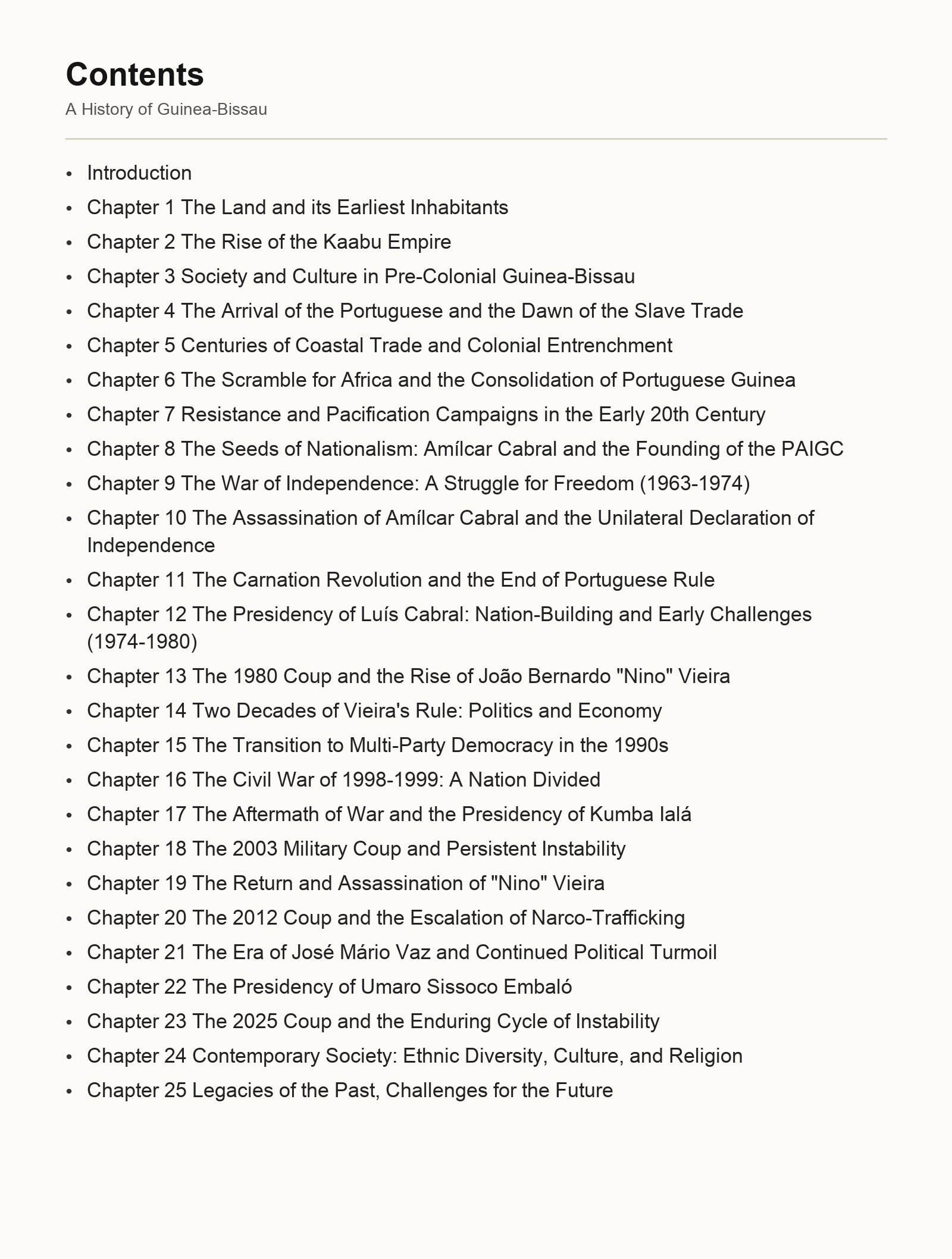
- Introduction
- Chapter 1 The Land and its Earliest Inhabitants
- Chapter 2 The Rise of the Kaabu Empire.
- Chapter 3 Society and Culture in Pre-Colonial Guinea-Bissau.
- Chapter 4 The Arrival of the Portuguese and the Dawn of the Slave Trade.
- Chapter 5 Centuries of Coastal Trade and Colonial Entrenchment.
- Chapter 6 The Scramble for Africa and the Consolidation of Portuguese Guinea.
- Chapter 7 Resistance and Pacification Campaigns in the Early 20th Century.
- Chapter 8 The Seeds of Nationalism: Amílcar Cabral and the Founding of the PAIGC.
- Chapter 9 The War of Independence: A Struggle for Freedom (1963-1974).
- Chapter 10 The Assassination of Amílcar Cabral and the Unilateral Declaration of Independence.
- Chapter 11 The Carnation Revolution and the End of Portuguese Rule.
- Chapter 12 The Presidency of Luís Cabral: Nation-Building and Early Challenges (1974-1980).
- Chapter 13 The 1980 Coup and the Rise of João Bernardo "Nino" Vieira.
- Chapter 14 Two Decades of Vieira's Rule: Politics and Economy.
- Chapter 15 The Transition to Multi-Party Democracy in the 1990s.
- Chapter 16 The Civil War of 1998-1999: A Nation Divided.
- Chapter 17 The Aftermath of War and the Presidency of Kumba Ialá.
- Chapter 18 The 2003 Military Coup and Persistent Instability.
- Chapter 19 The Return and Assassination of "Nino" Vieira.
- Chapter 20 The 2012 Coup and the Escalation of Narco-Trafficking.
- Chapter 21 The Era of José Mário Vaz and Continued Political Turmoil.
- Chapter 22 The Presidency of Umaro Sissoco Embaló.
- Chapter 23 The 2025 Coup and the Enduring Cycle of Instability.
- Chapter 24 Contemporary Society: Ethnic Diversity, Culture, and Religion.
- Chapter 25 Legacies of the Past, Challenges for the Future.
Author:
Published By:
Date Published:
May 18, 2026
Type:
Nonfiction
Language:
English
Also Available In:
Word Count:
40,176 words
Reading Time:
2 hours 49 minutes
Sample:
Order:
Order A History of Guinea-Bissau (Hardcover) on MixCache.com:
Buy NowPrint copy is made to order and ships worldwide. Includes the ebook free, ready to read instantly.
$5 account credit for all new MixCache.com accounts, usable toward any ebook purchase!*