
Browse by Category
Fiction
- Action & Adventure
- African American
- Anthologies
- Children's Fiction
- Classics
- Comics & Graphic Novels
- Coming of Age
- Contemporary
- Cultural & Regional
- Drama
- Erotica
- Fantasy
- General
- Historical Fiction
- Horror
- Humor & Satire
- Literary Fiction
- Mystery, Thriller & Suspense
- Poetry
- Religious & Inspirational
- Romance
- Science Fiction
- Short Stories
- War & Military
- Westerns
- Women's Fiction
- Young Adult
Non-Fiction
- Antiques & Collectibles
- Arts & Photography
- Biographies & Memoirs
- Business & Money
- Children's Non-Fiction
-
Computers & Technology
- Artificial Intelligence
- Computer Science
- Cybersecurity & Cryptography
- Data Science & Analytics
- Databases & Big Data
- Game Development & Design
- General
- Hardware & DIY
- Mobile App Development
- Networking & Cloud Computing
- Operating Systems
- Programming
- Robotics
- Software
- Software Engineering
- User Experience (UX) & Design
- Web Development & Design
- Cooking, Food & Wine
- Crafts, Hobbies & Home
- Education & Teaching
- Engineering
- General
- Health, Fitness & Dieting
-
History
- African History
- African History - North Africa
- African History - Sub-Saharan Africa
- American History
- American History - 20th Century
- American History - Civil War
- American History - Colonial Period
- Ancient History
- Asian History
- Asian History - China
- Asian History - India
- Asian History - Japan
- Asian History - Southeast Asia
- European History
- European History - Ancient Greece
- European History - Ancient Rome
- European History - Medieval
- European History - Modern
- European History - Renaissance
- General
- Middle Eastern History
- Military History
- Military History - Aviation
- Military History - Naval
- Social & Cultural History
- World History
- Humor & Entertainment
- Industrial Technology
- Language Learning
- Law
- LGBTQ+ Non-Fiction
- Literary Criticism
- Medical Books
- Parenting & Relationships
- Philosophy
- Politics & Social Sciences
- Reference
- Religion & Spirituality
-
Science & Math
- Agricultural Sciences
- Astronomy & Space Science
- Behavioral Sciences
- Biological Sciences
- Botany & Plant Science
- Chemistry
- Earth Sciences
- Engineering - Chemical
- Engineering - Civil
- Engineering - Electrical
- Engineering - Mechanical
- Environment
- General
- Geology
- Mathematics
- Nature & Ecology
- Oceanography
- Paleontology
- Physics
- Statistics
- Self-Help
- Sports & Outdoors
- Study Aids
- Sustainability & Green Living
- Textbooks
- Transportation
- Travel
- True Crime
- Urban Planning & Development
- Veterinary Medicine
- Writing & Publishing
Jump to Section
MixCache.com Total Access
Unlimited reading and audiobooks for every book published by MixCache.com.
Included titles carry the MTA badge.
Learn more →A History of New Zealand
About this book:
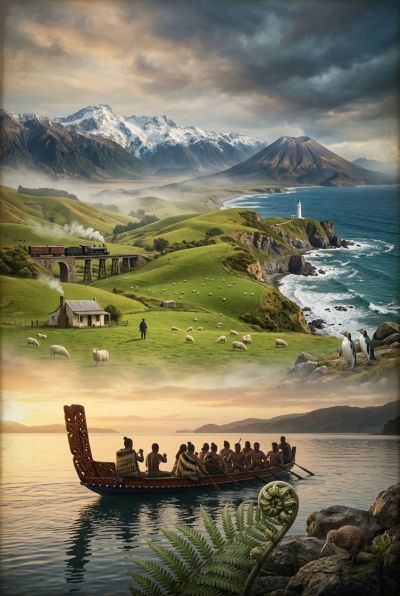
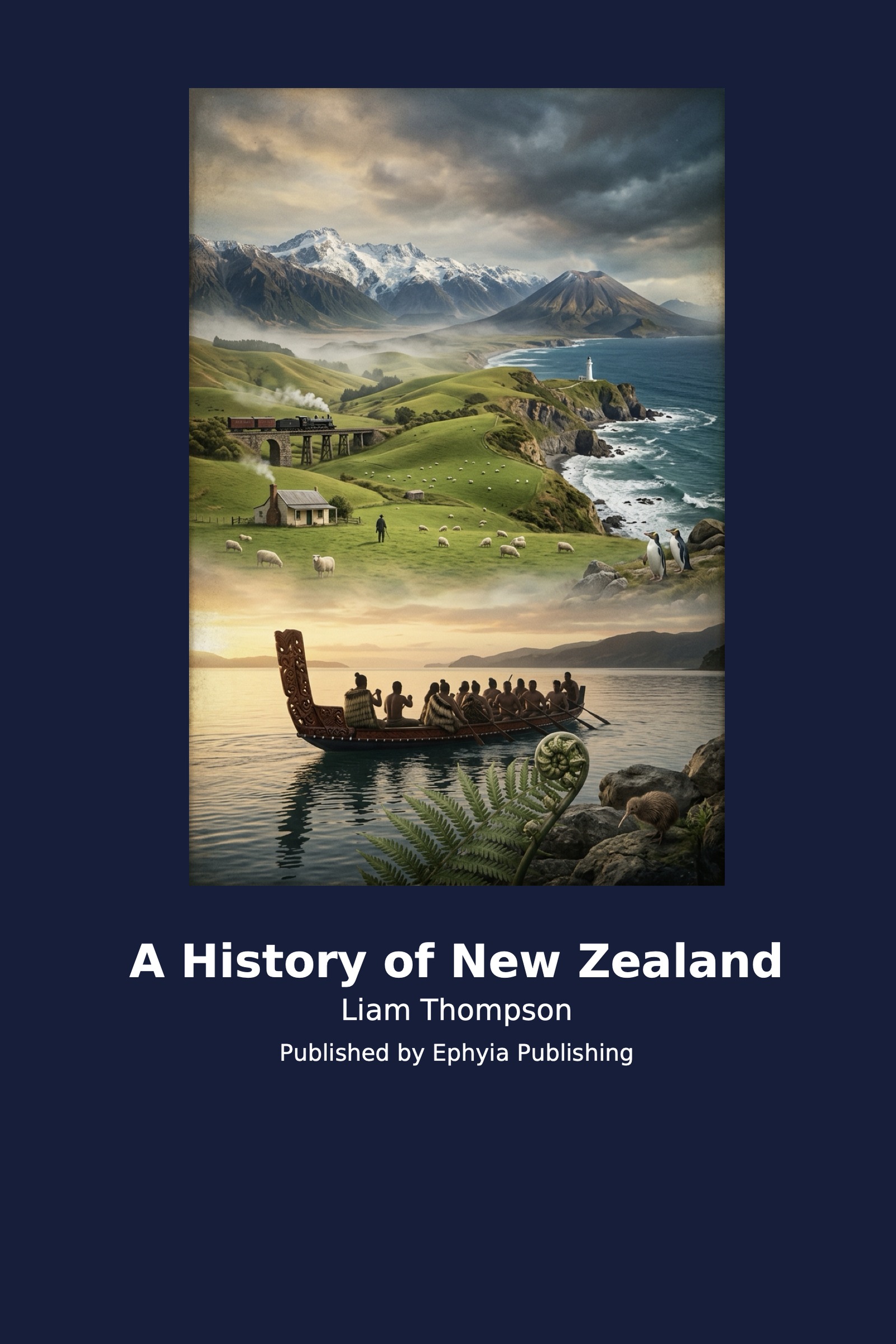
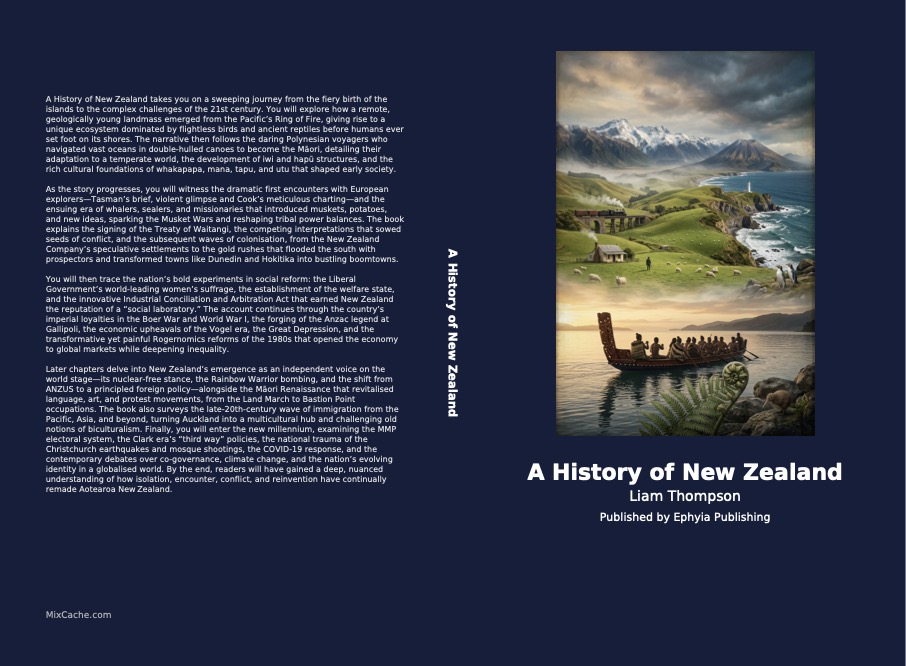
A History of New Zealand takes you on a sweeping journey from the fiery birth of the islands to the complex challenges of the 21st century. You will explore how a remote, geologically young landmass emerged from the Pacific’s Ring of Fire, giving rise to a unique ecosystem dominated by flightless birds and ancient reptiles before humans ever set foot on its shores. The narrative then follows the daring Polynesian voyagers who navigated vast oceans in double‑hulled canoes to become the Māori, detailing their adaptation to a temperate world, the development of iwi and hapū structures, and the rich cultural foundations of whakapapa, mana, tapu, and utu that shaped early society.
As the story progresses, you will witness the dramatic first encounters with European explorers—Tasman’s brief, violent glimpse and Cook’s meticulous charting—and the ensuing era of whalers, sealers, and missionaries that introduced muskets, potatoes, and new ideas, sparking the Musket Wars and reshaping tribal power balances. The book explains the signing of the Treaty of Waitangi, the competing interpretations that sowed seeds of conflict, and the subsequent waves of colonisation, from the New Zealand Company’s speculative settlements to the gold rushes that flooded the south with prospectors and transformed towns like Dunedin and Hokitika into bustling boomtowns.
You will then trace the nation’s bold experiments in social reform: the Liberal Government’s world‑leading women’s suffrage, the establishment of the welfare state, and the innovative Industrial Conciliation and Arbitration Act that earned New Zealand the reputation of a “social laboratory.” The account continues through the country’s imperial loyalties in the Boer War and World War I, the forging of the Anzac legend at Gallipoli, the economic upheavals of the Vogel era, the Great Depression, and the transformative yet painful Rogernomics reforms of the 1980s that opened the economy to global markets while deepening inequality.
Later chapters delve into New Zealand’s emergence as an independent voice on the world stage—its nuclear‑free stance, the Rainbow Warrior bombing, and the shift from ANZUS to a principled foreign policy—alongside the Māori Renaissance that revitalised language, art, and protest movements, from the Land March to Bastion Point occupations. The book also surveys the late‑20th‑century wave of immigration from the Pacific, Asia, and beyond, turning Auckland into a multicultural hub and challenging old notions of biculturalism. Finally, you will enter the new millennium, examining the MMP electoral system, the Clark era’s “third way” policies, the national trauma of the Christchurch earthquakes and mosque shootings, the COVID‑19 response, and the contemporary debates over co‑governance, climate change, and the nation’s evolving identity in a globalised world. By the end, readers will have gained a deep, nuanced understanding of how isolation, encounter, conflict, and reinvention have continually remade Aotearoa New Zealand.
What You'll Find Inside:
- Explore New Zealand's extraordinary geological journey from the submerged continent Zealandia to its active position on the Pacific Ring of Fire, shaping its unique flora and fauna including flightless birds like the moa and kiwi.
- Discover the origins and development of Māori society, from Polynesian voyagers' epic settlement to the intricate social structures of iwi, hapu, whakapapa, and cultural concepts like mana, tapu, and utu that defined life in Aotearoa for centuries.
- Understand the Treaty of Waitangi as New Zealand's founding document and how differing interpretations between its English and Māori versions regarding sovereignty and governance have shaped ongoing debates and relationships between Māori and Pākehā.
- Learn how New Zealand became a global 'social laboratory' by pioneering women's suffrage in 1893, establishing early welfare state measures, and experimenting with progressive policies that influenced social reform worldwide.
- Trace the nation's economic evolution from gold rush booms and Vogel's infrastructure projects to the radical free-market reforms of 'Rogernomics' in the 1980s and their lasting social consequences.
Who's It For:
This comprehensive history is ideal for students of history, particularly those focusing on Pacific or Oceanian studies, as well as general readers interested in how isolated societies develop unique cultural paths. It will especially benefit anyone seeking to understand New Zealand's bicultural foundations, the Māori-Pākehā relationship, and the nation's journey from indigenous society through colonial encounters to its modern multicultural identity. Readers interested in social reform movements, economic policy experiments, and how small nations navigate global relationships will find valuable insights throughout.
Table of Contents:
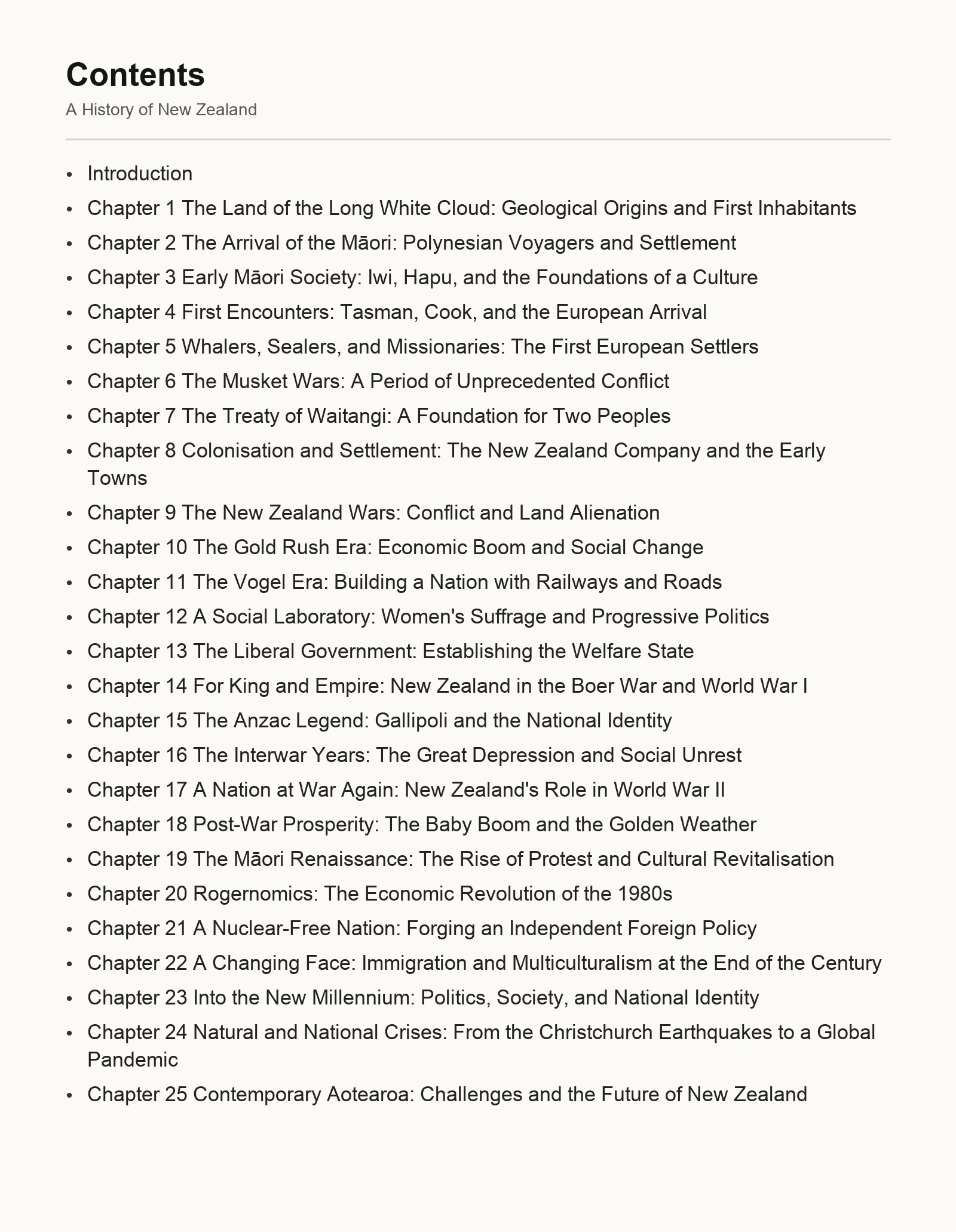
- Introduction
- Chapter 1 The Land of the Long White Cloud: Geological Origins and First Inhabitants
- Chapter 2 The Arrival of the Māori: Polynesian Voyagers and Settlement
- Chapter 3 Early Māori Society: Iwi, Hapu, and the Foundations of a Culture
- Chapter 4 First Encounters: Tasman, Cook, and the European Arrival
- Chapter 5 Whalers, Sealers, and Missionaries: The First European Settlers
- Chapter 6 The Musket Wars: A Period of Unprecedented Conflict
- Chapter 7 The Treaty of Waitangi: A Foundation for Two Peoples
- Chapter 8 Colonisation and Settlement: The New Zealand Company and the Early Towns
- Chapter 9 The New Zealand Wars: Conflict and Land Alienation
- Chapter 10 The Gold Rush Era: Economic Boom and Social Change
- Chapter 11 The Vogel Era: Building a Nation with Railways and Roads
- Chapter 12 A Social Laboratory: Women's Suffrage and Progressive Politics
- Chapter 13 The Liberal Government: Establishing the Welfare State
- Chapter 14 For King and Empire: New Zealand in the Boer War and World War I
- Chapter 15 The Anzac Legend: Gallipoli and the National Identity
- Chapter 16 The Interwar Years: The Great Depression and Social Unrest
- Chapter 17 A Nation at War Again: New Zealand's Role in World War II
- Chapter 18 Post-War Prosperity: The Baby Boom and the Golden Weather
- Chapter 19 The Māori Renaissance: The Rise of Protest and Cultural Revitalisation
- Chapter 20 Rogernomics: The Economic Revolution of the 1980s
- Chapter 21 A Nuclear-Free Nation: Forging an Independent Foreign Policy
- Chapter 22 A Changing Face: Immigration and Multiculturalism at the End of the Century
- Chapter 23 Into the New Millennium: Politics, Society, and National Identity
- Chapter 24 Natural and National Crises: From the Christchurch Earthquakes to a Global Pandemic
- Chapter 25 Contemporary Aotearoa: Challenges and the Future of New Zealand
Author:
Published By:
Date Published:
May 17, 2026
Type:
Nonfiction
Language:
English
Also Available In:
German, Spanish, Italian, Portuguese
Word Count:
55,321 words
Reading Time:
3 hours 52 minutes
Sample:
Order:
Buy the A History of New Zealand ebook on MixCache.com:
Buy NowThe full ebook will be available immediately to read instantly on any device.
$5 account credit for all new MixCache.com accounts, usable toward any ebook purchase!*





Ratings & Reviews
Ask Questions About This Book
Have a question about the content? Ask our AI assistant!
Start by asking a question about "A History of New Zealand"
Example: "Does this book mention William Shakespeare?"
Thinking...