Browse by Category
Fiction
- Action & Adventure
- African American
- Anthologies
- Children's Fiction
- Classics
- Comics & Graphic Novels
- Coming of Age
- Contemporary
- Cultural & Regional
- Drama
- Erotica
- Fantasy
- General
- Historical Fiction
- Horror
- Humor & Satire
- Literary Fiction
- Mystery, Thriller & Suspense
- Poetry
- Religious & Inspirational
- Romance
- Science Fiction
- Short Stories
- War & Military
- Westerns
- Women's Fiction
- Young Adult
Non-Fiction
- Antiques & Collectibles
- Arts & Photography
- Biographies & Memoirs
- Business & Money
- Children's Non-Fiction
-
Computers & Technology
- Artificial Intelligence
- Computer Science
- Cybersecurity & Cryptography
- Data Science & Analytics
- Databases & Big Data
- Game Development & Design
- General
- Hardware & DIY
- Mobile App Development
- Networking & Cloud Computing
- Operating Systems
- Programming
- Robotics
- Software
- Software Engineering
- User Experience (UX) & Design
- Web Development & Design
- Cooking, Food & Wine
- Crafts, Hobbies & Home
- Education & Teaching
- Engineering
- General
- Health, Fitness & Dieting
-
History
- African History
- African History - North Africa
- African History - Sub-Saharan Africa
- American History
- American History - 20th Century
- American History - Civil War
- American History - Colonial Period
- Ancient History
- Asian History
- Asian History - China
- Asian History - India
- Asian History - Japan
- Asian History - Southeast Asia
- European History
- European History - Ancient Greece
- European History - Ancient Rome
- European History - Medieval
- European History - Modern
- European History - Renaissance
- General
- Middle Eastern History
- Military History
- Military History - Aviation
- Military History - Naval
- Social & Cultural History
- World History
- Humor & Entertainment
- Industrial Technology
- Language Learning
- Law
- LGBTQ+ Non-Fiction
- Literary Criticism
- Medical Books
- Parenting & Relationships
- Philosophy
- Politics & Social Sciences
- Reference
- Religion & Spirituality
-
Science & Math
- Agricultural Sciences
- Astronomy & Space Science
- Behavioral Sciences
- Biological Sciences
- Botany & Plant Science
- Chemistry
- Earth Sciences
- Engineering - Chemical
- Engineering - Civil
- Engineering - Electrical
- Engineering - Mechanical
- Environment
- General
- Geology
- Mathematics
- Nature & Ecology
- Oceanography
- Paleontology
- Physics
- Statistics
- Self-Help
- Sports & Outdoors
- Study Aids
- Sustainability & Green Living
- Textbooks
- Transportation
- Travel
- True Crime
- Urban Planning & Development
- Veterinary Medicine
- Writing & Publishing
Jump to Section
MixCache.com Total Access
Unlimited reading and audiobooks for every book published by MixCache.com.
Included titles carry the MTA badge.
Learn more →A History of China
About this book:
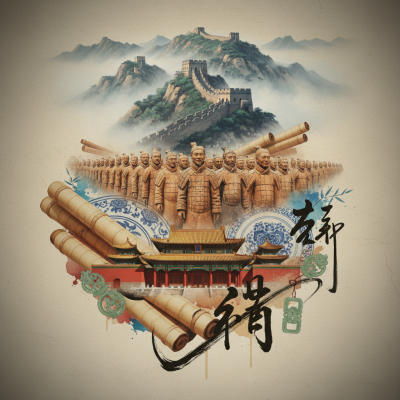
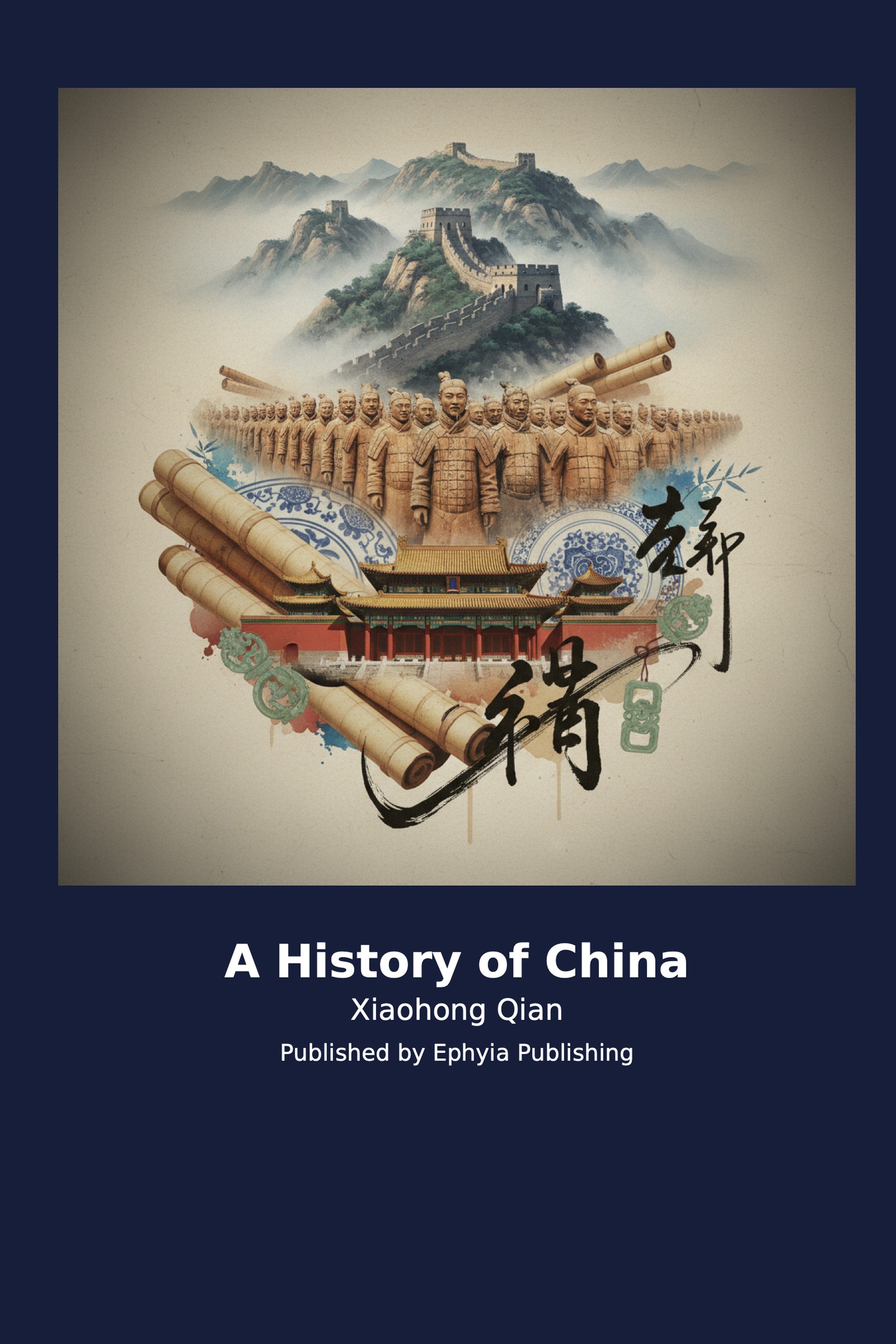
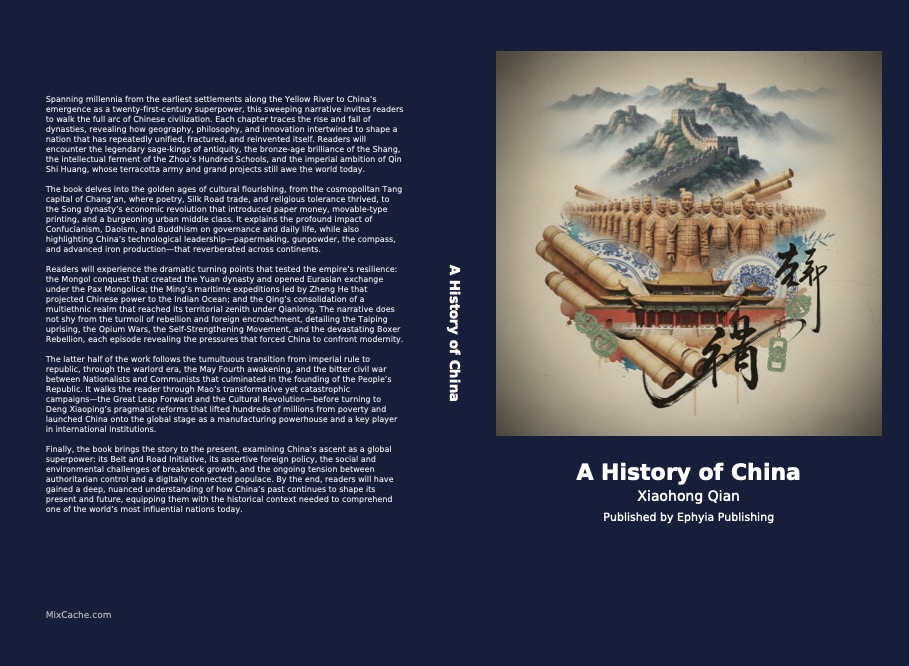
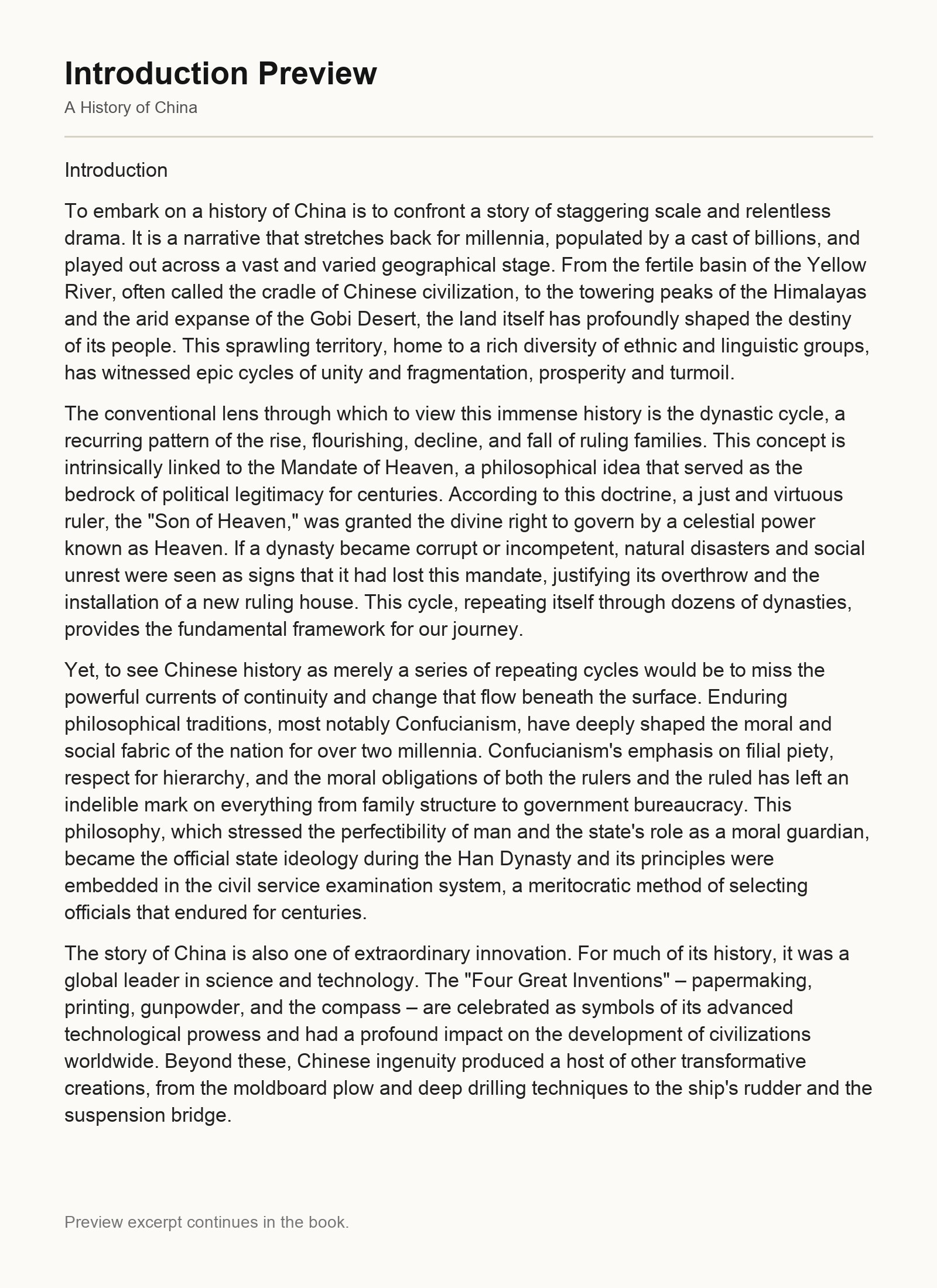
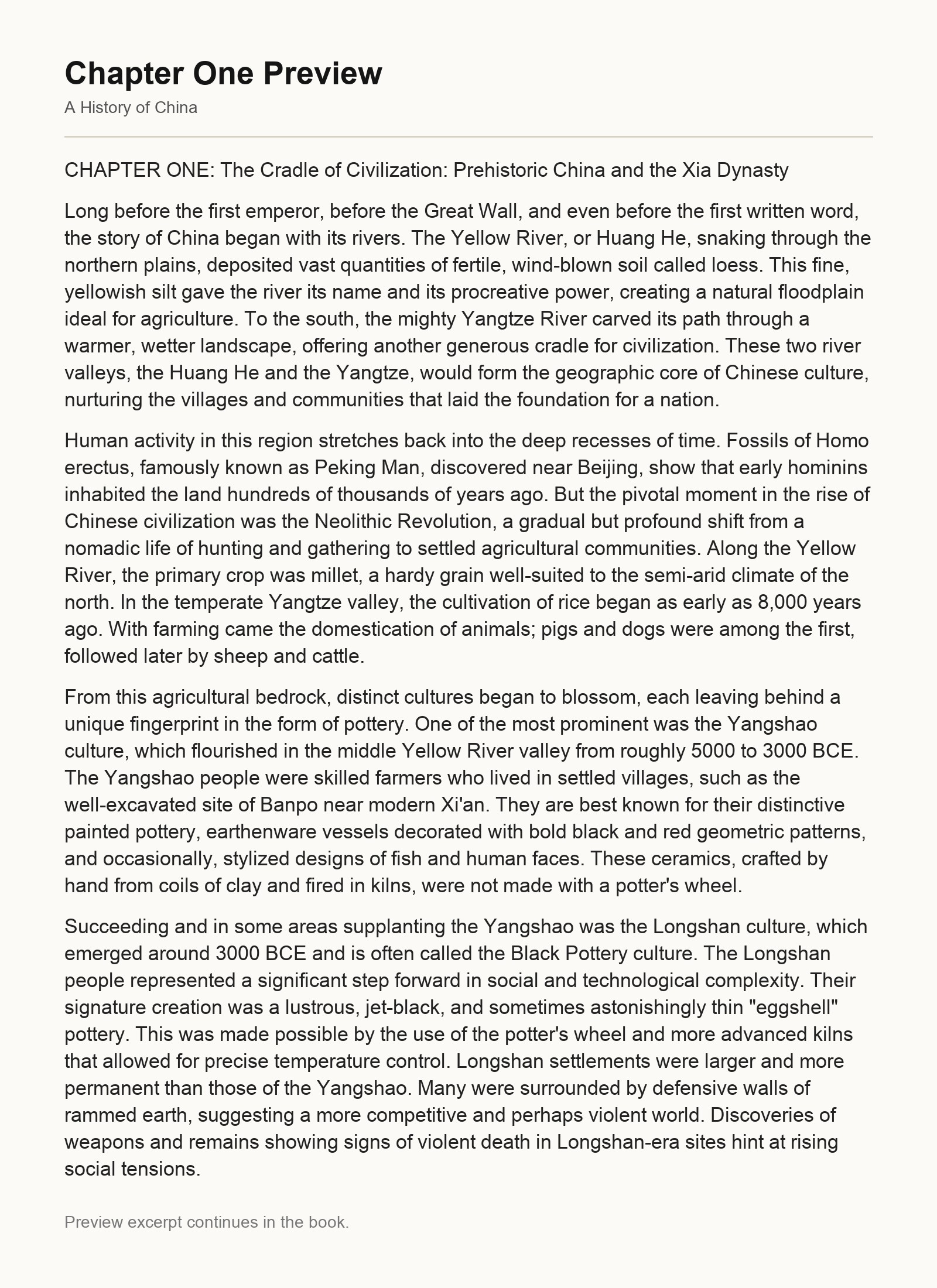
Spanning millennia from the earliest settlements along the Yellow River to China’s emergence as a twenty‑first‑century superpower, this sweeping narrative invites readers to walk the full arc of Chinese civilization. Each chapter traces the rise and fall of dynasties, revealing how geography, philosophy, and innovation intertwined to shape a nation that has repeatedly unified, fractured, and reinvented itself. Readers will encounter the legendary sage‑kings of antiquity, the bronze‑age brilliance of the Shang, the intellectual ferment of the Zhou’s Hundred Schools, and the imperial ambition of Qin Shi Huang, whose terracotta army and grand projects still awe the world today.
The book delves into the golden ages of cultural flourishing, from the cosmopolitan Tang capital of Chang’an, where poetry, Silk Road trade, and religious tolerance thrived, to the Song dynasty’s economic revolution that introduced paper money, movable‑type printing, and a burgeoning urban middle class. It explains the profound impact of Confucianism, Daoism, and Buddhism on governance and daily life, while also highlighting China’s technological leadership—papermaking, gunpowder, the compass, and advanced iron production—that reverberated across continents.
Readers will experience the dramatic turning points that tested the empire’s resilience: the Mongol conquest that created the Yuan dynasty and opened Eurasian exchange under the Pax Mongolica; the Ming’s maritime expeditions led by Zheng He that projected Chinese power to the Indian Ocean; and the Qing’s consolidation of a multiethnic realm that reached its territorial zenith under Qianlong. The narrative does not shy from the turmoil of rebellion and foreign encroachment, detailing the Taiping uprising, the Opium Wars, the Self‑Strengthening Movement, and the devastating Boxer Rebellion, each episode revealing the pressures that forced China to confront modernity.
The latter half of the work follows the tumultuous transition from imperial rule to republic, through the warlord era, the May Fourth awakening, and the bitter civil war between Nationalists and Communists that culminated in the founding of the People’s Republic. It walks the reader through Mao’s transformative yet catastrophic campaigns—the Great Leap Forward and the Cultural Revolution—before turning to Deng Xiaoping’s pragmatic reforms that lifted hundreds of millions from poverty and launched China onto the global stage as a manufacturing powerhouse and a key player in international institutions.
Finally, the book brings the story to the present, examining China’s ascent as a global superpower: its Belt and Road Initiative, its assertive foreign policy, the social and environmental challenges of breakneck growth, and the ongoing tension between authoritarian control and a digitally connected populace. By the end, readers will have gained a deep, nuanced understanding of how China’s past continues to shape its present and future, equipping them with the historical context needed to comprehend one of the world’s most influential nations today.
What You'll Find Inside:
- The dynastic cycle and Mandate of Heaven as the enduring framework for understanding China's political rise and fall over millennia
- China's legacy of innovation including the Four Great Inventions and their global impact on world civilization
- The cyclical pattern of foreign invasions, internal rebellions, and reform movements that shaped modern China
- The ideological evolution from Confucian orthodoxy to Marxist-Leninist revolution and pragmatic socialism
- China's transformation from imperial dynasty to 21st-century global superpower through reform and opening policies
Who's It For:
This book is ideal for university students, history enthusiasts, and professionals seeking a comprehensive understanding of China's 5,000-year civilization. It provides essential context for anyone interested in China's current global role, offering deep insights into how historical patterns continue to influence contemporary Chinese politics, society, and foreign policy.
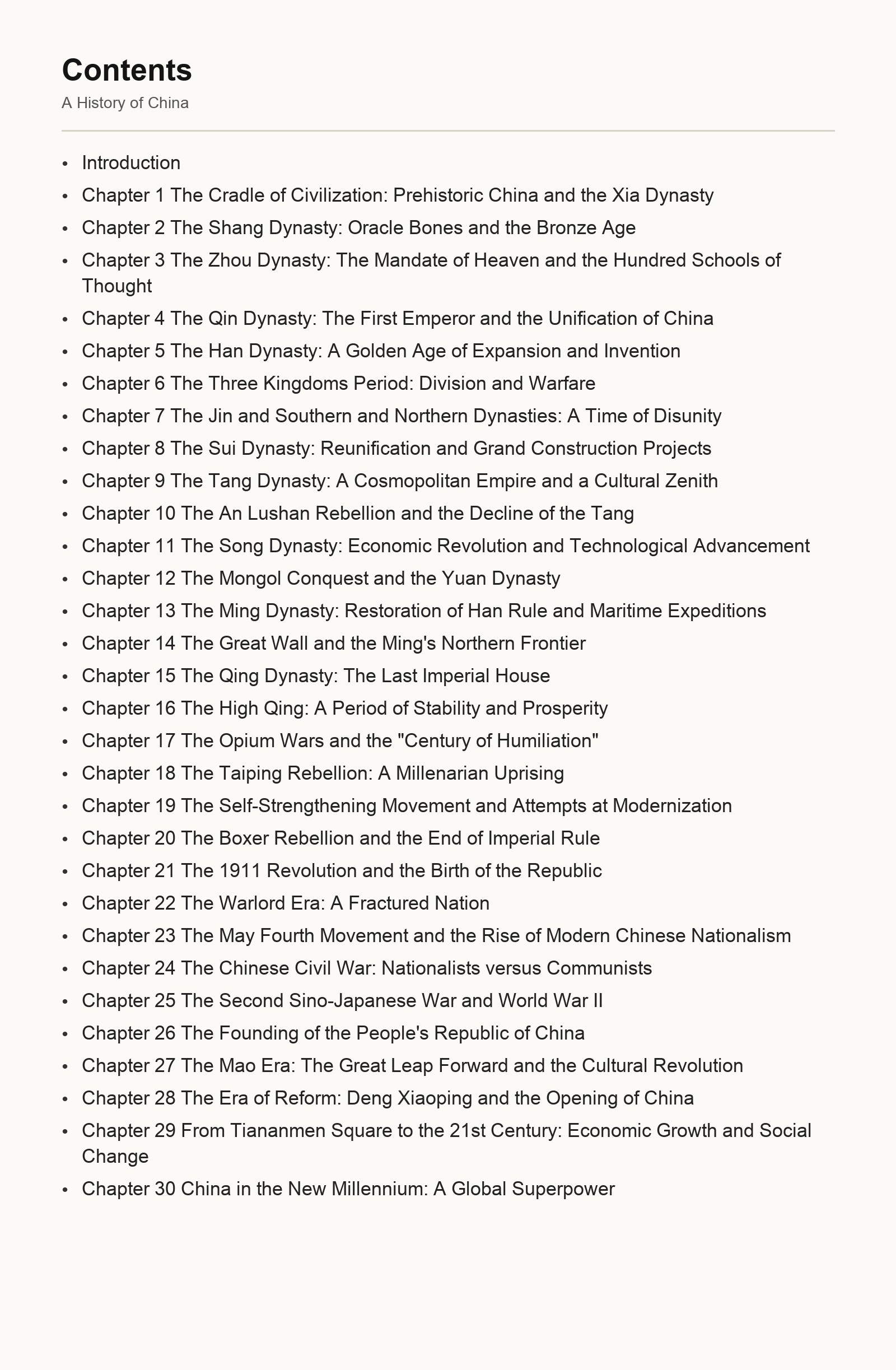
Table of Contents:
- Introduction
- Chapter 1 The Cradle of Civilization: Prehistoric China and the Xia Dynasty
- Chapter 2 The Shang Dynasty: Oracle Bones and the Bronze Age
- Chapter 3 The Zhou Dynasty: The Mandate of Heaven and the Hundred Schools of Thought
- Chapter 4 The Qin Dynasty: The First Emperor and the Unification of China
- Chapter 5 The Han Dynasty: A Golden Age of Expansion and Invention
- Chapter 6 The Three Kingdoms Period: Division and Warfare
- Chapter 7 The Jin and Southern and Northern Dynasties: A Time of Disunity
- Chapter 8 The Sui Dynasty: Reunification and Grand Construction Projects
- Chapter 9 The Tang Dynasty: A Cosmopolitan Empire and a Cultural Zenith
- Chapter 10 The An Lushan Rebellion and the Decline of the Tang
- Chapter 11 The Song Dynasty: Economic Revolution and Technological Advancement
- Chapter 12 The Mongol Conquest and the Yuan Dynasty
- Chapter 13 The Ming Dynasty: Restoration of Han Rule and Maritime Expeditions
- Chapter 14 The Great Wall and the Ming's Northern Frontier
- Chapter 15 The Qing Dynasty: The Last Imperial House
- Chapter 16 The High Qing: A Period of Stability and Prosperity
- Chapter 17 The Opium Wars and the "Century of Humiliation"
- Chapter 18 The Taiping Rebellion: A Millenarian Uprising
- Chapter 19 The Self-Strengthening Movement and Attempts at Modernization
- Chapter 20 The Boxer Rebellion and the End of Imperial Rule
- Chapter 21 The 1911 Revolution and the Birth of the Republic
- Chapter 22 The Warlord Era: A Fractured Nation
- Chapter 23 The May Fourth Movement and the Rise of Modern Chinese Nationalism
- Chapter 24 The Chinese Civil War: Nationalists versus Communists
- Chapter 25 The Second Sino-Japanese War and World War II
- Chapter 26 The Founding of the People's Republic of China
- Chapter 27 The Mao Era: The Great Leap Forward and the Cultural Revolution
- Chapter 28 The Era of Reform: Deng Xiaoping and the Opening of China
- Chapter 29 From Tiananmen Square to the 21st Century: Economic Growth and Social Change
- Chapter 30 China in the New Millennium: A Global Superpower
Ephyia Publishing MixCache.com Book Reference: 15309
Author:
Published By:
Date Published:
May 16, 2026
Type:
Nonfiction
Language:
English
Also Available In:
Word Count:
62,354 words
Reading Time:
4 hours 22 minutes
Sample:
Order:
Order A History of China (Hardcover) on MixCache.com:
Buy NowPrint copy is made to order and ships worldwide. Includes the ebook free, ready to read instantly.
$5 account credit for all new MixCache.com accounts, usable toward any ebook purchase!*