Browse by Category
Fiction
- Action & Adventure
- African American
- Anthologies
- Children's Fiction
- Classics
- Comics & Graphic Novels
- Coming of Age
- Contemporary
- Cultural & Regional
- Drama
- Erotica
- Fantasy
- General
- Historical Fiction
- Horror
- Humor & Satire
- Literary Fiction
- Mystery, Thriller & Suspense
- Poetry
- Religious & Inspirational
- Romance
- Science Fiction
- Short Stories
- War & Military
- Westerns
- Women's Fiction
- Young Adult
Non-Fiction
- Antiques & Collectibles
- Arts & Photography
- Biographies & Memoirs
- Business & Money
- Children's Non-Fiction
-
Computers & Technology
- Artificial Intelligence
- Computer Science
- Cybersecurity & Cryptography
- Data Science & Analytics
- Databases & Big Data
- Game Development & Design
- General
- Hardware & DIY
- Mobile App Development
- Networking & Cloud Computing
- Operating Systems
- Programming
- Robotics
- Software
- Software Engineering
- User Experience (UX) & Design
- Web Development & Design
- Cooking, Food & Wine
- Crafts, Hobbies & Home
- Education & Teaching
- Engineering
- General
- Health, Fitness & Dieting
-
History
- African History
- African History - North Africa
- African History - Sub-Saharan Africa
- American History
- American History - 20th Century
- American History - Civil War
- American History - Colonial Period
- Ancient History
- Asian History
- Asian History - China
- Asian History - India
- Asian History - Japan
- Asian History - Southeast Asia
- European History
- European History - Ancient Greece
- European History - Ancient Rome
- European History - Medieval
- European History - Modern
- European History - Renaissance
- General
- Middle Eastern History
- Military History
- Military History - Aviation
- Military History - Naval
- Social & Cultural History
- World History
- Humor & Entertainment
- Industrial Technology
- Language Learning
- Law
- LGBTQ+ Non-Fiction
- Literary Criticism
- Medical Books
- Parenting & Relationships
- Philosophy
- Politics & Social Sciences
- Reference
- Religion & Spirituality
-
Science & Math
- Agricultural Sciences
- Astronomy & Space Science
- Behavioral Sciences
- Biological Sciences
- Botany & Plant Science
- Chemistry
- Earth Sciences
- Engineering - Chemical
- Engineering - Civil
- Engineering - Electrical
- Engineering - Mechanical
- Environment
- General
- Geology
- Mathematics
- Nature & Ecology
- Oceanography
- Paleontology
- Physics
- Statistics
- Self-Help
- Sports & Outdoors
- Study Aids
- Sustainability & Green Living
- Textbooks
- Transportation
- Travel
- True Crime
- Urban Planning & Development
- Veterinary Medicine
- Writing & Publishing
Jump to Section
MixCache.com Total Access
Unlimited reading and audiobooks for every book published by MixCache.com.
Included titles carry the MTA badge.
Learn more →
Law and Constitutions: Shaping Rights and Governance in the Americas
MTA
Constitutional experiments, legal transplantations, and human rights movements across the hemisphere
About this book:
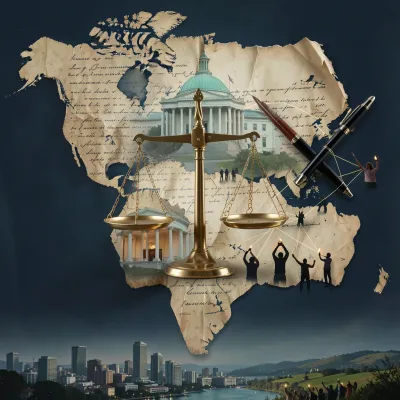
This book explores the evolution of constitutional law and governance across the Americas, tracing the development of legal systems from colonial legacies to modern plurinational experiments. It examines how North, Central, and South American nations have adapted inherited traditions—such as British common law and Spanish civil law—to navigate the unique challenges of presidentialism, federalism, and judicial review. The text highlights the region’s role as a laboratory for constitutional design, particularly through the rise of specialized constitutional courts and the widespread adoption of fast-track remedies like the *amparo* and *tutela* to protect fundamental rights.
A significant portion of the analysis focuses on the expansion of rights catalogues, moving from classical individual liberties to the inclusion of socioeconomic, collective, and environmental rights. The book details the transformative impact of social movements—including Indigenous, feminist, and LGBTQ+ advocates—who have leveraged constitutional litigation and constituent assemblies to redefine citizenship and state obligations. It specifically highlights the emergence of "plurinational" frameworks in the Andes and the global pioneering of the "rights of nature," which challenge traditional Western legal concepts by granting legal standing to ecosystems.
The book also addresses the persistent tensions between democratic resilience and authoritarian impulses. It scrutinizes the use of emergency powers, the rise of "hyperpresidentialism" under populist leaders, and the systemic challenge of corruption. By evaluating the Inter-American System of Human Rights alongside domestic case studies from Mexico, Colombia, Chile, and Brazil, the author illustrates how transnational norms and regional courts serve as both a check on state overreach and a catalyst for legal transplantation.
Ultimately, the work portrays constitutions in the Americas as living, contested architectures that are constantly reshaped by political crises and technological change. It concludes by looking toward the future of the hemisphere, suggesting that the durability of democratic governance will depend on the ability of these legal frameworks to adapt to contemporary pressures such as digital surveillance, climate migration, and persistent socioeconomic inequality.
What You'll Find Inside:
- Comparative analysis of constitutional designs across the Americas, examining how federalism, presidentialism, and separation of powers function in diverse political contexts from the United States to Caribbean nations.
- Evolution of rights catalogs from classical liberties (property, speech, due process) to expansive social, environmental, and collective rights including Indigenous territorial claims and rights of nature.
- Role of judicial review and constitutional courts in shaping constitutional meaning through landmark cases, amparo/tutela actions, and interaction with the Inter-American human rights system.
- Impact of human rights movements and social activism (Indigenous organizations, women's and LGBTQ+ advocates, environmental defenders) in driving constitutional reform and rights expansion.
- Processes of legal transplantation and constitutional borrowing across borders, examining how ideas like judicial review, ombudsman institutions, and human rights norms migrate and adapt throughout the hemisphere.
Who's It For:
This book is designed for law students seeking to understand doctrinal developments in comparative constitutional law, historians tracing the evolution of governance structures across the Americas, and engaged citizens looking to analyze constitutional reform proposals. It will particularly benefit those studying political science, human rights, or international law who want to grasp how constitutional design interacts with social movements and judicial activism. Policy makers, legal practitioners, and activists working on governance reform in the Americas will find practical insights into rights enforcement and institutional innovation. The accessible approach also makes it valuable for informed citizens interested in how constitutional choices affect fundamental freedoms and democratic resilience.
Table of Contents:
- Introduction
- Chapter 1 Mapping the Constitutional Landscape of the Americas
- Chapter 2 Founding Charters and Colonial Legacies
- Chapter 3 Federalism, Unitary States, and Hybrids
- Chapter 4 Separation of Powers and Presidentialism
- Chapter 5 Judicial Review and the Rise of Constitutional Courts
- Chapter 6 Rights Catalogues: From Classical Liberties to Social Rights
- Chapter 7 Indigenous Peoples and Plurinational Constitutions
- Chapter 8 Emergency Powers and Democratic Resilience
- Chapter 9 Populism, Hyperpresidentialism, and Guardrails
- Chapter 10 The Inter-American System of Human Rights
- Chapter 11 Legal Transplantation and Constitutional Borrowing
- Chapter 12 Constituent Assemblies and Processes of Change
- Chapter 13 Landmark Cases that Reframed Rights
- Chapter 14 Freedom of Expression and the Press
- Chapter 15 Privacy, Surveillance, and Digital Rights
- Chapter 16 Religious Freedom and Secularism
- Chapter 17 Gender Equality, Reproductive Rights, and LGBTQ+ Movements
- Chapter 18 Socioeconomic Rights: Health, Education, and Housing
- Chapter 19 Environmental Constitutionalism and Rights of Nature
- Chapter 20 Anti-Corruption, Accountability, and the Administrative State
- Chapter 21 Electoral Systems, Parties, and Judicialized Politics
- Chapter 22 Constitutionalism and Criminal Justice Reform
- Chapter 23 Migration, Citizenship, and Borders
- Chapter 24 Case Studies in Reform: Mexico, Colombia, Chile, and Brazil
- Chapter 25 Looking Ahead: Constitutional Futures in the Hemisphere
Author:
Published By:
Date Published:
May 5, 2026
Type:
Nonfiction
Language:
English
Word Count:
66,283 words
Reading Time:
4 hours 39 minutes
Sample:
Order:
Order Law and Constitutions: Shaping Rights and Governance in the Americas (Paperback) on MixCache.com:
Buy NowPrint copy is made to order and ships worldwide. Includes the ebook free, ready to read instantly.
$5 account credit for all new MixCache.com accounts, usable toward any ebook purchase!*