
Browse by Category
Fiction
- Action & Adventure
- African American
- Anthologies
- Children's Fiction
- Classics
- Comics & Graphic Novels
- Coming of Age
- Contemporary
- Cultural & Regional
- Drama
- Erotica
- Fantasy
- General
- Historical Fiction
- Horror
- Humor & Satire
- Literary Fiction
- Mystery, Thriller & Suspense
- Poetry
- Religious & Inspirational
- Romance
- Science Fiction
- Short Stories
- War & Military
- Westerns
- Women's Fiction
- Young Adult
Non-Fiction
- Antiques & Collectibles
- Arts & Photography
- Biographies & Memoirs
- Business & Money
- Children's Non-Fiction
-
Computers & Technology
- Artificial Intelligence
- Computer Science
- Cybersecurity & Cryptography
- Data Science & Analytics
- Databases & Big Data
- Game Development & Design
- General
- Hardware & DIY
- Mobile App Development
- Networking & Cloud Computing
- Operating Systems
- Programming
- Robotics
- Software
- Software Engineering
- User Experience (UX) & Design
- Web Development & Design
- Cooking, Food & Wine
- Crafts, Hobbies & Home
- Education & Teaching
- Engineering
- General
- Health, Fitness & Dieting
-
History
- African History
- African History - North Africa
- African History - Sub-Saharan Africa
- American History
- American History - 20th Century
- American History - Civil War
- American History - Colonial Period
- Ancient History
- Asian History
- Asian History - China
- Asian History - India
- Asian History - Japan
- Asian History - Southeast Asia
- European History
- European History - Ancient Greece
- European History - Ancient Rome
- European History - Medieval
- European History - Modern
- European History - Renaissance
- General
- Middle Eastern History
- Military History
- Military History - Aviation
- Military History - Naval
- Social & Cultural History
- World History
- Humor & Entertainment
- Industrial Technology
- Language Learning
- Law
- LGBTQ+ Non-Fiction
- Literary Criticism
- Medical Books
- Parenting & Relationships
- Philosophy
- Politics & Social Sciences
- Reference
- Religion & Spirituality
-
Science & Math
- Agricultural Sciences
- Astronomy & Space Science
- Behavioral Sciences
- Biological Sciences
- Botany & Plant Science
- Chemistry
- Earth Sciences
- Engineering - Chemical
- Engineering - Civil
- Engineering - Electrical
- Engineering - Mechanical
- Environment
- General
- Geology
- Mathematics
- Nature & Ecology
- Oceanography
- Paleontology
- Physics
- Statistics
- Self-Help
- Sports & Outdoors
- Study Aids
- Sustainability & Green Living
- Textbooks
- Transportation
- Travel
- True Crime
- Urban Planning & Development
- Veterinary Medicine
- Writing & Publishing
Jump to Section
MixCache.com Total Access
Unlimited reading and audiobooks for every book published by MixCache.com.
Included titles carry the MTA badge.
Learn more →
Truth Commissions, Memory, and Justice in the Americas
MTA
Transitional justice, historical memory, and reconciliation after authoritarian rule and mass violence
About this book:
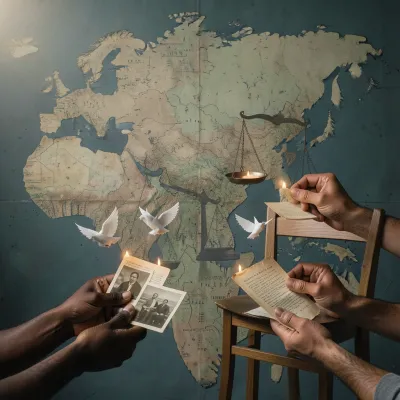
*Truth Commissions, Memory, and Justice in the Americas* provides a comprehensive comparative analysis of how nations across the Western Hemisphere have grappled with the legacies of authoritarian rule, civil war, and mass violence. The book situates truth commissions within the broader framework of transitional justice, examining how bodies such as Argentina’s CONADEP, Chile’s Rettig and Valech Commissions, and Guatemala’s CEH were designed to exhume suppressed histories. By analyzing national contexts ranging from the "Archives of Terror" in Paraguay to the ongoing conflict in Colombia, the text illustrates how mandates, political constraints, and timing dictate whether a commission successfully generates a shared public record or falls victim to institutionalized amnesia.
The narrative emphasizes that truth-seeking is a multi-dimensional process involving testimonial evidence, forensic science, and the prying open of state archives. The book highlights the evolution of these methods, noting how later commissions moved beyond simple casualty counts to address gender-based violence, the targeting of Indigenous and Afro-descendant populations, and the structural economic roots of repression. It argues that while forensic truth—such as DNA identification—provides irrefutable physical evidence, the act of public testimony serves a vital psychosocial function by validating the suffering of victims and restoring dignity to marginalized communities.
A central theme of the work is the complex and often friction-filled relationship between truth, legal accountability, and reconciliation. The text traces the "relay race" of justice, where truth commission reports often serve as the evidentiary substrate for future legal breakthroughs, even when initially blocked by amnesty laws. Through various case studies, the book demonstrates that legal trials, material reparations, and symbolic memorialization (such as museums and monuments) must work in tandem to effect genuine social change. However, it cautions that reconciliation is an ongoing, non-linear practice rather than a final destination, often hindered by bureaucratic resistance and the uneven implementation of recommendations.
Ultimately, the book offers a pragmatic assessment of the impact and legitimacy of truth commissions. It concludes that while these bodies cannot single-handedly heal a fractured society, they are essential catalysts for democratic consolidation. By documenting the patterns of state terror and making denial more politically costly, commissions create a durable historical record that subsequent generations can use to demand accountability. The work serves as a guide for future initiatives, emphasizing that inclusive participation, transparency, and a commitment to "non-repetition" are the hallmarks of a successful transition from a violent past to a more just and stable future.
What You'll Find Inside:
- Comparative analysis of truth commission designs across the Americas, examining how mandates, powers, and constraints shaped their effectiveness in different national contexts.
- Detailed case studies of major truth commissions including Argentina's CONADEP, Chile's Rettig and Valech Commissions, and Guatemala's CEH, highlighting their methodologies and impacts.
- Exploration of the relationship between truth-seeking and legal accountability, including how commission findings influenced prosecutions despite amnesty laws.
- Examination of methodological approaches to truth-seeking, including testimony collection, forensic science, and archival research, and their respective strengths and limitations.
- Analysis of how truth commissions contributed to memorialization, healing, and reconciliation efforts, while revealing what they often missed about systemic violence.
Who's It For:
This book is intended for scholars and students of transitional justice, human rights, and Latin American studies; practitioners working in truth commissions, international criminal law, or post-conflict reconstruction; policymakers and government officials designing accountability mechanisms; and human rights activists seeking to understand how societies confront past atrocities through truth-seeking processes.
Table of Contents:
- Introduction
- Chapter 1 Transitional Justice in the Americas: Concepts, Tensions, and Trajectories
- Chapter 2 Authoritarian Rule and Mass Violence: Regional Patterns and Legacies
- Chapter 3 Designing Truth Commissions: Mandates, Powers, and Constraints
- Chapter 4 Methods of Truth-Seeking: Testimony, Forensic Science, and Archives
- Chapter 5 Argentina I: CONADEP and the Politics of Nunca Más
- Chapter 6 Argentina II: Trials, Amnesty Laws, and Renewed Prosecutions
- Chapter 7 Chile I: The Rettig Report and the Boundaries of Truth
- Chapter 8 Chile II: The Valech Commission, Torture, and Reparations
- Chapter 9 Guatemala I: The CEH and the Naming of Genocide
- Chapter 10 Guatemala II: Indigenous Memory, Exhumations, and Community Justice
- Chapter 11 Peru I: The CVR and the War of Narratives
- Chapter 12 Peru II: Reparations, Museums, and Memory Debates
- Chapter 13 El Salvador: From Truth to Impunity and Back Again
- Chapter 14 Brazil: Delayed Truth, Archives, and the National Commission
- Chapter 15 Paraguay: Unearthing the Archives of Terror
- Chapter 16 Colombia: Truth, Justice, and Peace in an Ongoing Conflict
- Chapter 17 Haiti: Fragile Institutions and Contested Memories
- Chapter 18 Uruguay: Silence, Amnesty, and the Gradual Return of Truth
- Chapter 19 Comparative Findings: What Truth Commissions Reveal—and What They Miss
- Chapter 20 Legal Accountability: Courts, Amnesties, and International Law
- Chapter 21 Memorialization: Museums, Monuments, and Days of Remembrance
- Chapter 22 Healing and Psychosocial Repair: From Individual Trauma to Collective Care
- Chapter 23 Reconciliation Reconsidered: Ethics, Politics, and Pragmatics
- Chapter 24 Lessons for Future Commissions: Design, Participation, and Legitimacy
- Chapter 25 Beyond the Report: Implementing Recommendations and Measuring Impact
Author:
Published By:
Date Published:
May 5, 2026
Type:
Nonfiction
Language:
English
Word Count:
66,862 words
Reading Time:
4 hours 41 minutes
Sample:
MixCache.com Total Access
Get unlimited access to this book + all books published by MixCache.com for $11.99/month
Subscribe to MTAOr purchase this book individually below
Order:
Buy the Truth Commissions, Memory, and Justice in the Americas ebook on MixCache.com:
Buy Now
Full ebook will be available immediately
- read online or download as a PDF file.
$5 account credit for all new MixCache.com accounts, usable toward any ebook purchase!*



Ratings & Reviews
Ask Questions About This Book
Have a question about the content? Ask our AI assistant!
Start by asking a question about "Truth Commissions, Memory, and Justice in the Americas"
Example: "Does this book mention William Shakespeare?"
Thinking...