
Browse by Category
Fiction
- Action & Adventure
- African American
- Anthologies
- Children's Fiction
- Classics
- Comics & Graphic Novels
- Coming of Age
- Contemporary
- Cultural & Regional
- Drama
- Erotica
- Fantasy
- General
- Historical Fiction
- Horror
- Humor & Satire
- Literary Fiction
- Mystery, Thriller & Suspense
- Poetry
- Religious & Inspirational
- Romance
- Science Fiction
- Short Stories
- War & Military
- Westerns
- Women's Fiction
- Young Adult
Non-Fiction
- Antiques & Collectibles
- Arts & Photography
- Biographies & Memoirs
- Business & Money
- Children's Non-Fiction
-
Computers & Technology
- Artificial Intelligence
- Computer Science
- Cybersecurity & Cryptography
- Data Science & Analytics
- Databases & Big Data
- Game Development & Design
- General
- Hardware & DIY
- Mobile App Development
- Networking & Cloud Computing
- Operating Systems
- Programming
- Robotics
- Software
- Software Engineering
- User Experience (UX) & Design
- Web Development & Design
- Cooking, Food & Wine
- Crafts, Hobbies & Home
- Education & Teaching
- Engineering
- General
- Health, Fitness & Dieting
-
History
- African History
- African History - North Africa
- African History - Sub-Saharan Africa
- American History
- American History - 20th Century
- American History - Civil War
- American History - Colonial Period
- Ancient History
- Asian History
- Asian History - China
- Asian History - India
- Asian History - Japan
- Asian History - Southeast Asia
- European History
- European History - Ancient Greece
- European History - Ancient Rome
- European History - Medieval
- European History - Modern
- European History - Renaissance
- General
- Middle Eastern History
- Military History
- Military History - Aviation
- Military History - Naval
- Social & Cultural History
- World History
- Humor & Entertainment
- Industrial Technology
- Language Learning
- Law
- LGBTQ+ Non-Fiction
- Literary Criticism
- Medical Books
- Parenting & Relationships
- Philosophy
- Politics & Social Sciences
- Reference
- Religion & Spirituality
-
Science & Math
- Agricultural Sciences
- Astronomy & Space Science
- Behavioral Sciences
- Biological Sciences
- Botany & Plant Science
- Chemistry
- Earth Sciences
- Engineering - Chemical
- Engineering - Civil
- Engineering - Electrical
- Engineering - Mechanical
- Environment
- General
- Geology
- Mathematics
- Nature & Ecology
- Oceanography
- Paleontology
- Physics
- Statistics
- Self-Help
- Sports & Outdoors
- Study Aids
- Sustainability & Green Living
- Textbooks
- Transportation
- Travel
- True Crime
- Urban Planning & Development
- Veterinary Medicine
- Writing & Publishing
Jump to Section

Want unlimited access to all books published by MixCache.com (plus their audiobooks)? Try MixCache.com Total Access. Look for the MTA badge on book covers to identify included titles.
Access to infinite ebooks: Don't see the book you want? Suggest it and we'll create it (free!) for you from scratch with our powerful AI book writer. Then read it with MTA - besides profiting from any sales it makes!
Native Plants of the Mediterranean Basin: A Field Guide
MTA
Regional identification, habitat notes, and conservation status for Mediterranean Basin natives
About this book:
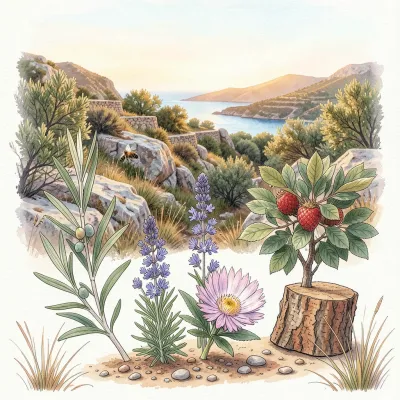
*Native Plants of the Mediterranean Basin: A Field Guide* is a comprehensive exploration of the region’s extraordinary biodiversity, framed by the rhythmic pulse of wet winters and hot, dry summers. The book serves as both a practical botanical resource and a call to stewardship, detailing the geographic and climatic zones—from humid mountain refugia to arid desert fringes—that have shaped the evolution of its flora. By categorizing plants by their specific habitats, such as coastal dunes, garrigue shrublands, evergreen woodlands, and alpine screes, the guide provides a structured framework for understanding how Mediterranean natives adapt to fire, salinity, and prolonged drought.
The text emphasizes field identification fundamentals, urging observers to utilize morphology, phenology, and sensory cues like scent and texture to distinguish between closely related species. It provides in-depth profiles of diverse plant groups, including the deceptive pollination strategies of Mediterranean orchids, the survival tactics of winter-spring geophytes, and the rapid life cycles of ephemeral annuals. Specialized chapters address the unique endemism found on Mediterranean islands and the resilient structures of succulents, xerophytes, and aquatic specialists, while also warning against toxic look-alikes and invasive species that threaten the ecological integrity of the basin.
Beyond mere identification, the book focuses on the practice of conservation and the ethics of field observation. It outlines the history of human-shaped landscapes and provides practical guidance on habitat restoration, grazing management, and the protection of rare or endangered species. The final chapters advocate for a collaborative approach to botany through citizen science, encouraging enthusiasts to document their findings responsibly. Ultimately, the guide positions the observer as an ally to the environment, emphasizing that understanding the names and rhythms of these plants is the first step toward ensuring their survival in an increasingly fragmented world.
What You'll Find Inside:
- Habitat-based organization covering 20+ distinct ecosystems from coastal dunes and saline wetlands to alpine meadows and karst cliffs, with species profiles emphasizing diagnostic morphology, phenology, and microhabitat preferences
- Regional flowering calendars and phenological guidance to time field observations effectively, accounting for elevation, aspect, and local climate variations across the Mediterranean Basin
- Comprehensive identification fundamentals including dichotomous keys, morphology analysis (leaf arrangement, stem characteristics, floral structures), and strategies to distinguish natives from invasive look-alikes
- Integrated conservation status with threat assessments (habitat loss, climate change, invasive species), ethical observation protocols, and practical guidance for habitat restoration and citizen science participation
- Specialized chapters on key plant groups including Mediterranean orchids, winter-spring geophytes, aromatic/medicinal natives, and toxic/irritant species with detailed identification features and ecological notes
Who's It For:
This field guide is designed for serious amateur botanists, ecology students, conservation professionals, and experienced naturalists working or traveling in the Mediterranean Basin. It assumes foundational botanical knowledge but provides the detailed identification skills, habitat context, and phenological guidance needed for accurate species identification in the field. The book will be most valuable to those engaged in plant surveys, habitat assessment, conservation planning, or scientific research requiring precise native plant identification and understanding of regional ecological patterns.
Author:
Published By:
Date Published:
May 5, 2026
Type:
Nonfiction
Language:
English
Word Count:
61,302 words
Reading Time:
4 hours 18 minutes
Sample:
Order:
Order Native Plants of the Mediterranean Basin: A Field Guide (Hardcover) on MixCache.com:
Buy NowPrint copy is made to order and ships worldwide. Includes the ebook free, ready to read instantly.
$5 account credit for all new MixCache.com accounts, usable toward any ebook purchase!*


