Browse by Category
Fiction
- Action & Adventure
- African American
- Anthologies
- Children's Fiction
- Classics
- Comics & Graphic Novels
- Coming of Age
- Contemporary
- Cultural & Regional
- Drama
- Erotica
- Fantasy
- General
- Historical Fiction
- Horror
- Humor & Satire
- Literary Fiction
- Mystery, Thriller & Suspense
- Poetry
- Religious & Inspirational
- Romance
- Science Fiction
- Short Stories
- War & Military
- Westerns
- Women's Fiction
- Young Adult
Non-Fiction
- Antiques & Collectibles
- Arts & Photography
- Biographies & Memoirs
- Business & Money
- Children's Non-Fiction
-
Computers & Technology
- Artificial Intelligence
- Computer Science
- Cybersecurity & Cryptography
- Data Science & Analytics
- Databases & Big Data
- Game Development & Design
- General
- Hardware & DIY
- Mobile App Development
- Networking & Cloud Computing
- Operating Systems
- Programming
- Robotics
- Software
- Software Engineering
- User Experience (UX) & Design
- Web Development & Design
- Cooking, Food & Wine
- Crafts, Hobbies & Home
- Education & Teaching
- Engineering
- General
- Health, Fitness & Dieting
-
History
- African History
- African History - North Africa
- African History - Sub-Saharan Africa
- American History
- American History - 20th Century
- American History - Civil War
- American History - Colonial Period
- Ancient History
- Asian History
- Asian History - China
- Asian History - India
- Asian History - Japan
- Asian History - Southeast Asia
- European History
- European History - Ancient Greece
- European History - Ancient Rome
- European History - Medieval
- European History - Modern
- European History - Renaissance
- General
- Middle Eastern History
- Military History
- Military History - Aviation
- Military History - Naval
- Social & Cultural History
- World History
- Humor & Entertainment
- Industrial Technology
- Language Learning
- Law
- LGBTQ+ Non-Fiction
- Literary Criticism
- Medical Books
- Parenting & Relationships
- Philosophy
- Politics & Social Sciences
- Reference
- Religion & Spirituality
-
Science & Math
- Agricultural Sciences
- Astronomy & Space Science
- Behavioral Sciences
- Biological Sciences
- Botany & Plant Science
- Chemistry
- Earth Sciences
- Engineering - Chemical
- Engineering - Civil
- Engineering - Electrical
- Engineering - Mechanical
- Environment
- General
- Geology
- Mathematics
- Nature & Ecology
- Oceanography
- Paleontology
- Physics
- Statistics
- Self-Help
- Sports & Outdoors
- Study Aids
- Sustainability & Green Living
- Textbooks
- Transportation
- Travel
- True Crime
- Urban Planning & Development
- Veterinary Medicine
- Writing & Publishing
Jump to Section

Want unlimited access to all books published by MixCache.com (plus their audiobooks)? Try MixCache.com Total Access. Look for the MTA badge on book covers to identify included titles.
Access to infinite ebooks: Don't see the book you want? Suggest it and we'll create it (free!) for you from scratch with our powerful AI book writer. Then read it with MTA - besides profiting from any sales it makes!
Space Exploration for Beginners
MTA
Clear, accessible introductions to planets, missions, and how to follow space news
About this book:
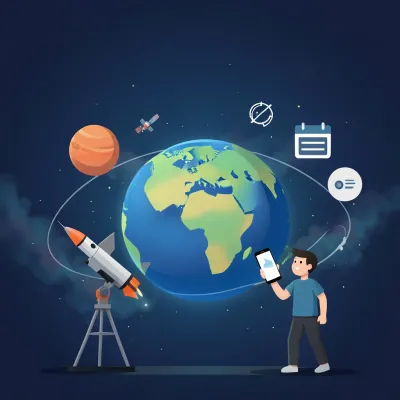
*Space Exploration for Beginners* provides a comprehensive and accessible introduction to the history, science, and practicalities of voyaging beyond Earth. The book begins by grounding readers in the fundamental principles of scale, gravity, and orbital mechanics, using simple analogies to explain how spacecraft reach and maintain orbit. It demystifies the technical aspects of rocketry, propulsion, and mission design, while also detailing the various types of satellites and telescopes—both ground-based and space-borne—that serve as humanity’s eyes and ears in the cosmos.
The middle chapters transition from technology to geography, offering an updated survey of the solar system. The text explores the Moon’s history and the goals of the modern Artemis era, the robotic exploration of Mars, and the unique environments of the inner and outer planets. Special attention is given to "small worlds" like asteroids and comets, the Sun’s influence on space weather, and the burgeoning field of exoplanet research. Throughout these sections, the book emphasizes the search for habitability and the chemical signatures of life.
Beyond pure science, the book examines the human and organizational side of exploration. It outlines the roles of national space agencies like NASA and ESA alongside the rising influence of private companies like SpaceX and Blue Origin. Critical discussions on space law, the ethics of contamination, and the management of space debris provide a realistic look at the challenges of a crowded orbital environment. The text also highlights the collaborative nature of international missions and the rigorous testing required to manage risk in the hostile vacuum of space.
Finally, the book serves as a practical manual for the modern space enthusiast. It teaches readers how to critically evaluate space news, interpret processed imagery, and track live launches and satellites from home. By encouraging participation through citizen science and amateur observation, the book moves space exploration from the realm of experts to a shared, accessible adventure. It concludes by looking toward the next decade of discovery, framing the future as a balance between technological ambition and the sustainable stewardship of the final frontier.
What You'll Find Inside:
- Understand fundamental concepts of gravity, orbits, and rocket propulsion using everyday analogies.
- Learn how to observe the night sky, identify planets, and track satellites and the ISS without specialized equipment.
- Explore the history of space exploration and the roles of major agencies and private companies.
- Discover how spacecraft navigate, communicate, and conduct science with instruments like cameras and spectrometers.
- Gain practical skills for following space news, participating in citizen science, and watching launches from home.
Who's It For:
This book is written for complete beginners with little or no background in astronomy or engineering, including high school students, adult learners, amateur astronomers, and anyone curious about space who wants a clear, jargon‑free introduction to the science, technology, and culture of space exploration. It assumes only everyday intuition and provides analogies and practical guidance so readers can follow missions, interpret news, and even participate in citizen‑science projects. Whether you are looking to start a hobby, supplement school studies, or simply satisfy your curiosity about the universe, this guide offers an accessible entry point.
Author:
Published By:
Date Published:
May 3, 2026
Type:
Nonfiction
Language:
English
Word Count:
65,243 words
Reading Time:
4 hours 34 minutes
Sample:
Order:
Order Space Exploration for Beginners (Hardcover) on MixCache.com:
Buy NowPrint copy is made to order and ships worldwide. Includes the ebook free, ready to read instantly.
$5 account credit for all new MixCache.com accounts, usable toward any ebook purchase!*