
Browse by Category
Fiction
- Action & Adventure
- African American
- Anthologies
- Children's Fiction
- Classics
- Comics & Graphic Novels
- Coming of Age
- Contemporary
- Cultural & Regional
- Drama
- Erotica
- Fantasy
- General
- Historical Fiction
- Horror
- Humor & Satire
- Literary Fiction
- Mystery, Thriller & Suspense
- Poetry
- Religious & Inspirational
- Romance
- Science Fiction
- Short Stories
- War & Military
- Westerns
- Women's Fiction
- Young Adult
Non-Fiction
- Antiques & Collectibles
- Arts & Photography
- Biographies & Memoirs
- Business & Money
- Children's Non-Fiction
-
Computers & Technology
- Artificial Intelligence
- Computer Science
- Cybersecurity & Cryptography
- Data Science & Analytics
- Databases & Big Data
- Game Development & Design
- General
- Hardware & DIY
- Mobile App Development
- Networking & Cloud Computing
- Operating Systems
- Programming
- Robotics
- Software
- Software Engineering
- User Experience (UX) & Design
- Web Development & Design
- Cooking, Food & Wine
- Crafts, Hobbies & Home
- Education & Teaching
- Engineering
- General
- Health, Fitness & Dieting
-
History
- African History
- African History - North Africa
- African History - Sub-Saharan Africa
- American History
- American History - 20th Century
- American History - Civil War
- American History - Colonial Period
- Ancient History
- Asian History
- Asian History - China
- Asian History - India
- Asian History - Japan
- Asian History - Southeast Asia
- European History
- European History - Ancient Greece
- European History - Ancient Rome
- European History - Medieval
- European History - Modern
- European History - Renaissance
- General
- Middle Eastern History
- Military History
- Military History - Aviation
- Military History - Naval
- Social & Cultural History
- World History
- Humor & Entertainment
- Industrial Technology
- Language Learning
- Law
- LGBTQ+ Non-Fiction
- Literary Criticism
- Medical Books
- Parenting & Relationships
- Philosophy
- Politics & Social Sciences
- Reference
- Religion & Spirituality
-
Science & Math
- Agricultural Sciences
- Astronomy & Space Science
- Behavioral Sciences
- Biological Sciences
- Botany & Plant Science
- Chemistry
- Earth Sciences
- Engineering - Chemical
- Engineering - Civil
- Engineering - Electrical
- Engineering - Mechanical
- Environment
- General
- Geology
- Mathematics
- Nature & Ecology
- Oceanography
- Paleontology
- Physics
- Statistics
- Self-Help
- Sports & Outdoors
- Study Aids
- Sustainability & Green Living
- Textbooks
- Transportation
- Travel
- True Crime
- Urban Planning & Development
- Veterinary Medicine
- Writing & Publishing
Jump to Section
MixCache.com Total Access
Unlimited reading and audiobooks for every book published by MixCache.com.
Included titles carry the MTA badge.
Learn more →
The Anatomy of a Purge
MTA
Case Studies of Political Repression from Moscow to the Provinces
About this book:
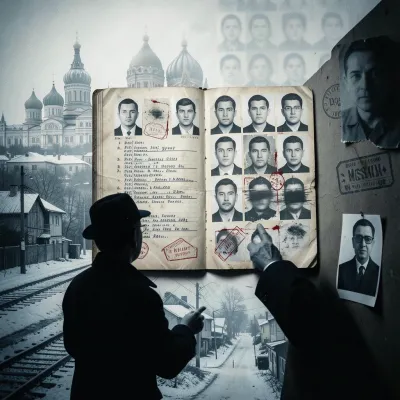
"The Anatomy of a Purge" meticulously dissects the mechanisms of political repression, moving beyond broad narratives to offer micro-histories of its implementation across various levels of Soviet society, from central Moscow to remote provincial settings. The book reveals how purges were not chaotic outbursts but systematically designed processes, driven by a complex interplay of ideology, institutional structures, and human behavior. It examines how seemingly innocuous elements like bureaucratic forms, quotas, and meeting minutes were weaponized, transforming abstract political directives into concrete acts of surveillance, accusation, and punishment that profoundly reshaped lives and communities.
The text emphasizes the "architecture of suspicion," illustrating how ideological categories (e.g., class enemy, foreign influence) were translated into administrative procedures that justified widespread surveillance, peer denunciations, and summary trials by bodies like the NKVD troikas. Chapters delve into specific settings such as factory floors, collective farms, and military barracks, demonstrating how local officials adapted central directives, often driven by personal ambition, fear, or a desire to meet arbitrary "quotas of terror." The book highlights the subtle but pervasive nature of control, extending to private lives through the monitoring of letters and diaries, and even to professional spheres like medicine (the Doctors' Scare) and cultural institutions (the Leningrad Affair).
A significant focus is placed on the human experience within this system. The book explores the devastating impact on women (wives and widows), youth, and religious communities, detailing how individuals navigated a landscape of shifting loyalties and arbitrary justice. It meticulously analyzes the "geography of removal," tracing the journeys of exiles to special settlements and the subsequent "afterlives of accusation" for orphans and remaining family members, characterized by enduring stigma and a pervasive "culture of the unsaid."
The final chapters delve into the challenges of historical reconstruction, advocating for "microhistory as ethics" to tell lives without witnesses by "triangulating sparse records." This involves critical analysis of archival "gaps, margins, and burned pages" to uncover the deliberate omissions and inherent biases in official documentation. Ultimately, the book concludes by examining the complex "legacies and lessons" of the purge, stressing how its effects—on memory, law, social trust, and institutional behavior—persisted long after the active repression ceased, underscoring that the past remains a contested terrain continually shaped by present choices.
What You'll Find Inside:
- How ordinary bureaucratic processes—forms, quotas, and procedural checkmarks—were systematically used to transform suspicion into administrative violence, making repression appear routine and rational
- The varied local implementation of central directives across factories, farms, schools, and ethnic borderlands, showing how national policies intersected with local rivalries, economic pressures, and community dynamics
- The enduring social afterlives of accusation that reshaped families, communities, and interpersonal trust for generations through silences, stigma, and reconfigured social hierarchies
- Methodological approaches for researching repression from fragmented archives, including triangulating sparse records with external sources and reading against the grain of official documents
- How ideology, institutions, and informal networks (especially informants and peer denunciations) interacted to create self-sustaining systems of fear where ordinary people became active participants in repression
Who's It For:
This book is designed for historians, political scientists, and sociology scholars studying 20th century authoritarian regimes, political violence, and state repression. It will be particularly valuable for researchers interested in microhistory methodology, archival work with incomplete records, and the comparative study of how bureaucratic systems enable mass violence. The detailed case studies and methodological discussions also make it suitable for graduate seminars on historical research methods and the sociology of fear and control.
Table of Contents:
- Introduction
- Chapter 1 The Architecture of Suspicion: Ideology, Institutions, and Informants
- Chapter 2 From Decree to Docket: How Orders Became Cases
- Chapter 3 The Moscow Trials: Scripts, Stages, and Spectators
- Chapter 4 Quotas and Ledgers: The Mathematics of Terror
- Chapter 5 The NKVD Troikas: Speed, Secrecy, and Sentencing
- Chapter 6 Factory Floor Purges: Production, Politics, and Peer Denunciations
- Chapter 7 Collective Farms Under Watch: Grain, Class, and the “Enemy Within”
- Chapter 8 Ethnic Operations: Nationality, Borderlands, and Preemptive Guilt
- Chapter 9 Letters, Diaries, and Silences: Private Lives Under Public Threat
- Chapter 10 The Leningrad Affair: Loyalty Recalculated
- Chapter 11 The Doctors’ Scare: Medicine, Rumor, and the Body Politic
- Chapter 12 Military Cleansings: Command Chains Severed
- Chapter 13 Youth and Schools: Discipline, Deviance, and the Komsomol
- Chapter 14 Religion on Trial: Clergy, Cults, and Catechisms of the State
- Chapter 15 Provincial Show Trials: Theater Off the Capital Stage
- Chapter 16 Work of Women: Wives, Widows, and the Weight of Accusation
- Chapter 17 Surveillance Ecologies: Mail, Microphones, and the Village Council
- Chapter 18 Forms that Kill: Paperwork, Checkmarks, and the Bureaucracy of Death
- Chapter 19 Exile and Special Settlements: The Geography of Removal
- Chapter 20 Afterlives of Accusation: Orphans, Neighbors, and the Unsaid
- Chapter 21 Repair and Reversal: Rehabilitations and Their Limits
- Chapter 22 Provincial Archives: Reading Gaps, Margins, and Burned Pages
- Chapter 23 Method in the Dust: Triangulating Sparse Records
- Chapter 24 Microhistory as Ethics: Telling Lives Without Witnesses
- Chapter 25 Legacies and Lessons: Memory, Law, and the Uses of the Past
Author:
Published By:
Date Published:
May 2, 2026
Type:
Nonfiction
Language:
English
Word Count:
89,960 words
Reading Time:
6 hours 18 minutes
Sample:
MixCache.com Total Access
Get unlimited access to this book + all books published by MixCache.com for $11.99/month
Subscribe to MTAOr purchase this book individually below
Order:
Buy the The Anatomy of a Purge ebook on MixCache.com:
Buy Now
Full ebook will be available immediately
- read online or download as a PDF file.
$5 account credit for all new MixCache.com accounts, usable toward any ebook purchase!*






Ratings & Reviews
Ask Questions About This Book
Have a question about the content? Ask our AI assistant!
Start by asking a question about "The Anatomy of a Purge"
Example: "Does this book mention William Shakespeare?"
Thinking...