
Browse by Category
Fiction
- Action & Adventure
- African American
- Anthologies
- Children's Fiction
- Classics
- Comics & Graphic Novels
- Coming of Age
- Contemporary
- Cultural & Regional
- Drama
- Erotica
- Fantasy
- General
- Historical Fiction
- Horror
- Humor & Satire
- Literary Fiction
- Mystery, Thriller & Suspense
- Poetry
- Religious & Inspirational
- Romance
- Science Fiction
- Short Stories
- War & Military
- Westerns
- Women's Fiction
- Young Adult
Non-Fiction
- Antiques & Collectibles
- Arts & Photography
- Biographies & Memoirs
- Business & Money
- Children's Non-Fiction
-
Computers & Technology
- Artificial Intelligence
- Computer Science
- Cybersecurity & Cryptography
- Data Science & Analytics
- Databases & Big Data
- Game Development & Design
- General
- Hardware & DIY
- Mobile App Development
- Networking & Cloud Computing
- Operating Systems
- Programming
- Robotics
- Software
- Software Engineering
- User Experience (UX) & Design
- Web Development & Design
- Cooking, Food & Wine
- Crafts, Hobbies & Home
- Education & Teaching
- Engineering
- General
- Health, Fitness & Dieting
-
History
- African History
- African History - North Africa
- African History - Sub-Saharan Africa
- American History
- American History - 20th Century
- American History - Civil War
- American History - Colonial Period
- Ancient History
- Asian History
- Asian History - China
- Asian History - India
- Asian History - Japan
- Asian History - Southeast Asia
- European History
- European History - Ancient Greece
- European History - Ancient Rome
- European History - Medieval
- European History - Modern
- European History - Renaissance
- General
- Middle Eastern History
- Military History
- Military History - Aviation
- Military History - Naval
- Social & Cultural History
- World History
- Humor & Entertainment
- Industrial Technology
- Language Learning
- Law
- LGBTQ+ Non-Fiction
- Literary Criticism
- Medical Books
- Parenting & Relationships
- Philosophy
- Politics & Social Sciences
- Reference
- Religion & Spirituality
-
Science & Math
- Agricultural Sciences
- Astronomy & Space Science
- Behavioral Sciences
- Biological Sciences
- Botany & Plant Science
- Chemistry
- Earth Sciences
- Engineering - Chemical
- Engineering - Civil
- Engineering - Electrical
- Engineering - Mechanical
- Environment
- General
- Geology
- Mathematics
- Nature & Ecology
- Oceanography
- Paleontology
- Physics
- Statistics
- Self-Help
- Sports & Outdoors
- Study Aids
- Sustainability & Green Living
- Textbooks
- Transportation
- Travel
- True Crime
- Urban Planning & Development
- Veterinary Medicine
- Writing & Publishing
Jump to Section
MixCache.com Total Access
Unlimited reading and audiobooks for every book published by MixCache.com.
Included titles carry the MTA badge.
Learn more →
Law and Constitutionality: Understanding Iran's Legal System
MTA
A clear primer on Iran's legal institutions, constitutional law, and rights framework
About this book:
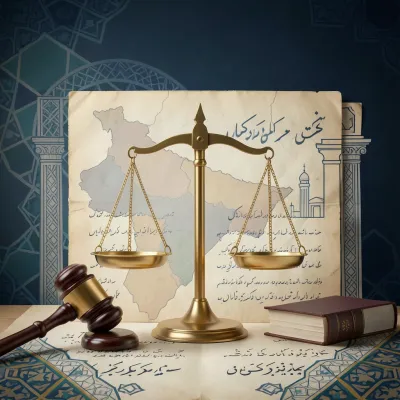
This book provides a comprehensive primer on Iran’s legal system, detailing the intricate interplay between its historical foundations, constitutional architecture, and religious doctrine. It explores how the 1979 Revolution integrated Islamic jurisprudence into a civil law framework, creating a hybrid system where elected bodies like the Presidency and the Majles (Parliament) coexist with powerful unelected institutions such as the Supreme Leader, the Guardian Council, and the Expediency Discernment Council. These bodies act as doctrinal gatekeepers, ensuring that all legislation, candidate vetting, and high-level policy arbitration remain consistent with Islamic principles and national security interests.
The text moves from abstract constitutional design to the practical operation of the judiciary, distinguishing between the general courts that handle routine civil and criminal matters and the specialized revolutionary, clerical, and military courts used for ideological and security offenses. It outlines the specific procedures governing investigations, prosecutions, and the rights of defendants, while emphasizing the pervasive role of the prosecutor and the investigating judge. Substantive chapters further dissect the laws governing contracts, property, and persons, as well as the specialized Islamic financial instruments required to navigate a banking sector that prohibits interest.
A recurring theme is the tension between constitutional rights and the institutional limits imposed by religious and state imperatives. The book examines how freedoms of expression, political participation, and minority rights are managed through a system of "calibrated permissiveness" and administrative oversight. It highlights the growing importance of the Administrative Justice Court as a venue for citizens to challenge bureaucratic overreach, as well as the evolving challenges posed by digital governance, cyber regulation, and international sanctions.
The final section translates these institutional analyses into practical strategies for practitioners and NGOs. It argues that meaningful reform and effective advocacy in Iran require a sophisticated "multilingual" approach—leveraging legal, theological, and policy arguments simultaneously. By understanding jurisdictional boundaries and institutional rhythms, advocates can navigate the system to achieve incremental gains in areas such as family law, environmental protection, and commercial regulation without directly confronting the state’s foundational ideological frame.
What You'll Find Inside:
- Explains Iran's constitutional architecture where elected institutions coexist with clerical supervision and the Supreme Leader's ultimate authority over key state functions
- Details the Guardian Council's dual role in reviewing legislation for constitutional and Islamic conformity and vetting election candidates
- Describes Iran's dual court system including general courts for routine civil/criminal matters and revolutionary courts for security/ideological offenses
- Covers substantive legal areas including civil law, family law, commercial law, banking under Islamic principles, and criminal procedure with defendants' rights
- Provides practical guidance for citizens, lawyers, and NGOs on navigating Iran's legal system for compliance, advocacy, and reform strategies
Who's It For:
This book is written for lawyers seeking a structured overview of Iran's legal system, students of comparative law searching for a reliable map of its institutions and procedures, and NGOs that need practical orientation to engage with legal processes affecting citizens and businesses. It provides essential knowledge for anyone needing to understand how Iran's legal framework actually functions in practice.
Table of Contents:
- Introduction
- Chapter 1 Historical Foundations of Iran’s Legal Order
- Chapter 2 Constitutional Architecture and Sources of Law
- Chapter 3 Separation of Powers and the Supreme Leader
- Chapter 4 The Guardian Council: Composition, Authority, and Review
- Chapter 5 The Expediency Discernment Council and Policy Arbitration
- Chapter 6 The President, Cabinet, and Administrative Law
- Chapter 7 The Islamic Consultative Assembly (Majles): Legislation and Oversight
- Chapter 8 The Judiciary: Organization, Leadership, and Independence
- Chapter 9 Court System I: General and Revolutionary Courts
- Chapter 10 Court System II: Special Clerical Court and Military Justice
- Chapter 11 Prosecutors, Investigating Judges, and Procedure
- Chapter 12 Civil Law: Persons, Property, and Contracts
- Chapter 13 Family Law and Personal Status
- Chapter 14 Commercial Law and the Business Environment
- Chapter 15 Banking, Finance, and Islamic Economic Principles
- Chapter 16 Criminal Law: Substantive Offenses and Punishments
- Chapter 17 Criminal Procedure and Defendants’ Rights
- Chapter 18 Administrative Justice Court and Judicial Review of State Action
- Chapter 19 Constitutional Rights and Duties: Scope and Limits
- Chapter 20 Elections, Political Parties, and Candidacy Vetting
- Chapter 21 Media, Expression, and the Digital Public Sphere
- Chapter 22 Minority Rights, Religion, and Cultural Autonomy
- Chapter 23 International Law, Treaties, and Sanctions Interface
- Chapter 24 Compliance, Enforcement, and the Role of Security Institutions
- Chapter 25 Reform, Advocacy, and Practical Strategies for Citizens and NGOs
Author:
Published By:
Date Published:
May 1, 2026
Type:
Nonfiction
Language:
English
Word Count:
74,763 words
Reading Time:
5 hours 14 minutes
Sample:
MixCache.com Total Access
Get unlimited access to this book + all books published by MixCache.com for $11.99/month
Subscribe to MTAOr purchase this book individually below
Order:
Buy the Law and Constitutionality: Understanding Iran's Legal System ebook on MixCache.com:
Buy Now
Full ebook will be available immediately
- read online or download as a PDF file.
$5 account credit for all new MixCache.com accounts, usable toward any ebook purchase!*


Ratings & Reviews
Ask Questions About This Book
Have a question about the content? Ask our AI assistant!
Start by asking a question about "Law and Constitutionality: Understanding Iran's Legal System"
Example: "Does this book mention William Shakespeare?"
Thinking...