Browse by Category
Fiction
- Action & Adventure
- African American
- Anthologies
- Children's Fiction
- Classics
- Comics & Graphic Novels
- Coming of Age
- Contemporary
- Cultural & Regional
- Drama
- Erotica
- Fantasy
- General
- Historical Fiction
- Horror
- Humor & Satire
- Literary Fiction
- Mystery, Thriller & Suspense
- Poetry
- Religious & Inspirational
- Romance
- Science Fiction
- Short Stories
- War & Military
- Westerns
- Women's Fiction
- Young Adult
Non-Fiction
- Antiques & Collectibles
- Arts & Photography
- Biographies & Memoirs
- Business & Money
- Children's Non-Fiction
-
Computers & Technology
- Artificial Intelligence
- Computer Science
- Cybersecurity & Cryptography
- Data Science & Analytics
- Databases & Big Data
- Game Development & Design
- General
- Hardware & DIY
- Mobile App Development
- Networking & Cloud Computing
- Operating Systems
- Programming
- Robotics
- Software
- Software Engineering
- User Experience (UX) & Design
- Web Development & Design
- Cooking, Food & Wine
- Crafts, Hobbies & Home
- Education & Teaching
- Engineering
- General
- Health, Fitness & Dieting
-
History
- African History
- African History - North Africa
- African History - Sub-Saharan Africa
- American History
- American History - 20th Century
- American History - Civil War
- American History - Colonial Period
- Ancient History
- Asian History
- Asian History - China
- Asian History - India
- Asian History - Japan
- Asian History - Southeast Asia
- European History
- European History - Ancient Greece
- European History - Ancient Rome
- European History - Medieval
- European History - Modern
- European History - Renaissance
- General
- Middle Eastern History
- Military History
- Military History - Aviation
- Military History - Naval
- Social & Cultural History
- World History
- Humor & Entertainment
- Industrial Technology
- Language Learning
- Law
- LGBTQ+ Non-Fiction
- Literary Criticism
- Medical Books
- Parenting & Relationships
- Philosophy
- Politics & Social Sciences
- Reference
- Religion & Spirituality
-
Science & Math
- Agricultural Sciences
- Astronomy & Space Science
- Behavioral Sciences
- Biological Sciences
- Botany & Plant Science
- Chemistry
- Earth Sciences
- Engineering - Chemical
- Engineering - Civil
- Engineering - Electrical
- Engineering - Mechanical
- Environment
- General
- Geology
- Mathematics
- Nature & Ecology
- Oceanography
- Paleontology
- Physics
- Statistics
- Self-Help
- Sports & Outdoors
- Study Aids
- Sustainability & Green Living
- Textbooks
- Transportation
- Travel
- True Crime
- Urban Planning & Development
- Veterinary Medicine
- Writing & Publishing
Jump to Section
MixCache.com Total Access
Unlimited reading and audiobooks for every book published by MixCache.com.
Included titles carry the MTA badge.
Learn more →
Iranian Cinema: Film, Censorship, and Global Impact
MTA
An accessible guide to the nation's film industry, auteurs, and international festivals
About this book:
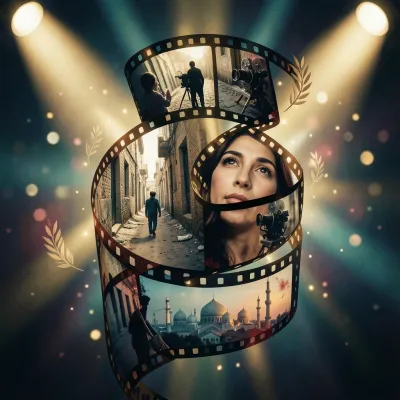
"Iranian Cinema: Film, Censorship, and Global Impact" provides a comprehensive exploration of Iran's film industry, tracing its evolution from early silent films to its acclaimed status on the international festival circuit. The book delves into how political and cultural transformations, particularly the 1979 Revolution and the Iran-Iraq War, fundamentally reshaped cinematic expression. It highlights how strict censorship, rather than stifling creativity, often fostered a unique aesthetic characterized by metaphor, ellipsis, long takes, and a nuanced realism, encouraging filmmakers to convey profound meanings through subtle visual and narrative techniques.
The text meticulously examines the intricate mechanisms of censorship, from script approval to post-production cuts, revealing how filmmakers strategically navigate these constraints to produce impactful work. It also explores the vital roles of state patronage, private investment, and diaspora funding in sustaining the industry, often through complex co-production arrangements and strategic marketing. The book underscores the significance of film festivals, both domestic (like Fajr) and international (Cannes, Berlin, Venice), in shaping films' reception, providing critical validation, and facilitating global distribution despite domestic bottlenecks and pervasive piracy.
Furthermore, the book devotes significant attention to key thematic areas and formal innovations. It analyzes the emergence of influential movements like the First New Wave, explores the aesthetics and ethics of "Sacred Defense" war cinema, and discusses the prominent role of women as directors, writers, and actors, who skillfully challenge gender norms within representational limits. The use of child protagonists as allegorical devices and the increasing prominence of documentary, essayistic, and hybrid forms are also detailed, showcasing Iranian cinema's continuous experimentation with narrative and visual language to address complex social and ethical questions.
Through in-depth case studies of landmark films like "The House Is Black," "The Cow," "Close-Up," "Taste of Cherry," "A Separation," "Offside," and "The Circle," the book illustrates how specific works exemplify these broader trends. It reveals how directors like Forough Farrokhzad, Dariush Mehrjui, Abbas Kiarostami, Asghar Farhadi, and Jafar Panahi have grappled with themes of identity, class, gender, and societal change, forging a cinema that is deeply rooted in local specificities yet resonates universally. The overarching narrative emphasizes Iranian cinema's remarkable resilience, adaptability, and its enduring capacity to transform limitations into a distinctive and globally celebrated artistic voice.
What You'll Find Inside:
- How censorship shaped Iranian cinema's unique aesthetic of metaphor, implication, and ellipsis, turning constraints into creative advantages
- The evolution from pre-revolution commercial cinema through post-revolution art cinema to global festival prominence
- The development of realist techniques including non-professional actors, long takes, and open endings as both artistic and practical responses
- Women's significant contributions as directors, writers, and stars navigating modesty codes while exploring gender and social issues
- The use of childhood protagonists as allegorical vehicles to explore complex social themes while navigating censorship restrictions
Who's It For:
This book is ideal for film students, scholars of Iranian studies, and global cinema enthusiasts seeking to understand how political constraints foster artistic innovation. It will particularly benefit readers interested in world cinema, censorship studies, and the intersection of art and politics, providing both historical context and analytical frameworks for appreciating Iranian film's unique aesthetic and cultural significance.
Table of Contents:
- Introduction
- Chapter 1 Origins and Early Studios: From Silent Screens to the 1970s
- Chapter 2 The Revolution on Film: 1979 and the Rebirth of an Industry
- Chapter 3 Rules, Red Lines, and Review Boards: How Censorship Works
- Chapter 4 Negotiating the Frame: Metaphor, Modesty Codes, and Montage
- Chapter 5 The First New Wave: Mehrjui, Beyzaie, and Pre-Revolution Art Cinema
- Chapter 6 Sacred Defense and Aftermath: War Cinema’s Aesthetics and Ethics
- Chapter 7 Realism Refined: Non-Actors, Long Takes, and Open Endings
- Chapter 8 Women, Agency, and Authorship in Iranian Cinema
- Chapter 9 Childhood as Shield and Mirror: Allegory through Young Protagonists
- Chapter 10 Documentary, Essay, and Hybrid Forms
- Chapter 11 Industry Anatomy: Production, The House of Cinema, and Guilds
- Chapter 12 Financing and the State: Budgets, Permits, and Patronage
- Chapter 13 Festivals at Home: Fajr and National Gatekeeping
- Chapter 14 Global Festival Networks: Cannes, Berlin, Venice, and Beyond
- Chapter 15 Critics, Audiences, and the Press: Reception at Home and Abroad
- Chapter 16 Piracy, Distribution Bottlenecks, and the Diaspora Market
- Chapter 17 Digital Disruptions: Satellite TV, VOD, and Streaming
- Chapter 18 Transnational and Exilic Voices
- Chapter 19 Ethics of Representation: Orientalism, Self-Orientalism, and Resistance
- Chapter 20 Censorship Casebook: Scripts, Shoots, and Post-Production Cuts
- Chapter 21 Case Study: The House Is Black and the Poetics of Reality
- Chapter 22 Case Study: The Cow and the Birth of Modern Iranian Cinema
- Chapter 23 Case Study: Close-Up and the Blurred Line Between Life and Film
- Chapter 24 Case Study: Taste of Cherry to A Separation — Universal Stories, Local Stakes
- Chapter 25 Case Study: Offside, The Circle, and the Politics of Everyday Space
Author:
Published By:
Date Published:
April 30, 2026
Type:
Nonfiction
Language:
English
Word Count:
67,735 words
Reading Time:
4 hours 45 minutes
Sample:
Order:
Order Iranian Cinema: Film, Censorship, and Global Impact (Paperback) on MixCache.com:
Buy NowPrint copy is made to order and ships worldwide. Includes the ebook free, ready to read instantly.
$5 account credit for all new MixCache.com accounts, usable toward any ebook purchase!*