Browse by Category
Fiction
- Action & Adventure
- African American
- Anthologies
- Children's Fiction
- Classics
- Comics & Graphic Novels
- Coming of Age
- Contemporary
- Cultural & Regional
- Drama
- Erotica
- Fantasy
- General
- Historical Fiction
- Horror
- Humor & Satire
- Literary Fiction
- Mystery, Thriller & Suspense
- Poetry
- Religious & Inspirational
- Romance
- Science Fiction
- Short Stories
- War & Military
- Westerns
- Women's Fiction
- Young Adult
Non-Fiction
- Antiques & Collectibles
- Arts & Photography
- Biographies & Memoirs
- Business & Money
- Children's Non-Fiction
-
Computers & Technology
- Artificial Intelligence
- Computer Science
- Cybersecurity & Cryptography
- Data Science & Analytics
- Databases & Big Data
- Game Development & Design
- General
- Hardware & DIY
- Mobile App Development
- Networking & Cloud Computing
- Operating Systems
- Programming
- Robotics
- Software
- Software Engineering
- User Experience (UX) & Design
- Web Development & Design
- Cooking, Food & Wine
- Crafts, Hobbies & Home
- Education & Teaching
- Engineering
- General
- Health, Fitness & Dieting
-
History
- African History
- African History - North Africa
- African History - Sub-Saharan Africa
- American History
- American History - 20th Century
- American History - Civil War
- American History - Colonial Period
- Ancient History
- Asian History
- Asian History - China
- Asian History - India
- Asian History - Japan
- Asian History - Southeast Asia
- European History
- European History - Ancient Greece
- European History - Ancient Rome
- European History - Medieval
- European History - Modern
- European History - Renaissance
- General
- Middle Eastern History
- Military History
- Military History - Aviation
- Military History - Naval
- Social & Cultural History
- World History
- Humor & Entertainment
- Industrial Technology
- Language Learning
- Law
- LGBTQ+ Non-Fiction
- Literary Criticism
- Medical Books
- Parenting & Relationships
- Philosophy
- Politics & Social Sciences
- Reference
- Religion & Spirituality
-
Science & Math
- Agricultural Sciences
- Astronomy & Space Science
- Behavioral Sciences
- Biological Sciences
- Botany & Plant Science
- Chemistry
- Earth Sciences
- Engineering - Chemical
- Engineering - Civil
- Engineering - Electrical
- Engineering - Mechanical
- Environment
- General
- Geology
- Mathematics
- Nature & Ecology
- Oceanography
- Paleontology
- Physics
- Statistics
- Self-Help
- Sports & Outdoors
- Study Aids
- Sustainability & Green Living
- Textbooks
- Transportation
- Travel
- True Crime
- Urban Planning & Development
- Veterinary Medicine
- Writing & Publishing
Jump to Section
MixCache.com Total Access
Unlimited reading and audiobooks for every book published by MixCache.com.
Included titles carry the MTA badge.
Learn more →
Cultural Heritage Under Threat: Archaeology and Preservation in Iran
MTA
Case studies on heritage sites, legal protections, and international cooperation
About this book:
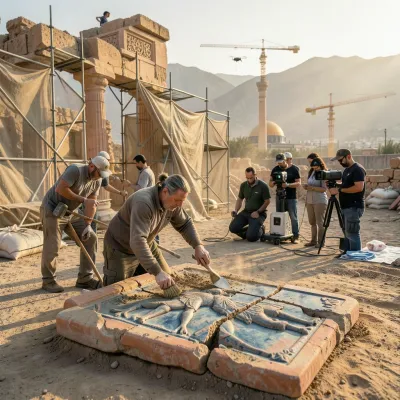
*Cultural Heritage Under Threat: Archaeology and Preservation in Iran* provides an exhaustive examination of the challenges and methodologies associated with safeguarding Iran’s vast archaeological landscape. Moving through iconic sites like Persepolis and Bam to lesser-known prehistoric mounds and coastal networks, the book frames Iranian heritage as a living palimpsest under pressure from natural disasters, climate change, illicit looting, and rapid industrial development. It highlights the tension between the necessity of modern infrastructure and the preservation of deep-time stratigraphy, particularly in provinces like Khuzestan and the Persian Gulf littoral.
The text emphasizes that effective stewardship requires a multidisciplinary approach that integrates advanced technology with traditional wisdom. Chapters detail the utility of digital heritage tools—such as remote sensing, 3D modeling, and open-data archives—while simultaneously advocating for the revival of local craftsmanship and ancient engineering solutions like qanats. This technical evolution is situated within a complex legal and geopolitical framework, where international conventions and repatriation efforts are often complicated by economic sanctions and shifting diplomatic climates.
Central to the book's thesis is the agency of local communities as the ultimate guardians of heritage. The authors argue for "community archaeology," where preservation is not a top-down mandate but a participatory process that aligns economic incentives with conservation. By fostering local guardianship and integrating heritage into regional development early in the planning cycle, practitioners can create resilient systems that move beyond crisis management.
Ultimately, the book offers a roadmap for the future, recommending a policy of "strategic triage" and preventive maintenance. It calls for enhanced institutional transparency, ethical documentation, and a shift in perspective that views cultural heritage not as a static relic of the past, but as essential infrastructure for national identity and sustainable growth. The summary underscores that the survival of Iran’s history depends on a collaborative effort involving policymakers, scholars, and the citizens who live alongside these ancient sites.
What You'll Find Inside:
- Case studies of 25 specific Iranian heritage sites illustrating preservation challenges and solutions across diverse landscapes and threats
- Analysis of multifaceted threats to cultural heritage including looting, development pressures, natural hazards, climate change, and political/economic constraints
- Emphasis on community agency and local knowledge as essential components for sustainable heritage stewardship and risk mitigation
- Examination of legal frameworks, policy gaps, and international cooperation mechanisms affecting heritage protection in Iran
- Integration of technological tools like remote sensing, digital documentation, and 3D modeling as amplifiers for traditional preservation approaches
Who's It For:
This book is written for preservationists, archaeologists, historians, planners, and cultural policymakers—professionals who make choices under uncertainty and constraint. It provides specific, actionable recommendations for those working to protect cultural heritage in complex environments where legal, economic, and political factors intersect with preservation efforts.
Table of Contents:
- Introduction
- Chapter 1 Landscapes of Memory: Geography and Deep Time
- Chapter 2 Persepolis: Royal Capital and Symbol under Pressure
- Chapter 3 Pasargadae and the Tomb of Cyrus: Stewardship and Access
- Chapter 4 Susa and Khuzestan: Archaeology in Oil Country
- Chapter 5 Tchogha Zanbil: Ziggurat Conservation in a Seismic Zone
- Chapter 6 Bam and Its Citadel: Recovery after the Earthquake
- Chapter 7 Bisotun: Rock Reliefs, Roads, and Rockfalls
- Chapter 8 Isfahan’s Safavid Ensemble: Living City, Living Heritage
- Chapter 9 The Bazaar of Tabriz: Commerce, Fire, and Preservation
- Chapter 10 Qanat Networks: Safeguarding Underground Water Heritage
- Chapter 11 Caravanserais of the Silk Roads: Connectivity and Care
- Chapter 12 Shahr-i Sokhta: Urban Planning at the Edge of the Desert
- Chapter 13 The Jiroft Horizon: Ethics of Discovery and Debate
- Chapter 14 Tepe Sialk and Kashan: Stratigraphy, Tourism, and Risk
- Chapter 15 Tepe Hissar and the Alborz: Research in a Changing Climate
- Chapter 16 Rock Art of the Zagros: Recording the Fading
- Chapter 17 Zoroastrian Sites of Yazd: Intangible and Tangible Custody
- Chapter 18 Armenian Monasteries of the Northwest: Shared Heritage
- Chapter 19 Coastal Heritage of the Persian Gulf: Erosion and Industry
- Chapter 20 Museums and Repatriation: Tracing Illicit Antiquities
- Chapter 21 Law and Policy in Iran: Frameworks, Gaps, and Reforms
- Chapter 22 International Conventions and Sanctions: Cooperation under Constraint
- Chapter 23 Community Archaeology: Local Voices and Guardianship
- Chapter 24 Digital Heritage: Remote Sensing, Archives, and Open Data
- Chapter 25 Roadmap for the Future: Recommendations for Practitioners and Policymakers
Author:
Published By:
Date Published:
April 30, 2026
Type:
Nonfiction
Language:
English
Word Count:
71,230 words
Reading Time:
4 hours 59 minutes
Sample:
Order:
Order Cultural Heritage Under Threat: Archaeology and Preservation in Iran (Hardcover) on MixCache.com:
Buy NowPrint copy is made to order and ships worldwide. Includes the ebook free, ready to read instantly.
$5 account credit for all new MixCache.com accounts, usable toward any ebook purchase!*