
Browse by Category
Fiction
- Action & Adventure
- African American
- Anthologies
- Children's Fiction
- Classics
- Comics & Graphic Novels
- Coming of Age
- Contemporary
- Cultural & Regional
- Drama
- Erotica
- Fantasy
- General
- Historical Fiction
- Horror
- Humor & Satire
- Literary Fiction
- Mystery, Thriller & Suspense
- Poetry
- Religious & Inspirational
- Romance
- Science Fiction
- Short Stories
- War & Military
- Westerns
- Women's Fiction
- Young Adult
Non-Fiction
- Antiques & Collectibles
- Arts & Photography
- Biographies & Memoirs
- Business & Money
- Children's Non-Fiction
-
Computers & Technology
- Artificial Intelligence
- Computer Science
- Cybersecurity & Cryptography
- Data Science & Analytics
- Databases & Big Data
- Game Development & Design
- General
- Hardware & DIY
- Mobile App Development
- Networking & Cloud Computing
- Operating Systems
- Programming
- Robotics
- Software
- Software Engineering
- User Experience (UX) & Design
- Web Development & Design
- Cooking, Food & Wine
- Crafts, Hobbies & Home
- Education & Teaching
- Engineering
- General
- Health, Fitness & Dieting
-
History
- African History
- African History - North Africa
- African History - Sub-Saharan Africa
- American History
- American History - 20th Century
- American History - Civil War
- American History - Colonial Period
- Ancient History
- Asian History
- Asian History - China
- Asian History - India
- Asian History - Japan
- Asian History - Southeast Asia
- European History
- European History - Ancient Greece
- European History - Ancient Rome
- European History - Medieval
- European History - Modern
- European History - Renaissance
- General
- Middle Eastern History
- Military History
- Military History - Aviation
- Military History - Naval
- Social & Cultural History
- World History
- Humor & Entertainment
- Industrial Technology
- Language Learning
- Law
- LGBTQ+ Non-Fiction
- Literary Criticism
- Medical Books
- Parenting & Relationships
- Philosophy
- Politics & Social Sciences
- Reference
- Religion & Spirituality
-
Science & Math
- Agricultural Sciences
- Astronomy & Space Science
- Behavioral Sciences
- Biological Sciences
- Botany & Plant Science
- Chemistry
- Earth Sciences
- Engineering - Chemical
- Engineering - Civil
- Engineering - Electrical
- Engineering - Mechanical
- Environment
- General
- Geology
- Mathematics
- Nature & Ecology
- Oceanography
- Paleontology
- Physics
- Statistics
- Self-Help
- Sports & Outdoors
- Study Aids
- Sustainability & Green Living
- Textbooks
- Transportation
- Travel
- True Crime
- Urban Planning & Development
- Veterinary Medicine
- Writing & Publishing
Jump to Section
MixCache.com Total Access
Unlimited reading and audiobooks for every book published by MixCache.com.
Included titles carry the MTA badge.
Learn more →
Iranian Photography: Memory, Protest, and Everyday Life
MTA
A curated exploration of Iranian photography from Pahlavi-era studio portraits to contemporary documentary work
About this book:
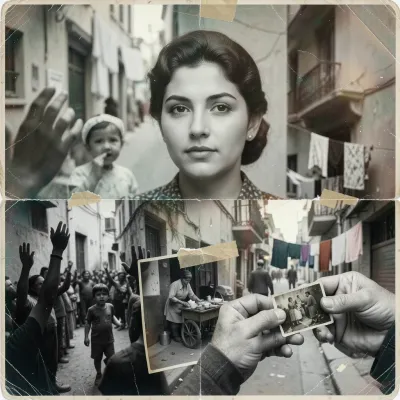
This book provides a comprehensive social and art history of Iranian photography, tracing its evolution from the Pahlavi era to the digital present. It begins by examining the meticulously staged studio portraiture of the mid-20th century, where individuals rehearsed modern identities against painted backdrops, and contrasts this with the grand state spectacles and royal pageantry used to project national power. As the medium matured, the book explores the rise of photographic modernism through camera clubs and the emergence of street photography, which captured the textures of work, leisure, and the increasingly visible role of women in public life.
The narrative shifts dramatically with the 1979 Revolution and the subsequent Iran-Iraq War, periods where the camera became a vital tool for witnessing, martyrdom, and collective grief. Photography moved from the front lines to domestic altars, with images of "martyrs" being mass-reproduced into iconic posters that blurred the line between private loss and public myth. Following the war, the 1990s marked a "documentary turn," as photographers focused on the gritty, unvarnished realities of reconstruction, industrial extraction, and the persistence of everyday commerce in the nation's bazaars.
In its final sections, the book addresses the radical shifts brought about by the digital turn and the rise of social media. It analyzes how "networked protest" during the 2009 Green Movement and the 2022 "Women, Life, Freedom" uprising transformed smartphones into tactical instruments of resistance, allowing for real-time, global circulation of citizen-produced testimony. These modern chapters highlight the constant battle between state censorship and the tactics of digital opacity used by activists to protect their identities.
Ultimately, the book frames Iranian photography as a braided history of memory, protest, and daily life. It emphasizes the ethical responsibilities of the photographer, the importance of the intimate family archive, and the growing field of conceptual and diaspora photography. By moving from the controlled environment of the studio to the algorithmic feeds of the present, the work illustrates how the act of "seeing and being seen" remains a powerful and contested site of Iranian agency and identity.
What You'll Find Inside:
- Traces the evolution of Iranian photography from Pahlavi-era studio portraits to contemporary digital and networked images.
- Examines how photography has been used to construct national identity, state power, and collective memory through official spectacles and protest imagery.
- Highlights the role of women both as subjects and photographers, revealing shifting gender dynamics and visual agency.
- Explores everyday life and informal economies—street scenes, bazaars, family albums, and provincial life—as vital sites of cultural production and resistance.
- Discusses contemporary practices including conceptual art, diaspora perspectives, social media activism, and ethical considerations of visibility and consent.
Who's It For:
This book is aimed at scholars, students, and general readers interested in Iranian visual culture, history, photography, and social movements. It will be particularly valuable for researchers in Middle Eastern studies, visual anthropology, art history, and photojournalism who seek to understand how images shape memory, protest, and everyday life in Iran.
Table of Contents:
- Introduction
- Chapter 1 The Studio as Stage: Pahlavi-Era Portraiture
- Chapter 2 Imaging the Nation: State Ceremonies and Royal Spectacle
- Chapter 3 Photographic Modernism and Camera Clubs, 1950s–1970s
- Chapter 4 Streets of Modern Tehran: Work, Leisure, Transit
- Chapter 5 Women Before and Behind the Camera
- Chapter 6 Revolution, 1978–1979: Crowds, Martyrs, and Thresholds
- Chapter 7 The Icon and the Poster: Mass Reproduction and Myth
- Chapter 8 War and Witness: The Iran–Iraq Conflict
- Chapter 9 Sacred Time, Public Space: Muharram, Ashura, and Pilgrimage
- Chapter 10 The State’s Eye: Official Photographers and News Agencies
- Chapter 11 After the Front: Reconstruction and the 1990s Documentary Turn
- Chapter 12 Family Albums and the Intimate Archive
- Chapter 13 Land, Oil, and Extraction: Industry and Environment
- Chapter 14 Bazaar Worlds: Commerce, Craft, and Informal Economies
- Chapter 15 Provinces and Peripheries: Beyond the Capital
- Chapter 16 Bodies, Dress, and the Politics of Visibility
- Chapter 17 Conceptual Turns: Staged, Constructed, and Post-Documentary Practices
- Chapter 18 Diaspora Visions: Exile, Return, and Transnational Memory
- Chapter 19 The Green Movement, 2009: Networked Protest
- Chapter 20 Censor, Redact, Resist: Tactics of Opacity
- Chapter 21 Women, Life, Freedom: 2022–Present
- Chapter 22 Screens and Streams: Social Media and Algorithmic Attention
- Chapter 23 Schooling the Eye: Education, Collectives, and Workshops
- Chapter 24 Photobooks, Galleries, and Global Circulation
- Chapter 25 Ethics and Futures: Care, Consent, and Solidarity
Author:
Published By:
Date Published:
April 30, 2026
Type:
Nonfiction
Language:
English
Word Count:
75,466 words
Reading Time:
5 hours 17 minutes
Sample:
Order:
Order Iranian Photography: Memory, Protest, and Everyday Life (Hardcover) on MixCache.com:
Buy NowPrint copy is made to order and ships worldwide. Includes the ebook free, ready to read instantly.
$5 account credit for all new MixCache.com accounts, usable toward any ebook purchase!*


