Browse by Category
Fiction
- Action & Adventure
- African American
- Anthologies
- Children's Fiction
- Classics
- Comics & Graphic Novels
- Coming of Age
- Contemporary
- Cultural & Regional
- Drama
- Erotica
- Fantasy
- General
- Historical Fiction
- Horror
- Humor & Satire
- Literary Fiction
- Mystery, Thriller & Suspense
- Poetry
- Religious & Inspirational
- Romance
- Science Fiction
- Short Stories
- War & Military
- Westerns
- Women's Fiction
- Young Adult
Non-Fiction
- Antiques & Collectibles
- Arts & Photography
- Biographies & Memoirs
- Business & Money
- Children's Non-Fiction
-
Computers & Technology
- Artificial Intelligence
- Computer Science
- Cybersecurity & Cryptography
- Data Science & Analytics
- Databases & Big Data
- Game Development & Design
- General
- Hardware & DIY
- Mobile App Development
- Networking & Cloud Computing
- Operating Systems
- Programming
- Robotics
- Software
- Software Engineering
- User Experience (UX) & Design
- Web Development & Design
- Cooking, Food & Wine
- Crafts, Hobbies & Home
- Education & Teaching
- Engineering
- General
- Health, Fitness & Dieting
-
History
- African History
- African History - North Africa
- African History - Sub-Saharan Africa
- American History
- American History - 20th Century
- American History - Civil War
- American History - Colonial Period
- Ancient History
- Asian History
- Asian History - China
- Asian History - India
- Asian History - Japan
- Asian History - Southeast Asia
- European History
- European History - Ancient Greece
- European History - Ancient Rome
- European History - Medieval
- European History - Modern
- European History - Renaissance
- General
- Middle Eastern History
- Military History
- Military History - Aviation
- Military History - Naval
- Social & Cultural History
- World History
- Humor & Entertainment
- Industrial Technology
- Language Learning
- Law
- LGBTQ+ Non-Fiction
- Literary Criticism
- Medical Books
- Parenting & Relationships
- Philosophy
- Politics & Social Sciences
- Reference
- Religion & Spirituality
-
Science & Math
- Agricultural Sciences
- Astronomy & Space Science
- Behavioral Sciences
- Biological Sciences
- Botany & Plant Science
- Chemistry
- Earth Sciences
- Engineering - Chemical
- Engineering - Civil
- Engineering - Electrical
- Engineering - Mechanical
- Environment
- General
- Geology
- Mathematics
- Nature & Ecology
- Oceanography
- Paleontology
- Physics
- Statistics
- Self-Help
- Sports & Outdoors
- Study Aids
- Sustainability & Green Living
- Textbooks
- Transportation
- Travel
- True Crime
- Urban Planning & Development
- Veterinary Medicine
- Writing & Publishing
Jump to Section
MixCache.com Total Access
Unlimited reading and audiobooks for every book published by MixCache.com.
Included titles carry the MTA badge.
Learn more →
Water Wars: Environmental Crisis and Resource Management in Iran
MTA
Investigative analysis of water scarcity, climate impacts, and policy responses
About this book:
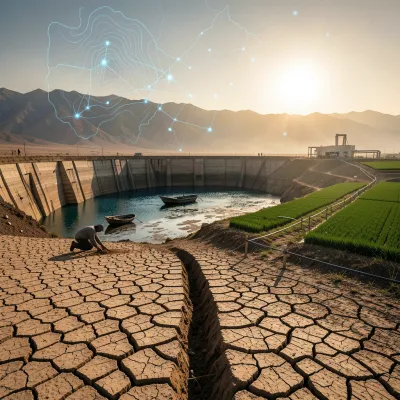
*Water Wars: Environmental Crisis and Resource Management in Iran* provides an investigative analysis of the country’s escalating water scarcity, driven by a combination of climate change, population growth, and decades of aggressive engineering. The book traces Iran’s transition from sustainable ancient systems like *qanats* to a modern reliance on mega-dams and deep wells, which has led to the depletion of aquifers, widespread land subsidence, and the desiccation of iconic water bodies like Lake Urmia and the Hamoun wetlands. By examining the "energy–water nexus" and the thirsty demands of state-subsidized agriculture, the text illustrates how policy choices often exacerbate natural aridity.
The narrative highlights the socioeconomic and geopolitical consequences of mismanagement, including urban water stress in major cities like Tehran and Isfahan, and transboundary tensions over shared rivers such as the Helmand and Aras. The book emphasizes that water stress is rarely distributed evenly, often marginalizing rural communities, women, and downstream ecosystems. Furthermore, it documents the rise of grassroots stewardship and public protests, suggesting that water has become a central flashpoint for social justice and institutional accountability in Iran.
To address the crisis, the book proposes a shift from supply-side expansion to integrated resource management. It advocates for a "roadmap" centered on water pricing reform, the use of technology like desalination and wastewater reuse, and the restoration of environmental flows. Ultimately, the analysis argues that while climate change acts as a risk multiplier, the path toward resilience lies in transparent governance, data-driven policy, and a social contract that prioritizes long-term ecological health over short-term extraction.
What You'll Find Inside:
- The book provides a comprehensive analysis of Iran's water crisis, examining historical water management systems from ancient qanats to modern mega-dams, and how they've transformed the country's hydrology.
- Readers will find in-depth case studies of specific environmental crises including the vanishing Lake Urmia, the degradation of Hamoun wetlands, and water stress in major river basins like the Karun and Zayandeh-Rud.
- The book analyzes water use across all sectors - agriculture (which consumes the majority of Iran's water), urban centers (Tehran, Isfahan, Mashhad), and industry - revealing the interconnected nature of water demand.
- It explores the social dimensions of water scarcity, including equity issues, gender impacts, rural-urban divides, and grassroots movements that have emerged in response to water stress.
- The book concludes with a practical roadmap for sustainable water management, proposing scenarios, policy recommendations, and actionable steps for governance reform, technology adoption, and institutional improvement.
Who's It For:
This book is essential reading for water resource managers, policymakers, and environmental planners working on water scarcity issues in Iran and similar arid regions. Researchers and students in hydrology, environmental science, and Middle Eastern studies will find valuable case studies and analysis. Development practitioners, NGO workers, and activists focused on water justice and sustainable resource management will also benefit from its comprehensive examination of technical, social, and governance dimensions of Iran's water crisis.
Table of Contents:
- Introduction
- Chapter 1 The Geography of Scarcity: Iran’s Water Landscape
- Chapter 2 From Qanats to Mega-Dams: A History of Water Control
- Chapter 3 Climate Signals: Warming Trends and Precipitation Shifts
- Chapter 4 Droughts and Deluges: Variability and Extremes
- Chapter 5 Groundwater on the Brink: Aquifers, Subsidence, and Salinity
- Chapter 6 The Dam Equation: Benefits, Trade-offs, and Ecosystem Costs
- Chapter 7 River Basins in Crisis: Karun, Dez, and Zayandeh-Rud
- Chapter 8 The Vanishing Lake Urmia: Causes and Consequences
- Chapter 9 Hamoun and the Sistan Plain: Wetlands, Winds, and Livelihoods
- Chapter 10 Agriculture’s Thirst: Cropping Patterns and Irrigation Efficiency
- Chapter 11 Urban Water Stress: Tehran, Isfahan, and Mashhad
- Chapter 12 Industry, Mining, and the Energy–Water Nexus
- Chapter 13 Virtual Water and Food Security: Trade-offs in Imports and Exports
- Chapter 14 Transboundary Tensions: Helmand, Aras, and Shatt al-Arab
- Chapter 15 Governance and Law: Institutions, Rights, and Allocation
- Chapter 16 Pricing, Subsidies, and Incentives: The Economics of Conservation
- Chapter 17 Data, Monitoring, and Transparency: Building a Water Information System
- Chapter 18 Technology Options: Desalination, Reuse, and Smart Irrigation
- Chapter 19 Environmental Flows and River Restoration
- Chapter 20 Land Use, Dust Storms, and Desertification
- Chapter 21 Social Dimensions: Equity, Gender, and Rural–Urban Divides
- Chapter 22 Protest, Participation, and Grassroots Stewardship
- Chapter 23 Case Studies in Adaptation: Villages, Watersheds, and NGOs
- Chapter 24 Risk Management: Drought Planning, Flood Control, and Insurance
- Chapter 25 A Path Forward: Scenarios, Policies, and an Action Roadmap
Author:
Published By:
Date Published:
April 30, 2026
Type:
Nonfiction
Language:
English
Word Count:
70,502 words
Reading Time:
4 hours 56 minutes
Sample:
Order:
Order Water Wars: Environmental Crisis and Resource Management in Iran (Paperback) on MixCache.com:
Buy NowPrint copy is made to order and ships worldwide. Includes the ebook free, ready to read instantly.
$5 account credit for all new MixCache.com accounts, usable toward any ebook purchase!*