Browse by Category
Fiction
- Action & Adventure
- African American
- Anthologies
- Children's Fiction
- Classics
- Comics & Graphic Novels
- Coming of Age
- Contemporary
- Cultural & Regional
- Drama
- Erotica
- Fantasy
- General
- Historical Fiction
- Horror
- Humor & Satire
- Literary Fiction
- Mystery, Thriller & Suspense
- Poetry
- Religious & Inspirational
- Romance
- Science Fiction
- Short Stories
- War & Military
- Westerns
- Women's Fiction
- Young Adult
Non-Fiction
- Antiques & Collectibles
- Arts & Photography
- Biographies & Memoirs
- Business & Money
- Children's Non-Fiction
-
Computers & Technology
- Artificial Intelligence
- Computer Science
- Cybersecurity & Cryptography
- Data Science & Analytics
- Databases & Big Data
- Game Development & Design
- General
- Hardware & DIY
- Mobile App Development
- Networking & Cloud Computing
- Operating Systems
- Programming
- Robotics
- Software
- Software Engineering
- User Experience (UX) & Design
- Web Development & Design
- Cooking, Food & Wine
- Crafts, Hobbies & Home
- Education & Teaching
- Engineering
- General
- Health, Fitness & Dieting
-
History
- African History
- African History - North Africa
- African History - Sub-Saharan Africa
- American History
- American History - 20th Century
- American History - Civil War
- American History - Colonial Period
- Ancient History
- Asian History
- Asian History - China
- Asian History - India
- Asian History - Japan
- Asian History - Southeast Asia
- European History
- European History - Ancient Greece
- European History - Ancient Rome
- European History - Medieval
- European History - Modern
- European History - Renaissance
- General
- Middle Eastern History
- Military History
- Military History - Aviation
- Military History - Naval
- Social & Cultural History
- World History
- Humor & Entertainment
- Industrial Technology
- Language Learning
- Law
- LGBTQ+ Non-Fiction
- Literary Criticism
- Medical Books
- Parenting & Relationships
- Philosophy
- Politics & Social Sciences
- Reference
- Religion & Spirituality
-
Science & Math
- Agricultural Sciences
- Astronomy & Space Science
- Behavioral Sciences
- Biological Sciences
- Botany & Plant Science
- Chemistry
- Earth Sciences
- Engineering - Chemical
- Engineering - Civil
- Engineering - Electrical
- Engineering - Mechanical
- Environment
- General
- Geology
- Mathematics
- Nature & Ecology
- Oceanography
- Paleontology
- Physics
- Statistics
- Self-Help
- Sports & Outdoors
- Study Aids
- Sustainability & Green Living
- Textbooks
- Transportation
- Travel
- True Crime
- Urban Planning & Development
- Veterinary Medicine
- Writing & Publishing
Jump to Section
MixCache.com Total Access
Unlimited reading and audiobooks for every book published by MixCache.com.
Included titles carry the MTA badge.
Learn more →
Visegrad Unbound: Politics, Populism and EU Tensions in Central Europe
MTA
An in-depth regional portrait of Poland, Hungary, Czechia and Slovakia and their coalition strategies within the EU
About this book:
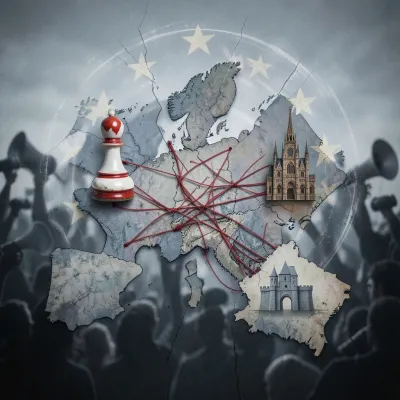
*Visegrad Unbound* provides a comprehensive analysis of the Visegrad Four (V4)—Poland, Hungary, Czechia, and Slovakia—and their complex, often contentious relationship with the European Union. The book moves beyond the caricature of a monolithic, obstructionist bloc, instead characterizing the V4 as a flexible platform where coordination depends on shifting national interests, historical memory, and domestic political economies. While the group gained global attention for its unified defiance during the 2015 migration crisis, the text highlights deep internal fractures, particularly regarding energy geopolitics, security postures toward Russia, and the varying degrees of "illiberal consolidation" within each member state.
The narrative focuses heavily on the domestic drivers of regional populism, examining how ruling parties in Poland and Hungary have institutionalized state capture and clientelism to maintain power. By rewriting constitutional rules, taming judiciaries, and exerting control over media ecosystems, these governments have created "illiberal democracies" that challenge the EU’s foundational values. In contrast, the book presents Czechia and Slovakia as more pragmatic and pluralistic actors, often acting as moderating forces that balance regional solidarity with a necessity for economic integration within German-led supply chains and the broader EU single market.
A central theme is the strategic use of "sovereignty" and "historical victimhood" as leverage in Brussels. The authors detail how V4 leaders masterfully navigate the EU's "playbook," using the threat of vetoes in budget negotiations and rule-of-law disputes to extract concessions while remaining net beneficiaries of EU funds. This transactional relationship creates a "sovereign integration" model where states embrace European financial benefits while rejecting its normative oversight. The book also explores the role of civil society and youth as countervailing forces, noting that brain drain and generational shifts pose long-term threats to the very populist projects currently dominating the region.
The concluding chapters offer a diagnostic look at the future, presenting various scenarios for V4-EU relations through 2030. It suggests that while the current "managed friction" is likely to persist, the increasing use of financial conditionality by the EU will force these nations to make difficult trade-offs between ideological purity and economic survival. Ultimately, the book argues that managing European polarization requires a sophisticated diplomatic approach that recognizes the V4's legitimate cultural anxieties and historical traumas without compromising on the essential democratic standards required for a cohesive Union.
What You'll Find Inside:
- The Visegrad Four functions as a flexible coordination platform rather than a rigid alliance, leveraging informal mechanisms, agenda-setting, and rotating leadership to influence EU decision-making disproportionate to its size.
- Migration policy has served as a defining catalyst for V4 cohesion, transforming from emergency response to a durable political framework that reshaped EU asylum policies through coordinated resistance to quota systems and the New Pact on Migration.
- Rule of law conflicts reveal a fundamental tension between V4 assertions of national sovereignty and EU efforts to uphold democratic standards, with Poland and Hungary leading illiberal consolidation while Czechia and Slovakia maintain more pragmatic approaches.
- EU budget politics and cohesion funds function as both economic lifelines and political leverage for V4 states, creating complex dynamics where financial dependency coexists with resistance to conditionality and rule-of-law mechanisms.
- Domestic identity politics rooted in historical memory, religious values, and perceptions of sovereignty drive V4 approaches to European integration, often creating divergence within the group despite shared rhetoric on sovereignty and traditional values.
Who's It For:
Visegrad Unbound is essential reading for students and scholars of European politics, international relations, and comparative governance who seek to understand the complex dynamics of Central Europe within the EU framework. Policy makers, diplomats, and EU officials working on enlargement, rule of law, or cohesion policy will find valuable insights into V4 coordination strategies and domestic drivers. The book also appeals to researchers studying populism, democratic backsliding, and the interplay between national sovereignty and supranational integration. Ultimately, anyone interested in the future trajectory of European integration and the challenges of managing polarization within the Union will benefit from this comprehensive regional analysis.
Table of Contents:
- Introduction
- Chapter 1 The Visegrad Idea: Origins and Reinventions
- Chapter 2 Mapping the Region: Political Economies and Cleavages
- Chapter 3 Parties and Power: Populist Pathways in Poland
- Chapter 4 Illiberal Consolidation: Hungary’s Model
- Chapter 5 Pragmatism and Pluralism: Czechia’s Balancing Act
- Chapter 6 Between East and West: Slovakia’s Political Swings
- Chapter 7 The Mechanics of Coordination: V4 Institutions and Informalism
- Chapter 8 Coalition Craft: Agenda-Setting and Rotating Leadership
- Chapter 9 Migration as Catalyst: From 2015 to the New Pact
- Chapter 10 Rule of Law Battles: Courts, Media, and EU Conditionality
- Chapter 11 Budget Politics: Net Beneficiaries, Cohesion, and Leverage
- Chapter 12 Security First: NATO, Russia, and Strategic Autonomy Debates
- Chapter 13 Energy Geopolitics: Gas, Nuclear, and Green Transition
- Chapter 14 Borders and Mobility: Schengen, Labor, and Brain Drain
- Chapter 15 The Brussels Playbook: Council, Parliament, and Backchannels
- Chapter 16 Domestic Drivers: Identity, Religion, and Historical Memory
- Chapter 17 State Capture and Clientelism: Mechanisms and Myths
- Chapter 18 Civil Society and Counter-Mobilization
- Chapter 19 Media Ecosystems: Public Broadcasters and Oligarchs
- Chapter 20 Courts and Constitutions: Independence Under Pressure
- Chapter 21 Business, Oligarchs, and EU Funds: Who Pays, Who Gains
- Chapter 22 Youth, Education, and the Culture Wars
- Chapter 23 Fractures Within the Four: Divergence and Bilateral Rifts
- Chapter 24 Scenarios to 2030: Futures for V4–EU Relations
- Chapter 25 Policy Options and Diplomatic Pathways: Managing Polarization
Author:
Published By:
Date Published:
April 30, 2026
Type:
Nonfiction
Language:
English
Word Count:
76,201 words
Reading Time:
5 hours 20 minutes
Sample:
Order:
Order Visegrad Unbound: Politics, Populism and EU Tensions in Central Europe (Paperback) on MixCache.com:
Buy NowPrint copy is made to order and ships worldwide. Includes the ebook free, ready to read instantly.
$5 account credit for all new MixCache.com accounts, usable toward any ebook purchase!*