Browse by Category
Fiction
- Action & Adventure
- African American
- Anthologies
- Children's Fiction
- Classics
- Comics & Graphic Novels
- Coming of Age
- Contemporary
- Cultural & Regional
- Drama
- Erotica
- Fantasy
- General
- Historical Fiction
- Horror
- Humor & Satire
- Literary Fiction
- Mystery, Thriller & Suspense
- Poetry
- Religious & Inspirational
- Romance
- Science Fiction
- Short Stories
- War & Military
- Westerns
- Women's Fiction
- Young Adult
Non-Fiction
- Antiques & Collectibles
- Arts & Photography
- Biographies & Memoirs
- Business & Money
- Children's Non-Fiction
-
Computers & Technology
- Artificial Intelligence
- Computer Science
- Cybersecurity & Cryptography
- Data Science & Analytics
- Databases & Big Data
- Game Development & Design
- General
- Hardware & DIY
- Mobile App Development
- Networking & Cloud Computing
- Operating Systems
- Programming
- Robotics
- Software
- Software Engineering
- User Experience (UX) & Design
- Web Development & Design
- Cooking, Food & Wine
- Crafts, Hobbies & Home
- Education & Teaching
- Engineering
- General
- Health, Fitness & Dieting
-
History
- African History
- African History - North Africa
- African History - Sub-Saharan Africa
- American History
- American History - 20th Century
- American History - Civil War
- American History - Colonial Period
- Ancient History
- Asian History
- Asian History - China
- Asian History - India
- Asian History - Japan
- Asian History - Southeast Asia
- European History
- European History - Ancient Greece
- European History - Ancient Rome
- European History - Medieval
- European History - Modern
- European History - Renaissance
- General
- Middle Eastern History
- Military History
- Military History - Aviation
- Military History - Naval
- Social & Cultural History
- World History
- Humor & Entertainment
- Industrial Technology
- Language Learning
- Law
- LGBTQ+ Non-Fiction
- Literary Criticism
- Medical Books
- Parenting & Relationships
- Philosophy
- Politics & Social Sciences
- Reference
- Religion & Spirituality
-
Science & Math
- Agricultural Sciences
- Astronomy & Space Science
- Behavioral Sciences
- Biological Sciences
- Botany & Plant Science
- Chemistry
- Earth Sciences
- Engineering - Chemical
- Engineering - Civil
- Engineering - Electrical
- Engineering - Mechanical
- Environment
- General
- Geology
- Mathematics
- Nature & Ecology
- Oceanography
- Paleontology
- Physics
- Statistics
- Self-Help
- Sports & Outdoors
- Study Aids
- Sustainability & Green Living
- Textbooks
- Transportation
- Travel
- True Crime
- Urban Planning & Development
- Veterinary Medicine
- Writing & Publishing
Jump to Section

Want unlimited access to all books published by MixCache.com (plus their audiobooks)? Try MixCache.com Total Access. Look for the MTA badge on book covers to identify included titles.
Access to infinite ebooks: Don't see the book you want? Suggest it and we'll create it (free!) for you from scratch with our powerful AI book writer. Then read it with MTA - besides profiting from any sales it makes!
Common Defense? NATO, EU Security and the Future of European Military Cooperation
MTA
An analysis of defense integration, burden-sharing and the politics of European strategic autonomy
About this book:
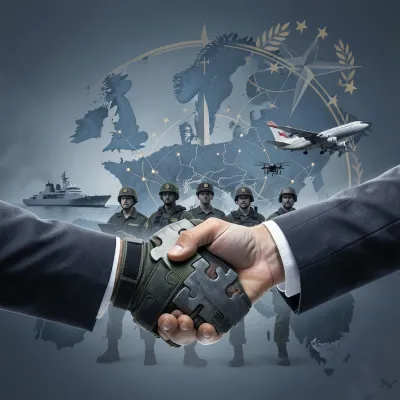
"Common Defense? NATO, EU Security and the Future of European Military Cooperation" offers a comprehensive examination of Europe's multifaceted security landscape, delving into the intricate relationship between NATO and EU security frameworks, the challenges of defense integration, burden-sharing, and the pursuit of European strategic autonomy. The book argues that strengthening European deterrence and crisis response requires optimizing existing structures rather than duplicating efforts or eroding transatlantic ties. It maps the institutional overlaps between NATO's Defence Planning Process and the EU's Capability Development Cycle, highlighting both synergies and persistent friction points, often exacerbated by national preferences and historical grievances like the Turkey-Cyprus dispute.
A core theme is the chronic fragmentation of Europe's defense industrial base and procurement processes. The book details how this fragmentation leads to higher costs, interoperability challenges, and insufficient munitions stockpiles, starkly exposed by recent geopolitical events. Initiatives like PESCO and the European Defence Fund (EDF) are analyzed as attempts to foster collaboration and scale, yet their effectiveness is often hampered by national industrial policies, political hurdles, and delivery gaps. The author advocates for moving beyond the "2 percent of GDP" burden-sharing metric, proposing a more comprehensive scorecard that emphasizes deployable forces, readiness, interoperability, and sustainment capacity as true indicators of military contribution.
The analysis extends to geographical and conceptual challenges, including the demanding "deterrence by denial" strategy on NATO's Eastern Flank and the multifaceted crisis management needs in the Southern Neighbourhood, encompassing irregular migration, terrorism, and stabilization. Emerging domains like cyber, space, and hybrid threats are also explored, underscoring the necessity of whole-of-society responses and seamless civil-military cooperation. The book also considers the pivotal role of military mobility, aiming for a "Schengen of Defence," and the complex "nuclear question" involving the US extended deterrent, France's independent arsenal, and NATO's sharing arrangements.
Concluding with scenarios for 2030-2040, the book offers a "Practical Playbook" for deeper integration. It recommends harmonizing planning cycles, establishing binding ammunition reserve compacts, streamlining military mobility through infrastructure upgrades and a "One-Stop-Shop" for clearances, and implementing secure, federated intelligence-sharing architectures. It also stresses the importance of democratic resilience, energy security, and societal preparedness as foundational elements of defense, advocating for a "Deterrence Ecosystem" where European autonomy strengthens the transatlantic alliance rather than undermining it.
What You'll Find Inside:
- The book analyzes how NATO's Defence Planning Process and the EU's Capability Development Cycle can be better synchronized to avoid duplication and enhance European military capabilities.
- It examines persistent challenges in Europe's defense industrial base, including fragmentation, interoperability issues, and efforts like the European Defence Fund to create scale and innovation.
- The text develops a more comprehensive burden-sharing framework that moves beyond the 2% GDP metric to assess real military outputs like readiness, deployability, and sustainability.
- It explores military mobility as a critical 'Schengen of Defence' enabler for both NATO reinforcement and EU crisis response operations across Europe.
- The book argues that credible European strategic autonomy in key areas actually strengthens rather than undermines the transatlantic alliance by enabling more equitable burden-sharing.
Who's It For:
This book is designed for defense officials, policymakers, legislators, and industry leaders working on European security and defense cooperation. It will also benefit citizens and researchers seeking to understand how NATO and EU defense initiatives can be better aligned to strengthen deterrence while preserving the transatlantic partnership. The analysis is particularly relevant for those grappling with burden-sharing debates, industrial policy challenges, and the pursuit of European strategic autonomy within the alliance framework.
Author:
Published By:
Date Published:
April 30, 2026
Type:
Nonfiction
Language:
English
Word Count:
47,172 words
Reading Time:
3 hours 18 minutes
Sample:
Order:
Order Common Defense? NATO, EU Security and the Future of European Military Cooperation (Paperback) on MixCache.com:
Buy NowPrint copy is made to order and ships worldwide. Includes the ebook free, ready to read instantly.
$5 account credit for all new MixCache.com accounts, usable toward any ebook purchase!*