
Browse by Category
Fiction
- Action & Adventure
- African American
- Anthologies
- Children's Fiction
- Classics
- Comics & Graphic Novels
- Coming of Age
- Contemporary
- Cultural & Regional
- Drama
- Erotica
- Fantasy
- General
- Historical Fiction
- Horror
- Humor & Satire
- Literary Fiction
- Mystery, Thriller & Suspense
- Poetry
- Religious & Inspirational
- Romance
- Science Fiction
- Short Stories
- War & Military
- Westerns
- Women's Fiction
- Young Adult
Non-Fiction
- Antiques & Collectibles
- Arts & Photography
- Biographies & Memoirs
- Business & Money
- Children's Non-Fiction
-
Computers & Technology
- Artificial Intelligence
- Computer Science
- Cybersecurity & Cryptography
- Data Science & Analytics
- Databases & Big Data
- Game Development & Design
- General
- Hardware & DIY
- Mobile App Development
- Networking & Cloud Computing
- Operating Systems
- Programming
- Robotics
- Software
- Software Engineering
- User Experience (UX) & Design
- Web Development & Design
- Cooking, Food & Wine
- Crafts, Hobbies & Home
- Education & Teaching
- Engineering
- General
- Health, Fitness & Dieting
-
History
- African History
- African History - North Africa
- African History - Sub-Saharan Africa
- American History
- American History - 20th Century
- American History - Civil War
- American History - Colonial Period
- Ancient History
- Asian History
- Asian History - China
- Asian History - India
- Asian History - Japan
- Asian History - Southeast Asia
- European History
- European History - Ancient Greece
- European History - Ancient Rome
- European History - Medieval
- European History - Modern
- European History - Renaissance
- General
- Middle Eastern History
- Military History
- Military History - Aviation
- Military History - Naval
- Social & Cultural History
- World History
- Humor & Entertainment
- Industrial Technology
- Language Learning
- Law
- LGBTQ+ Non-Fiction
- Literary Criticism
- Medical Books
- Parenting & Relationships
- Philosophy
- Politics & Social Sciences
- Reference
- Religion & Spirituality
-
Science & Math
- Agricultural Sciences
- Astronomy & Space Science
- Behavioral Sciences
- Biological Sciences
- Botany & Plant Science
- Chemistry
- Earth Sciences
- Engineering - Chemical
- Engineering - Civil
- Engineering - Electrical
- Engineering - Mechanical
- Environment
- General
- Geology
- Mathematics
- Nature & Ecology
- Oceanography
- Paleontology
- Physics
- Statistics
- Self-Help
- Sports & Outdoors
- Study Aids
- Sustainability & Green Living
- Textbooks
- Transportation
- Travel
- True Crime
- Urban Planning & Development
- Veterinary Medicine
- Writing & Publishing
Jump to Section
MixCache.com Total Access
Unlimited reading and audiobooks for every book published by MixCache.com.
Included titles carry the MTA badge.
Learn more →
Climate Politics in the U.S.
MTA
Policy Battles, State Innovation, and the Road to Decarbonization
About this book:
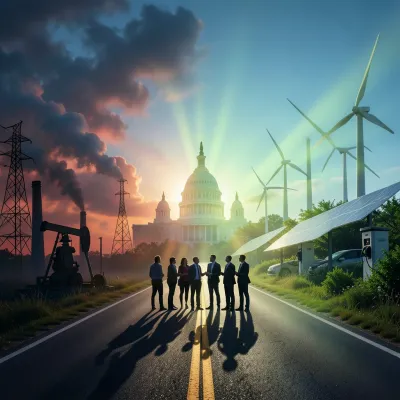
*Climate Politics in the U.S.* provides a comprehensive analysis of the institutional, partisan, and regulatory dynamics that shape American decarbonization efforts. It explores a "braided stream" of progress, where federal legislative gridlock is often countered by executive rulemaking, judicial intervention, and significant policy innovation at the state and local levels. By examining the unique features of American federalism, the book illustrates how states like California act as laboratories for standards in clean energy and transportation, while federal agencies like the EPA navigate complex legal doctrines to regulate emissions.
The book delves into the specific sector-based battles that define the road to net-zero, including the decline of the coal industry, the electrification of the transportation sector, and the technical challenges of modernizing the electric grid. It highlights the pivotal role of the Inflation Reduction Act (IRA) as a landmark shift toward industrial policy and green finance, using incentives to reshoring clean manufacturing and catalyze private investment. Simultaneously, it addresses the "gritty details" of governance, such as permitting bottlenecks, methane monitoring in the oil and gas patch, and the vital role of agricultural and forest lands as carbon sinks.
A central theme of the work is the intersection of climate action with social and economic forces. It underscores the growing influence of the environmental justice movement and the necessity of a "just transition" for communities historically dependent on fossil fuels. The text also analyzes the strategic "playbook" for climate advocates, emphasizing the importance of narrative framing—such as national security and economic opportunity—to bridge the partisan "climate gap" and build durable coalitions across labor, industry, and grassroots organizations.
Looking toward 2035 and 2050, the book presents various scenarios ranging from accelerated ambition to political retrenchment. It concludes that the trajectory of U.S. climate policy will be determined by the consistency of political will, the pace of technological innovation, and the ability of institutions to adapt to escalating climate impacts. Ultimately, the road to decarbonization is framed as a continuous negotiation between entrenched interests and emerging market realities, where local leadership and strategic federalism remain the primary engines of change.
What You'll Find Inside:
- U.S. climate politics is defined by fragmented authority across federal, state, and local governments, which creates both veto points and opportunities for policy experimentation when federal action stalls.
- Deep partisan polarization produces a persistent 'climate gap,' yet economic incentives, state-level mandates, and narrowly targeted policies can generate bipartisan support and incremental progress.
- When Congress is gridlocked, the administrative state (EPA, DOE, FERC, etc.) and executive actions become the main engines of climate policy, though they remain vulnerable to legal challenges and administrative reversals.
- State innovations—such as California’s vehicle standards, renewable/clean energy standards, and methane regulations—often set de facto national benchmarks, drive market transformation, and inform federal policy.
- Durable decarbonization requires sequencing and stacking standards, incentives, finance, and grassroots momentum while addressing permitting bottlenecks, grid modernization, and just transition considerations.
Who's It For:
This book is essential for policymakers, legislative staff, and regulatory officials who design and implement climate strategies; advocates and organizers seeking to navigate institutional levers; scholars and students of environmental law, political science, and public policy; and professionals in energy, finance, transportation, and industry who need to understand the intersecting forces shaping U.S. decarbonization.
Table of Contents:
- Introduction
- Chapter 1 The Landscape: Why U.S. Climate Politics Are Different
- Chapter 2 Parties, Polarization, and the Climate Gap
- Chapter 3 The Administrative State: EPA, CEQ, and Rulemaking Power
- Chapter 4 Congress in Gridlock and Motion: From Cap-and-Trade to the IRA
- Chapter 5 Executive Action: The Pen, the Phone, and the Courts
- Chapter 6 Federalism as Engine: California’s Leadership and the State Wave
- Chapter 7 RPS to CES: State Standards Driving the Power Sector
- Chapter 8 Permitting, Siting, and the Transmission Bottleneck
- Chapter 9 The Electric Grid: FERC, ISOs, and Market Design for Decarbonization
- Chapter 10 Transportation Transformation: CAFE, EV Mandates, and Charging Build-Out
- Chapter 11 Methane and the Oil & Gas Patch: Standards, Monitoring, and Orphan Wells
- Chapter 12 Coal’s Decline and the Utility Transition: IRPs, Securitization, and Just Transition
- Chapter 13 Industry Lobbying and Influence: Fossil Fuel, Utilities, and Trade Associations
- Chapter 14 Money, Markets, and Disclosure: Climate Risk and Green Finance
- Chapter 15 Innovation and Industrial Policy: DOE Loans, ARPA‑E, and Clean Manufacturing
- Chapter 16 Carbon Pricing vs. Standards: Lessons from States and Abroad
- Chapter 17 Agriculture, Forestry, and Land: Sinks, Soils, and Working Lands
- Chapter 18 Environmental Justice and Community Power
- Chapter 19 Grassroots Movements: From Divestment to Direct Action
- Chapter 20 Courts, Doctrine, and Preemption: The Boundaries of Authority
- Chapter 21 Resilience and Adaptation: Disasters, Insurance, and Managed Retreat
- Chapter 22 International Linkages: Trade, CBAMs, and Clean Supply Chains
- Chapter 23 Local Governments and Mayors: Building Codes, Transit, and Heat
- Chapter 24 Strategic Playbook: Windows, Narratives, and Coalition Design
- Chapter 25 The Road Ahead: Scenarios to 2035 and 2050
Author:
Published By:
Date Published:
April 29, 2026
Type:
Nonfiction
Language:
English
Word Count:
46,595 words
Reading Time:
3 hours 16 minutes
Sample:
MixCache.com Total Access
Get unlimited access to this book + all books published by MixCache.com for $11.99/month
Subscribe to MTAOr purchase this book individually below
Order:
Buy the Climate Politics in the U.S. ebook on MixCache.com:
Buy Now
Full ebook will be available immediately
- read online or download as a PDF file.
$5 account credit for all new MixCache.com accounts, usable toward any ebook purchase!*


Ratings & Reviews
Ask Questions About This Book
Have a question about the content? Ask our AI assistant!
Start by asking a question about "Climate Politics in the U.S."
Example: "Does this book mention William Shakespeare?"
Thinking...