
Browse by Category
Fiction
- Action & Adventure
- African American
- Anthologies
- Children's Fiction
- Classics
- Comics & Graphic Novels
- Coming of Age
- Contemporary
- Cultural & Regional
- Drama
- Erotica
- Fantasy
- General
- Historical Fiction
- Horror
- Humor & Satire
- Literary Fiction
- Mystery, Thriller & Suspense
- Poetry
- Religious & Inspirational
- Romance
- Science Fiction
- Short Stories
- War & Military
- Westerns
- Women's Fiction
- Young Adult
Non-Fiction
- Antiques & Collectibles
- Arts & Photography
- Biographies & Memoirs
- Business & Money
- Children's Non-Fiction
-
Computers & Technology
- Artificial Intelligence
- Computer Science
- Cybersecurity & Cryptography
- Data Science & Analytics
- Databases & Big Data
- Game Development & Design
- General
- Hardware & DIY
- Mobile App Development
- Networking & Cloud Computing
- Operating Systems
- Programming
- Robotics
- Software
- Software Engineering
- User Experience (UX) & Design
- Web Development & Design
- Cooking, Food & Wine
- Crafts, Hobbies & Home
- Education & Teaching
- Engineering
- General
- Health, Fitness & Dieting
-
History
- African History
- African History - North Africa
- African History - Sub-Saharan Africa
- American History
- American History - 20th Century
- American History - Civil War
- American History - Colonial Period
- Ancient History
- Asian History
- Asian History - China
- Asian History - India
- Asian History - Japan
- Asian History - Southeast Asia
- European History
- European History - Ancient Greece
- European History - Ancient Rome
- European History - Medieval
- European History - Modern
- European History - Renaissance
- General
- Middle Eastern History
- Military History
- Military History - Aviation
- Military History - Naval
- Social & Cultural History
- World History
- Humor & Entertainment
- Industrial Technology
- Language Learning
- Law
- LGBTQ+ Non-Fiction
- Literary Criticism
- Medical Books
- Parenting & Relationships
- Philosophy
- Politics & Social Sciences
- Reference
- Religion & Spirituality
-
Science & Math
- Agricultural Sciences
- Astronomy & Space Science
- Behavioral Sciences
- Biological Sciences
- Botany & Plant Science
- Chemistry
- Earth Sciences
- Engineering - Chemical
- Engineering - Civil
- Engineering - Electrical
- Engineering - Mechanical
- Environment
- General
- Geology
- Mathematics
- Nature & Ecology
- Oceanography
- Paleontology
- Physics
- Statistics
- Self-Help
- Sports & Outdoors
- Study Aids
- Sustainability & Green Living
- Textbooks
- Transportation
- Travel
- True Crime
- Urban Planning & Development
- Veterinary Medicine
- Writing & Publishing
Jump to Section
MixCache.com Total Access
Unlimited reading and audiobooks for every book published by MixCache.com.
Included titles carry the MTA badge.
Learn more →
Voter Suppression and Protection in the 21st Century
MTA
Laws, Litigation, and Local Tactics to Secure the American Ballot
About this book:
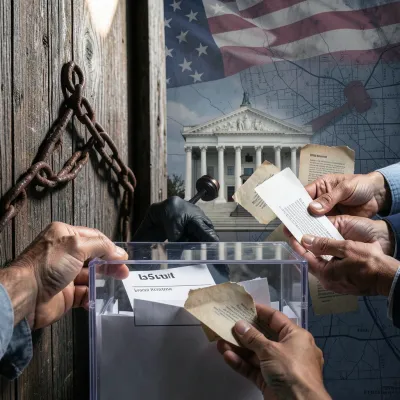
*Voter Suppression and Protection in the 21st Century* provides a comprehensive analysis of the legal, administrative, and tactical challenges facing the American electorate. The book traces the evolution of the franchise from its constitutional origins through the landmark Voting Rights Act of 1965 to contemporary hurdles. It highlights how the 2013 *Shelby County* decision shifted the burden of proof from states to litigants, necessitating a more reactive and resource-intensive approach to protecting ballot access. By examining specific pressure points—such as strict voter ID laws, aggressive roll maintenance, polling place consolidations, and signature-matching requirements—the text illustrates how facially neutral policies can create disparate impacts on minority, student, rural, and low-income voters.
The book moves beyond legal theory to offer a practical field guide for election administrators and civil rights practitioners. It details the mechanics of modern suppression, including the rise of digital disinformation and the weaponization of "election integrity" narratives. Conversely, it provides a playbook for voter protection, emphasizing the importance of administrative remedies, such as robust ballot-curing processes, automatic voter registration, and clear guidance for poll workers. The text underscores that election security and voter access are not mutually exclusive; rather, well-designed systems—supported by data-driven mapping and transparent audits—strengthen both democratic resilience and public trust.
A significant portion of the work is dedicated to the localized and community-level defense of the ballot. It explores the vital roles of non-partisan poll watching, voter hotlines, and cross-sector coalitions in providing a rapid response to on-the-ground disruptions. Chapters on specific populations, such as Native American, military, and returning citizens, reveal the unique logistical and bureaucratic barriers these groups face, from a lack of residential street addresses to the complexities of felony disenfranchisement and fee-based restoration. These sections argue for tailored outreach and culturally competent administration to ensure that the promise of universal suffrage is realized for all demographics.
Finally, the book proposes a forward-looking agenda for democratic reform. It advocates for federal standards to establish a floor of protection across states, significant investment in election infrastructure and cybersecurity, and the adoption of independent redistricting commissions to combat partisan gerrymandering. By integrating legal doctrine with operational checklists and data analysis, the book concludes that securing the American ballot is a continuous practice. It calls for a multi-layered strategy of preventive administration, evidence-based litigation, and durable community organizing to build an electoral system capable of withstanding both political pressure and physical disruptions like pandemics or natural disasters.
What You'll Find Inside:
- The historical development of voting rights from constitutional foundations through the Voting Rights Act and its post-Shelby County transformation
- Detailed analysis of modern voter suppression tactics including strict ID laws, voter roll purges, polling place closures, and restrictions on early/mail voting
- Specific protections and challenges for vulnerable voter groups: students, Native Americans, returning citizens, military/overseas voters, language minorities, and people with disabilities
- Practical protection strategies including litigation approaches (Section 2, §1983, state constitutions), administrative remedies, and on-the-ground tactics like poll watching and hotlines
- A forward-looking agenda for democratic resilience featuring national standards, election funding, independent redistricting, and community coalition building
Who's It For:
This book is essential for civil rights lawyers preparing litigation, election administrators implementing voting procedures, advocates organizing voter protection efforts, and community organizers working to defend ballot access - anyone needing practical tools to combat voter suppression and secure the American franchise in the 21st century.
Table of Contents:
- Introduction
- Chapter 1 The Architecture of the American Franchise: Rights, Powers, and Precedents
- Chapter 2 The Voting Rights Act: From 1965 to the Present
- Chapter 3 Shelby County and Its Aftermath: Preclearance Unraveled
- Chapter 4 Modern Voter ID Laws: Designs, Data, and Disparate Impact
- Chapter 5 Voter Roll Maintenance vs. Purges: Lawful Hygiene or Suppression?
- Chapter 6 Polling Place Closures and Consolidations: Geography as Gatekeeper
- Chapter 7 Early Voting, Hours, and Lines: Managing Access Over Time
- Chapter 8 Mail Voting and Absentee Ballots: Rules, Rejections, and Cures
- Chapter 9 Provisional Ballots: Safety Net or Sieve?
- Chapter 10 Signature Matching and Ballot Curing: Due Process at the Envelope
- Chapter 11 Language Access and Disability Rights: Ensuring Usable Elections
- Chapter 12 Student Voters: Residency, ID, and Campus Access
- Chapter 13 Native American Voters: Address Rules and Rural Barriers
- Chapter 14 Returning Citizens: Disenfranchisement, Fees, and Restoration
- Chapter 15 Military and Overseas Voters: UOCAVA and Practical Protections
- Chapter 16 Disinformation and Intimidation: Modern Tactics to Chill the Vote
- Chapter 17 Technology, Cybersecurity, and Chain of Custody
- Chapter 18 Redistricting and the Right to an Effective Vote
- Chapter 19 Emergency Powers, Natural Disasters, and Pandemic Voting
- Chapter 20 Litigation Strategies: Section 2, §1983, and State Constitutions
- Chapter 21 Administrative Remedies: Policy, Rulemaking, and Guidance
- Chapter 22 On-the-Ground Protection: Poll Watching, Hotlines, and Rapid Response
- Chapter 23 Data, Mapping, and Evidence: Building the Record
- Chapter 24 Coalition Building and Voter Education: Community-Level Defense
- Chapter 25 A Forward-Looking Agenda: Standards, Reforms, and Democratic Resilience
Author:
Published By:
Date Published:
April 29, 2026
Type:
Nonfiction
Language:
English
Word Count:
48,944 words
Reading Time:
3 hours 26 minutes
Sample:
MixCache.com Total Access
Get unlimited access to this book + all books published by MixCache.com for $11.99/month
Subscribe to MTAOr purchase this book individually below
Order:
Buy the Voter Suppression and Protection in the 21st Century ebook on MixCache.com:
Buy Now
Full ebook will be available immediately
- read online or download as a PDF file.
$5 account credit for all new MixCache.com accounts, usable toward any ebook purchase!*



Ratings & Reviews
Ask Questions About This Book
Have a question about the content? Ask our AI assistant!
Start by asking a question about "Voter Suppression and Protection in the 21st Century"
Example: "Does this book mention William Shakespeare?"
Thinking...