Browse by Category
Fiction
- Action & Adventure
- African American
- Anthologies
- Children's Fiction
- Classics
- Comics & Graphic Novels
- Coming of Age
- Contemporary
- Cultural & Regional
- Drama
- Erotica
- Fantasy
- General
- Historical Fiction
- Horror
- Humor & Satire
- Literary Fiction
- Mystery, Thriller & Suspense
- Poetry
- Religious & Inspirational
- Romance
- Science Fiction
- Short Stories
- War & Military
- Westerns
- Women's Fiction
- Young Adult
Non-Fiction
- Antiques & Collectibles
- Arts & Photography
- Biographies & Memoirs
- Business & Money
- Children's Non-Fiction
-
Computers & Technology
- Artificial Intelligence
- Computer Science
- Cybersecurity & Cryptography
- Data Science & Analytics
- Databases & Big Data
- Game Development & Design
- General
- Hardware & DIY
- Mobile App Development
- Networking & Cloud Computing
- Operating Systems
- Programming
- Robotics
- Software
- Software Engineering
- User Experience (UX) & Design
- Web Development & Design
- Cooking, Food & Wine
- Crafts, Hobbies & Home
- Education & Teaching
- Engineering
- General
- Health, Fitness & Dieting
-
History
- African History
- African History - North Africa
- African History - Sub-Saharan Africa
- American History
- American History - 20th Century
- American History - Civil War
- American History - Colonial Period
- Ancient History
- Asian History
- Asian History - China
- Asian History - India
- Asian History - Japan
- Asian History - Southeast Asia
- European History
- European History - Ancient Greece
- European History - Ancient Rome
- European History - Medieval
- European History - Modern
- European History - Renaissance
- General
- Middle Eastern History
- Military History
- Military History - Aviation
- Military History - Naval
- Social & Cultural History
- World History
- Humor & Entertainment
- Industrial Technology
- Language Learning
- Law
- LGBTQ+ Non-Fiction
- Literary Criticism
- Medical Books
- Parenting & Relationships
- Philosophy
- Politics & Social Sciences
- Reference
- Religion & Spirituality
-
Science & Math
- Agricultural Sciences
- Astronomy & Space Science
- Behavioral Sciences
- Biological Sciences
- Botany & Plant Science
- Chemistry
- Earth Sciences
- Engineering - Chemical
- Engineering - Civil
- Engineering - Electrical
- Engineering - Mechanical
- Environment
- General
- Geology
- Mathematics
- Nature & Ecology
- Oceanography
- Paleontology
- Physics
- Statistics
- Self-Help
- Sports & Outdoors
- Study Aids
- Sustainability & Green Living
- Textbooks
- Transportation
- Travel
- True Crime
- Urban Planning & Development
- Veterinary Medicine
- Writing & Publishing
Jump to Section
MixCache.com Total Access
Unlimited reading and audiobooks for every book published by MixCache.com.
Included titles carry the MTA badge.
Learn more →
Guns, Rockets, and Radar: The Science and Technology That Won World War II
MTA
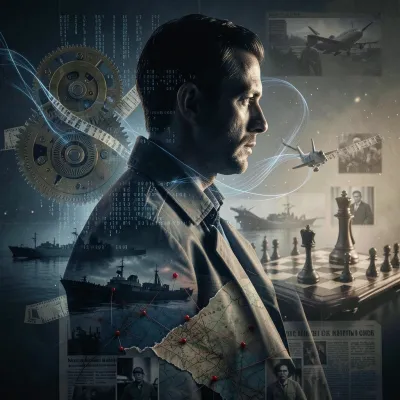
From radar and cryptography to jet engines and rocketry — innovations that changed warfare
About this book:

*Guns, Rockets, and Radar* explores how World War II was won not just on the battlefield, but through a monumental mobilization of scientific and industrial intelligence. The book traces the shift from traditional warfare to a modern, data-driven approach, highlighting how the Allies successfully integrated academic research with military strategy. By establishing organizations like the Office of Scientific Research and Development, nations were able to harness the expertise of multidisciplinary teams to solve urgent operational problems, leading to breakthroughs in radar, sonar, and cryptography that fundamentally altered the tactical landscape.
The narrative details the rapid evolution of specific technologies, such as the cavity magnetron for microwave radar, the proximity fuze for air defense, and the first electronic digital computers used for codebreaking. It examines the "war of the elements," where chemical and metallurgical innovations—such as synthetic rubber, high-octane fuels, and advanced alloys—overcame resource shortages and enhanced machine performance. These technical achievements are framed within the context of intense global competition, showing how the Allies outpaced the Axis through superior collaboration, logistics, and the ability to scale laboratory prototypes into mass-produced, reliable hardware like the Liberty ships.
Beyond hardware, the book delves into the emergence of Operations Research and the geosciences, where data analysis and environmental understanding became strategic weapons. It highlights the critical role of medicine, specifically the mass production of penicillin and the development of blood banking, which revolutionized trauma care and survival rates. The book concludes by addressing the profound ethical dilemmas faced by scientists, particularly in the Manhattan Project, and traces the legacy of these wartime innovations into the Cold War and the modern digital age, offering lessons on how societies can effectively organize for rapid innovation in times of crisis.
What You'll Find Inside:
- How scientific mobilization transformed warfare - from labs and drafting tables to frontline combat, integrating universities, government labs, industry, and military units under extreme pressure
- The radar revolution from Chain Home's early warning networks to microwave mastery enabling precision targeting, night fighting, and anti-submarine warfare
- Codebreaking triumphs at Bletchley Park and beyond - how cracking Enigma, Purple, and other ciphers provided strategic intelligence that shortened the war
- The unprecedented scale of the Manhattan Project - physics, industry, and secrecy combined to create atomic weapons that ended the war and began the nuclear age
- Wartime innovation lessons for today - clear problem definition, empowered multidisciplinary teams, rapid prototyping, and collaboration as force multipliers in high-stakes environments
Who's It For:
This book is ideal for history enthusiasts, science and technology students, military historians, and professionals interested in how scientific innovation occurs under pressure. It will particularly appeal to readers who want to understand not just what technologies were developed in WWII, but how they were conceived, produced, and integrated into military strategy through organizational ingenuity and cross-disciplinary collaboration.
Table of Contents:
- Introduction
- Chapter 1 The Mobilization of Science: From Labs to the Front
- Chapter 2 Radar Revolution: From Chain Home to Microwave Mastery
- Chapter 3 Sound in the Deep: Sonar and the Battle of the Atlantic
- Chapter 4 Cryptography and Codebreaking: Enigma, Purple, and Beyond
- Chapter 5 Operations Research: Turning Data into Decisions
- Chapter 6 Proximity Fuzes: Electronics at Artillery Speed
- Chapter 7 Hunting the U-Boat: Sensors, Weapons, and Tactics
- Chapter 8 Aircraft Innovation: Aerodynamics, Materials, and Avionics
- Chapter 9 Jet Propulsion: From Whittle and von Ohain to Combat Debut
- Chapter 10 Rockets and Missiles: V-1, V-2, and Ballistic Frontiers
- Chapter 11 Computing Machines: Bombes, Colossi, and Early Digital Logic
- Chapter 12 The Manhattan Project: Physics, Industry, and Secrecy
- Chapter 13 Chemistry at War: Synthetic Fuels, Rubbers, and Explosives
- Chapter 14 Medicine and the Battlefield: Penicillin, Blood, and Trauma Care
- Chapter 15 Logistics as Technology: Liberty Ships, Pipelines, and Throughput
- Chapter 16 Fire Control: Analog Computers and Gunlaying Radar
- Chapter 17 Air Defense Networks: Command, Control, and Interception
- Chapter 18 Navigation and Mapping: LORAN, Gee, and New Geodesy
- Chapter 19 Camouflage and Electronic Warfare: Chaff, Jamming, and Deception
- Chapter 20 Materials Matter: Aluminum, Magnesium, Plastics, and Steels
- Chapter 21 Weather, Oceanography, and Terrain: The Geosciences of Strategy
- Chapter 22 Collaboration and Rivalry: Allies, Axis, and Neutrals
- Chapter 23 Scientists at War: Ethics, Dilemmas, and Responsibility
- Chapter 24 From Victory to Cold War: Technology Transfer and Transformation
- Chapter 25 Lessons for Today: Policy, Organization, and Risk in Innovation
Author:
Published By:
Date Published:
April 16, 2026
Type:
Nonfiction
Language:
English
Word Count:
43,468 words
Reading Time:
3 hours 3 minutes
Sample:
Order:
Order Guns, Rockets, and Radar: The Science and Technology That Won World War II (Hardcover) on MixCache.com:
Buy NowPrint copy is made to order and ships worldwide. Includes the ebook free, ready to read instantly.
$5 account credit for all new MixCache.com accounts, usable toward any ebook purchase!*