Browse by Category
Fiction
- Action & Adventure
- African American
- Anthologies
- Children's Fiction
- Classics
- Comics & Graphic Novels
- Coming of Age
- Contemporary
- Cultural & Regional
- Drama
- Erotica
- Fantasy
- General
- Historical Fiction
- Horror
- Humor & Satire
- Literary Fiction
- Mystery, Thriller & Suspense
- Poetry
- Religious & Inspirational
- Romance
- Science Fiction
- Short Stories
- War & Military
- Westerns
- Women's Fiction
- Young Adult
Non-Fiction
- Antiques & Collectibles
- Arts & Photography
- Biographies & Memoirs
- Business & Money
- Children's Non-Fiction
-
Computers & Technology
- Artificial Intelligence
- Computer Science
- Cybersecurity & Cryptography
- Data Science & Analytics
- Databases & Big Data
- Game Development & Design
- General
- Hardware & DIY
- Mobile App Development
- Networking & Cloud Computing
- Operating Systems
- Programming
- Robotics
- Software
- Software Engineering
- User Experience (UX) & Design
- Web Development & Design
- Cooking, Food & Wine
- Crafts, Hobbies & Home
- Education & Teaching
- Engineering
- General
- Health, Fitness & Dieting
-
History
- African History
- African History - North Africa
- African History - Sub-Saharan Africa
- American History
- American History - 20th Century
- American History - Civil War
- American History - Colonial Period
- Ancient History
- Asian History
- Asian History - China
- Asian History - India
- Asian History - Japan
- Asian History - Southeast Asia
- European History
- European History - Ancient Greece
- European History - Ancient Rome
- European History - Medieval
- European History - Modern
- European History - Renaissance
- General
- Middle Eastern History
- Military History
- Military History - Aviation
- Military History - Naval
- Social & Cultural History
- World History
- Humor & Entertainment
- Industrial Technology
- Language Learning
- Law
- LGBTQ+ Non-Fiction
- Literary Criticism
- Medical Books
- Parenting & Relationships
- Philosophy
- Politics & Social Sciences
- Reference
- Religion & Spirituality
-
Science & Math
- Agricultural Sciences
- Astronomy & Space Science
- Behavioral Sciences
- Biological Sciences
- Botany & Plant Science
- Chemistry
- Earth Sciences
- Engineering - Chemical
- Engineering - Civil
- Engineering - Electrical
- Engineering - Mechanical
- Environment
- General
- Geology
- Mathematics
- Nature & Ecology
- Oceanography
- Paleontology
- Physics
- Statistics
- Self-Help
- Sports & Outdoors
- Study Aids
- Sustainability & Green Living
- Textbooks
- Transportation
- Travel
- True Crime
- Urban Planning & Development
- Veterinary Medicine
- Writing & Publishing
Jump to Section
MixCache.com Total Access
Unlimited reading and audiobooks for every book published by MixCache.com.
Included titles carry the MTA badge.
Learn more →
Through the Lens of War: Photography, Film, and the Visual Culture of World War II
MTA
How images shaped public opinion, propaganda, and historical memory during and after the war
About this book:
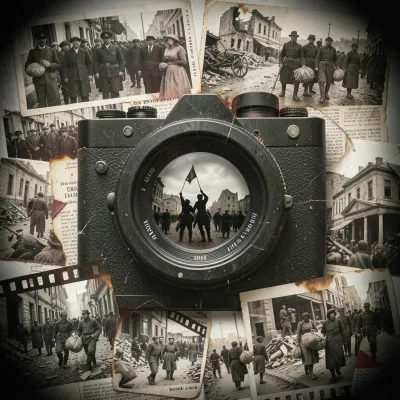
*Through the Lens of War: Photography, Film, and the Visual Culture of World War II* explores how visual media transitioned from a battlefield tool to a primary architect of global historical memory. The book details the technological evolution of 35mm cameras and 16mm film, which allowed photographers to embed with troops and capture the visceral reality of combat. It examines the dual nature of these images: while frontline lenses documented the raw brutality of war, state-controlled "Propaganda Machines" in both Allied and Axis nations meticulously curated and censored this output to shape public morale, demonize enemies, and justify the immense human and industrial costs of total war.
The narrative traces the circulation of these images through pervasive wartime media, such as weekly cinema newsreels and high-circulation picture magazines like *Life* and *Picture Post*. These platforms transformed isolated snapshots into cohesive visual narratives, training the public to "see" the war through specific ideological frames. The book also addresses the ethical weight of the camera in documenting atrocities, particularly during the liberation of concentration camps, where photography shifted from a tool of persuasion to irrefutable legal evidence used in post-war trials to hold perpetrators accountable.
Furthermore, the text examines how visual culture mediated complex social dynamics, including the representation of race and gender, and the documentation of the home front’s industrial mobilization. It highlights the role of clandestine photography by resistance movements as a form of defiance against occupation. By analyzing the "afterlives" of these images, the book illustrates how wartime footage has been repurposed in museums, memorials, and textbooks to solidify national identities and collective memory.
In its conclusion, the book bridges the gap between the mid-twentieth century and the present day, exploring how digital reconstructions, AI colorization, and virtual reality have altered the "twenty-first-century gaze." These modern technologies offer unprecedented immersion and accessibility but also raise new questions about authenticity and the ethics of historical representation. Ultimately, the work argues that the visual culture of World War II remains a living, evolving archive that continues to influence contemporary understanding of conflict, justice, and human resilience.
What You'll Find Inside:
- Explores how photographs, film, and visual media were produced, censored, and circulated to shape public opinion and propaganda during WWII.
- Details technological advances (35mm cameras, 16mm film, aerial reconnaissance) that enabled frontline documentation and intelligence gathering.
- Examines the contrasting visual strategies of Axis and Allied powers, including dehumanization, leader cults, and morale‑building imagery.
- Analyzes ethical dilemmas surrounding atrocity images, medical photography, censorship, and the use of visual evidence in war crimes trials.
- Traces the afterlives of wartime images in museums, memorials, textbooks, and digital reconstructions, showing how memory is continually renegotiated.
Who's It For:
This book is ideal for undergraduate and graduate students in media studies, art history, history, film studies, and memory studies who need interdisciplinary frameworks for analyzing wartime visual culture. It will also benefit archivists, museum curators, educators, and researchers working with historical images or propaganda materials. General readers interested in how photography and film influenced public perception, memory, and justice during World War II will find the content accessible and insightful.
Table of Contents:
- Introduction
- Chapter 1 The Camera Goes to War: Technology, Access, and Training
- Chapter 2 State Eyes: Ministries of Information and Propaganda Machines
- Chapter 3 Newsreels and the Theater: The Weekly War on the Big Screen
- Chapter 4 Picture Magazines: Life, Picture Post, and Visual Narratives
- Chapter 5 Frontline Lenses: Combat Photographers and Risk
- Chapter 6 Censorship and Gatekeeping: What the Public Was Allowed to See
- Chapter 7 The Home Front Image: Rationing, Labor, and Morale
- Chapter 8 Axis Aesthetics: Germany, Italy, and Japan’s Visual Strategies
- Chapter 9 Allied Visions: United States, Britain, and the Soviet Union
- Chapter 10 Race, Gender, and Representation in Wartime Imagery
- Chapter 11 Atrocity, Evidence, and the Ethics of Witnessing
- Chapter 12 Aerial Reconnaissance: Mapping the War from Above
- Chapter 13 The Pacific War on Film: Jungle, Sea, and Sky
- Chapter 14 The Eastern Front in Images: Siege, Snow, and Steel
- Chapter 15 Occupation and Resistance: Underground Press and Photographs
- Chapter 16 War at Home: Internment, Segregation, and Civil Liberties in Images
- Chapter 17 Medical Photography and the Wounded Body
- Chapter 18 Logistics and Industry: Factories, Ships, and Supply Lines
- Chapter 19 Faith, Ritual, and Mourning: Visuals of Loss and Resilience
- Chapter 20 Liberation and Aftermath: Camps, Ruins, and Return
- Chapter 21 Trials and Testimony: Images in the Courtroom
- Chapter 22 From Propaganda to Memory: Museums, Memorials, and Textbooks
- Chapter 23 The Afterlives of Footage: Archives, Restorations, and Reuse
- Chapter 24 Global Circulations: War Images in the Colonial and Postcolonial World
- Chapter 25 Digital Reconstructions and the Twenty-First-Century Gaze
Author:
Published By:
Date Published:
April 13, 2026
Type:
Nonfiction
Language:
English
Word Count:
41,336 words
Reading Time:
2 hours 54 minutes
Sample:
Order:
Order Through the Lens of War: Photography, Film, and the Visual Culture of World War II (Hardcover) on MixCache.com:
Buy NowPrint copy is made to order and ships worldwide. Includes the ebook free, ready to read instantly.
$5 account credit for all new MixCache.com accounts, usable toward any ebook purchase!*