Browse by Category
Fiction
- Action & Adventure
- African American
- Anthologies
- Children's Fiction
- Classics
- Comics & Graphic Novels
- Coming of Age
- Contemporary
- Cultural & Regional
- Drama
- Erotica
- Fantasy
- General
- Historical Fiction
- Horror
- Humor & Satire
- Literary Fiction
- Mystery, Thriller & Suspense
- Poetry
- Religious & Inspirational
- Romance
- Science Fiction
- Short Stories
- War & Military
- Westerns
- Women's Fiction
- Young Adult
Non-Fiction
- Antiques & Collectibles
- Arts & Photography
- Biographies & Memoirs
- Business & Money
- Children's Non-Fiction
-
Computers & Technology
- Artificial Intelligence
- Computer Science
- Cybersecurity & Cryptography
- Data Science & Analytics
- Databases & Big Data
- Game Development & Design
- General
- Hardware & DIY
- Mobile App Development
- Networking & Cloud Computing
- Operating Systems
- Programming
- Robotics
- Software
- Software Engineering
- User Experience (UX) & Design
- Web Development & Design
- Cooking, Food & Wine
- Crafts, Hobbies & Home
- Education & Teaching
- Engineering
- General
- Health, Fitness & Dieting
-
History
- African History
- African History - North Africa
- African History - Sub-Saharan Africa
- American History
- American History - 20th Century
- American History - Civil War
- American History - Colonial Period
- Ancient History
- Asian History
- Asian History - China
- Asian History - India
- Asian History - Japan
- Asian History - Southeast Asia
- European History
- European History - Ancient Greece
- European History - Ancient Rome
- European History - Medieval
- European History - Modern
- European History - Renaissance
- General
- Middle Eastern History
- Military History
- Military History - Aviation
- Military History - Naval
- Social & Cultural History
- World History
- Humor & Entertainment
- Industrial Technology
- Language Learning
- Law
- LGBTQ+ Non-Fiction
- Literary Criticism
- Medical Books
- Parenting & Relationships
- Philosophy
- Politics & Social Sciences
- Reference
- Religion & Spirituality
-
Science & Math
- Agricultural Sciences
- Astronomy & Space Science
- Behavioral Sciences
- Biological Sciences
- Botany & Plant Science
- Chemistry
- Earth Sciences
- Engineering - Chemical
- Engineering - Civil
- Engineering - Electrical
- Engineering - Mechanical
- Environment
- General
- Geology
- Mathematics
- Nature & Ecology
- Oceanography
- Paleontology
- Physics
- Statistics
- Self-Help
- Sports & Outdoors
- Study Aids
- Sustainability & Green Living
- Textbooks
- Transportation
- Travel
- True Crime
- Urban Planning & Development
- Veterinary Medicine
- Writing & Publishing
Jump to Section
MixCache.com Total Access
Unlimited reading and audiobooks for every book published by MixCache.com.
Included titles carry the MTA badge.
Learn more →
Proxy Wars and Local Realities: Vietnam, Korea, and Angola Reexamined
MTA
Comparative case studies of major Cold War proxy conflicts and their long-term impacts
About this book:

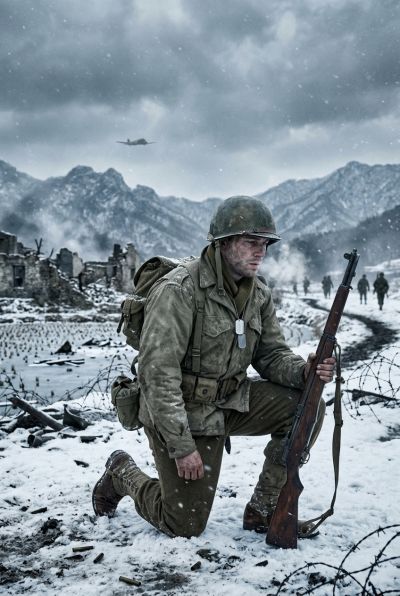
"Proxy Wars and Local Realities: Vietnam, Korea, and Angola Reexamined" offers a comparative analysis of three major Cold War proxy conflicts, challenging the conventional superpower-centric narrative by foregrounding the critical role of local actors and conditions. The book argues that these wars were "co-produced," where external patrons supplied resources and strategic frameworks, but local leaders and communities actively shaped, adapted, and sometimes subverted that support, leading to unpredictable trajectories and outcomes. It examines the distinct features of each conflict—Korea as an early, conventional internationalized war; Vietnam as a protracted revolution and counterinsurgency; and Angola as a prolonged civil war intertwined with decolonization and resource politics—to identify recurring mechanisms and unique particularities across diverse geographical, temporal, and political contexts.
The analysis delves into a broad spectrum of factors influencing these conflicts, including colonial legacies and nationalist revolutions that set the initial stage for conflict and shaped the character of local movements. It explores the evolving superpower strategies of the United States, Soviet Union, and China, highlighting their geopolitical motivations, ideological drivers, and persistent challenges in controlling their clients. Beyond the great powers, the book emphasizes the significant contributions of regional actors such as Cuba, South Africa, and neighboring states, whose independent agendas often complicated and intensified the conflicts. The study meticulously details battlefield doctrines, from conventional operations to guerrilla warfare, demonstrating how terrain and technology—like air power, SAMs, and logistics—dictated tactical choices and operational effectiveness for both patrons and proxies.
Furthermore, the book investigates the socio-political and economic dimensions of proxy warfare. It examines how wartime political orders, built on parties, factions, and state-building efforts, competed for legitimacy and control. It analyzes the profound impact of ethnicity, ideology, and identity on ground-level mobilization and loyalty, revealing how these local cleavages often complicated simplistic Cold War binaries. The economic underpinnings of these wars are thoroughly explored, from the crucial role of external aid and the impact of sanctions to the strategic importance of natural resources like oil and diamonds, which often fueled prolonged fighting and created distorted "war economies." Crucially, the book centers the civilian experience, charting the immense human costs of displacement, the daily struggle for survival, and the profound social transformations wrought by decades of conflict.
Finally, the book addresses the complex processes of war termination—whether through military victory, stalemate, or exhaustion—and the enduring post-conflict legacies. It examines the arduous challenges of demobilization and reintegration for combatants, the contested nature of historical memory, and the often-elusive pursuit of reconciliation. The study also traces the divergent paths of development after war, showing how wartime institutions and entrenched inequalities continued to shape economic growth and political stability for generations. By meticulously examining sources, methods, and archival debates, the book offers critical lessons for understanding contemporary proxy conflicts, emphasizing the timeless challenges of external intervention, the resilience of local agency, and the profound human and societal reverberations that extend far beyond the cessation of hostilities.
What You'll Find Inside:
- How Cold War proxy wars were co-produced by superpower patronage and local agency, demonstrating that clients were not passive instruments but active actors who shaped and constrained external support
- Comparative analysis of Vietnam, Korea, and Angola revealing recurring mechanisms in proxy warfare while accounting for each conflict's unique colonial legacies, terrain, and regional actor involvement
- Examination of how local realities—including ethnicity, economics, and geography—mediated superpower strategies and determined whether conflicts evolved toward conventional warfare, insurgency, or hybrid models
- In-depth analysis of civilian experiences as central to understanding proxy wars, covering displacement, survival strategies, social transformation, and the long-term human costs that persisted long after ceasefires
- Lessons for contemporary proxy conflicts regarding the limits of external control, the role of resource-driven economies, and the challenges of post-conflict reconciliation when local realities outlast great-power rivalries
Who's It For:
This book is designed for scholars and graduate students in history, political science, and international relations specializing in Cold War studies, conflict analysis, or post-conflict reconstruction. It will also benefit policy analysts, foreign affairs practitioners, and researchers seeking to understand how global power dynamics interact with local realities in proxy wars, particularly those drawing parallels to contemporary conflicts. The work's multi-archival approach and focus on civilian experiences make it valuable for anyone interested in the human and institutional dimensions of warfare beyond traditional military history.
Table of Contents:
- Introduction
- Chapter 1 The Architecture of Cold War Proxy Conflict
- Chapter 2 Defining Proxy Wars: Concepts, Causes, and Controversies
- Chapter 3 Choosing the Cases: Why Vietnam, Korea, and Angola?
- Chapter 4 Colonial Legacies and Nationalist Revolutions
- Chapter 5 Superpower Strategy: Washington, Moscow, and Global Rivalry
- Chapter 6 Beyond the Superpowers: Beijing, Havana, Pretoria, and Regional Actors
- Chapter 7 Korea 1950–1953: From Civil War to Internationalized War
- Chapter 8 Vietnam 1945–1975: Revolution, Counterinsurgency, and Intervention
- Chapter 9 Angola 1961–2002: Decolonization, Civil War, and External Patrons
- Chapter 10 Battlefield Doctrine: Conventional Operations vs. Guerrilla Warfare
- Chapter 11 Arms, Advisers, and Intelligence: Building and Sustaining Proxies
- Chapter 12 Negotiating War and Peace: Armistices, Accords, and Broken Ceasefires
- Chapter 13 Information Warfare: Propaganda, Media, and Perception
- Chapter 14 Political Orders in Wartime: Parties, Factions, and State-Building
- Chapter 15 Ethnicity, Ideology, and Mobilization on the Ground
- Chapter 16 The Economics of Proxy War: Aid, Sanctions, Resources, and Rents
- Chapter 17 Civilian Experience: Displacement, Survival, and Social Transformation
- Chapter 18 Law and Atrocity: Norms, Violations, and Accountability
- Chapter 19 Technology and Terrain: Air Power, SAMs, Logistics, and Geography
- Chapter 20 Urban Insurgency and Rural Counterinsurgency: Comparative Battlescapes
- Chapter 21 War Termination: Victory, Stalemate, and Exhaustion
- Chapter 22 Post-Conflict Legacies: Demobilization, Memory, and Reconciliation
- Chapter 23 Development After War: Institutions, Inequality, and Growth
- Chapter 24 Lessons for Contemporary Proxy Conflicts
- Chapter 25 Methods, Sources, and Archival Debates
Author:
Published By:
Date Published:
January 25, 2026
Type:
Nonfiction
Language:
English
Word Count:
66,134 words
Reading Time:
4 hours 38 minutes
Sample:
Order:
Order Proxy Wars and Local Realities: Vietnam, Korea, and Angola Reexamined (Paperback) on MixCache.com:
Buy NowPrint copy is made to order and ships worldwide. Includes the ebook free, ready to read instantly.
$5 account credit for all new MixCache.com accounts, usable toward any ebook purchase!*