Browse by Category
Fiction
- Action & Adventure
- African American
- Anthologies
- Children's Fiction
- Classics
- Comics & Graphic Novels
- Coming of Age
- Contemporary
- Cultural & Regional
- Drama
- Erotica
- Fantasy
- General
- Historical Fiction
- Horror
- Humor & Satire
- Literary Fiction
- Mystery, Thriller & Suspense
- Poetry
- Religious & Inspirational
- Romance
- Science Fiction
- Short Stories
- War & Military
- Westerns
- Women's Fiction
- Young Adult
Non-Fiction
- Antiques & Collectibles
- Arts & Photography
- Biographies & Memoirs
- Business & Money
- Children's Non-Fiction
-
Computers & Technology
- Artificial Intelligence
- Computer Science
- Cybersecurity & Cryptography
- Data Science & Analytics
- Databases & Big Data
- Game Development & Design
- General
- Hardware & DIY
- Mobile App Development
- Networking & Cloud Computing
- Operating Systems
- Programming
- Robotics
- Software
- Software Engineering
- User Experience (UX) & Design
- Web Development & Design
- Cooking, Food & Wine
- Crafts, Hobbies & Home
- Education & Teaching
- Engineering
- General
- Health, Fitness & Dieting
-
History
- African History
- African History - North Africa
- African History - Sub-Saharan Africa
- American History
- American History - 20th Century
- American History - Civil War
- American History - Colonial Period
- Ancient History
- Asian History
- Asian History - China
- Asian History - India
- Asian History - Japan
- Asian History - Southeast Asia
- European History
- European History - Ancient Greece
- European History - Ancient Rome
- European History - Medieval
- European History - Modern
- European History - Renaissance
- General
- Middle Eastern History
- Military History
- Military History - Aviation
- Military History - Naval
- Social & Cultural History
- World History
- Humor & Entertainment
- Industrial Technology
- Language Learning
- Law
- LGBTQ+ Non-Fiction
- Literary Criticism
- Medical Books
- Parenting & Relationships
- Philosophy
- Politics & Social Sciences
- Reference
- Religion & Spirituality
-
Science & Math
- Agricultural Sciences
- Astronomy & Space Science
- Behavioral Sciences
- Biological Sciences
- Botany & Plant Science
- Chemistry
- Earth Sciences
- Engineering - Chemical
- Engineering - Civil
- Engineering - Electrical
- Engineering - Mechanical
- Environment
- General
- Geology
- Mathematics
- Nature & Ecology
- Oceanography
- Paleontology
- Physics
- Statistics
- Self-Help
- Sports & Outdoors
- Study Aids
- Sustainability & Green Living
- Textbooks
- Transportation
- Travel
- True Crime
- Urban Planning & Development
- Veterinary Medicine
- Writing & Publishing
Jump to Section
MixCache.com Total Access
Unlimited reading and audiobooks for every book published by MixCache.com.
Included titles carry the MTA badge.
Learn more →
Cuban Missile Crisis Revisited: Crisis Management and Diplomacy Under Fire
MTA
A minute-by-minute policy and diplomatic study with lessons for modern nuclear crises
About this book:

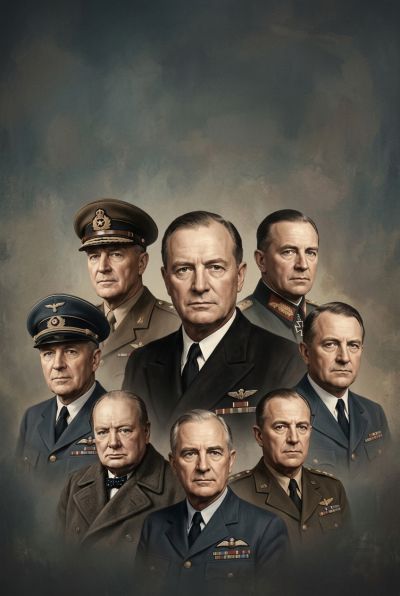
"Cuban Missile Crisis Revisited: Crisis Management and Diplomacy Under Fire" by John F. Kennedy and his inner circle is a minute-by-minute policy and diplomatic study of the October 1962 confrontation, offering crucial lessons for navigating modern nuclear crises. The book details the agonizing thirteen days when the world stood at the brink of nuclear war, meticulously reconstructing the decision-making processes within the Kennedy administration's Executive Committee (ExComm) and analyzing the complex interplay of intelligence, military strategy, and diplomacy. It emphasizes that communication, not merely military capability, was the decisive factor in averting catastrophe, highlighting the critical roles of both public statements and covert back-channel negotiations.
The narrative begins with the intelligence warning from U-2 imagery confirming Soviet offensive missiles in Cuba, leading to the formation of ExComm and the intense internal debate over response options: a military strike, invasion, or naval quarantine. The book details the strategic communication challenges, including crafting President Kennedy's powerful address to announce the quarantine, and the delicate "naval chess" game that established the line of interception. It meticulously tracks Khrushchev’s shifting positions, particularly through his two letters, which opened the door for a deal involving the removal of American Jupiter missiles from Turkey.
A significant focus is placed on "Black Saturday," when a U-2 shootdown and other near-misses brought the world closest to all-out war, illustrating the perilous risks of escalation, accidental conflict, and the breakdown of command and control. The book delves into the invisible negotiation between Robert F. Kennedy and Soviet Ambassador Anatoly Dobrynin, emphasizing the role of secrecy, sequencing, and verification in securing the complex quid pro quo that ultimately resolved the crisis. It also addresses the critical challenge of managing military pressure and ensuring civilian control, as well as the deep-seated concerns of NATO allies, particularly regarding Berlin and the Jupiter missiles.
Ultimately, the book outlines the lasting institutional reforms born from the crisis, such as the establishment of the Washington-Moscow Hotline and refined crisis procedures, underscoring the vital importance of transparent communication and robust intelligence in preventing future global conflicts. By drawing parallels to later events like Able Archer and Kargil, it offers contemporary leaders a practical toolkit for deterrence, escalation control, and effective signaling, demonstrating that the human capacity for judgment, restraint, and empathy remains paramount in navigating existential threats in an evolving geopolitical landscape.
What You'll Find Inside:
- How communication channels (public statements, private signals, and back-channels) determined outcomes in the Cuban Missile Crisis and provide lessons for modern nuclear confrontations
- The structure and functioning of ExComm as a crisis decision-making body, including how diverse perspectives were balanced under extreme pressure
- Why escalation should be viewed as a process of accumulated small steps rather than a single threshold, with near-misses demonstrating how unintended war can occur
- The strategic choice of naval quarantine as a measured escalation that bought time for diplomacy while demonstrating resolve
- Practical leadership lessons for decision-making under fire, including managing civil-military tensions, validating intelligence under time pressure, and designing de-escalation pathways
Who's It For:
This book is essential for national security officials, policymakers, and military leaders who may face nuclear or major crises, as well as students and scholars of international relations, diplomatic history, and crisis management. It provides practical tools for leaders operating under extreme pressure where minutes matter and stakes are existential, offering insights applicable to contemporary flashpoints involving nuclear weapons, cyber threats, and great power competition.
Table of Contents:
- Introduction
- Chapter 1 The World at the Brink: October 1962 in Context
- Chapter 2 Intelligence Warning: U‑2 Imagery and the First Alarms
- Chapter 3 Forming ExComm: Building a Crisis Cabinet
- Chapter 4 The Options Debate: Strike, Invasion, or Quarantine
- Chapter 5 Messaging Moscow: Public Statements and Private Signals
- Chapter 6 The Quarantine Announced: Crafting the Presidential Address
- Chapter 7 Naval Chess: Rules of Engagement and the Line of Interception
- Chapter 8 Khrushchev’s Gambit: The First Letter
- Chapter 9 Escalation Risks: Low‑Level Reconnaissance and Air Defense
- Chapter 10 The UN Stage: Stevenson Confronts Zorin
- Chapter 11 Back Channels Open: Bobby, Dobrynin, and the Invisible Negotiation
- Chapter 12 Berlin and Beyond: Soviet Linkages and Allied Concerns
- Chapter 13 Black Saturday: The U‑2 Shootdown and Near‑Misses
- Chapter 14 The Second Letter: Hardening Positions and Mixed Messages
- Chapter 15 Jupiter Missiles and Tradeoffs: Turkey, Italy, and Alliance Politics
- Chapter 16 The Deal Takes Shape: Lettercraft and Face‑Saving
- Chapter 17 Communicating the Quid Pro Quo: Secrecy, Sequencing, and Verification
- Chapter 18 Standing Down: Implementation and the Endgame
- Chapter 19 Managing the Military: Civilian Control Under Pressure
- Chapter 20 Nuclear Command and Control: Safeguards, Alerts, and Accidents
- Chapter 21 Intelligence During Crisis: Speed, Skepticism, and Red Teams
- Chapter 22 Institutions Reforged: The Hotline, Crisis Procedures, and After‑Action Reviews
- Chapter 23 Comparative Cases: Able Archer, Kargil, and Contemporary Echoes
- Chapter 24 Playbooks for the Present: Deterrence, Escalation Control, and Signaling
- Chapter 25 Lessons for Leaders: Decision‑Making Under Fire
Author:
Published By:
Date Published:
January 23, 2026
Type:
Nonfiction
Language:
English
Word Count:
60,265 words
Reading Time:
4 hours 13 minutes
Sample:
Order:
Order Cuban Missile Crisis Revisited: Crisis Management and Diplomacy Under Fire (Hardcover) on MixCache.com:
Buy NowPrint copy is made to order and ships worldwide. Includes the ebook free, ready to read instantly.
$5 account credit for all new MixCache.com accounts, usable toward any ebook purchase!*