
Browse by Category
Fiction
- Action & Adventure
- African American
- Anthologies
- Children's Fiction
- Classics
- Comics & Graphic Novels
- Coming of Age
- Contemporary
- Cultural & Regional
- Drama
- Erotica
- Fantasy
- General
- Historical Fiction
- Horror
- Humor & Satire
- Literary Fiction
- Mystery, Thriller & Suspense
- Poetry
- Religious & Inspirational
- Romance
- Science Fiction
- Short Stories
- War & Military
- Westerns
- Women's Fiction
- Young Adult
Non-Fiction
- Antiques & Collectibles
- Arts & Photography
- Biographies & Memoirs
- Business & Money
- Children's Non-Fiction
-
Computers & Technology
- Artificial Intelligence
- Computer Science
- Cybersecurity & Cryptography
- Data Science & Analytics
- Databases & Big Data
- Game Development & Design
- General
- Hardware & DIY
- Mobile App Development
- Networking & Cloud Computing
- Operating Systems
- Programming
- Robotics
- Software
- Software Engineering
- User Experience (UX) & Design
- Web Development & Design
- Cooking, Food & Wine
- Crafts, Hobbies & Home
- Education & Teaching
- Engineering
- General
- Health, Fitness & Dieting
-
History
- African History
- African History - North Africa
- African History - Sub-Saharan Africa
- American History
- American History - 20th Century
- American History - Civil War
- American History - Colonial Period
- Ancient History
- Asian History
- Asian History - China
- Asian History - India
- Asian History - Japan
- Asian History - Southeast Asia
- European History
- European History - Ancient Greece
- European History - Ancient Rome
- European History - Medieval
- European History - Modern
- European History - Renaissance
- General
- Middle Eastern History
- Military History
- Military History - Aviation
- Military History - Naval
- Social & Cultural History
- World History
- Humor & Entertainment
- Industrial Technology
- Language Learning
- Law
- LGBTQ+ Non-Fiction
- Literary Criticism
- Medical Books
- Parenting & Relationships
- Philosophy
- Politics & Social Sciences
- Reference
- Religion & Spirituality
-
Science & Math
- Agricultural Sciences
- Astronomy & Space Science
- Behavioral Sciences
- Biological Sciences
- Botany & Plant Science
- Chemistry
- Earth Sciences
- Engineering - Chemical
- Engineering - Civil
- Engineering - Electrical
- Engineering - Mechanical
- Environment
- General
- Geology
- Mathematics
- Nature & Ecology
- Oceanography
- Paleontology
- Physics
- Statistics
- Self-Help
- Sports & Outdoors
- Study Aids
- Sustainability & Green Living
- Textbooks
- Transportation
- Travel
- True Crime
- Urban Planning & Development
- Veterinary Medicine
- Writing & Publishing
Jump to Section
MixCache.com Total Access
Unlimited reading and audiobooks for every book published by MixCache.com.
Included titles carry the MTA badge.
Learn more →
Borders in Blood: Wars and Boundary Making
MTA
A political and military history of South American border conflicts
About this book:

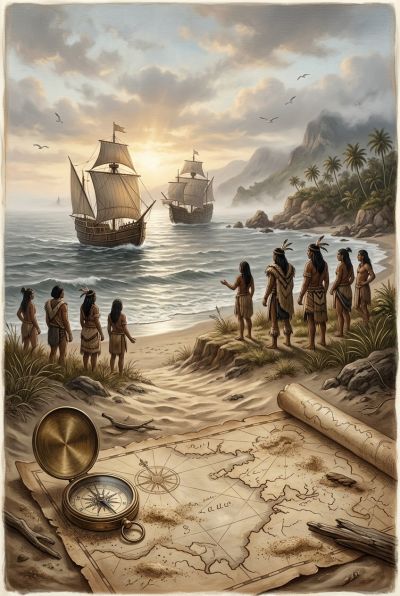
The book "Borders in Blood: Wars and Boundary Making" offers a comprehensive political and military history of how South America's national frontiers were forged through conflict, diplomacy, and resource competition. It begins by exploring the continent's challenging geography—from the Andes to the Amazon—which created vast, ill-defined frontiers after independence. The foundational legal principle of *uti possidetis*, which aimed to turn colonial administrative lines into national borders, proved deeply ambiguous, often serving as a source of future disputes rather than a solution. Cartographers and surveyors then became crucial actors, translating abstract claims into tangible lines on maps, a process fraught with technical difficulty, political pressure, and occasional fraud.
The narrative then delves into major wars that were defining in the shaping of these borders. The War of the Pacific (1879-1884) is presented as a prime example of conflict driven by control of economic resources—specifically, the nitrate deposits of the Atacama Desert. Chile's decisive victory reshaped the continent's southwest, securing its access to these riches while leaving Bolivia landlocked, a national trauma that persists to this day. Similarly, the Chaco War (1932-1935) between Bolivia and Paraguay is examined as a brutal contest for a territory believed to hold oil and a vital riverine route to the Atlantic. Fought in the unforgiving "Green Hell" of the Gran Chaco, this war of attrition highlighted the critical importance of logistics, airpower, and terrain in modern warfare, ultimately ending in a stalemate mediated by international powers.
Beyond these large-scale wars, the book covers a diverse array of other significant disputes. It details the resolution of the Acre conflict between Brazil, Bolivia, and Peru, which was settled through diplomacy (the Treaty of Petrópolis) rather than war and was driven by the global rubber boom. The Leticia Incident between Colombia and Peru is examined as a crisis that tested the emerging norms of Pan-Americanism and international arbitration. The long-running border saga between Ecuador and Peru is traced from the 1941 war to the final Brasília Accord of 1998, showing how persistent disputes can erupt into repeated violence before a comprehensive, internationally-mediated solution is found. The book also explores the unique cases of Argentina and Chile, whose boundary-making process extended from the conquest of Patagonia to the tense and technologically advanced Beagle Channel dispute, and Guyana and Venezuela, whose conflict over the Essequibo region represents a modern flashpoint rooted in colonial legacies and the recent discovery of vast oil reserves.
A central theme is the profound human cost of this border-making process. The book dedicates significant attention to the "local lives" of indigenous nations and settlers, who were often caught in the crossfire of competing national projects. Their ancestral lands were carved up, their communities militarized, and their traditional ways of life irrevocably altered by the imposition of state lines. This human experience is contrasted with the official state-building efforts, as nations established garrisons, built roads, and constructed customs posts to project sovereignty into remote margins and solidify their claims on the ground.
Finally, "Borders in Blood" traces the evolution of conflict resolution. It moves from the early reliance on uti possidetis and arbitration by distant European monarchs to the rise of organized international law and regional bodies like the Organization of American States (OAS). The book concludes by examining the legacy of these historical conflicts in the modern era of economic integration (Mercosur, IIRSA) and ongoing friction, where new resource frontiers (lithium, oil, water) and old grievances continue to test the stability of South America's boundaries. The narrative suggests that while the continent has largely moved away from direct warfare over territory, the lines drawn in the past remain deeply embedded in national identity, economic policy, and diplomatic relations.
What You'll Find Inside:
- Explore how South American borders were forged through the interplay of military conflict, diplomacy, and the unique challenges posed by diverse geographies like the Atacama Desert, Amazon rainforest, and Andes Mountains.
- Understand the profound impact of valuable resources such as nitrates, oil, rubber, and lithium, which transformed remote frontiers into coveted strategic assets and primary drivers of territorial disputes.
- Examine the enduring influence of the 'uti possidetis juris' principle and the subsequent role of international law and arbitration in resolving complex border claims, from the 1899 Paris Award to the 1998 Brasília Accord.
- Discover the human cost and social dynamics of border-making, focusing on the experiences of indigenous communities, settlers, and soldiers caught on militarized margins, and how national identities were shaped by these conflicts.
- Analyze the evolution of border management from 19th-century warfare and colonial legacies to 21st-century regional integration efforts like Mercosur, alongside emerging frictions from new resource frontiers and environmental challenges.
Who's It For:
This book is for anyone interested in the political and military history of South America, international relations, and the intricate process of border formation. It will particularly appeal to historians, political scientists, students of geopolitics, and readers seeking a nuanced understanding of how geography, resources, and national identity have shaped the continent's modern boundaries and ongoing diplomatic challenges.
Table of Contents:
- Introduction
- Chapter 1 The Continent of Edges: From Frontier to Boundary in South America
- Chapter 2 Uti Possidetis and the Making of Territorial Claims
- Chapter 3 Cartographers, Surveys, and the Lines That Matter
- Chapter 4 War of the Pacific I: Causes and Nitrate Capitalism
- Chapter 5 War of the Pacific II: Command of the Sea
- Chapter 6 War of the Pacific III: Desert Campaigns and Occupations
- Chapter 7 War of the Pacific IV: Diplomacy, Plebiscites, and Treaties
- Chapter 8 The Chaco War I: Oil, Ecology, and the “Green Hell”
- Chapter 9 The Chaco War II: Armies, Airpower, and Logistics
- Chapter 10 The Chaco War III: Battles, Attrition, and Command
- Chapter 11 The Chaco War IV: Mediation and the 1938 Peace
- Chapter 12 The Acre Question: Rubber, Revolt, and the Treaty of Petrópolis
- Chapter 13 The Leticia Incident: Amazonian Borderlands between Colombia and Peru
- Chapter 14 Argentina and Chile: From Patagonia to the Beagle Channel
- Chapter 15 Ecuador and Peru: From the 1941 War to the 1998 Brasília Accord
- Chapter 16 Guyana, Venezuela, and the Essequibo Dispute
- Chapter 17 Bolivia’s Enclosure: The Long Quest for a Maritime Corridor
- Chapter 18 Local Lives: Indigenous Nations, Settlers, and Militarized Margins
- Chapter 19 Building States at the Edge: Garrisons, Roads, and Customs Posts
- Chapter 20 National Identity and Memory: Textbooks, Monuments, and Martyrs
- Chapter 21 Intelligence, Technology, and Terrain: Practicing Border Warfare
- Chapter 22 International Law and Arbitration: From Uti Possidetis to the OAS
- Chapter 23 Economic Corridors and Resource Frontiers: Nitrates, Oil, Rubber, Lithium
- Chapter 24 Integration and Friction: Mercosur, Infrastructure, and New Disputes
- Chapter 25 Drawing the Next Line: Lessons on War, Diplomacy, and Territory
Author:
Published By:
Date Published:
January 17, 2026
Type:
Nonfiction
Language:
English
Word Count:
63,763 words
Reading Time:
4 hours 28 minutes
Sample:
MixCache.com Total Access
Get unlimited access to this book + all books published by MixCache.com for $11.99/month
Subscribe to MTAOr purchase this book individually below
Order:
Buy the Borders in Blood: Wars and Boundary Making ebook on MixCache.com:
Buy Now
Full ebook will be available immediately
- read online or download as a PDF file.
$5 account credit for all new MixCache.com accounts, usable toward any ebook purchase!*




Ratings & Reviews
Ask Questions About This Book
Have a question about the content? Ask our AI assistant!
Start by asking a question about "Borders in Blood: Wars and Boundary Making"
Example: "Does this book mention William Shakespeare?"
Thinking...