Browse by Category
Fiction
- Action & Adventure
- African American
- Anthologies
- Children's Fiction
- Classics
- Comics & Graphic Novels
- Coming of Age
- Contemporary
- Cultural & Regional
- Drama
- Erotica
- Fantasy
- General
- Historical Fiction
- Horror
- Humor & Satire
- Literary Fiction
- Mystery, Thriller & Suspense
- Poetry
- Religious & Inspirational
- Romance
- Science Fiction
- Short Stories
- War & Military
- Westerns
- Women's Fiction
- Young Adult
Non-Fiction
- Antiques & Collectibles
- Arts & Photography
- Biographies & Memoirs
- Business & Money
- Children's Non-Fiction
-
Computers & Technology
- Artificial Intelligence
- Computer Science
- Cybersecurity & Cryptography
- Data Science & Analytics
- Databases & Big Data
- Game Development & Design
- General
- Hardware & DIY
- Mobile App Development
- Networking & Cloud Computing
- Operating Systems
- Programming
- Robotics
- Software
- Software Engineering
- User Experience (UX) & Design
- Web Development & Design
- Cooking, Food & Wine
- Crafts, Hobbies & Home
- Education & Teaching
- Engineering
- General
- Health, Fitness & Dieting
-
History
- African History
- African History - North Africa
- African History - Sub-Saharan Africa
- American History
- American History - 20th Century
- American History - Civil War
- American History - Colonial Period
- Ancient History
- Asian History
- Asian History - China
- Asian History - India
- Asian History - Japan
- Asian History - Southeast Asia
- European History
- European History - Ancient Greece
- European History - Ancient Rome
- European History - Medieval
- European History - Modern
- European History - Renaissance
- General
- Middle Eastern History
- Military History
- Military History - Aviation
- Military History - Naval
- Social & Cultural History
- World History
- Humor & Entertainment
- Industrial Technology
- Language Learning
- Law
- LGBTQ+ Non-Fiction
- Literary Criticism
- Medical Books
- Parenting & Relationships
- Philosophy
- Politics & Social Sciences
- Reference
- Religion & Spirituality
-
Science & Math
- Agricultural Sciences
- Astronomy & Space Science
- Behavioral Sciences
- Biological Sciences
- Botany & Plant Science
- Chemistry
- Earth Sciences
- Engineering - Chemical
- Engineering - Civil
- Engineering - Electrical
- Engineering - Mechanical
- Environment
- General
- Geology
- Mathematics
- Nature & Ecology
- Oceanography
- Paleontology
- Physics
- Statistics
- Self-Help
- Sports & Outdoors
- Study Aids
- Sustainability & Green Living
- Textbooks
- Transportation
- Travel
- True Crime
- Urban Planning & Development
- Veterinary Medicine
- Writing & Publishing
Jump to Section

Want unlimited access to all books published by MixCache.com (plus their audiobooks)? Try MixCache.com Total Access. Look for the MTA badge on book covers to identify included titles.
Access to infinite ebooks: Don't see the book you want? Suggest it and we'll create it (free!) for you from scratch with our powerful AI book writer. Then read it with MTA - besides profiting from any sales it makes!
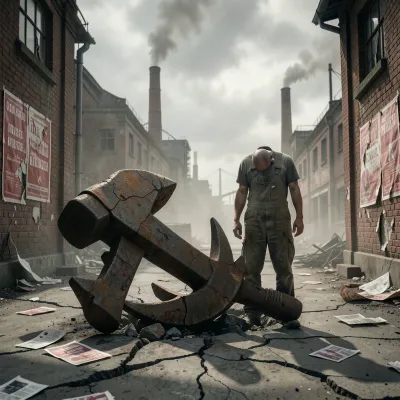
The Industrial Network
MTA
Technology, Labor, and the Rise of Manufacturing in Europe
About this book:

The Industrial Revolution in Europe is best understood not as a linear march of inventions, but as the construction of an ever-evolving network. This network linked raw materials like coal and cotton to new technologies like the steam engine, and connected entrepreneurs and capital to organized labor and distant global markets. Its development was not a single event but a complex, interdependent system of technology, institutions, and social organization, beginning with the textile mills of Britain and expanding to the integrated steel and coal complexes of the Ruhr.
The core of this network was built upon technological innovation and the mastery of power. The initial advantages of regions like Lancashire stemmed from a combination of water power, entrepreneurial skill, and the mechanization of spinning and weaving. However, the limitations of water power were overcome by the steam engine, which liberated factories from the riverbank and anchored them to coalfields. This relationship between energy and machinery was symbiotic; new machines demanded more power, and new power sources enabled even more complex machinery, a process that accelerated with the introduction of electricity and the internal combustion engine.
This technological and energy revolution was impossible without parallel developments in finance, knowledge, and logistics. A network of merchants, banks, and investors provided the essential capital for building factories and railways. Know-how circulated through a complex web of patent offices, technical schools, industrial espionage, and the migration of skilled workers, not as a simple one-way transfer from Britain but as a process of adaptation and reinvention. Crucially, canals and later railways created the physical infrastructure that stitched this network together, binding mines to mills and mills to ports, creating vast national and international markets.
The industrial network's rise was also a profound social and political transformation. It demanded a new kind of workforce, drawn from the countryside and organized under the rigid discipline of the factory clock. This system drove a wedge between work and family life, and its factories and mines created a new industrial working class with its own collective identity, giving birth to strikes, trade unions, and a new politics of labor. In response, the state was compelled to expand its role, moving beyond simply setting rules to actively building infrastructure, promoting education, managing currency, and eventually, regulating labor conditions and establishing social safety nets.
Finally, the industrial network was inextricably global. It was fueled by resources extracted from around the world and found its outlets in distant colonial and international markets. This global reach intensified geopolitical rivalries and created a lasting division between industrialized cores and resource-supplying peripheries. The "second industrial wave" of steel, chemicals, and electricity further deepened these patterns, entrenching the model of science-driven corporate innovation and consolidating the industrial state as the dominant global power structure, whose legacies of urbanization, institutional frameworks, and environmental challenges continue to shape development today.
What You'll Find Inside:
- Explores the Industrial Revolution as a complex network of technologies, institutions, and human labor, rather than a simple linear story of inventions.
- Highlights the critical role of infrastructure, such as canals and railways, in creating integrated systems of production and supply chains across Europe.
- Analyzes the profound social transformations caused by industrialization, including the reorganization of family life, gender roles, and the emergence of a new industrial working class.
- Examines the circulation of knowledge and technology across national borders, showing how industrial techniques were diffused, adapted, and resisted in different European regions.
- Details the rise of industrial science, including advancements in metallurgy (steel), chemistry, and electricity, which constituted a 'second wave' of industrial transformation.
Who's It For:
This book is for students of economic history, sociology, and industrial development, particularly those interested in the comparative history of European industrialization. It will also appeal to general readers seeking a comprehensive understanding of the Industrial Revolution that goes beyond inventors and machines to explore the complex systems of labor, finance, and technology that reshaped society.
Author:
Published By:
Date Published:
January 11, 2026
Type:
Nonfiction
Language:
English
Word Count:
63,365 words
Reading Time:
4 hours 26 minutes
Sample:
Order:
Order The Industrial Network (Hardcover) on MixCache.com:
Buy NowPrint copy is made to order and ships worldwide. Includes the ebook free, ready to read instantly.
$5 account credit for all new MixCache.com accounts, usable toward any ebook purchase!*