Browse by Category
Fiction
- Action & Adventure
- African American
- Anthologies
- Children's Fiction
- Classics
- Comics & Graphic Novels
- Coming of Age
- Contemporary
- Cultural & Regional
- Drama
- Erotica
- Fantasy
- General
- Historical Fiction
- Horror
- Humor & Satire
- Literary Fiction
- Mystery, Thriller & Suspense
- Poetry
- Religious & Inspirational
- Romance
- Science Fiction
- Short Stories
- War & Military
- Westerns
- Women's Fiction
- Young Adult
Non-Fiction
- Antiques & Collectibles
- Arts & Photography
- Biographies & Memoirs
- Business & Money
- Children's Non-Fiction
-
Computers & Technology
- Artificial Intelligence
- Computer Science
- Cybersecurity & Cryptography
- Data Science & Analytics
- Databases & Big Data
- Game Development & Design
- General
- Hardware & DIY
- Mobile App Development
- Networking & Cloud Computing
- Operating Systems
- Programming
- Robotics
- Software
- Software Engineering
- User Experience (UX) & Design
- Web Development & Design
- Cooking, Food & Wine
- Crafts, Hobbies & Home
- Education & Teaching
- Engineering
- General
- Health, Fitness & Dieting
-
History
- African History
- African History - North Africa
- African History - Sub-Saharan Africa
- American History
- American History - 20th Century
- American History - Civil War
- American History - Colonial Period
- Ancient History
- Asian History
- Asian History - China
- Asian History - India
- Asian History - Japan
- Asian History - Southeast Asia
- European History
- European History - Ancient Greece
- European History - Ancient Rome
- European History - Medieval
- European History - Modern
- European History - Renaissance
- General
- Middle Eastern History
- Military History
- Military History - Aviation
- Military History - Naval
- Social & Cultural History
- World History
- Humor & Entertainment
- Industrial Technology
- Language Learning
- Law
- LGBTQ+ Non-Fiction
- Literary Criticism
- Medical Books
- Parenting & Relationships
- Philosophy
- Politics & Social Sciences
- Reference
- Religion & Spirituality
-
Science & Math
- Agricultural Sciences
- Astronomy & Space Science
- Behavioral Sciences
- Biological Sciences
- Botany & Plant Science
- Chemistry
- Earth Sciences
- Engineering - Chemical
- Engineering - Civil
- Engineering - Electrical
- Engineering - Mechanical
- Environment
- General
- Geology
- Mathematics
- Nature & Ecology
- Oceanography
- Paleontology
- Physics
- Statistics
- Self-Help
- Sports & Outdoors
- Study Aids
- Sustainability & Green Living
- Textbooks
- Transportation
- Travel
- True Crime
- Urban Planning & Development
- Veterinary Medicine
- Writing & Publishing
Jump to Section
MixCache.com Total Access
Unlimited reading and audiobooks for every book published by MixCache.com.
Included titles carry the MTA badge.
Learn more →
Borderlands of Conflict
MTA
Ethnic Politics, Memory, and State Building in Central Europe
About this book:

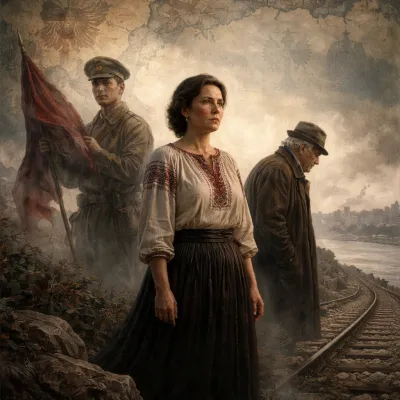
*Borderlands of Conflict* examines the turbulent process of state-building in Central Europe's most contested regions, arguing that modern nations are not forged in capitals but in the messy, everyday negotiations of life on the frontier. Focusing on three key case studies—Silesia, Galicia, and the Balkans—the book combines archival research with oral history to trace the "borderland effect," where shifting political borders constantly rearrange families, economies, and identities. It reveals how grand political outcomes are the aggregate result of countless small-scale interactions in schools, courts, churches, and workplaces, where individuals must constantly navigate competing demands for loyalty.
The book explores how these micro-dynamics operate. The state attempts to create loyal citizens through its institutions: censuses that force people to choose a single nationality, schools that impose a standardized language and history, and laws that favor one community over another. In response, communities adapt, resist, and negotiate. In Silesia, the industrial frontier created a complex interplay between class and ethnicity, culminating in the violent plebiscites and partitions that scarred the region. In Galicia, the Habsburg legacy of layered autonomy allowed Poles and Ukrainians to build parallel societies whose competing ambitions ultimately tore the province apart. In the Balkans, the violent collapse of the Ottoman order and the rise of competing nation-states led to brutal cycles of ethnic violence, forced migration, and fragile, local reconciliations.
Ultimately, the book demonstrates how memory becomes a key battleground in these borderlands. Competing communities construct powerful "memory regimes" through monuments, museums, and national holidays, each telling a different story of victimhood and heroism. These conflicting memories of the past fuel the political tensions of the present, shaping identities long after the original borders have been dissolved or redrawn. *Borderlands of Conflict* offers a powerful explanation for why the ghosts of old empires continue to haunt the politics of modern Europe, showing that the struggles over memory, identity, and sovereignty are the enduring legacy of life lived on the edge.
What You'll Find Inside:
- The book's central thesis is that political borders and ethnic identities in Central Europe were not simply imposed from above, but were constantly negotiated and reshaped in everyday local settings.
- It examines three key case studies—industrial Silesia, agrarian Galicia, and the diverse Balkans—to show how ethnic politics, labor, religion, and local power dynamics produced different 'borderland effects'.
- Everyday institutions such as schools, courts, churches, and police stations are highlighted as the primary arenas where state power was translated, contested, and made real for ordinary people.
- A core theme is the power of memory, which is shown to be an active and contested resource, shaped through state-sponsored monuments, museums, and curricula to build national narratives and justify political claims.
- The book traces the long-term consequences of these local negotiations, showing how they led to large-scale outcomes like plebiscites, population displacements, and violent state-building, whose legacies continue to influence European politics today.
Who's It For:
This book is primarily for students and scholars of modern European history, political science, and sociology, particularly those with an interest in nationalism, state-building, and ethnic conflict. Its detailed case studies and engagement with theories of memory, identity, and social construction also make it essential reading for anyone seeking a deep, ground-level understanding of Central Europe's turbulent twentieth century and the historical roots of its contemporary political landscape.
Table of Contents:
- Introduction
- Chapter 1 Nations at the Border: Concepts and Theories
- Chapter 2 Empires, Nations, and the Cartography of Central Europe
- Chapter 3 Methods: Archival Traces and Oral Histories
- Chapter 4 Counting Difference: Census, Language, and Religion
- Chapter 5 Everyday State-Building: Schools, Courts, and Churches
- Chapter 6 Silesia I: Industrial Frontiers and Classed Ethnicity
- Chapter 7 Silesia II: Language Wars, Labor Politics, and Print Culture
- Chapter 8 Silesia III: Plebiscites, Partitions, and Statecraft from Below
- Chapter 9 Galicia I: Habsburg Legacies and Provincial Autonomies
- Chapter 10 Galicia II: Villages of Many Tongues
- Chapter 11 Galicia III: War, Relief, and the Reinvention of Community
- Chapter 12 Balkan Crossroads I: Ottoman Afterlives and New Nations
- Chapter 13 Balkan Crossroads II: Towns, Tribes, and Transhumance
- Chapter 14 Balkan Crossroads III: Violence, Reprisal, and Local Reconciliations
- Chapter 15 Memory Regimes: Monuments, Museums, and Martyrs
- Chapter 16 Mobility and Displacement: Refugees, Repatriates, Remainers
- Chapter 17 Mixed Families and the Intimacies of Politics
- Chapter 18 Borders in the City: Silesian and Galician Urban Worlds
- Chapter 19 Border Schools: Curricula, Teachers, and Children
- Chapter 20 Faith at the Frontier: Confessional Politics and Conversion
- Chapter 21 Policing the Periphery: Gendarmes, Militias, and Smugglers
- Chapter 22 Economies of the Edge: Coal, Grain, and Contraband
- Chapter 23 Negotiated Sovereignties: Local Councils and Central States
- Chapter 24 Memory After 1989: Europe, Migration, and New Identities
- Chapter 25 The Borderland Effect: Microdynamics and Macro Outcomes
Author:
Published By:
Date Published:
January 11, 2026
Type:
Nonfiction
Language:
English
Word Count:
70,403 words
Reading Time:
4 hours 56 minutes
Sample:
Order:
Order Borderlands of Conflict (Paperback) on MixCache.com:
Buy NowPrint copy is made to order and ships worldwide. Includes the ebook free, ready to read instantly.
$5 account credit for all new MixCache.com accounts, usable toward any ebook purchase!*