Browse by Category
Fiction
- Action & Adventure
- African American
- Anthologies
- Children's Fiction
- Classics
- Comics & Graphic Novels
- Coming of Age
- Contemporary
- Cultural & Regional
- Drama
- Erotica
- Fantasy
- General
- Historical Fiction
- Horror
- Humor & Satire
- Literary Fiction
- Mystery, Thriller & Suspense
- Poetry
- Religious & Inspirational
- Romance
- Science Fiction
- Short Stories
- War & Military
- Westerns
- Women's Fiction
- Young Adult
Non-Fiction
- Antiques & Collectibles
- Arts & Photography
- Biographies & Memoirs
- Business & Money
- Children's Non-Fiction
-
Computers & Technology
- Artificial Intelligence
- Computer Science
- Cybersecurity & Cryptography
- Data Science & Analytics
- Databases & Big Data
- Game Development & Design
- General
- Hardware & DIY
- Mobile App Development
- Networking & Cloud Computing
- Operating Systems
- Programming
- Robotics
- Software
- Software Engineering
- User Experience (UX) & Design
- Web Development & Design
- Cooking, Food & Wine
- Crafts, Hobbies & Home
- Education & Teaching
- Engineering
- General
- Health, Fitness & Dieting
-
History
- African History
- African History - North Africa
- African History - Sub-Saharan Africa
- American History
- American History - 20th Century
- American History - Civil War
- American History - Colonial Period
- Ancient History
- Asian History
- Asian History - China
- Asian History - India
- Asian History - Japan
- Asian History - Southeast Asia
- European History
- European History - Ancient Greece
- European History - Ancient Rome
- European History - Medieval
- European History - Modern
- European History - Renaissance
- General
- Middle Eastern History
- Military History
- Military History - Aviation
- Military History - Naval
- Social & Cultural History
- World History
- Humor & Entertainment
- Industrial Technology
- Language Learning
- Law
- LGBTQ+ Non-Fiction
- Literary Criticism
- Medical Books
- Parenting & Relationships
- Philosophy
- Politics & Social Sciences
- Reference
- Religion & Spirituality
-
Science & Math
- Agricultural Sciences
- Astronomy & Space Science
- Behavioral Sciences
- Biological Sciences
- Botany & Plant Science
- Chemistry
- Earth Sciences
- Engineering - Chemical
- Engineering - Civil
- Engineering - Electrical
- Engineering - Mechanical
- Environment
- General
- Geology
- Mathematics
- Nature & Ecology
- Oceanography
- Paleontology
- Physics
- Statistics
- Self-Help
- Sports & Outdoors
- Study Aids
- Sustainability & Green Living
- Textbooks
- Transportation
- Travel
- True Crime
- Urban Planning & Development
- Veterinary Medicine
- Writing & Publishing
Jump to Section
MixCache.com Total Access
Unlimited reading and audiobooks for every book published by MixCache.com.
Included titles carry the MTA badge.
Learn more →
Women Who Wired the World: Gender, Invention, and the Hidden History of Technology
MTA
Recovering the contributions of women inventors, coders, and engineers from early computing to modern startups
About this book:

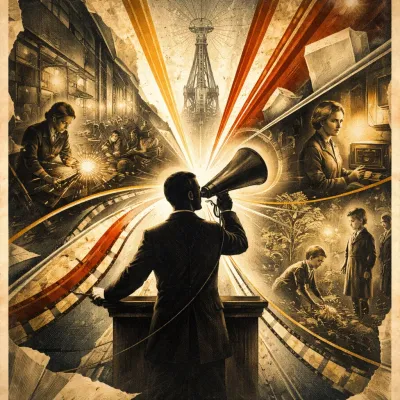
*Women Who Wired the World* presents a sweeping revisionist history of technology, arguing that the dominant narrative of solitary male geniuses is a myth that obscures the foundational, collaborative, and often invisible contributions of women. The book posits that from the earliest days of telegraphy and computing to the modern complexities of AI and venture capital, women have been central to technological innovation, not as peripheral helpers, but as inventors, engineers, programmers, and system-builders. The narrative recovers the stories of figures like Ada Lovelace, the ENIAC programmers, and Grace Hopper, but also expands the lens to include the thousands of women who operated early networks, debugged wartime code, and performed the "glue work" that holds complex systems together.
A core theme is the systemic and institutional nature of women's erasure. The book identifies recurring mechanisms that have hidden women's work: gendered job classifications that label technical labor as "clerical" or "support"; legal and patent systems that have historically presumed male inventorship; venture capital structures that are biased against female founders and the markets they often target; and corporate cultures that reward individual "heroics" over collaborative maintenance. By examining these systems, the book argues that the underrepresentation of women in tech is not a "pipeline problem" but a failure of institutions, incentives, and culture.
Finally, the book moves from historical recovery to a practical "playbook for change." It argues that understanding this hidden history provides the tools to build a more equitable and innovative future. It calls for an overhaul of tech education to be more interdisciplinary and inclusive, a redesign of corporate hiring and promotion practices to value diverse skills, and a fundamental shift in the economic models of venture capital and platform businesses. Ultimately, it frames this work as essential not just for justice, but for better technology, arguing that a wider range of creators leads to more robust, accessible, and human-centered systems for everyone.
What You'll Find Inside:
- Uncovering the hidden history of women's foundational contributions to technology, from early computing and codebreaking to hardware design and software development.
- Examining the systemic barriers that have obscured women's work, including gendered job classifications, patent law biases, and the myth of the 'lone genius' inventor.
- Analyzing how modern tech industry challenges—from venture capital funding gaps and AI bias to content moderation—are rooted in historical patterns of exclusion.
- Providing a practical 'playbook for change' with strategies for educators, policymakers, and organizations to build more inclusive and equitable tech ecosystems.
- Emphasizing that technology is a socio-technical system, revealing how invisible labor, collaboration, and care work are essential to innovation.
Who's It For:
This book is for anyone interested in technology, history, and social justice. It is especially valuable for students and educators in computer science and history, technology professionals seeking to understand the systemic issues in their industry, and policymakers or advocates working to create a more equitable future for innovation. Readers interested in recovering the contributions of women and other marginalized groups to STEM fields will find it an essential resource.
Table of Contents:
- Introduction
- Chapter 1 Rewriting the Origin Story
- Chapter 2 Ada Lovelace and the Analytical Imagination
- Chapter 3 Telegraphs, Switchboards, and the Feminization of Early Networks
- Chapter 4 Wartime Codebreakers: Bletchley, Arlington, and Beyond
- Chapter 5 The ENIAC Programmers and the Myth of the Machine
- Chapter 6 Grace Hopper and the Birth of Software
- Chapter 7 Hidden Figures at NASA and the Space Race
- Chapter 8 From Room-Sized Computers to Personal Computing: Homebrew Heroines
- Chapter 9 Networking the World: Radia Perlman and the Architecture of the Internet
- Chapter 10 Silicon Valley’s Invisible Labor: Operators, Testers, and Temps
- Chapter 11 Open Source, Open Doors? Women in Communities of Code
- Chapter 12 Hardware Pioneers: From Semiconductors to Wearables
- Chapter 13 Human–Computer Interaction and the Design of Access
- Chapter 14 Tech Policy Trailblazers: Standards, Safety, and Civil Rights
- Chapter 15 Global South Innovators: Rethinking the Map of Invention
- Chapter 16 Tech Education: From Classroom to Bootcamp
- Chapter 17 Venture Capital and the Gender Funding Gap
- Chapter 18 Founders and Startups: Building Inclusive Companies
- Chapter 19 AI and Data Feminism: Bias, Power, and Accountability
- Chapter 20 Platforms, Moderation, and the Economics of Care
- Chapter 21 Laboratories and Archives: Methods for Recovering Histories
- Chapter 22 Beyond the Pipeline: Institutions, Incentives, and Culture
- Chapter 23 Law, Patents, and Credit: Who Gets Named as Inventor
- Chapter 24 Teaching the Canon: Syllabi, Exhibits, and Public Memory
- Chapter 25 Futures Wired Differently: A Playbook for Change
Author:
Published By:
Date Published:
January 9, 2026
Type:
Nonfiction
Language:
English
Word Count:
60,322 words
Reading Time:
4 hours 13 minutes
Sample:
Order:
Order Women Who Wired the World: Gender, Invention, and the Hidden History of Technology (Paperback) on MixCache.com:
Buy NowPrint copy is made to order and ships worldwide. Includes the ebook free, ready to read instantly.
$5 account credit for all new MixCache.com accounts, usable toward any ebook purchase!*