Browse by Category
Fiction
- Action & Adventure
- African American
- Anthologies
- Children's Fiction
- Classics
- Comics & Graphic Novels
- Coming of Age
- Contemporary
- Cultural & Regional
- Drama
- Erotica
- Fantasy
- General
- Historical Fiction
- Horror
- Humor & Satire
- Literary Fiction
- Mystery, Thriller & Suspense
- Poetry
- Religious & Inspirational
- Romance
- Science Fiction
- Short Stories
- War & Military
- Westerns
- Women's Fiction
- Young Adult
Non-Fiction
- Antiques & Collectibles
- Arts & Photography
- Biographies & Memoirs
- Business & Money
- Children's Non-Fiction
-
Computers & Technology
- Artificial Intelligence
- Computer Science
- Cybersecurity & Cryptography
- Data Science & Analytics
- Databases & Big Data
- Game Development & Design
- General
- Hardware & DIY
- Mobile App Development
- Networking & Cloud Computing
- Operating Systems
- Programming
- Robotics
- Software
- Software Engineering
- User Experience (UX) & Design
- Web Development & Design
- Cooking, Food & Wine
- Crafts, Hobbies & Home
- Education & Teaching
- Engineering
- General
- Health, Fitness & Dieting
-
History
- African History
- African History - North Africa
- African History - Sub-Saharan Africa
- American History
- American History - 20th Century
- American History - Civil War
- American History - Colonial Period
- Ancient History
- Asian History
- Asian History - China
- Asian History - India
- Asian History - Japan
- Asian History - Southeast Asia
- European History
- European History - Ancient Greece
- European History - Ancient Rome
- European History - Medieval
- European History - Modern
- European History - Renaissance
- General
- Middle Eastern History
- Military History
- Military History - Aviation
- Military History - Naval
- Social & Cultural History
- World History
- Humor & Entertainment
- Industrial Technology
- Language Learning
- Law
- LGBTQ+ Non-Fiction
- Literary Criticism
- Medical Books
- Parenting & Relationships
- Philosophy
- Politics & Social Sciences
- Reference
- Religion & Spirituality
-
Science & Math
- Agricultural Sciences
- Astronomy & Space Science
- Behavioral Sciences
- Biological Sciences
- Botany & Plant Science
- Chemistry
- Earth Sciences
- Engineering - Chemical
- Engineering - Civil
- Engineering - Electrical
- Engineering - Mechanical
- Environment
- General
- Geology
- Mathematics
- Nature & Ecology
- Oceanography
- Paleontology
- Physics
- Statistics
- Self-Help
- Sports & Outdoors
- Study Aids
- Sustainability & Green Living
- Textbooks
- Transportation
- Travel
- True Crime
- Urban Planning & Development
- Veterinary Medicine
- Writing & Publishing
Jump to Section
MixCache.com Total Access
Unlimited reading and audiobooks for every book published by MixCache.com.
Included titles carry the MTA badge.
Learn more →
Education In Samoa
MTA
A Comprehensive Overview from Early Childhood to Higher Education
About this book:
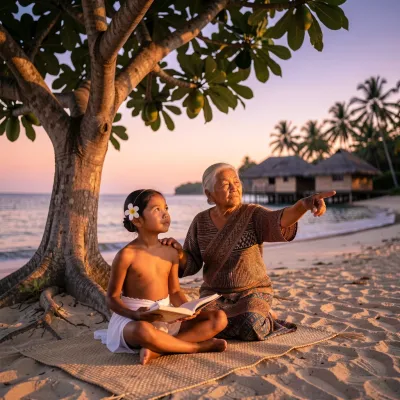
Education in Samoa has evolved from deeply rooted oral traditions and communal learning within the aiga and nu’u to a formal system shaped by missionary influence, colonial administration, and post‑independence nation‑building. Early learning was practical, skill‑based, and embedded in daily life, emphasizing respect for elders, cultural knowledge, and subsistence abilities. The arrival of missionaries introduced literacy, written Samoan, and Bible‑centric schooling, while colonial powers—first Germany then New Zealand—established government schools, standardized examinations, and a bifurcated system favoring English‑medium instruction for upward mobility. Independence in 1962 allowed Samoa to reclaim and reinterpret these legacies, creating a blended system that seeks to balance global educational standards with the preservation of fa’a Samoa.
Today the system comprises early childhood education (largely community‑ and NGO‑run), compulsory eight‑year primary education, secondary education divided into junior and senior cycles with national examinations (SPSLC, SJSC, SSC, PSSC), technical and vocational education and training (TVET), and higher education dominated by the National University of Samoa (NUS). Governance rests with the Ministry of Education, Sports and Culture (MESC), which oversees curriculum, teacher training, assessment, and resource allocation, while a dual structure of government and mission schools provides choice and cultural continuity. Bilingual instruction progresses from Samoan‑medium in early years to English‑medium in later grades, aiming for additive bilingualism, and curricula increasingly integrate local knowledge, climate change, digital literacy, and 21st‑century skills alongside traditional subjects.
Persistent challenges include resource inequities between urban and rural schools, teacher recruitment and retention—especially in specialized subjects—relevance of curriculum to local labor markets, student retention, and the impact of natural disasters. Special education, inclusive practices, and support for children with diverse needs are growing foci but remain hampered by limited specialist personnel, funding, and infrastructure. The brain drain of skilled graduates to overseas opportunities threatens the sustainability of the education workforce, while remittances and returning expertise offer partial mitigation. Ongoing reforms emphasize curriculum modernization, teacher quality, technology integration, equitable access, inclusive education, disaster‑resilient infrastructure, and data‑driven policy, all aligned with Samoa’s sustainable development goals and its aspiration to nurture culturally grounded, globally competent citizens.
What You'll Find Inside:
- Explores the historical evolution of Samoan education from traditional learning systems through missionary and colonial influences to the modern system.
- Provides a detailed breakdown of the education structure, from early childhood through primary, secondary, TVET, and higher education.
- Examines the critical balance between Samoan language preservation and English proficiency in bilingual education policies.
- Addresses key challenges such as resource constraints, teacher retention, brain drain, and the impact of natural disasters on education.
- Highlights education's central role in Samoa's sustainable development, including environmental stewardship, economic growth, and cultural preservation.
Who's It For:
This book is ideal for policymakers, educators, researchers, and students focused on Pacific Island education systems. It will also benefit international development professionals, donor organizations, and anyone interested in how small island developing states navigate the intersection of traditional culture, colonial legacies, and modern educational demands.
Table of Contents:
- Introduction
- Chapter 1: Historical Foundations of Samoan Education
- Chapter 2: Traditional Samoan Learning Systems
- Chapter 3: The Influence of Missionaries on Samoan Education
- Chapter 4: Colonial Legacies and Educational Development
- Chapter 5: Structure of the Samoan Education System
- Chapter 6: Early Childhood Education in Samoa
- Chapter 7: Primary Education: Curriculum and Challenges
- Chapter 8: Secondary Education: Pathways and Opportunities
- Chapter 9: Technical and Vocational Education and Training (TVET)
- Chapter 10: Higher Education Institutions in Samoa
- Chapter 11: Curriculum Development and Implementation
- Chapter 12: Language in Education: Samoan and English
- Chapter 13: Teacher Training and Professional Development
- Chapter 14: Educational Policies and Governance
- Chapter 15: Funding and Financing of Education
- Chapter 16: Access and Equity in Samoan Education
- Chapter 17: Education for Children with Special Needs
- Chapter 18: The Role of Community and Family in Education
- Chapter 19: Impact of Culture on Learning and Teaching
- Chapter 20: Technology and Digital Literacy in Schools
- Chapter 21: Challenges and Issues in Samoan Education
- Chapter 22: International Aid and Partnerships in Education
- Chapter 23: Educational Reforms and Future Directions
- Chapter 24: The Brain Drain and its Impact on Education
- Chapter 25: Education's Role in Samoa's Sustainable Development
Author:
Published By:
Date Published:
July 5, 2026
Type:
Nonfiction
Language:
English
Word Count:
42,867 words
Reading Time:
3 hours
Sample:
Order:
Order Education In Samoa (Hardcover) on MixCache.com:
Buy NowPrint copy is made to order and ships worldwide. Includes the ebook free, ready to read instantly.
$5 account credit for all new MixCache.com accounts, usable toward any ebook purchase!*