Browse by Category
Fiction
- Action & Adventure
- African American
- Anthologies
- Children's Fiction
- Classics
- Comics & Graphic Novels
- Coming of Age
- Contemporary
- Cultural & Regional
- Drama
- Erotica
- Fantasy
- General
- Historical Fiction
- Horror
- Humor & Satire
- Literary Fiction
- Mystery, Thriller & Suspense
- Poetry
- Religious & Inspirational
- Romance
- Science Fiction
- Short Stories
- War & Military
- Westerns
- Women's Fiction
- Young Adult
Non-Fiction
- Antiques & Collectibles
- Arts & Photography
- Biographies & Memoirs
- Business & Money
- Children's Non-Fiction
-
Computers & Technology
- Artificial Intelligence
- Computer Science
- Cybersecurity & Cryptography
- Data Science & Analytics
- Databases & Big Data
- Game Development & Design
- General
- Hardware & DIY
- Mobile App Development
- Networking & Cloud Computing
- Operating Systems
- Programming
- Robotics
- Software
- Software Engineering
- User Experience (UX) & Design
- Web Development & Design
- Cooking, Food & Wine
- Crafts, Hobbies & Home
- Education & Teaching
- Engineering
- General
- Health, Fitness & Dieting
-
History
- African History
- African History - North Africa
- African History - Sub-Saharan Africa
- American History
- American History - 20th Century
- American History - Civil War
- American History - Colonial Period
- Ancient History
- Asian History
- Asian History - China
- Asian History - India
- Asian History - Japan
- Asian History - Southeast Asia
- European History
- European History - Ancient Greece
- European History - Ancient Rome
- European History - Medieval
- European History - Modern
- European History - Renaissance
- General
- Middle Eastern History
- Military History
- Military History - Aviation
- Military History - Naval
- Social & Cultural History
- World History
- Humor & Entertainment
- Industrial Technology
- Language Learning
- Law
- LGBTQ+ Non-Fiction
- Literary Criticism
- Medical Books
- Parenting & Relationships
- Philosophy
- Politics & Social Sciences
- Reference
- Religion & Spirituality
-
Science & Math
- Agricultural Sciences
- Astronomy & Space Science
- Behavioral Sciences
- Biological Sciences
- Botany & Plant Science
- Chemistry
- Earth Sciences
- Engineering - Chemical
- Engineering - Civil
- Engineering - Electrical
- Engineering - Mechanical
- Environment
- General
- Geology
- Mathematics
- Nature & Ecology
- Oceanography
- Paleontology
- Physics
- Statistics
- Self-Help
- Sports & Outdoors
- Study Aids
- Sustainability & Green Living
- Textbooks
- Transportation
- Travel
- True Crime
- Urban Planning & Development
- Veterinary Medicine
- Writing & Publishing
Jump to Section
MixCache.com Total Access
Unlimited reading and audiobooks for every book published by MixCache.com.
Included titles carry the MTA badge.
Learn more →
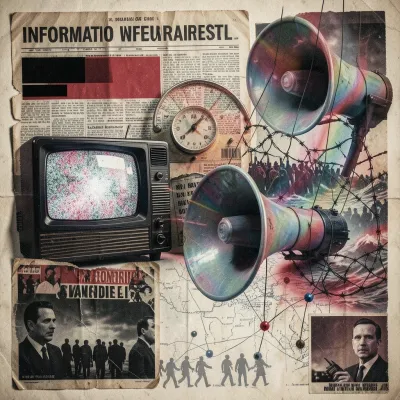
Intelligence and Deception: Spies, Codebreaking, and Strategic Surprise
MTA
How Information and Disinformation Determined Military Outcomes
About this book:

This book provides a comprehensive history and analysis of the evolution of intelligence, from ancient deception tactics to the complexities of the modern digital age. It argues that military and political outcomes are disproportionately determined by a side’s ability to collect, interpret, and manipulate information. By tracing the development of institutionalized espionage, signals intelligence, and sophisticated codebreaking—from the pivotal decryption of the Enigma machine to the birth of the National Security Agency—the text illustrates how information advantage has consistently tilted the global balance of power.
The narrative emphasizes that intelligence is an inherently human enterprise, frequently hampered by cognitive biases, organizational "groupthink," and the "fog of war." Through case studies ranging from the successes of Midway and D-Day to the catastrophic failures of Pearl Harbor and the Yom Kippur War, the author explores how the interplay between intelligence and policy determines strategic success. It also delves into the morally ambiguous realm of covert action and counterintelligence, highlighting the ethical dilemmas and psychological tolls faced by practitioners who operate at the "dirty hands" edge of statecraft.
Special attention is given to the technological shifts that have redefined secrecy, specifically the transition from manual ciphers to electronic computing and the current deluge of digital metadata. The book examines the rise of non-state threats, the weaponization of social media for disinformation, and the increasing role of cyber operations like Stuxnet. It concludes by looking forward to the emerging frontiers of artificial intelligence and quantum computing, suggesting that while the tools of the trade are undergoing a radical transformation, the fundamental struggle between those who seek to hide information and those who seek to reveal it remains the central pillar of international stability.
What You'll Find Inside:
- The book details how WWII codebreaking triumphs like Enigma's decryption and the Ultra system transformed raw intercepts into actionable intelligence, directly enabling victories at Midway, El Alamein, and D-Day by compressing surprise and accelerating Allied operations.
- Deception operations receive equal analysis, showcasing how Soviet maskirovka and Allied Bodyguard/Fortitude campaigns exploited enemy psychology and integrated fake networks, double agents, and false radio traffic to decisively mislead adversaries about invasion timing and locations.
- The evolution of modern intelligence institutions is traced from WWII ad hoc efforts to the Cold War national security state, covering the creation of CIA, NSA, and Five Eyes alliances, plus enduring tensions between intelligence collection and covert action.
- Contemporary challenges are examined, including cyber operations (Stuxnet), digital disinformation campaigns, terrorism intelligence gathering, and the ethical dilemmas of balancing security with democratic accountability in an era of mass surveillance and algorithmic analysis.
- The book concludes with forward-looking analysis on how AI, quantum computing, and the global data deluge are reshaping intelligence collection, analysis, and strategic stability—emphasizing that enduring practices like analytic humility and source diversification remain critical despite technological change.
Who's It For:
This book is essential for intelligence professionals, military strategists, policymakers, and graduate students in international relations or security studies who need to understand historical patterns of intelligence success and failure. It also serves concerned citizens interested in the ethical implications of modern surveillance, cyber operations, and disinformation in democratic societies. The historical lessons and best practices sections are particularly valuable for those working in national security, counterterrorism, or strategic planning roles seeking to apply timeless principles to contemporary challenges involving AI, quantum threats, and the information age.
Table of Contents:
- Introduction
- Chapter 1 The Fog of War and the Search for Advantage
- Chapter 2 Signals in the Noise: The Birth of Modern Intelligence
- Chapter 3 Cryptography’s Long Arc: From Ciphers to Machines
- Chapter 4 Enigma and the Polish–British Breakthrough
- Chapter 5 Ultra and the Allied War of Information
- Chapter 6 Deception as Strategy: From Maskirovka to Bodyguard
- Chapter 7 Double Agents and the Art of the Turn
- Chapter 8 From Aerial Reconnaissance to Space-Based Eyes
- Chapter 9 The Pacific Theater: Magic, Midway, and Beyond
- Chapter 10 Resistance Networks and Partisan Intelligence
- Chapter 11 The Birth of the National Security State
- Chapter 12 Berlin, Moles, and the Cold War’s Shadow Wars
- Chapter 13 Nuclear Secrets and Strategic Signaling
- Chapter 14 Covert Action versus Intelligence: A Blurred Line
- Chapter 15 Counterintelligence: Hunting the Enemy Within
- Chapter 16 Codebreaking in the Computer Age
- Chapter 17 Economic and Industrial Espionage
- Chapter 18 Terror, Insurgency, and Human Intelligence
- Chapter 19 Cyber Operations, SIGINT, and the Data Deluge
- Chapter 20 Disinformation Campaigns and Psychological Operations
- Chapter 21 Law, Oversight, and Democratic Accountability
- Chapter 22 Ethics at the Edge: Dilemmas of Means and Ends
- Chapter 23 Intelligence Failures: Surprise, Bias, and Organizational Blindness
- Chapter 24 Best Practices: Tradecraft, Analysis, and Decision Support
- Chapter 25 The Future of Secrecy: AI, Quantum, and Strategic Stability
Author:
Published By:
Date Published:
May 13, 2026
Type:
Nonfiction
Language:
English
Word Count:
83,943 words
Reading Time:
5 hours 53 minutes
Sample:
Order:
Order Intelligence and Deception: Spies, Codebreaking, and Strategic Surprise (Hardcover) on MixCache.com:
Buy NowPrint copy is made to order and ships worldwide. Includes the ebook free, ready to read instantly.
$5 account credit for all new MixCache.com accounts, usable toward any ebook purchase!*