Browse by Category
Fiction
- Action & Adventure
- African American
- Anthologies
- Children's Fiction
- Classics
- Comics & Graphic Novels
- Coming of Age
- Contemporary
- Cultural & Regional
- Drama
- Erotica
- Fantasy
- General
- Historical Fiction
- Horror
- Humor & Satire
- Literary Fiction
- Mystery, Thriller & Suspense
- Poetry
- Religious & Inspirational
- Romance
- Science Fiction
- Short Stories
- War & Military
- Westerns
- Women's Fiction
- Young Adult
Non-Fiction
- Antiques & Collectibles
- Arts & Photography
- Biographies & Memoirs
- Business & Money
- Children's Non-Fiction
-
Computers & Technology
- Artificial Intelligence
- Computer Science
- Cybersecurity & Cryptography
- Data Science & Analytics
- Databases & Big Data
- Game Development & Design
- General
- Hardware & DIY
- Mobile App Development
- Networking & Cloud Computing
- Operating Systems
- Programming
- Robotics
- Software
- Software Engineering
- User Experience (UX) & Design
- Web Development & Design
- Cooking, Food & Wine
- Crafts, Hobbies & Home
- Education & Teaching
- Engineering
- General
- Health, Fitness & Dieting
-
History
- African History
- African History - North Africa
- African History - Sub-Saharan Africa
- American History
- American History - 20th Century
- American History - Civil War
- American History - Colonial Period
- Ancient History
- Asian History
- Asian History - China
- Asian History - India
- Asian History - Japan
- Asian History - Southeast Asia
- European History
- European History - Ancient Greece
- European History - Ancient Rome
- European History - Medieval
- European History - Modern
- European History - Renaissance
- General
- Middle Eastern History
- Military History
- Military History - Aviation
- Military History - Naval
- Social & Cultural History
- World History
- Humor & Entertainment
- Industrial Technology
- Language Learning
- Law
- LGBTQ+ Non-Fiction
- Literary Criticism
- Medical Books
- Parenting & Relationships
- Philosophy
- Politics & Social Sciences
- Reference
- Religion & Spirituality
-
Science & Math
- Agricultural Sciences
- Astronomy & Space Science
- Behavioral Sciences
- Biological Sciences
- Botany & Plant Science
- Chemistry
- Earth Sciences
- Engineering - Chemical
- Engineering - Civil
- Engineering - Electrical
- Engineering - Mechanical
- Environment
- General
- Geology
- Mathematics
- Nature & Ecology
- Oceanography
- Paleontology
- Physics
- Statistics
- Self-Help
- Sports & Outdoors
- Study Aids
- Sustainability & Green Living
- Textbooks
- Transportation
- Travel
- True Crime
- Urban Planning & Development
- Veterinary Medicine
- Writing & Publishing
Jump to Section
MixCache.com Total Access
Unlimited reading and audiobooks for every book published by MixCache.com.
Included titles carry the MTA badge.
Learn more →
Education In Uzbekistan
MTA
A Comprehensive Overview from Early Childhood to Higher Education
About this book:
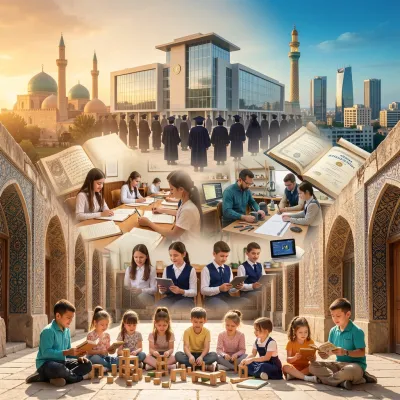
Uzbekistan’s educational system reflects a deep historical lineage that stretches from Silk Road madrasahs and Islamic scholarship through Jadid reformers, Soviet centralization, and post‑independence modernization. Since 1991, the nation has pursued comprehensive reforms—most notably the 2017 shift to an 11‑year compulsory general secondary education, the alignment of higher‑education degrees with the Bologna Process, and sustained efforts to expand early childhood education, vocational training, and lifelong learning. These changes are guided by strategic policies on curriculum development, teacher professionalization, quality assurance, and the integration of information and communication technologies, all aimed at balancing national identity with global competitiveness.
The system is structured across early childhood (nurseries and kindergartens), primary (grades 1‑4), secondary (grades 5‑11), vocational education and training, and higher education (universities, institutes, academies). Admission to state universities relies heavily on centralized national entrance examinations, supplemented by quotas, state grants, and contractual places, while private and foreign branch campuses offer alternative pathways. Curriculum reforms emphasize critical thinking, problem‑solving, digital literacy, entrepreneurship, and multilingual instruction, with Uzbek as the state language, Russian retaining pragmatic importance, minority languages supported in regions, and English prioritized for global engagement. Quality assurance operates through licensing, accreditation, State Educational Standards, and internal institutional systems, overseen by bodies such as the State Inspectorate for Quality Supervision in Education.
Financing remains predominantly state‑funded, yet diversification is encouraged via private investment, international grants, and revenue‑generating activities at higher‑education institutions. Persistent challenges include regional disparities in resources and teacher quality, aligning curricula with labor‑market needs, ensuring equitable access for students with special educational needs, and mitigating brain drain. Opportunities lie in leveraging digital technologies, expanding public‑private partnerships, fostering research‑innovation ecosystems, strengthening international collaborations, and cultivating a culture of lifelong learning. Case studies such as Westminster International University in Tashkent, Inha University, Presidential Schools, inclusive‑education initiatives, the “My School” platform, and vocational “Ishga Marxamat” centers illustrate successful innovation and reform. Looking ahead, Uzbekistan aims to deepen personalized and blended learning, enhance global competitiveness through international benchmarks, boost research commercialization, strengthen governance and ethics, and position education as the cornerstone of national development, economic diversification, and social cohesion.
What You'll Find Inside:
- Exploration of Uzbekistan's education system from early childhood through higher education, including structural changes and key institutions.
- Historical overview of education in Uzbekistan, tracing its evolution from Islamic madrasas to Soviet-era policies and post-independence reforms.
- Detailed analysis of vocational education and training (VET) programs, their alignment with labor market needs, and role in economic development.
- Discussion of inclusive education practices, multilingualism in instruction, and efforts to support students with special educational needs.
- Insight into international cooperation, quality assurance mechanisms, and future prospects for educational innovation and globalization.
Who's It For:
This book is intended for policymakers, educators, and researchers interested in the educational development of Central Asia, particularly Uzbekistan. It will also benefit international partners, development organizations, and anyone seeking a comprehensive understanding of how Uzbekistan's education system is adapting to modernization and global integration. The detailed exploration of reforms, curriculum development, and institutional structures makes it valuable for comparative education studies and regional policy analysis.
Table of Contents:
- Introduction
- Chapter 1: Historical Foundations of Uzbek Education
- Chapter 2: The Structure of the Uzbek Educational System
- Chapter 3: Early Childhood Education: Nurseries and Kindergartens
- Chapter 4: Primary Education: A Foundation for Learning
- Chapter 5: Secondary Education: General and Specialized Tracks
- Chapter 6: Vocational Education and Training: Skills for the Future
- Chapter 7: Higher Education Institutions: Universities and Institutes
- Chapter 8: Admission to Higher Education: Processes and Challenges
- Chapter 9: Curriculum Development and Educational Standards
- Chapter 10: Teacher Training and Professional Development
- Chapter 11: The Role of Information and Communication Technologies in Education
- Chapter 12: Inclusive Education: Addressing Special Needs
- Chapter 13: Language of Instruction and Multilingualism in Education
- Chapter 14: Funding and Financing of Education in Uzbekistan
- Chapter 15: Educational Reforms and Policy Changes
- Chapter 16: International Cooperation and Partnerships in Education
- Chapter 17: Quality Assurance and Accreditation in Education
- Chapter 18: Research and Innovation in Uzbek Higher Education
- Chapter 19: Student Life and Support Services
- Chapter 20: Challenges and Opportunities in Uzbek Education
- Chapter 21: The Impact of Globalization on Education in Uzbekistan
- Chapter 22: Lifelong Learning and Adult Education
- Chapter 23: The Role of Education in National Development
- Chapter 24: Future Directions and Prospects for Uzbek Education
- Chapter 25: Case Studies and Success Stories in Uzbek Education
Author:
Published By:
Date Published:
July 8, 2026
Type:
Nonfiction
Language:
English
Word Count:
76,373 words
Reading Time:
5 hours 21 minutes
Sample:
Order:
Order Education In Uzbekistan (Hardcover) on MixCache.com:
Buy NowPrint copy is made to order and ships worldwide. Includes the ebook free, ready to read instantly.
$5 account credit for all new MixCache.com accounts, usable toward any ebook purchase!*