Browse by Category
Fiction
- Action & Adventure
- African American
- Anthologies
- Children's Fiction
- Classics
- Comics & Graphic Novels
- Coming of Age
- Contemporary
- Cultural & Regional
- Drama
- Erotica
- Fantasy
- General
- Historical Fiction
- Horror
- Humor & Satire
- Literary Fiction
- Mystery, Thriller & Suspense
- Poetry
- Religious & Inspirational
- Romance
- Science Fiction
- Short Stories
- War & Military
- Westerns
- Women's Fiction
- Young Adult
Non-Fiction
- Antiques & Collectibles
- Arts & Photography
- Biographies & Memoirs
- Business & Money
- Children's Non-Fiction
-
Computers & Technology
- Artificial Intelligence
- Computer Science
- Cybersecurity & Cryptography
- Data Science & Analytics
- Databases & Big Data
- Game Development & Design
- General
- Hardware & DIY
- Mobile App Development
- Networking & Cloud Computing
- Operating Systems
- Programming
- Robotics
- Software
- Software Engineering
- User Experience (UX) & Design
- Web Development & Design
- Cooking, Food & Wine
- Crafts, Hobbies & Home
- Education & Teaching
- Engineering
- General
- Health, Fitness & Dieting
-
History
- African History
- African History - North Africa
- African History - Sub-Saharan Africa
- American History
- American History - 20th Century
- American History - Civil War
- American History - Colonial Period
- Ancient History
- Asian History
- Asian History - China
- Asian History - India
- Asian History - Japan
- Asian History - Southeast Asia
- European History
- European History - Ancient Greece
- European History - Ancient Rome
- European History - Medieval
- European History - Modern
- European History - Renaissance
- General
- Middle Eastern History
- Military History
- Military History - Aviation
- Military History - Naval
- Social & Cultural History
- World History
- Humor & Entertainment
- Industrial Technology
- Language Learning
- Law
- LGBTQ+ Non-Fiction
- Literary Criticism
- Medical Books
- Parenting & Relationships
- Philosophy
- Politics & Social Sciences
- Reference
- Religion & Spirituality
-
Science & Math
- Agricultural Sciences
- Astronomy & Space Science
- Behavioral Sciences
- Biological Sciences
- Botany & Plant Science
- Chemistry
- Earth Sciences
- Engineering - Chemical
- Engineering - Civil
- Engineering - Electrical
- Engineering - Mechanical
- Environment
- General
- Geology
- Mathematics
- Nature & Ecology
- Oceanography
- Paleontology
- Physics
- Statistics
- Self-Help
- Sports & Outdoors
- Study Aids
- Sustainability & Green Living
- Textbooks
- Transportation
- Travel
- True Crime
- Urban Planning & Development
- Veterinary Medicine
- Writing & Publishing
Jump to Section
MixCache.com Total Access
Unlimited reading and audiobooks for every book published by MixCache.com.
Included titles carry the MTA badge.
Learn more →
Education In Western Sahara
MTA
A Comprehensive Overview from Early Childhood to Higher Education
About this book:
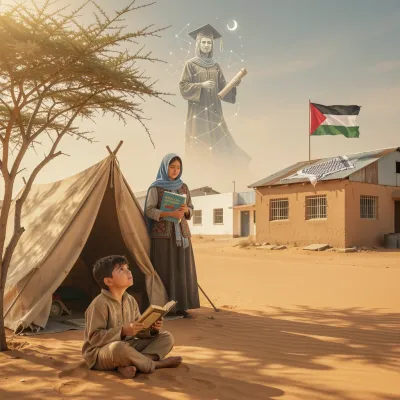
Education in Western Sahara is shaped by a layered history that blends indigenous nomadic learning, Islamic scholarship, Spanish colonial impositions, and the upheavals of mid‑20th‑century conflict. Prior to colonization, Sahrawi knowledge was transmitted orally and through practical desert survival skills, later complemented by Quranic schools that introduced rudimentary literacy and religious instruction. Spanish rule instituted a foreign‑language, secular system focused on administrative training, marginalizing Arabic and Hassaniya while creating a small educated elite. The ensuing war split the territory into Moroccan‑administered zones and Sahrawi refugee camps, prompting two divergent educational trajectories: integration into Morocco’s national system versus a self‑reliant, SADR‑managed curriculum emphasizing Sahrawi identity, Arabic instruction, and Spanish as a gateway to foreign scholarships.
Across both contexts, education spans early childhood through higher levels, with notable efforts in universal access, gender equality, and inclusive programming. In Moroccan‑controlled areas, schooling follows the national Arabic‑French bilingual model, supported by state infrastructure and teacher training, though disparities persist in remote regions. In the refugee camps, schools—often adobe structures—provide free, community‑based education from preschool to secondary, reinforced by a robust international scholarship network that sends students to Algeria, Cuba, and Spain for university and teacher training, producing a returning professional class that staffs camp services. Technical and vocational training, non‑formal adult literacy, and programs for students with special needs are present in both settings, though resource constraints and dependence on external aid are far more acute in the camps. Language policy reflects political and cultural priorities: Arabic as the primary medium of instruction everywhere, with French emphasized in Morocco and Spanish privileged in the camps to facilitate overseas study.
International aid—particularly from UNHCR, NGOs, and sympathetic states—has been indispensable, especially for camp education where it funds construction, materials, teacher stipends, and scholarships. Despite challenges posed by political instability, resource scarcity, harsh desert conditions, and the need for curriculum relevance, Western Saharan education exhibits resilience and innovation: community‑driven school management, integrated vocational programs, solar‑powered learning centers, and a strong focus on girls’ education and female leadership. Education is viewed not only as a means of knowledge transmission but also as a tool for peacebuilding, identity preservation, and preparation for future self‑determination. Ongoing strategic planning seeks to improve quality, expand localized higher education, enhance teacher training, leverage technology, and ensure inclusive, lifelong learning for all Sahrawis, whether within Moroccan‑administered territories or the refugee camps.
What You'll Find Inside:
- Examination of the dual educational systems in Western Sahara - comparing Moroccan-administered territories and Sahrawi refugee camps across all education levels from early childhood to higher education
- Historical evolution of education from pre-colonial nomadic traditions and Islamic scholarship through Spanish colonialism to contemporary adaptations during and after the conflict
- Comprehensive analysis of specialized education topics including girls' education and gender equality, inclusive education for students with special needs, non-formal education and adult literacy, and technical/vocational training
- Critical role of international aid, scholarship programs (particularly from Algeria, Cuba, and Spain), and community initiatives in sustaining educational access, quality, and human capital development
- Education's multifaceted function in cultural identity preservation, peacebuilding efforts, socioeconomic development, and preparation for potential future self-determination or reconciliation scenarios
Who's It For:
This book is essential reading for policymakers, international aid organizations, and NGOs working in Western Sahara or similar conflict-affected regions. Researchers and academics specializing in comparative education, refugee studies, or North African/Middle Eastern education will find valuable comparative insights and case studies. Additionally, educators, students, and anyone interested in the future of Western Sahara will gain a comprehensive understanding of how education functions as both a tool of resilience and a pathway to peace and development in this unique geopolitical context.
Table of Contents:
- Introduction
- Chapter 1: Historical Foundations of Education in Western Sahara
- Chapter 2: Traditional Educational Practices and Their Evolution
- Chapter 3: The Impact of Colonialism on Western Saharan Education
- Chapter 4: Education During the Conflict: Challenges and Adaptations
- Chapter 5: Early Childhood Education: Current Status and Future Directions
- Chapter 6: Primary Education: Structure, Curriculum, and Access
- Chapter 7: Secondary Education: Pathways and Opportunities
- Chapter 8: Technical and Vocational Training in Western Sahara
- Chapter 9: Higher Education Institutions and Programs
- Chapter 10: Teacher Training and Professional Development
- Chapter 11: Curriculum Development and Educational Standards
- Chapter 12: Language of Instruction and Multilingualism in Education
- Chapter 13: The Role of International Aid in Western Saharan Education
- Chapter 14: Education in Refugee Camps: A Unique Context
- Chapter 15: Girls' Education and Gender Equality Initiatives
- Chapter 16: Inclusive Education for Students with Special Needs
- Chapter 17: Non-Formal Education and Adult Literacy Programs
- Chapter 18: The Influence of Culture and Identity on Education
- Chapter 19: Educational Policy and Governance in Western Sahara
- Chapter 20: Funding and Resources for Education
- Chapter 21: Challenges and Obstacles to Educational Development
- Chapter 22: Innovations and Best Practices in Western Saharan Education
- Chapter 23: The Role of Education in Peacebuilding and Development
- Chapter 24: Future Prospects and Strategic Planning for Education
- Chapter 25: Case Studies and Comparative Perspectives in Sahrawi Education
Author:
Published By:
Date Published:
July 8, 2026
Type:
Nonfiction
Language:
English
Word Count:
37,347 words
Reading Time:
2 hours 37 minutes
Sample:
Order:
Order Education In Western Sahara (Hardcover) on MixCache.com:
Buy NowPrint copy is made to order and ships worldwide. Includes the ebook free, ready to read instantly.
$5 account credit for all new MixCache.com accounts, usable toward any ebook purchase!*