Browse by Category
Fiction
- Action & Adventure
- African American
- Anthologies
- Children's Fiction
- Classics
- Comics & Graphic Novels
- Coming of Age
- Contemporary
- Cultural & Regional
- Drama
- Erotica
- Fantasy
- General
- Historical Fiction
- Horror
- Humor & Satire
- Literary Fiction
- Mystery, Thriller & Suspense
- Poetry
- Religious & Inspirational
- Romance
- Science Fiction
- Short Stories
- War & Military
- Westerns
- Women's Fiction
- Young Adult
Non-Fiction
- Antiques & Collectibles
- Arts & Photography
- Biographies & Memoirs
- Business & Money
- Children's Non-Fiction
-
Computers & Technology
- Artificial Intelligence
- Computer Science
- Cybersecurity & Cryptography
- Data Science & Analytics
- Databases & Big Data
- Game Development & Design
- General
- Hardware & DIY
- Mobile App Development
- Networking & Cloud Computing
- Operating Systems
- Programming
- Robotics
- Software
- Software Engineering
- User Experience (UX) & Design
- Web Development & Design
- Cooking, Food & Wine
- Crafts, Hobbies & Home
- Education & Teaching
- Engineering
- General
- Health, Fitness & Dieting
-
History
- African History
- African History - North Africa
- African History - Sub-Saharan Africa
- American History
- American History - 20th Century
- American History - Civil War
- American History - Colonial Period
- Ancient History
- Asian History
- Asian History - China
- Asian History - India
- Asian History - Japan
- Asian History - Southeast Asia
- European History
- European History - Ancient Greece
- European History - Ancient Rome
- European History - Medieval
- European History - Modern
- European History - Renaissance
- General
- Middle Eastern History
- Military History
- Military History - Aviation
- Military History - Naval
- Social & Cultural History
- World History
- Humor & Entertainment
- Industrial Technology
- Language Learning
- Law
- LGBTQ+ Non-Fiction
- Literary Criticism
- Medical Books
- Parenting & Relationships
- Philosophy
- Politics & Social Sciences
- Reference
- Religion & Spirituality
-
Science & Math
- Agricultural Sciences
- Astronomy & Space Science
- Behavioral Sciences
- Biological Sciences
- Botany & Plant Science
- Chemistry
- Earth Sciences
- Engineering - Chemical
- Engineering - Civil
- Engineering - Electrical
- Engineering - Mechanical
- Environment
- General
- Geology
- Mathematics
- Nature & Ecology
- Oceanography
- Paleontology
- Physics
- Statistics
- Self-Help
- Sports & Outdoors
- Study Aids
- Sustainability & Green Living
- Textbooks
- Transportation
- Travel
- True Crime
- Urban Planning & Development
- Veterinary Medicine
- Writing & Publishing
Jump to Section
MixCache.com Total Access
Unlimited reading and audiobooks for every book published by MixCache.com.
Included titles carry the MTA badge.
Learn more →
Education In Belgium
MTA
A Comprehensive Overview from Early Childhood to Higher Education
About this book:

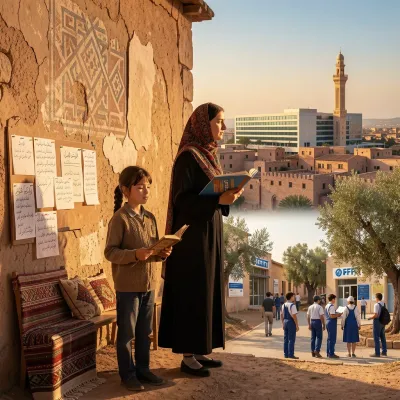
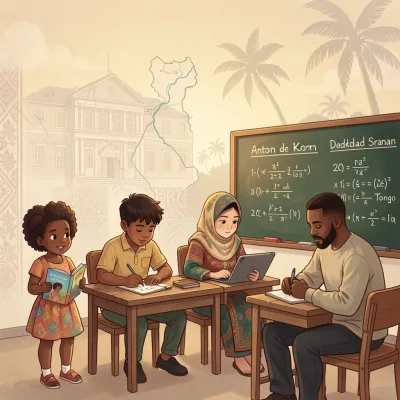
Education in Belgium is a complex, federated system deeply influenced by its linguistic diversity and historical evolution. The country’s three linguistic communities—the Flemish (Dutch-speaking), French (French-speaking), and German-speaking—each independently govern their own educational frameworks, from early childhood to higher education, reflecting distinct cultural and curricular priorities. This structure emerged from centuries of political and religious tensions, including the 19th-century "School War" and the 1958 School Pact, which established the coexistence of public and subsidized private (primarily Catholic) schools. Federalization in the late 20th century entrenched these linguistic divisions, leading to autonomous ministries for each community that oversee curriculum, teacher training, and funding, ensuring education aligns with local identities while maintaining national accountability through shared foundational principles like compulsory schooling and quality standards.
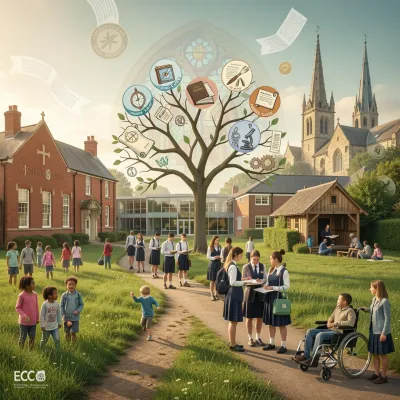
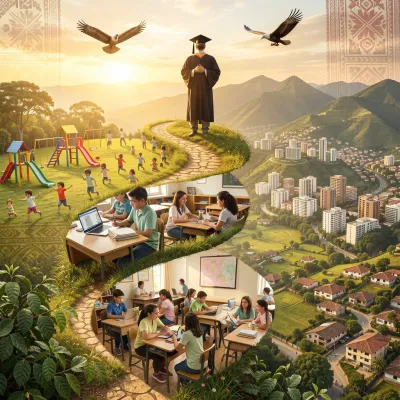
Belgian education spans early childhood (crèches and pre-primary), primary (ages 6–12), and secondary education, which offers four distinct pathways: General (academic preparation for university), Technical (blending theory and practice), Vocational (work-based training), and Art Education (focused on creative disciplines). The system employs a three-cycle structure (Bachelor’s, Master’s, Doctorate) aligned with the Bologna Process, harmonizing higher education degrees across Europe. Each community manages universities and university colleges (*hogescholen*/*hautes écoles*), which offer specialized programs tailored to academic, professional, or artistic goals. Rigorous teacher training, inclusive special needs provisions, and multilingual curricula, including mandatory second-language instruction, underscore the system’s commitment to holistic development and global competitiveness.
Ongoing challenges include addressing educational equity, bridging socioeconomic gaps, and adapting to technological advancements like digital learning tools and AI. Teacher shortages, especially in STEM and language fields, alongside the need for continuous curriculum updates to reflect modern skills (e.g., digital literacy, sustainability), drive reforms. The system also grapples with balancing federalized autonomy and coordination between communities to ensure consistent quality and resource distribution. Vocational training and lifelong learning initiatives, supported by public employment services (*VDAB*, *Forem*, *ADG*) and sectoral programs, emphasize adaptability to labor market demands and social inclusion. Digitalization has been transformative, enhancing personalized learning and administrative processes but requiring sustained investment to mitigate access disparities.
Looking ahead, Belgian education is poised for further innovation, emphasizing competency-based learning, mental health support, and global citizenship. Future priorities include fostering flexible pathways between academic and vocational tracks, expanding international collaboration, and integrating AI and sustainable practices into curricula. The communities’ autonomous yet collaborative approach ensures they can respond to global trends while preserving their unique cultural educational identities, preparing students for a dynamic, interconnected world.
What You'll Find Inside:
- A clear overview of Belgium’s three autonomous education systems: Flemish, French-speaking, and German-speaking.
- The historical roots of Belgian education, including the School War, federalization, and the public-private school balance.
- A stage-by-stage guide from crèches and pre-primary education through primary, secondary, higher education, and doctoral studies.
- Insight into secondary pathways, including general, technical, vocational, and art education, plus assessment and certification.
- Key modern issues shaping Belgian education, such as inclusion, teacher training, funding, digitalization, internationalization, and lifelong learning.
Who's It For:
This book is especially useful for educators, policymakers, researchers, and education students who want a detailed understanding of Belgium’s decentralized and multilingual education system. It will also benefit prospective students and families considering study in Belgium, as well as international observers comparing European education models.
Table of Contents:
- Introduction
- Chapter 1: The Historical Evolution of Belgian Education
- Chapter 2: Understanding Belgium's Linguistic and Educational Communities
- Chapter 3: The Structure and Governance of the Belgian Educational System
- Chapter 4: Early Childhood Education: Crèches, Pre-Primary, and Kleuterschool
- Chapter 5: The Goals and Curriculum of Pre-Primary Education
- Chapter 6: Primary Education in Belgium: Foundation and Core Subjects
- Chapter 7: Differentiating Between Flemish, Walloon, and German-speaking Primary Schools
- Chapter 8: Secondary Education: General, Technical, Vocational, and Art Education
- Chapter 9: The First Degree of Secondary Education: Orientation and Exploration
- Chapter 10: The Second and Third Degrees of Secondary Education: Specialization and Pathways
- Chapter 11: Curriculum Development and Educational Standards
- Chapter 12: Assessment, Evaluation, and Certification in Secondary Education
- Chapter 13: Special Needs Education: Inclusion and Support Systems
- Chapter 14: Teacher Training and Professional Development
- Chapter 15: Higher Education: Universities and University Colleges (Hogescholen)
- Chapter 16: Bachelor's and Master's Programs: Structure and Accreditation
- Chapter 17: Doctoral Studies and Research in Belgian Universities
- Chapter 18: The Bologna Process and its Impact on Belgian Higher Education
- Chapter 19: Funding and Financing of Education in Belgium
- Chapter 20: The Role of Private and Public Education Providers
- Chapter 21: Internationalization of Belgian Education: Exchange Programs and Foreign Students
- Chapter 22: Challenges and Reforms in the Belgian Educational Landscape
- Chapter 23: The Impact of Digitalization on Belgian Classrooms
- Chapter 24: Vocational Training and Lifelong Learning Initiatives
- Chapter 25: Future Perspectives and Innovations in Belgian Education
Author:
Published By:
Date Published:
June 19, 2026
Type:
Nonfiction
Language:
English
Word Count:
44,488 words
Reading Time:
3 hours 7 minutes
Sample:
Order:
Order Education In Belgium (Paperback) on MixCache.com:
Buy NowPrint copy is made to order and ships worldwide. Includes the ebook free, ready to read instantly.
$5 account credit for all new MixCache.com accounts, usable toward any ebook purchase!*