Browse by Category
Fiction
- Action & Adventure
- African American
- Anthologies
- Children's Fiction
- Classics
- Comics & Graphic Novels
- Coming of Age
- Contemporary
- Cultural & Regional
- Drama
- Erotica
- Fantasy
- General
- Historical Fiction
- Horror
- Humor & Satire
- Literary Fiction
- Mystery, Thriller & Suspense
- Poetry
- Religious & Inspirational
- Romance
- Science Fiction
- Short Stories
- War & Military
- Westerns
- Women's Fiction
- Young Adult
Non-Fiction
- Antiques & Collectibles
- Arts & Photography
- Biographies & Memoirs
- Business & Money
- Children's Non-Fiction
-
Computers & Technology
- Artificial Intelligence
- Computer Science
- Cybersecurity & Cryptography
- Data Science & Analytics
- Databases & Big Data
- Game Development & Design
- General
- Hardware & DIY
- Mobile App Development
- Networking & Cloud Computing
- Operating Systems
- Programming
- Robotics
- Software
- Software Engineering
- User Experience (UX) & Design
- Web Development & Design
- Cooking, Food & Wine
- Crafts, Hobbies & Home
- Education & Teaching
- Engineering
- General
- Health, Fitness & Dieting
-
History
- African History
- African History - North Africa
- African History - Sub-Saharan Africa
- American History
- American History - 20th Century
- American History - Civil War
- American History - Colonial Period
- Ancient History
- Asian History
- Asian History - China
- Asian History - India
- Asian History - Japan
- Asian History - Southeast Asia
- European History
- European History - Ancient Greece
- European History - Ancient Rome
- European History - Medieval
- European History - Modern
- European History - Renaissance
- General
- Middle Eastern History
- Military History
- Military History - Aviation
- Military History - Naval
- Social & Cultural History
- World History
- Humor & Entertainment
- Industrial Technology
- Language Learning
- Law
- LGBTQ+ Non-Fiction
- Literary Criticism
- Medical Books
- Parenting & Relationships
- Philosophy
- Politics & Social Sciences
- Reference
- Religion & Spirituality
-
Science & Math
- Agricultural Sciences
- Astronomy & Space Science
- Behavioral Sciences
- Biological Sciences
- Botany & Plant Science
- Chemistry
- Earth Sciences
- Engineering - Chemical
- Engineering - Civil
- Engineering - Electrical
- Engineering - Mechanical
- Environment
- General
- Geology
- Mathematics
- Nature & Ecology
- Oceanography
- Paleontology
- Physics
- Statistics
- Self-Help
- Sports & Outdoors
- Study Aids
- Sustainability & Green Living
- Textbooks
- Transportation
- Travel
- True Crime
- Urban Planning & Development
- Veterinary Medicine
- Writing & Publishing
Jump to Section

Want unlimited access to all books published by MixCache.com (plus their audiobooks)? Try MixCache.com Total Access. Look for the MTA badge on book covers to identify included titles.
Access to infinite ebooks: Don't see the book you want? Suggest it and we'll create it (free!) for you from scratch with our powerful AI book writer. Then read it with MTA - besides profiting from any sales it makes!
Provincial Health and Medicine in China
MTA
Traditional healing, public health, and medical modernization — one province per chapter
About this book:

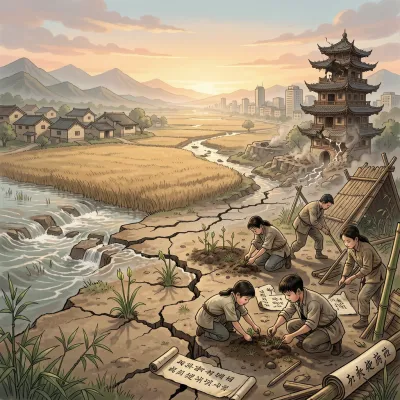
This book offers a comprehensive examination of how provincial contexts in China have shaped healing practices, public health strategies, and medical modernization. Through 25 detailed case studies, it explores the interplay between geography, economy, ethnicity, and political authority, revealing how each region's unique challenges—from Hebei’s urban-rural divides to Inner Mongolia’s nomadic health systems—have influenced approaches to disease, treatment, and care. Traditional medicine is presented not as a relic but as an evolving force that interacts dynamically with biomedical institutions and state-sponsored public health initiatives. Each chapter illustrates how local healers, barefoot doctors, and community networks adapted to epidemics like cholera, plague, and malaria, often blending empirical and cultural knowledge with scientific interventions.
The narrative underscores the centrality of provincial governance in translating national health policies into locally feasible programs, while highlighting the role of ecological and social factors in determining outcomes. Environmental changes, industrialization, and border dynamics (e.g., in Yunnan, Guangxi, and Hainan) emerge as critical drivers of public health priorities, influencing everything from agricultural policies to pandemic preparedness. The book also emphasizes how epidemics have acted as catalysts for reform, accelerating modernization efforts while exposing infrastructural gaps. From the opium crises in Yunnan to the HIV/AIDS stigma in Henan, the text reveals how cultural, economic, and political pressures have shaped local responses to health challenges.
Methodologically, the work combines social, environmental, and institutional history with medical anthropology and public health insights, drawing on diverse sources including archives, oral histories, and ecological data. It demonstrates how local actors—whether herbalists, epidemiologists, or village health workers—have mediated the effectiveness of national campaigns, ensuring that policies resonate with community practices and ecological realities. The comparative structure allows readers to trace cross-regional patterns, such as how border regions navigated zoonotic diseases or how industrial areas grappled with occupational health.
Ultimately, the book argues that effective health systems depend on integrating traditional and biomedical practices, respecting local ecological knowledge, and designing culturally responsive surveillance. By comparing divergent pathways across provinces—from the maritime health networks of Zhejiang to the high-altitude adaptations of Qinghai—it provides a toolkit for understanding how healing systems evolve in response to local and global pressures, offering lessons applicable to China and beyond.
What You'll Find Inside:
- Provincial variations in health systems shaped by local geography, economy, ethnicity, and political authority
- The dynamic interaction between traditional medicine and biomedical modernization across China's provinces
- How epidemics have tested and transformed provincial public health capacities throughout history
- The role of local actors in adapting health policies to ecological realities and community needs
- Lessons for contemporary health systems from China's provincial medical history and hybrid practices
Who's It For:
Medical historians, public health practitioners, and researchers interested in China's health systems will find valuable insights in this provincial-level analysis. The book is particularly useful for those studying how traditional healing practices interact with modern medical institutions, and how geography, ethnicity, and political authority shape healthcare outcomes. It offers concrete lessons for designing culturally responsive health interventions and understanding the complexities of medical modernization in diverse settings.
Author:
Published By:
Date Published:
June 17, 2026
Type:
Nonfiction
Language:
English
Word Count:
48,871 words
Reading Time:
3 hours 25 minutes
Sample:
Order:
Order Provincial Health and Medicine in China (Hardcover) on MixCache.com:
Buy NowPrint copy is made to order and ships worldwide. Includes the ebook free, ready to read instantly.
$5 account credit for all new MixCache.com accounts, usable toward any ebook purchase!*