Browse by Category
Fiction
- Action & Adventure
- African American
- Anthologies
- Children's Fiction
- Classics
- Comics & Graphic Novels
- Coming of Age
- Contemporary
- Cultural & Regional
- Drama
- Erotica
- Fantasy
- General
- Historical Fiction
- Horror
- Humor & Satire
- Literary Fiction
- Mystery, Thriller & Suspense
- Poetry
- Religious & Inspirational
- Romance
- Science Fiction
- Short Stories
- War & Military
- Westerns
- Women's Fiction
- Young Adult
Non-Fiction
- Antiques & Collectibles
- Arts & Photography
- Biographies & Memoirs
- Business & Money
- Children's Non-Fiction
-
Computers & Technology
- Artificial Intelligence
- Computer Science
- Cybersecurity & Cryptography
- Data Science & Analytics
- Databases & Big Data
- Game Development & Design
- General
- Hardware & DIY
- Mobile App Development
- Networking & Cloud Computing
- Operating Systems
- Programming
- Robotics
- Software
- Software Engineering
- User Experience (UX) & Design
- Web Development & Design
- Cooking, Food & Wine
- Crafts, Hobbies & Home
- Education & Teaching
- Engineering
- General
- Health, Fitness & Dieting
-
History
- African History
- African History - North Africa
- African History - Sub-Saharan Africa
- American History
- American History - 20th Century
- American History - Civil War
- American History - Colonial Period
- Ancient History
- Asian History
- Asian History - China
- Asian History - India
- Asian History - Japan
- Asian History - Southeast Asia
- European History
- European History - Ancient Greece
- European History - Ancient Rome
- European History - Medieval
- European History - Modern
- European History - Renaissance
- General
- Middle Eastern History
- Military History
- Military History - Aviation
- Military History - Naval
- Social & Cultural History
- World History
- Humor & Entertainment
- Industrial Technology
- Language Learning
- Law
- LGBTQ+ Non-Fiction
- Literary Criticism
- Medical Books
- Parenting & Relationships
- Philosophy
- Politics & Social Sciences
- Reference
- Religion & Spirituality
-
Science & Math
- Agricultural Sciences
- Astronomy & Space Science
- Behavioral Sciences
- Biological Sciences
- Botany & Plant Science
- Chemistry
- Earth Sciences
- Engineering - Chemical
- Engineering - Civil
- Engineering - Electrical
- Engineering - Mechanical
- Environment
- General
- Geology
- Mathematics
- Nature & Ecology
- Oceanography
- Paleontology
- Physics
- Statistics
- Self-Help
- Sports & Outdoors
- Study Aids
- Sustainability & Green Living
- Textbooks
- Transportation
- Travel
- True Crime
- Urban Planning & Development
- Veterinary Medicine
- Writing & Publishing
Jump to Section

Want unlimited access to all books published by MixCache.com (plus their audiobooks)? Try MixCache.com Total Access. Look for the MTA badge on book covers to identify included titles.
Access to infinite ebooks: Don't see the book you want? Suggest it and we'll create it (free!) for you from scratch with our powerful AI book writer. Then read it with MTA - besides profiting from any sales it makes!
Art and Material Culture of China's Provinces
MTA
Regional arts, crafts, and visual traditions documented one province at a time
About this book:
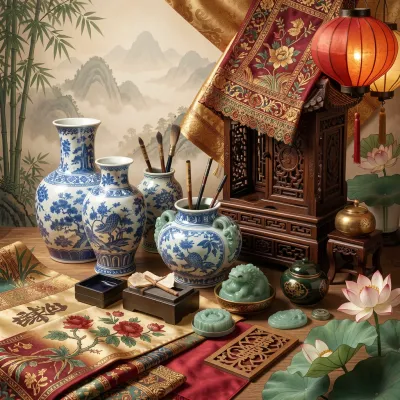
This book offers a comprehensive exploration of China's artistic and material culture by examining each province individually, highlighting how local traditions intersected with broader historical, environmental, and commercial forces. Organized around four core media—ceramics, textiles, painting, and crafts—the narrative traces regional innovations while emphasizing the networks of exchange that connected disparate areas. Each chapter focuses on unique cultural artifacts, such as Anhui’s inkstones and Huizhou merchant influences, Fujian’s Dehua porcelain and temple arts, and Gansu’s Hexi Corridor Bronzes and Dunhuang murals, illustrating how geography, resources, and trade routes like the Grand Canal, Silk Road, and Tea-Horse Road shaped artistic production and aesthetic preferences.
The text underscores the dynamic interplay between local craftsmanship and external influences, revealing how provinces balanced indigenous traditions with cross-cultural adaptations. For instance, Guangdong’s Lingnan painting and Canton Export Ware reflect maritime trade connections, while Guizhou’s Miao-Dong textiles exemplify ethnic minority artistry amid changing socio-economic landscapes. The book also highlights the social dimensions of craftsmanship, particularly the roles of women, guilds, and community networks in sustaining traditions. Provenance research and technical analysis are integrated throughout, offering insights into authenticity, materials, and historical contexts, which are critical for understanding the legacy of artifacts in temple sales, export markets, and modern collections.
Chapters on Hebei’s Cizhou stonewares, Heilongjiang’s birch bark crafts, and Jiangsu’s Yixing teapots and Suzhou embroidery emphasize the diversity of China’s material culture, from utilitarian objects to elite court arts. The book also addresses contemporary challenges, such as urbanization, tourism, and globalization, which threaten traditional practices while creating opportunities for revitalization. Through case studies and archaeological insights, it connects past and present, showcasing efforts to safeguard intangible cultural heritage and revive endangered crafts.
Ultimately, the work argues that China’s material culture is not a static collection of isolated traditions but a mosaic of interconnected legacies, shaped by the ingenuity of artisans, the flow of ideas, and the enduring relationship between art, ecology, and human life. By focusing on objects and their makers, the book presents art as a form of social history, inviting readers to engage with the tangible expressions of regional identity and cultural exchange that define China’s artistic heritage.
What You'll Find Inside:
- Explores regional art and craft traditions across all 23 Chinese provinces, highlighting unique cultural practices shaped by local resources and ethnic diversity.
- Emphasizes the interplay between geography, trade networks, and material culture, showcasing how rivers, trade routes, and environmental conditions influenced artistic development.
- Details iconic crafts like Yixing teapots, Longquan celadon, and indigenous textiles, linking them to their historical, spiritual, and economic contexts.
- Provides practical provenance guidance for collectors, including authentication techniques, historical trade influences, and ethical considerations in cultural preservation.
- Integrates social history and technical analysis to connect artifacts with the hands that created them—women, minorities, merchants, and monks—and their ongoing revitalization efforts.
Who's It For:
This book is designed for art historians, archaeologists, collectors, and students of Chinese cultural studies who seek a comprehensive understanding of provincial material culture. It is especially beneficial for those interested in connoisseurship, cultural preservation, and the socio-historical contexts of Chinese crafts. The detailed provenance research and case studies make it valuable for professionals in museums and the antiques trade.
Author:
Published By:
Date Published:
June 14, 2026
Type:
Nonfiction
Language:
English
Word Count:
52,968 words
Reading Time:
3 hours 43 minutes
Sample:
Order:
Order Art and Material Culture of China's Provinces (Paperback) on MixCache.com:
Buy NowPrint copy is made to order and ships worldwide. Includes the ebook free, ready to read instantly.
$5 account credit for all new MixCache.com accounts, usable toward any ebook purchase!*